
Our readers keep the lights on and my garage snacks stocked. As an Amazon Associate, I earn from qualifying purchases.
Specs are compiled from manufacturer listings and verified buyer reviews and can change over time — please confirm the key details on the product page before buying.
Buying non-studded winter tires means choosing traction in snow and ice without the clatter and road wear of metal studs. The right set transforms your car’s handling on a frozen morning commute; the wrong one leaves you sliding. This guide covers eight options, from budget-friendly picks to premium models that excel on packed snow. You will learn which spec matters most and what buyers report after a full season.
I’m Min Islam — the founder and writer behind Trending Car. This guide is built by comparing the manufacturers’ published specifications and the patterns across verified customer reviews, so you get each pick’s real strengths and trade-offs instead of marketing spin.
You need winter tires that grip snow and ice without metal studs, but the right rubber compound and tread pattern depend on your vehicle and local weather. Here is how to pick the best non-studded winter tires for your car, SUV, or truck.
Our Picks at a Glance

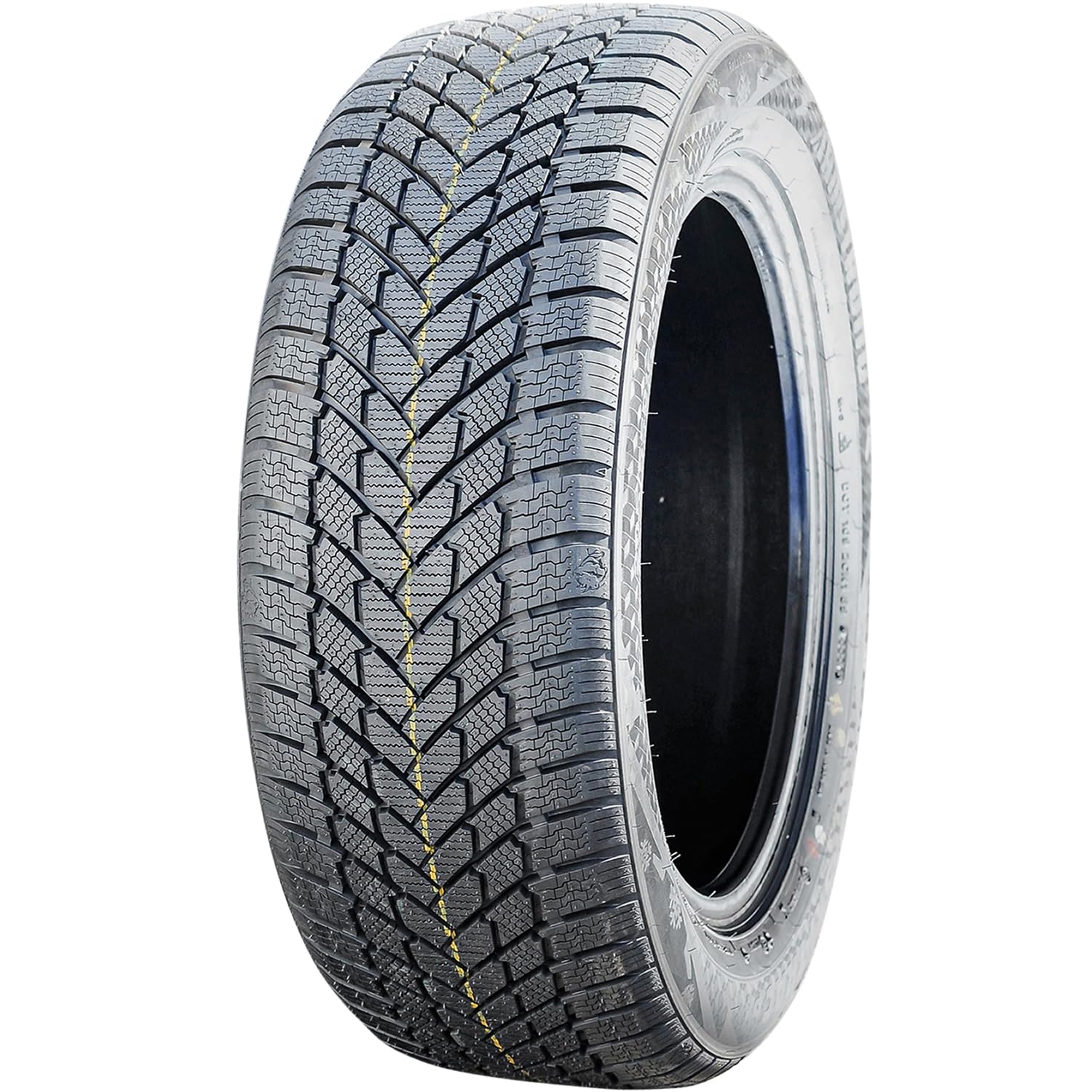

How To Choose The Best Non-Studded Winter Tires
Picking winter rubber is different from buying all-seasons. You are trading some dry-road refinement for cold-weather bite. The three factors that separate a great winter tire from a so-so one are rubber compound, tread pattern, and load rating — each affects feel below freezing.
Look for the Mountain Snowflake First
The Three-Peak Mountain Snowflake symbol is not a marketing sticker. It means the tire passed a specific industry traction test on medium-packed snow. A tire without this symbol may work in light flurries, but for real accumulation or icy slush, the snowflake mark is your baseline. Several tires in this list carry it, and that alone tells you they are designed for severe winter service.
Match the Load Range to Your Vehicle
A passenger car with a standard load (SL) tire needs a different carcass than a heavy SUV or a crossover running an extra load (XL) spec. SL tires are lighter and ride softer, which suits sedans and hatchbacks. XL tires carry a higher maximum inflation pressure — 44 psi or more — and handle the extra weight of a truck-based SUV without squirming in corners.
Don’t Overlook the Tread Direction
Directional tread patterns, where the V-grooves all face forward, are excellent at channeling slush and water out from under the contact patch. They give you confident straight-line stability in deep snow, but they limit your ability to rotate tires front-to-back without remounting. Non-directional or symmetric patterns are quieter on dry pavement and let you rotate freely, which extends tread life across all four corners.
Quick Comparison
| Model | Best For | Load Capacity | Item Weight | Item Diameter | Amazon |
|---|---|---|---|---|---|
| Accelera X Grip 215/65R16★ Best Overall | Budget SUV winter | 1874 lbs | 25 lbs | 27 inches | Amazon |
| Armstrong Ski-Trac PC 205/60R16Best Value | Passenger car value | 1389 lbs | 20 lbs | 25.7 inches | Amazon |
| Hercules Avalanche RT 215/60R16Three-Peak Rated | Three-Peak reliability | 1521 lbs | 24 lbs | 26.14 inches | Amazon |
| Armstrong Ski-Trac HP 245/45R18 | SUV performance | 1764 lbs | 27 lbs | 26.7 inches | Amazon |
| Cooper Discoverer True North 215/55R17 | Long tread life | 1477 lbs | 25.7 lbs | 26.3 inches | Amazon |
| Continental Viking Contact 7 185/55R15 | Compact car ice grip | — | — | 23 inches | Amazon |
| Bridgestone Blizzak DM-V2 225/65R17 | Premium SUV traction | 1874 lbs | 29.1 lbs | 28.5 inches | Amazon |
| Yokohama iceGUARD G075 265/50R19 | Heavy-duty pickup/SUV | 2337 lbs | 35.2 lbs | — | Amazon |
In‑Depth Reviews
1. Accelera X Grip Winter 215/65R16
Our pick — 4.5★ from 300+ verified ratings; the strongest balance of quality and price.
The budget SUV tire that earns its keep on steep hills and highways alike.
Before you spend double on a premium name, consider this: the Accelera X Grip is an XL-rated (extra load) winter tire carrying 1,874 pounds per corner, which puts it in the same load class as much pricier options. It measures 27 inches in diameter and tips the scales at 25 pounds — light enough that balancing took minimal weight, as owners mention. Quality and value for money are the two most talked-about aspects here, with owners praising how it handles both New Hampshire blizzards and New York City delivery shifts without drama.
The catch is noise. Some owners find it slightly audible on dry pavement, though an equal number call it silent. On snow and ice, the consensus is clear: this tire grips well enough that one owner ran a Honda Fit through an entire winter and still recommended it as “a cheaper alternative to the big brand names.” It spins its tires if you hammer the throttle from a stop, but that is typical for a studless winter compound — easy driving smooths it right out.
At 4.5 stars with more than 300 ratings, this is the crowd favorite for a reason. It delivers a touring-car ride in a truck-size package, and it saves you enough money to buy a set of steel wheels to mount them on.
Where it shines
- XL load rating supports heavy SUVs at 1,874 lbs per tire
- Customers say it climbs steep hills from a stop with no struggle
- Balances easily with minimal wheel weights, saving shop time
Something to know
- Noise level gets mixed reviews — some find it quiet, others notice a hum
- Not a low-maintenance tire if you drive aggressively in deep powder
Reach for these if: you drive a crossover or small SUV on a tight budget and need real snow traction without paying premium-brand prices.
Look elsewhere if: absolute cabin silence on dry highways is your top priority — the mixed noise reports suggest it may not satisfy that.
2. Armstrong Ski-Trac PC 205/60R16
A featherlight passenger tire that restores control on icy roads for pennies on the dollar.
At just 20 pounds and a 25.7-inch diameter, this Armstrong is one of the lightest winter tires you will find. The standard load (SL) rating means it is built for sedans and compact cars, not heavy SUVs, and its 1,389-pound capacity is a good match for a Honda Civic or Kia Soul. Customers note that it restored control on icy roads in a 2006 Civic — one owner called it “excellent ice traction.” The value-for-money aspect gets almost as much praise as quality, with one owner reporting a saving versus a local shop quote.
The honest trade-off is off-the-line bite. A few owners note that it is weak from a dead stop on glare ice, though braking remains solid once you are moving. It handles 3 inches of snow comfortably and even manages 6 to 8 inches of heavy stuff, though the friction-compound nature means your right foot needs to be gentle at launch. On the highway, it is smooth up to 75 mph with no vibration.
This is the pick for anyone who needs a winter tire for a front-wheel-drive commuter but does not want to spend more than necessary. The owner consensus is clear: it outperforms top-tier all-seasons on ice and light snow, and it does so at a price that leaves room for a second set of wheels.
Best for frugal commuters: saves hundreds over shop-installed premiums while delivering genuine winter traction. Know this: launch grip on pure ice is modest — left-foot braking and gentle throttle get the best results.
Pick this if: you drive a small sedan and want a dedicated winter tire without overspending — the value is undeniable.
skip it if: you often accelerate hard from a stop on slick roads and need maximum launch grip.
3. Hercules Avalanche RT 215/60R16
The Three-Peak badge tells you this one is certified for severe snow before you even drive it.
Three-Peak Mountain Snowflake certification is not handed out lightly, and the Hercules Avalanche RT wears it. That means it passes the industry test for medium-packed snow traction — a level most all-season tires cannot touch. At 24 pounds and a 26.14-inch diameter, it sits in the middle of the pack weight-wise, but its 1,521-pound load capacity gives it room for a midsize sedan or a light crossover. Reviewers point out it climbs snowy hills with ease, and in Colorado winters, owners say it rides smoothly for a winter tire. One mechanic even commented on the quality just from looking at the tread.
This is not a tire you buy for high-speed summer driving — the soft winter compound wears faster on warm pavement. But during the months that matter, it delivers exactly what the snowflake promises. The tread features deep sipping (thin slits in the rubber blocks that bite into ice), and owners who install and balance their own tires note the build quality is consistent.
With a perfect score among a small but vocal ownership base, the Hercules is a quiet overachiever. It does not get the attention of the big brands, but it earns its spot through real-world snow performance and honest construction.
Certified severe-weather grip: the Three-Peak symbol means this tire passed a real packed-snow test, not just marketing. Worth noting: the small review pool means long-term durability data is thin, but early reports are all positive.
Choose this for: confidence that your tire meets an actual snow-traction standard — the certification is the proof.
Think twice if: you need a large review base to feel confident about long-term wear; the sample here is small but uniformly positive.
4. Armstrong Ski-Trac HP 245/45R18

A performance winter tire for trucks and SUVs that surprises owners with its quiet ride.
Winter tires for larger vehicles are often noisy, but the Armstrong Ski-Trac HP bucks that trend. At 27 pounds with an XL load range carrying 1,764 pounds, this is built for heavier crossovers and SUVs, not compact cars. The 26.7-inch diameter suits a performance-oriented fitment, and shoppers say it is surprisingly quiet and smooth for a budget winter tire — a rare combination in this size. One owner ran it on a front-wheel-drive car through 6 inches of fresh snow and praised the start-and-stop traction, noting that turning engages traction control but still feels safe.
The trade-off mentioned most is tread longevity. Some owners flag that the rubber wears faster than premium rivals, which makes sense given the soft winter compound needed for ice grip. Speed rating is high — a V-rating — so dry-road handling at highway speeds is not compromised. This is a solid winter tire that delivers dependable snow performance at a meaningful discount.
Owners who have bought it twice — and several have — confirm the formula works. If you need a winter tire for a larger vehicle and quiet highway cruising matters, this Armstrong is worth a hard look.
Strong points
- Remarkably quiet ride for a winter tire in this weight and size class
- V-speed rating (up to 149 mph) protects dry-road performance
- XL construction handles heavy SUV loads at 1,764 lbs per tire
Fair warning
- Tread wear is a recurring topic — some owners say it wears faster than premium options
- Ice traction is an open question; buyers report strong snow performance but note unknown long-term ice behavior
Ideal for: SUV and truck owners who want a quiet, confidence-inspiring winter tire without the premium price tag.
Consider carefully if: you expect a tire to last more than 3-4 seasons — the tread longevity reports suggest it may not be a long-haul choice.
5. Cooper Discoverer True North 215/55R17

A winter tire that outlasts the season — owners mention 60,000 miles on a single set.
Most winter tires wear out in three or four seasons, but the Cooper Discoverer True North has a documented track record that breaks that pattern. One owner in Minnesota drove a previous set for 60,000 miles on a Honda Civic, calling it “very near snow tire performance, yet lasts like a regular passenger tire.” That durability comes from a Three-Peak Mountain Snowflake-certified design that also delivers the shortest stopping distance in snow per Cooper’s own claims, a statement backed by owner reports of excellent traction on slushy and icy roads. At 25.7 pounds and a 26.3-inch diameter, it fits a wide array of sedans and crossovers.
Noise gets mixed feedback here, just as with the Accelera. Some owners find it exceptionally quiet; others notice a hum at highway speeds. The majority opinion, however, is that the grip is outstanding and the tire holds up well over time, with quality and value for money topping the aspect charts. One owner in the Midwest described how a 2005 Toyota Matrix stopped fishtailing entirely after the switch — a real-world testament to its slush-channeling tread design.
This is the tire for drivers who want winter security without the hassle of swapping rubber twice a year. Its long-wearing compound blurs the line between a winter and all-season, making it a smart choice for mild-to-moderate snow regions.
What stands out
- Owner-reported tread life of 60,000 miles on a single set — exceptional for a winter tire
- Three-Peak certification with documented shortest stopping distance in snow
- Eliminates fishtailing on slush and black ice, per buyer accounts
Something to note
- Noise level splits opinions — some owners find it quiet, others hear a hum on dry pavement
Choose this if: you hate swapping tires twice a year and want winter capability that lasts through many seasons.
Look elsewhere if: pure ice traction is your only concern — this tire leans toward snow and slush grip with long wear as its headline.
6. Continental Viking Contact 7 185/55R15

Continental’s PolarPlus rubber stays flexible in the deep freeze, keeping grip when others harden up.
The Viking Contact 7 is engineered for the kind of cold that cracks lesser tires. Its PolarPlus Technology keeps the rubber compound pliable in extreme low temperatures, which directly improves grip and reduces stopping distances on ice. At a compact 23 inches in diameter, it is built for smaller cars — a Nissan Rogue fitment is common among owners — and it carries an XL load range despite its size, giving it a sturdy carcass for its class. Customers note driving 60 mph through heavy snow without drama, and one owner describes pulling a tow truck out of a snowy hill — a story that tells you more about the grip than any spec sheet could.
The Three-Peak Mountain Snowflake certification is present, and the tire meets the severe snow service requirements of both the USTMA and the Tire and Rubber Association of Canada. It comes backed by a 60-day trial and three years of roadside assistance, which is rare at this price tier. Owners consistently praise the smooth highway ride and stable handling at 75 mph, unusual for a small-diameter winter tire. The only caveat is availability — this is a less common size, and stock can run thin mid-season.
Class-leading compound: PolarPlus stays flexible at temperatures that freeze standard rubber, giving you real ice grip. Worth knowing: limited to compact fitments — check your exact size before buying.
Best for: drivers of small cars in extreme northern climates who need a tire that stays soft and grippy in deep cold.
Not for: large SUVs or trucks — the 23-inch diameter is too small for anything beyond a compact crossover.
7. Bridgestone Blizzak DM-V2 225/65R17
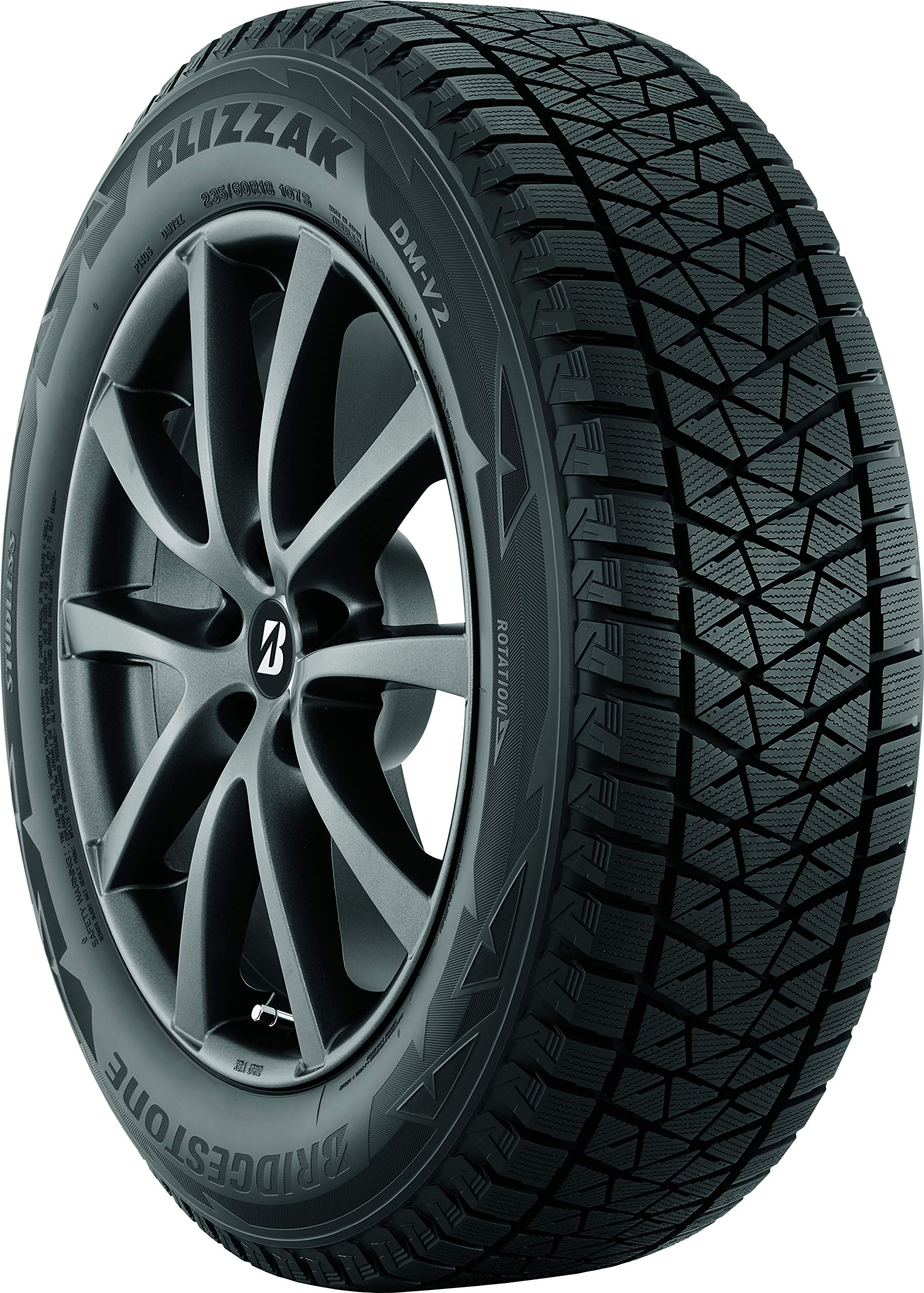
The Blizzak name carries weight for a reason — its Multi-Cell compound literally pushes water off ice for grip.
Bridgestone’s Blizzak line has been the benchmark in winter tires for years, and the DM-V2 is the SUV-specific version that justifies the reputation. It uses a next-generation Multi-Cell compound that contains microscopic bite particles, designed to absorb the thin water layer on ice and create friction where non-winter tires slide. The tread pattern features 15 percent more block edges than the previous version, increasing its snow-shearing force. At 29.1 pounds and a 28.5-inch diameter, this is a substantial tire built for larger crossovers and SUVs — the load capacity matches the Accelera at 1,874 pounds, but with a softer SL rating.
Owners in Northeast Ohio and the Rocky Mountains report it transforms icy driveways into easy navigation, and one owner is on their second set — a vote of confidence that matters. The rubber is very soft — that is what gives it the ice grip — so it is not suitable for warm-weather driving. Some reviewers point out the manufacture date code can be older stock (one reported a 2021 date), so check the sidewall stamp before mounting. Despite that, the owner consensus is that few tires match the Blizzak’s composure on glare ice and packed snow.
Why it leads
- Multi-Cell bites into ice by wicking away surface water — real physics, not marketing
- 15% more tread block edges improve grip in snow and slush
- Second-set buyers confirm the long-term value of the premium price
What to watch
- Very soft compound wears quickly on warm, dry roads — do not run these past April
- Some units may ship with older date codes; inspect the DOT stamp on arrival
Get these if: you face a real winter — ice, packed snow, mountain passes — and want the highest-confidence tire for your SUV.
Skip them if: winters in your area are mild or you cannot commit to seasonal tire swaps — the soft compound will wear fast in warmer weather.
8. Yokohama iceGUARD G075 265/50R19

The largest tire here carries 2,337 pounds — built for heavy trucks and large SUVs that face real snow.
The Yokohama iceGUARD G075 is a serious piece of equipment. At 35.2 pounds and with a massive 2,337-pound load capacity (load index 110), it is designed for the heaviest vehicles in this roundup — full-size pickups and three-row SUVs. The directional tread pattern increases contact area on snow, while three-dimensional sipes (the small zigzag cuts in the tread blocks) add stability on ice. The low-heat-generating under-tread compound reduces rolling resistance, which helps fuel economy on long winter drives. Owners in Northern Michigan report excellent performance in heavy snow, with deep tread and good mileage from the set.
Yokohama backs this tire with a standard warranty that includes a 30-day trial satisfaction guarantee, giving you a short window to confirm the fit and feel are right. The maximum pressure is 50 psi, which is higher than typical passenger tires and a sign that this is built for the extra weight of a truck-based platform. The only real consideration is size availability — the 265/50R19 is a relatively large and specific fitment, so make sure your vehicle’s load range requirement matches before ordering.
Built for heavy towing and hauling: the 2337-pound capacity is class-leading here. Keep in mind: confirm your vehicle’s required load index — this is a specific large-size fitment for heavy-duty applications.
Meant for: owners of large SUVs and pickup trucks who need a dedicated winter tire with the load capacity to match their vehicle’s weight.
Not for: compact cars or mid-size crossovers — this tire is physically too large and heavy for most passenger vehicles.
Understanding the Specs
Load Range (SL vs XL)
Standard Load (SL) tires are built for passenger cars and light crossovers. They ride softer and are lighter. Extra Load (XL) tires have a stronger carcass and can handle higher inflation pressure — typically 42 to 44 psi — which supports heavier trucks and SUVs. Check your vehicle’s door-jamb placard for the recommended load range. Using an SL tire on a vehicle that calls for XL can lead to sidewall flex and poor handling in winter conditions.
Three-Peak Mountain Snowflake
This symbol means the tire has passed a specific industry traction test on medium-packed snow. It is not a marketing logo — it is a certification from the USTMA and the Tire and Rubber Association of Canada. Tires without this mark may still work in light snow, but if you face real accumulation or icy slush, look for the snowflake. It is the single best indicator that a tire is built for severe winter service.
FAQ
Can I run non-studded winter tires year-round?
Are non-studded winter tires quieter than studded tires?
How long do non-studded winter tires typically last?
Do I need all four tires or just two?
What does XL mean on a winter tire sidewall?
Will non-studded winter tires fit my existing wheels?
What does the speed rating (H, V, T) mean on a winter tire?
Is the Three-Peak Mountain Snowflake required by law?
Can I use winter tires on a front-wheel-drive car if I have the wrong load range?
How do I store winter tires during the off-season?
Final Thoughts: The Verdict
For most drivers, the best balance of price, weight, and real-world snow traction is the Accelera X Grip Winter 215/65R16 — it handles hills, highways, and heavy snow without breaking your budget. If you want a tire that could last through multiple Minnesota winters, the Cooper Discoverer True North with its documented 60,000-mile tread life is the endurance pick. And for maximum ice confidence in a heavy SUV, the Bridgestone Blizzak DM-V2 is still the standard that others are measured against. Each earns its place; match the strength to your winter reality.
How We Picked
We do not accept paid placement. Every pick is matched to a real buyer and a real use-case; we do not hands-on test units.
Sources & Methodology
Specifications: manufacturer listings and product documentation. Review insights: verified customer reviews, as of July 2026. Pricing: not shown on this page (it changes often); check the current price via the retailer link.
As an Amazon Associate, Trending Car earns from qualifying purchases. This does not affect which products we feature.