
Our readers keep the lights on and my garage snacks stocked. As an Amazon Associate, I earn from qualifying purchases.
Specs are compiled from manufacturer listings and verified buyer reviews and can change over time — please confirm the key details on the product page before buying.
You want a tire that holds the road at 70 mph without emptying your wallet. That means balancing price with wet-grip, cornering confidence, and mileage that lasts more than one season. This guide helps you find the best motorcycle tire prices for your bike, without cutting corners on safety.
I’m Min Islam — the founder and writer behind Trending Car. This guide is built by comparing the manufacturers’ published specifications and the patterns across verified customer reviews, so you get each pick’s real strengths and trade-offs instead of marketing spin.
Here are the models that earn their keep mile after mile, narrowed down by real-world owner feedback so you can get the best prices without settling for less than you need to stay safe in the saddle.
Our Picks at a Glance


How To Choose The Best Motorcycle Tire Prices
Buying a motorcycle tire on a budget isn’t about grabbing the lowest number you see. It is about matching the rubber to your bike’s weight, your riding style, and the weather you ride in. A cheap front tire on a heavy cruiser can feel unstable, and an expensive sport tire on a commuter bike will wear out fast without giving you any benefit.
Match the size code first
Every tire has a code like 130/90-16. The first number is the width in millimeters, the second is the aspect ratio (the height as a percentage of the width), and the last is the rim diameter in inches. Using the wrong size can throw off your speedometer, mess with handling, or rub against the fender. Always check your owner’s manual or the sidewall of your current tire before ordering.
Know your load index
A tire’s load index tells you the maximum weight it can carry safely. For cruisers loaded with a passenger and luggage, a higher index matters a lot. Lighter sportbikes can get away with a lower rating. Picking a tire with too little capacity for your bike can lead to overheating and failure at high speeds or on long trips.
Decide on construction: radial vs bias-ply
Radial tires have cords that run across the tire at a 90-degree angle to the direction of travel, which generally gives better high-speed stability and a cooler running temperature. Bias-ply tires have cords that crisscross at an angle, offering a stiffer sidewall that handles heavy loads well and often costs less. Sport-touring and sport bikes usually use radials, while many cruisers still roll on bias-ply tires.
Quick Comparison
| Model | Best For | Construction | Load Capacity | Speed Rating | Amazon |
|---|---|---|---|---|---|
| Dunlop D402 Front★ Best Overall | Harley Touring | Bias-ply | 783 lb | H | Amazon |
| Kenda KM1Best Value | Sport Touring | Radial | 520 lb | W | Amazon |
| Michelin Pilot Power 2CTTop Performer | Sport / Twisties | Radial | — | H | Amazon |
| Shinko 777 Front | Cruiser / V-Twin | Aramid belted | 908 lb | H | Amazon |
| Dunlop D404 Rear | Budget Cruiser | Radial | 1200 lb | H | Amazon |
| Bridgestone S22 | Street / Wet Grip | Radial | 600 lb | — | Amazon |
| Shinko SR777 HD Rear | Heavy Cruiser | Bias-ply | 908 lb | H | Amazon |
| Continental ContiMotion | All-Round Sport Touring | Steel-belted | 804.7 lb | — | Amazon |
In‑Depth Reviews
1. Dunlop Harley Davidson D402 Front Tire
Our pick — over 4.5★ from 800+ verified ratings; the strongest balance of quality and price.
The official Harley touring tire that riders trust for stability on rain grooves and steel bridges.
This D402 is the tire that Dunlop engineered and tested with Harley-Davidson for touring bikes. It uses a three-ply polyester casing with two fiberglass belts, so you get a stable ride that handles heavy loads. The computer-tune tread profile includes an offset center groove, which helps you stay confident when crossing rain grooves or steel-grated bridges. That groove also reduces cupping, meaning the tire wears more evenly over time.
It carries a load capacity of 783 pounds — strong enough for a fully loaded bagger — and it runs tubeless on a 16-inch rim. The crowd is overwhelmingly positive here, with quality and value for money earning the most praise by a wide margin. Riders consistently call it a perfect fit for Road Kings and Tri-Glide models, and the smooth ride gets a nod in nearly every account. The catch? At 40 PSI maximum pressure, this is a bias-ply tire built for comfort and stability over cornering aggression — not the pick for canyon carving.
Harley long hauler: This is the tire to reach for if you ride a Harley touring model and want the official factory-approved rubber that handles heavy loads and highway rain grooves without drama.
cruiser comfort: you own a Harley touring bike and want the tire that was built to complement its suspension and weight from the factory.
corner carving: you ride a non-Harley cruiser or a sportbike — this is a vehicle-specific fit that won’t make sense for other platforms.
2. Kenda KM1 120/70ZR17 Sport Touring Motorcycle Tire
A sport-touring radial that punches way above its price tag for commuters and weekend riders.
The Kenda KM1 delivers all-weather grip and even wear through a newly designed tread pattern and a rubber compound that heats up quickly from cold. Its 4-ply radial construction gives it strength for year-round riding, and the tune apex geometry keeps high-speed stability balanced with agile handling. The load capacity is 520 pounds, and it handles a maximum pressure of 58 PSI.
Buyers often call it the best bang for the buck they have ever seen. As one owner with a 140-mile commute put it, the rear lasts around 8,000 miles with half tread remaining at 4,000 miles. Quality and value for money are the two most-discussed positives here, and grip gets plenty of praise — it holds strong in both wet and dry conditions. The trade-off: the sidewalls are stiff, so DIY installation takes some muscle and you may need 40 PSI to seat the beads.
budget commuter: For riders logging real miles every day who want a tire that lasts without costing a fortune, this is the smart buy.
daily rider: your bike takes a 17-inch rear and you rack up highway miles — the 8,000-mile rear life reported by owners is tough to top at this level.
track days: you plan to install it yourself and prefer a tire that beads up easily — these stiff sidewalls can fight back.
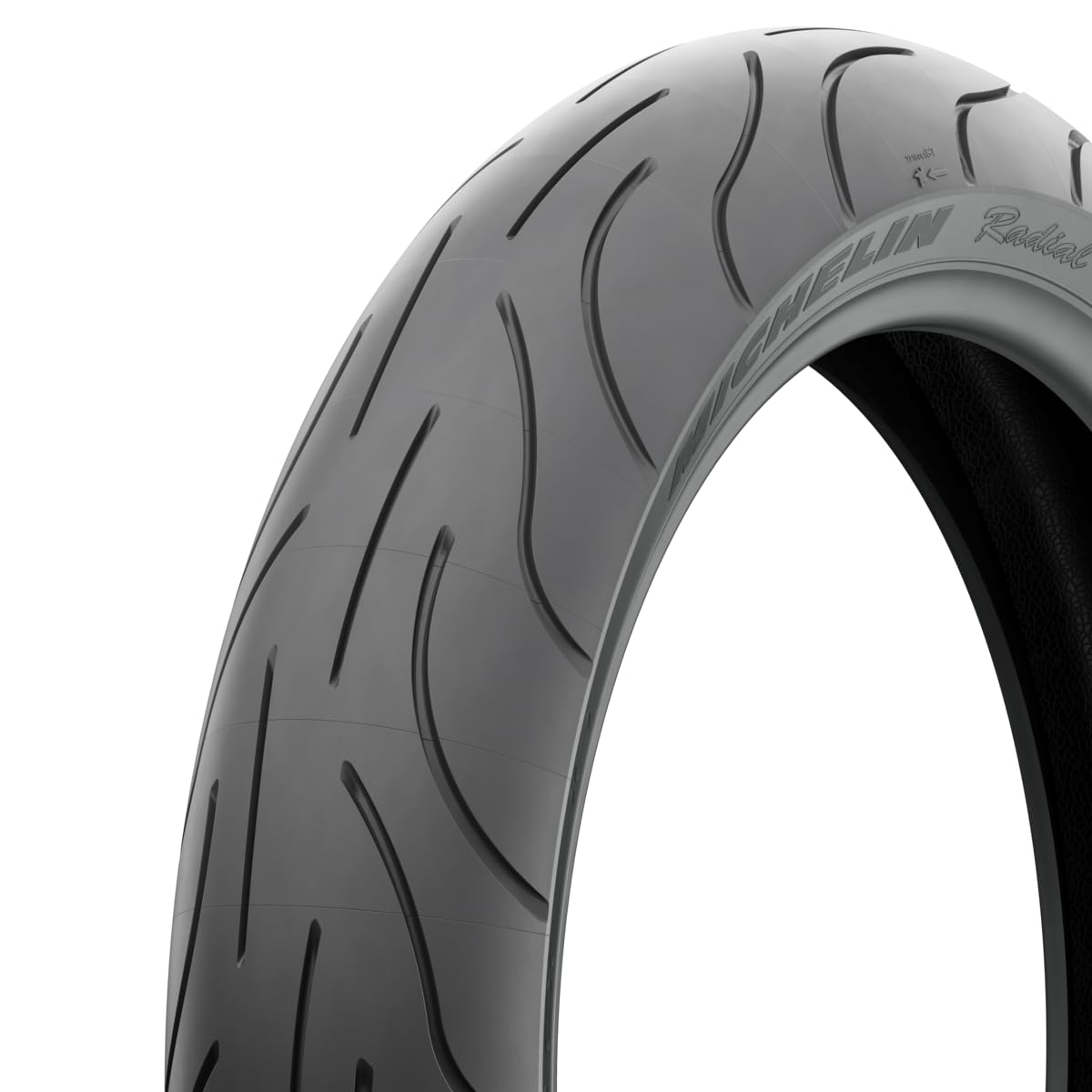
3. Michelin Pilot Power 2CT Motorcycle Tire
The street-focused dual-compound that leans hard and lasts long without sacrificing confidence.
Michelin’s 2CT Dual-Compound Technology puts a resistant compound in the center for long tread life and a softer compound at the edges for cornering grip. The result is a tire that achieves a maximum lean angle of 51.2 degrees on the road — real performance for sport riders who push through the twisties. It weighs 9.41 pounds and is built for sporty riding on a wide range of bikes, including sport-tourers like the Triumph Trophy SE.
This tire is well-loved for its quality and grip, with dry traction described as top tier. One rider noted it lasted over 9,000 miles, which is excellent for a tire with sticky edges. The smooth ride was a welcome upgrade for someone replacing an older Dunlop on their Triumph. The honest drawback: because the edges use a softer rubber, they wear faster than the center, and once the sides go, the tire feels different through turns. It is the nature of a dual-compound sport tire.
sticky compound
- Dual-compound center lasts while edges grip — a rider reported 9,000+ miles
- 51.2° lean angle makes it a genuine sport tire for canyon roads
- Top-tier dry grip and confident wet performance straight from the start
short lifespan
- Softer rubber on the sides wears faster than the center — feel changes once edges are gone
- Not built for heavy touring loads or extreme mileage expectations on a heavy bike
sport grip: you ride a sportbike or sport-tourer and want a tire that leans deep into corners while still lasting through the season.
touring miles: you are a commuter on a heavy cruiser — this tire’s edge-focused compound wears too fast for straight-line highway miles.
4. Shinko 777 Front H.D. 100/90-19 Black Wall Motorcycle Tire

A heavy-duty front for V-twins that plants the wheel with 908 pounds of load capacity.
This is the Shinko 777 in its Heavy Duty version — a 100/90-19 front tire with a reinforced carcass that gives it a planted, stable feel on cruiser motorcycles. It uses aramid belted construction (a lightweight, strong synthetic fiber) for strength, and the tread design includes functional siping — those small slits in the rubber — along with grooves for better water evacuation. Owners say it corners well, grips on wet roads, and runs smooth on the highway, exactly as one buyer summed it up: “great all around.”
Value for money and general performance get strong praise. It carries a huge 908-pound load capacity — that is a 75% higher capacity than the Kenda KM1’s 520 pounds — so it is built for heavy metric cruisers. The maximum pressure is 61 PSI, well above the 40 PSI of the Dunlop D402. There is a mixed note around durability and wobble — a few riders mention rear wheel instability on certain applications, so proper balancing and matching this tire with a compatible rear partner matters.
heavy duty: If you ride a heavy V-twin or metric cruiser and need a front tire that can handle big loads at highway speeds, this is a solid, well-priced choice.
bagger support: your bike takes a 19-inch front and you want a heavy-duty aramid-belted tire that carries 908 pounds with confidence.
lightweight: you are a sport rider — this is a bias-ply cruiser tire, not built for high lean angles or aggressive cornering.
5. Bridgestone Battlax Hypersport S22 Motorcycle Tire
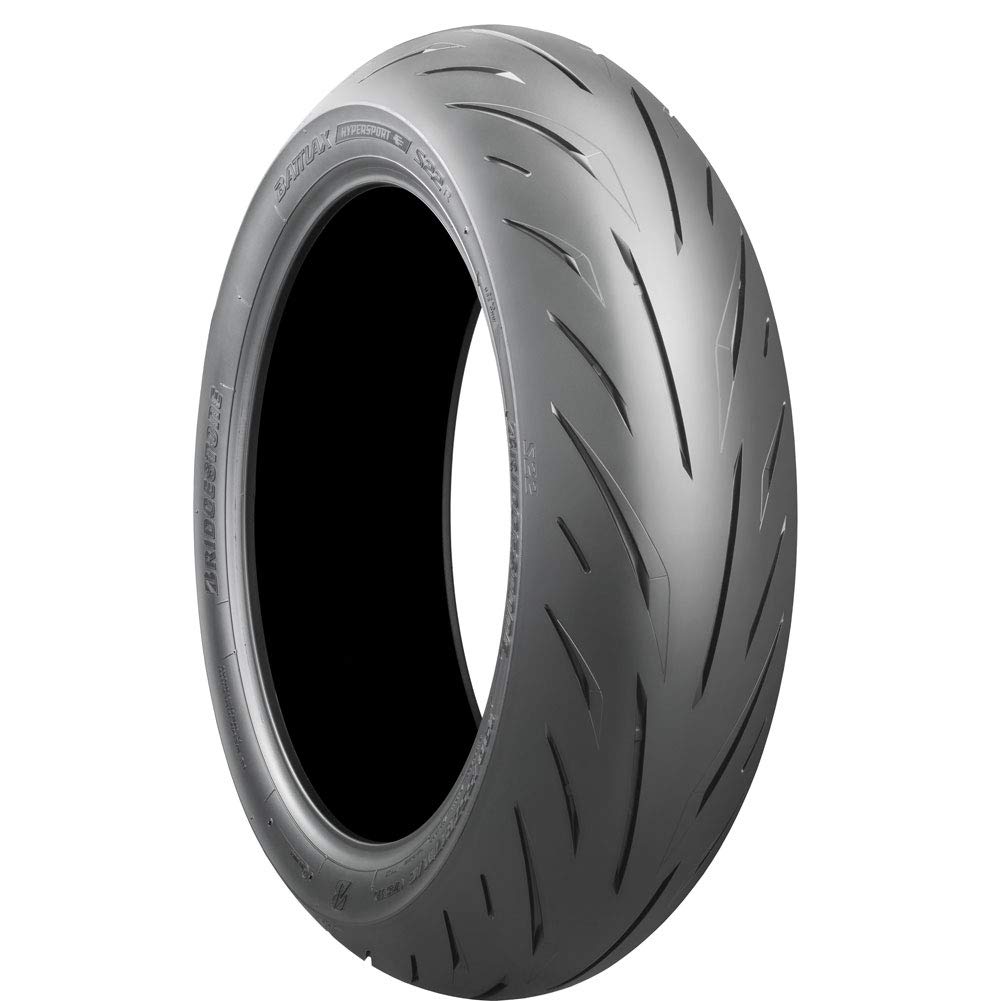
Bridgestone’s premier street sport tire that sticks in the wet like a street-legal slick in the dry.
The Battlax Hypersport S22 uses fine-grain silica in the rear compound to improve wet grip, along with a redesigned front and rear pattern that boosts water evacuation. It is Bridgestone’s top tire for modern street sport bikes, and the increased pattern rigidity gives you sharper handling response. The load capacity is 600 pounds.
Riders call it the best wet-weather street tire they have used — and it is genuinely impressive in the dry too, with owners comparing it favorably to Pirelli Rosso tires on a Ducati Panigale. It warms up fast even in cold conditions around 50°F and holds strong at over 160 mph. Quality and grip are the top two aspects by far. Durability does get a mixed note: some riders report about 5,000 miles on the rear, which is normal for a high-grip street sport tire.
rain traction: If you ride a modern sportbike in a rainy climate and still want tire-shredding dry grip when the sun comes out, the S22 is your tire.
wet safety: you want the absolute best street tire for wet conditions without sacrificing dry cornering performance.
dry speed: your budget is tight or you ride a heavy touring cruiser — this is a sport tire with a shorter lifespan.
6. Shinko SR777 HD Black Wall Bias Rear Tire – 150/80B16 77H

The heavy-duty rear for cruisers that carries 908 pounds and rides smooth over expansion joints.
This is the Shinko SR777 HD, purpose-built for heavy cruiser machines carrying passengers and luggage. Its 4-ply rated carcass uses aramid belting (a synthetic fiber that adds strength without adding much weight) to handle the stress of long-distance touring. The H-rating means it is safe up to 130 mph, and the 150/80-16 size fits many V-twin and metric cruiser models. Owners consistently say the ride is notably smooth — one rider mentioned they do not even feel freeway expansion joints, and the grip on curves surprises people who bought it on a budget.
Quality and value for money are the biggest praise points here. Ride quality also stands out with 34 mentions, which is high for a rear cruiser tire. Durability and grip get solid positive marks too. The mixed note centers on stability: some buyers report a rear wheel wobble, so matching this tire carefully with a compatible front partner and getting it professionally balanced is wise. It comes from a manufacturer some riders are hesitant about, but those who try it often end up recommending it.
high mileage: For cruiser owners who load up for long weekends, this Shinko rear delivers big load capacity, a smooth ride, and an H-speed rating at a very approachable price.
road trips: you ride a heavy cruiser or bagger and want a rear tire that soaks up freeway seams and holds 908 pounds at 130 mph.
aggressive leans: you are a sport-touring rider who needs a radial — this is a bias-ply with a construction suited for straight-line stability, not cornering speed.
7. Dunlop D404 Rear 130/90-16 67H
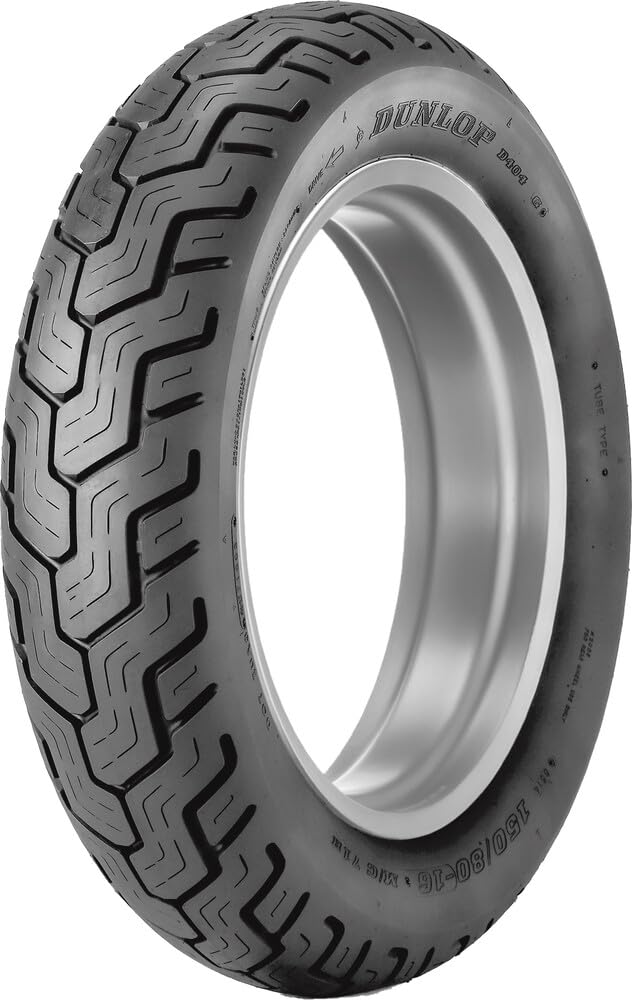
The go-to budget rear for Sportsters and cruisers that delivers surprising grip for the money.
The Dunlop D404 rear is a universal-fit tire that works on a wide range of cruiser motorcycles, and it is a popular choice for older Harley Sportsters. It uses a bias-ply construction (the cords cross at an angle for a stiffer sidewall) that delivers a smooth ride, and the tread compound is tuned for a balance of mileage and grip. The tread pattern itself helps push water out from under the contact patch for better wet-road confidence.
Riders appreciate the value and performance for the price — one Sportster owner called the grip “amazing” and bought a second one. It is known to run well at higher speeds, with a buyer noting it holds steady at 80 mph on a 1991 Sportster. Quality is the top-mentioned positive. The honest reality is that the rubber is on the softer side, so wear comes faster than on a harder touring compound. One rider with a Sportster 1200 Custom reported about 4,500 miles of riding before showing visible wear. That is the trade-off for the grip this tire provides at this level.
Sportster fit: If you own a Harley Sportster or a light cruiser and want an affordable rear tire with genuinely good grip, the D404 is a proven choice.
cruiser stock: you need a reliable 130/90-16 rear for your cruiser and value grip over extreme longevity.
wide tires: you tour thousands of miles every season and need a harder compound that lasts longer — this soft rubber wears faster on long hauls.
8. Continental ContiMotion 120/70ZR17 Front and 180/55ZR17 Rear (2 Pack)
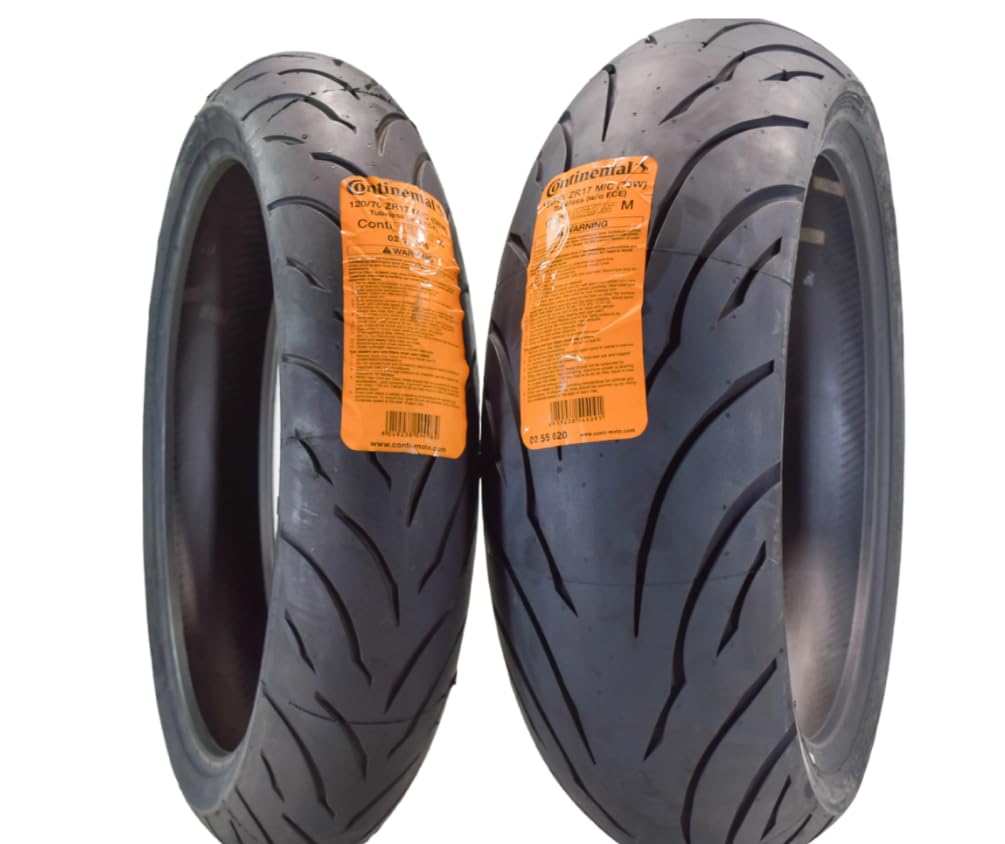
The all-season radial set that hits the balance between entry-level price and sport touring capability.
This Continental ContiMotion two-pack gives you a matched front and rear set — specifically a 120/70ZR17 front and a 180/55ZR17 rear — so you don’t have to hunt for a matching pair. It is steel-belted radial construction with formulated polymers in the compound designed to deliver a strong cost-to-mileage value. The load capacity is 804.7 pounds per tire, and the maximum pressure is 42 PSI. It is ideal for entry-level riders and experienced veterans who just want reliable feedback on dry or wet roads without overspending.
Owners are vocal about the value here — it is among the most-discussed positives by a large margin. Grip also gets frequent praise, with a buyer noting the tire hugs the road “like a glove” even at 145 mph. The ride quality is smooth, and the tires handle corners and wet roads with confidence. The recurring honest note: the rear wears faster than some expect, especially on a 600-pound sportbike under aggressive throttle. One rider chalked it up to “operator enjoyment” — fair when you are having fun.
balanced pair
- Matched front-and-rear set simplifies buying — no guessing about compatibility
- Steel-belted radial gives predictable handling on dry and wet pavement
- Owners mention confident grip at speeds up to 145 mph
moderate grip
- Rear tire wear is faster than touring-focused compounds — heavy bikes and aggressive throttle accelerate it
- Not designed for extreme lean angles or track-day abuse
all-round set: you want a complete front-rear set for your 17-inch sportbike or sport-tourer and value predictable all-season performance at a fair price.
race track: you need a rear tire that lasts 8,000+ miles — the ContiMotion’s soft compound gives grip first, longevity second.
Understanding the Specs
Load Capacity & Load Index
Load capacity is the maximum weight a tire can safely carry, measured in pounds. The load index is a number that maps to that capacity — a higher index means a higher weight limit. For example, a tire with a load index of 77 can carry 908 pounds, while one rated at 58 carries 520 pounds. If you ride a heavy cruiser with a passenger and luggage, a higher load index is not optional — it is a safety requirement. A tire overloaded at highway speeds can overheat and fail.
Speed Rating (H, W, etc.)
Speed rating is a letter on the sidewall that tells you the maximum speed the tire is built to handle safely. An H rating is certified for up to 130 mph, while a W rating goes up to 168 mph. Picking a tire with a speed rating below what your bike can reach is dangerous — the tire may not handle the heat and stress at high speeds. For most street riders, H or V-rated tires offer more than enough headroom without pushing into race-tier pricing.
Bias-Ply vs Radial Construction
Bias-ply tires have layers of fabric cord laid at alternating angles (usually 30-45 degrees) across the tire. This gives a stiffer sidewall that handles heavy loads well and tends to cost less. Radial tires have cord layers running straight across from bead to bead at 90 degrees, which allows the sidewall and tread to flex independently — giving better high-speed stability, cooler running temperatures, and longer tread life on sportbikes. Most modern sport and sport-touring bikes use radials, while many cruisers still use bias-ply tires.
Tubeless vs Tube-Type
A tubeless tire seals directly against the rim and does not require an inner tube. The D402, Shinko SR777, and most modern radials are tubeless. Tube-type tires (or tires mounted on tube-type rims) need an inner tube to hold air. Running a tubeless tire on a tube-type rim without a proper tube can cause the bead to slip. Always check whether your rims are designed for tubeless or tube-type mounting before buying.
FAQ
What does 130/90-16 mean on a motorcycle tire?
Can I put a radial tire on a bike that came with bias-ply tires?
How do I know my motorcycle tire’s maximum load?
What does the H in “67H” stand for?
Is a higher load index always better?
How often should I replace my motorcycle tires?
What is siping on a motorcycle tire?
Can I install a motorcycle tire myself?
What is the difference between aramid belted and steel belted tires?
Should I replace both front and rear tires at the same time?
Final Thoughts: The Verdict
For most riders, the motorcycle tire prices equation depends on the Kenda KM1 because it delivers strong all-weather grip, a proven 8,000-mile rear life, and 4-ply radial construction at a price that competes with budget bias-ply options. If you need maximum load capacity for a heavy cruiser, the Shinko 777 Front carries 908 pounds on aramid belting and leaves money left over. And for sport riders who want a dual-compound tire that leans 51.2 degrees and still gets past 9,000 miles, the Michelin Pilot Power 2CT is the performance pick that actually earns its rating.
How We Picked
We do not accept paid placement. Every pick is matched to a real buyer and a real use-case; we do not hands-on test units.
Sources & Methodology
Specifications: manufacturer listings and product documentation. Review insights: verified customer reviews, as of July 2026. Pricing: not shown on this page (it changes often); check the current price via the retailer link.
As an Amazon Associate, Trending Car earns from qualifying purchases. This does not affect which products we feature.