
Our readers keep the lights on and my garage snacks stocked. As an Amazon Associate, I earn from qualifying purchases.
Specs are compiled from manufacturer listings and verified buyer reviews and can change over time — please confirm the key details on the product page before buying.
Choosing a full-face MTB helmet means deciding how much chin protection you are willing to carry up a climb. A half-shell leaves your jaw exposed on the first rock garden, but a full-face that feels like a cinder block will have you leaving it in the car. The helmets here solve that trade-off differently — some are ultralight fixed shells, some are convertibles, and some pack DH-level safety into a ventilated package. The right full-face balances weight, ventilation, and rotational-impact protection for your specific riding style.
I’m Min Islam — the founder and writer behind Trending Car. This guide is built by comparing the manufacturers’ published specifications and the patterns across verified customer reviews, so you get each pick’s real strengths and trade-offs instead of marketing spin.
The crowd favorite here is the Bell Super DH MIPS — a convertible design so well-loved that buyers report best full-face mtb helmet confidence after thousands of miles on the trail. Its flexibility lets you ride open on the climb and snap the chin bar on for the descent without needing a second helmet.
Our Picks at a Glance


How To Choose The Best Full-Face MTB Helmet
Full-face helmets used to be a simple choice — you either pedaled up in an open-face or you wore a heavy moto-style bucket on the lift. Modern designs have blurred the line completely. You now have convertibles that shed the chin bar for climbing, ultra-light fixed shells that breathe like a half-shell, and safety systems that handle rotational impacts differently than standard EPS foam. Understanding the trade-offs in weight, ventilation, certification, and fit will steer you to the right match.
Convertible vs Fixed Chin Bar
A convertible helmet lets you ride without the chin guard on climbs and snap it on before descents — no tools needed. That means one helmet does double duty, but the attachment mechanism adds a small weight and complexity penalty. Fixed full-face helmets are typically lighter and have no moving parts to fail, but you wear the chin bar all day. If you pedal for hours to earn your descents, a convertible like the Bell Super DH MIPS or Leatt Enduro 2.0 lets you climb without the chin bar and descend with full protection.. If you mostly ride bike parks or shuttles, a fixed shell such as the iXS Trigger FF saves weight and eliminates fiddling.
Weight and Ventilation
Every extra gram on your head amplifies neck fatigue on a long day. The lightest full-face helmets in this roundup sit around 595-640 grams, which is close to a heavy half-shell. Heavier options push past 900 grams — fine for chairlifts but tiring on all-day pedals. Ventilation is measured partly by vent count but more by channel design. A helmet with 20+ well-placed vents and deep internal channels will keep you cool at low speeds, while a helmet with fewer, smaller vents may force you to slow down on hot climbs. The Smith Mainline uses 21 fixed vents paired with a Koroyd honeycomb layer for both airflow and impact absorption, while the Bell Sanction uses 15 vents for high-velocity flow tune for BMX-style effort.
Rotational Impact Systems (MIPS, 360 Turbine, Koroyd)
A standard foam liner handles straight-on hits, but angled impacts create rotational forces on the brain. MIPS (Multi-directional Impact Protection System) is a low-friction layer inside the helmet that allows your head to slide a few millimeters relative to the shell, redirecting that rotational energy. The Leatt Enduro 2.0 takes a different approach with 360 Turbine Technology — small rubber-like discs that compress and twist under load. The Smith Mainline uses Koroyd, a honeycomb of welded tubes that crumple on impact while keeping ventilation channels open. All three reduce rotational risk, but they affect weight, noise, and fit differently — MIPS can be slightly noisier inside the shell, while Koroyd keeps the helmet exceptionally well-ventilated.
Certification Standards
Not all full-face helmets are certified for downhill riding. CPSC is the baseline US standard for bicycle helmets. ASTM F1952 is the downhill-specific certification that tests the chin bar and shell at higher impact forces. CE EN1078 is the European equivalent for bicycle helmets. A helmet with only CPSC certification is fine for light trail riding with a chin bar, but for bike park laps and enduro racing, look for the ASTM F1952 mark. The iXS Trigger FF, Smith Mainline, Troy Lee Designs Stage, and Bell Super DH MIPS all carry downhill certification. Helmets like the Bell Sanction are certified to CPSC and EN1078 but not ASTM F1952, which matches their intended BMX and dirt-jump use.
Fit Adjustability and Padding
A full-face helmet must fit your head circumference snugly and your face shape correctly — loose cheek pads mean the chin bar can shift in a crash. Most premium helmets ship with multiple thicknesses of cheek pads (often 2-3 sets) and crown liners so you can dial in the fit. A rear dial system (like the Ergo-Fit Ultra on the iXS or Float Fit on the Bell Super DH) lets you tighten or loosen the cradle around your head in seconds. The geometry of the chin bar matters too: some tapers in at the bottom and can feel tight going over your head, as a few owners noted about the Leatt Enduro 2.0. If you wear goggles, look for a goggle strap channel and a visor that pivots to accommodate them — both the OutdoorMaster Rhino and the Troy Lee Designs Stage have these features built in.
Quick Comparison
| Model | Best For | Weight | Vents | Safety System | Amazon |
|---|---|---|---|---|---|
| Bell Super DH MIPS★ Best Overall | Convertible Trail/Enduro | 16 oz | 19 vents + 4 chin | Flex Spherical+MIPS | Amazon |
| Troy Lee Designs StagePremium Pick | Lighter DH-Enduro Hybrid | ~690g | 25 vents | MIPS + EPP/EPS | Amazon |
| iXS Trigger FF MIPSFeatherweight Champ | Featherweight DH Fixed | ~595g | Internal channels | MIPS + EPS | Amazon |
| Smith Mainline | DH Certified with Koroyd | 3.2 lb | 21 vents | Koroyd + MIPS | Amazon |
| Leatt Enduro 2.0 | Convertible with 360 Turbine | 640g | 20 vents | 360 Turbine + EPS | Amazon |
| Bell Sanction | BMX / Budget Dirt Jump | 850g | 15 vents | EPS hardshell | Amazon |
| OutdoorMaster Rhino | Budget Full-Face / First Buy | ~750g | 27 vents | EPP collar + EPS | Amazon |
| DEMON UNITED Podium MIPS | Value Full-Face with MIPS | 2 lb 2 oz | 13 vents | MIPS + EPS | Amazon |
| Demon United FR Link | Convertible on a Budget | 1.8 lb (816g) | Multiple vents | EPS with chin guard | Amazon |
In‑Depth Reviews
1. Bell Super DH MIPS
Our pick — over 4.5★ from 650+ verified ratings; the strongest balance of quality and price.
The convertible that survives five thousand miles and still wants another lap.
This is the helmet owners reach for when they need a half-shell for a twelve-mile climb and a downhill-certified full-face for the rocky chute at the top. The chin bar snaps on without tools, and the Flex Spherical+MIPS system tackles both high-speed and low-speed rotational impacts while letting air flow through the 19 brow and chin-bar vents. The X-Static padding woven with real silver fibers dries fast and resists odor, and the Sweat Guide pad routes moisture away from your eyewear so goggles stay fog-free.
Buyers call this the best MTB helmet period, reporting it is “durable after 5,000+ miles.” The chin bar can require a bit of finagling to reattach perfectly, and replacement pads are harder to find than on some competitors. Quality is the most-discussed strength, mentioned more than 80 times by owners. The fit gets mixed feedback — some find the cheek pads snug, which is intentional for security but not everyone’s preference.
At 16 ounces, it is noticeably heavier than the 595g iXS Trigger FF, but that weight buys you the flexibility of two helmets in one. The Fidlock magnetic buckle is glove-friendly, the breakaway camera mount is integrated, and the Float Fit DH dial makes on-the-fly adjustment simple.
What Wins People Over
- Convertible DH certification — climb without the chin bar, descend with it
- Flex Spherical+MIPS handles rotational and straight-on impacts simultaneously
- Owners praise the quality above everything else, citing durability across thousands of miles
- Fidlock magnetic buckle is easy to operate with gloves on
The Trade-Offs
- Chin bar reattachment takes practice; one owner describes it as requiring “finagling”
- Replacement padding is not as widely available as on more mainstream models
- Heavier than dedicated fixed-shell full-face helmets in the same price tier
Reach for this if: you pedal up mountains and want one helmet that does trail and enduro duty without compromising downhill certification.
Think twice if: you prioritize the absolute lightest weight possible and rarely remove the chin bar — the iXS Trigger FF is about 400 grams lighter.
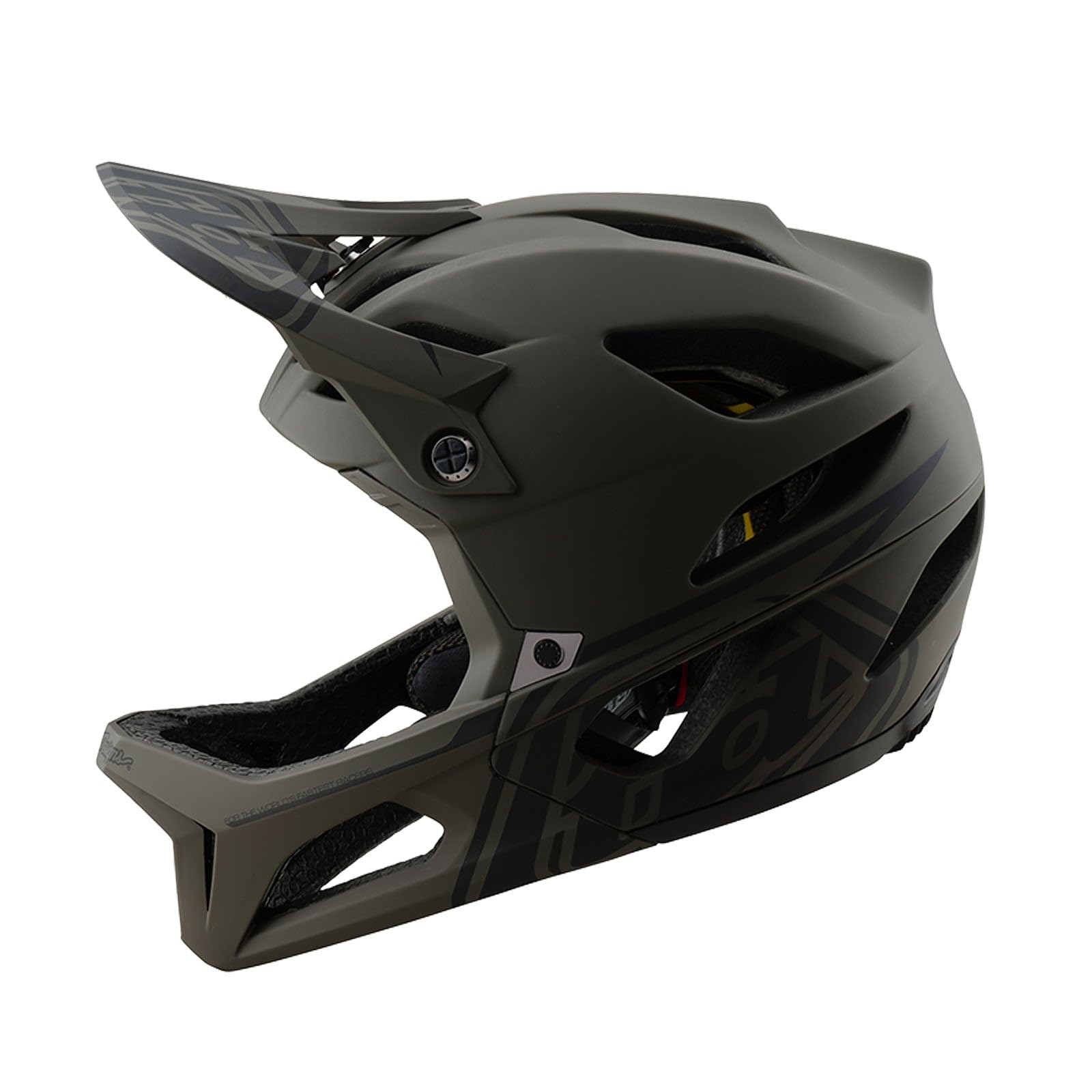
2. Troy Lee Designs Stage MIPS
A downhill-certified featherweight that breathes like it is not even there.
At roughly 690 grams with a full shell and chin bar, the Stage is within striking distance of many half-shell weights while carrying ASTM F1952 downhill certification. That is because Troy Lee Designs uses a dual-density foam sandwich — EPP for low-speed hits, EPS for high-speed impacts — combined with a MIPS rotational liner. The 25 intake and exhaust ports keep air moving even in Florida-level heat, as owners riding in the South repeatedly note.
The FIDLOCK magnetic buckle is quick and reliable, and the adjustability is generous: the helmet ships with two crown liners, three sets of cheek pads, and two neck rolls so you can tune the fit precisely. The Polyacrylite-injected chin bar uses EXO-Skeleton reinforcement, and the breakaway visor screws reduce injury risk in a roll. Buyers consistently praise the lightweight feel and breathability, with many calling it the most comfortable fit across major brands.
One owner found a minor defect in a cheek pad pin recess, so inspect yours on arrival. The 3-year limited manufacturer warranty provides some confidence for that investment.
Your best bet for: all-day enduro racing and bike park laps where you want DH-level protection without feeling like you are wearing a helmet.
The honest shortfall: the chin bar is fixed, so you cannot strip it for long climbing days — but at this weight, few owners seem to mind.
3. iXS Trigger FF MIPS
The lightest DH-certified full-face on the list, and it pedals like a half-shell.
At approximately 595 grams — the medium weighs in at 624g according to one owner’s scale — the Trigger FF is the lightest helmet here by a clear margin. That is about the weight of a good half-shell. iXS achieves it with a fully integrated EPS liner and chin bar molded as one piece, plus a MIPS layer that uses rubber mount points to avoid the squeaking that some MIPS helmets produce. The Ergo-Fit Ultra system gives you both vertical and circumference dial adjustment, and the magnetic closure is easy to operate one-handed.
Owners consistently say this helmet “pedals like a half shell” because the weight is so low that you forget you are in a full-face. Downhill certification (ASTM F1952) means it is legal at any bike park, and the internal ventilation channels are strategically placed to keep air moving. Several owners have crashed in this helmet — one twice — and reported that the chin bar prevented jaw injury and that iXS offers a half-off crash replacement discount.
The main compromise is that the front vents lack mesh screens, so a few owners have taped their own bug mesh over the openings. It is also on the pricier side among fixed-shell full-face options, though owners argue it represents the best value in pro-quality DH helmets.
Best for: riders who value low weight above everything and want a single-purpose DH helmet that does not feel like one.
skip it if: you ride in heavy bug or debris conditions and want built-in vent screens, or if you need a convertible chin bar for long climbs.
4. Smith Mainline Koroyd MIPS

The honeycomb-crushing safety system that lets you breathe while you go big.
Smith pairs a full Koroyd honeycomb layer — hundreds of welded thermoplastic tubes that crumple on impact — with a MIPS (Multi-directional Impact Protection System) rotational liner for two independent layers of energy management. That makes the Mainline among the most thoroughly protected downhill helmets without turning into an oven. The 21 fixed vents and hybrid X-Static/Ionic+ lining wick sweat and control odor, so long days in the saddle stay fresh.
It complies with ASTM F1952 downhill, CPSC, CE EN1078, and NTA8776 e-bike standards. The fit system includes three washable cheek pad kits, two crown liners, and two neck rolls, letting riders from 57-58cm heads (common praise in reviews) dial in a custom feel. The visor adjusts to three positions and integrates with Smith goggles without pressing on the nose.
The main drawbacks are cost — it sits at the premium end of the lineup — and the D-ring buckle, which a few owners find overkill for enduro riding compared to a magnetic Fidlock. The MIPS liner can also be slightly noisier than a helmet without it, as the low-friction layer creates a soft rubbing sound when turning your head.
Reach for this if: you push hard on downhill tracks and want the most advanced impact-absorption technology available in a ventilated package.
Think twice if: a magnetic buckle is a must-have for you, or if you want a convertible design for climbing without the chin bar.
5. Leatt Enduro 2.0
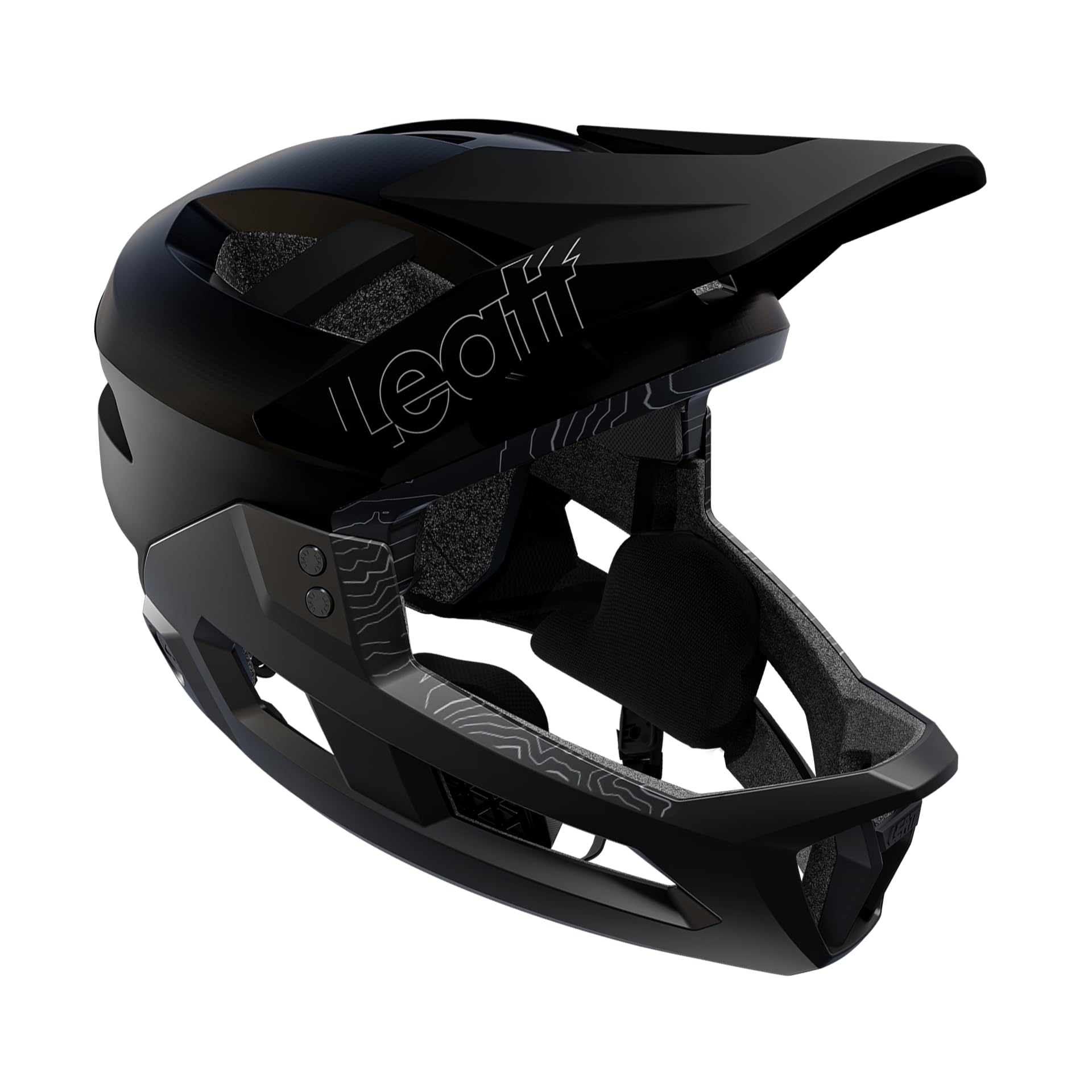
A 640-gram convertible with disc-like turbines that twist on impact instead of slide.
Leatt’s 360 Turbine Technology is a different approach to rotational safety — small rubber discs embedded in the foam compress and rotate to absorb energy, working alongside the in-molded EPS foam. This 3-in-1 system addresses low-speed, high-speed, and rotational forces without the low-friction layer of MIPS. At 640 grams, the Enduro 2.0 is one of the lightest convertible helmets on the market, and the push-button chin bar snaps off in seconds for climbing.
The 20 vents are designed to work effectively even at low speeds, so you stay cool on steep grinds. The moisture-wicking, anti-odor liner is removable and washable, and the Fidlock magnetic closure makes one-handed operation easy. A dedicated sunglasses dock port on the shell gives you a safe place to stow eyewear when you swap to goggles.
A few owners mention that the chin bar tapers inward at the bottom, making it feel tight when pulling the helmet over your head — once on, the fit is snug and secure. The 640-gram weight puts it just behind the iXS Trigger FF, but the convertible flexibility makes it a strong competitor for riders who want both climbing and descending capability in a single helmet.
Best for: enduro racers and trail riders who want a lightweight convertible with a unique rotational safety system.
The real catch: the chin bar’s inward taper can be tight going over the head for some face shapes — test the fit before committing.
6. Bell Sanction
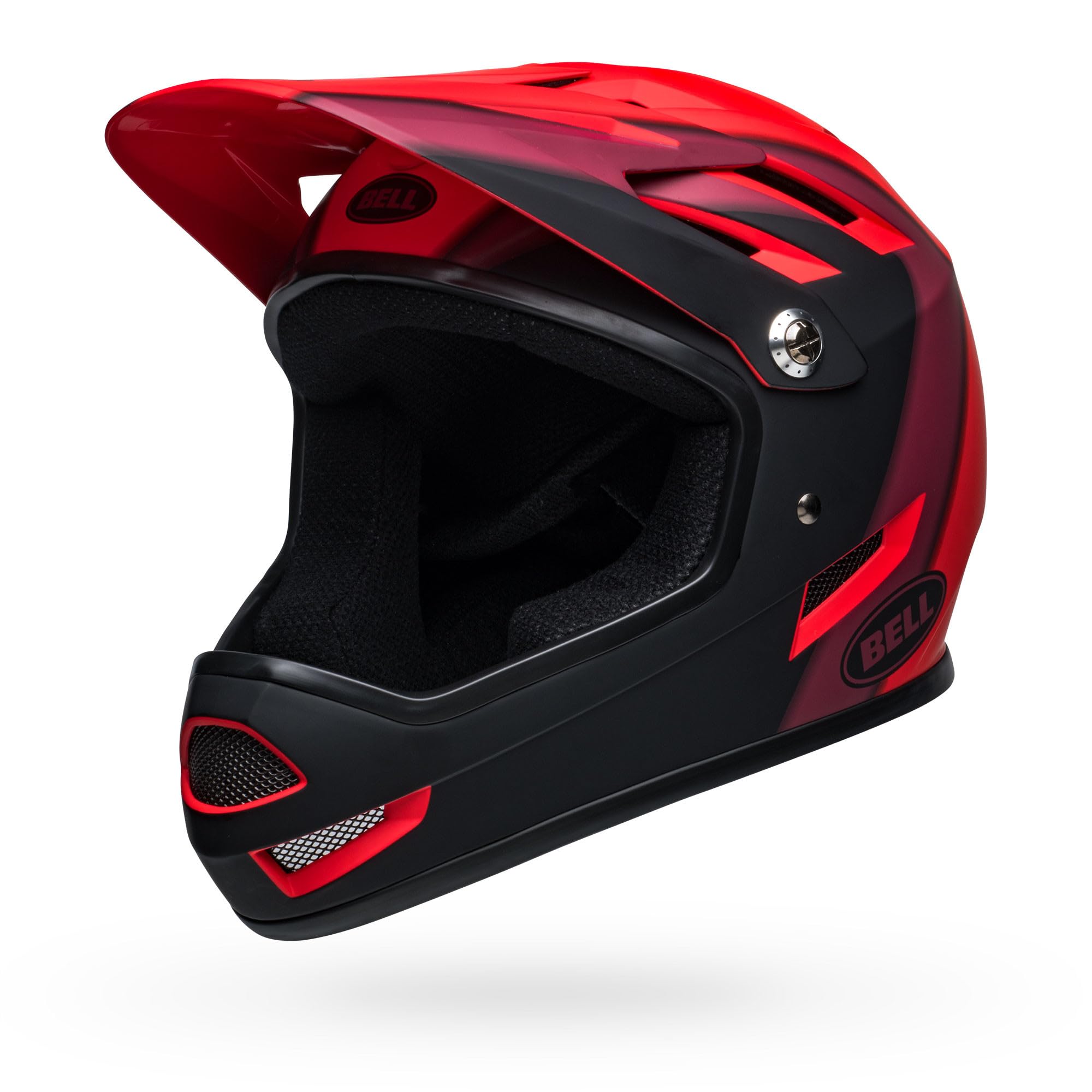
A BMX-bred full-face that keeps the price low and the protection solid.
The Sanction is designed specifically for BMX and dirt jumping, with a low-profile shell that is scaled smaller than a motocross helmet. At 850 grams, it is not the lightest on the list, but the weight is distributed well enough that riders report wearing it comfortably for four-hour sessions. The 15 high-velocity vents are positioned to draw air through during intense, short-duration efforts.
The shell is a standard polycarbonate hardshell with EPS foam liner, and it meets CPSC and CE EN1078 safety standards. It does not carry ASTM F1952 downhill certification, which matches its intended use — this is a peppy track and pump-track helmet, not a bike-park sled. The adjustable 3-screw visor lets you tune the field of view to block sun or roost.
Owners consistently praise the value and comfort, with several noting it fits a wide range of head shapes. Parents of young riders buy the small size for kids who have outgrown youth helmets but still need full-face protection. The fabric liner may show wear after a year of heavy use, but at this price point that trade-off is expected.
Your move: grab this if you ride BMX, pump tracks, or light trails and want a solid full-face without spending premium money.
Look elsewhere if: you need downhill certification for bike park laps or prioritize the absolute lightest weight.
7. OutdoorMaster Rhino
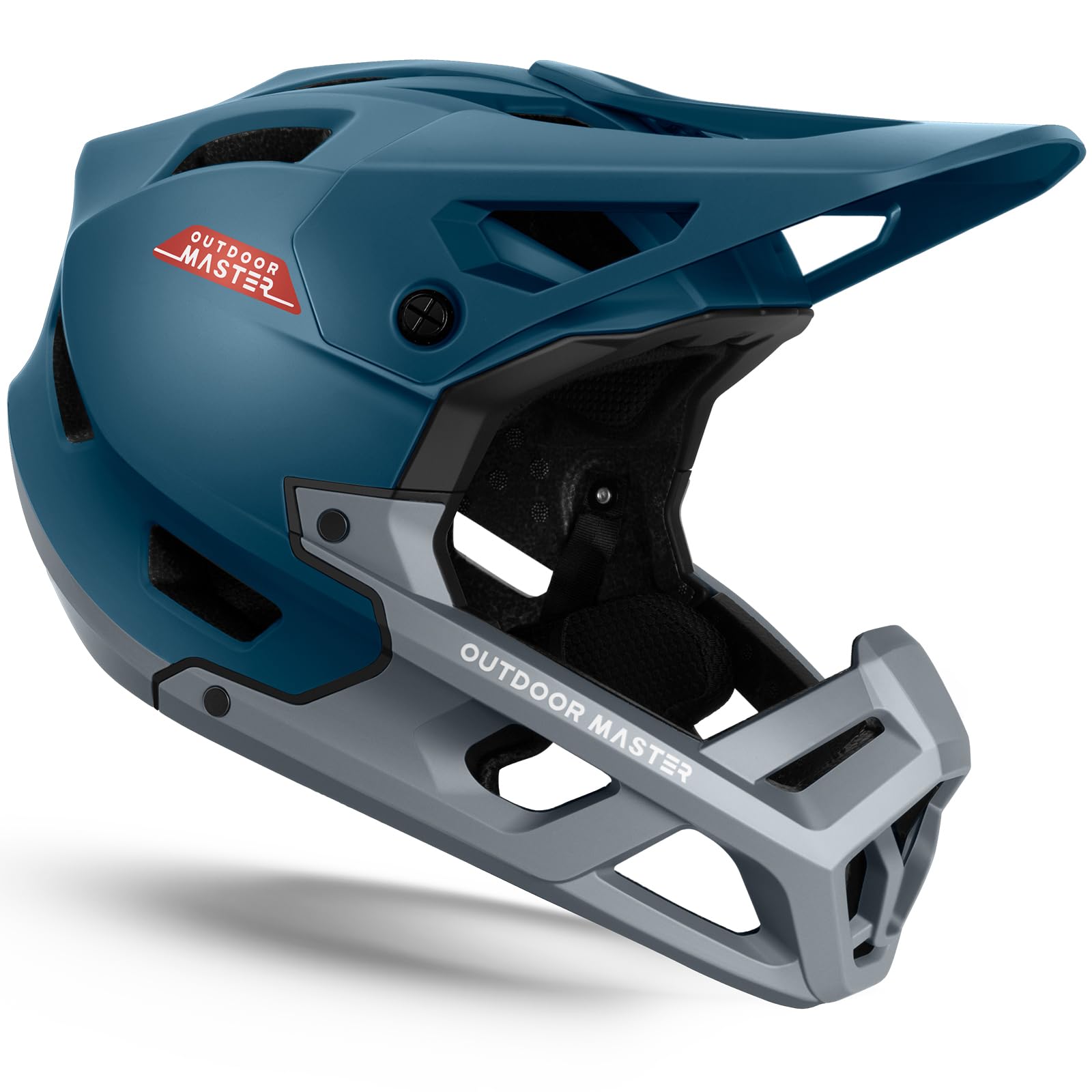
Twenty-seven vents and an EPP collar that makes this budget helmet pedal-worthy.
The Rhino uses a PC+EPP construction — expanded polypropylene can handle multiple impacts better than standard EPS — combined with an EPS collar zone around the collarbone area to improve safety in shoulder strikes. At just under 750 grams, it is lighter than the Bell Sanction and rides close to helmets costing twice as much. The 27 vents are the highest count on this list, and the deep injection-molded channels keep air moving even on slow climbs.
It fits head circumferences from 57-62cm and includes two sets of D-rings of different thicknesses to adjust the strap position. A goggle strap channel keeps eyewear in place, and the pivoting visor rotates out of the way when goggles are stowed. A removable, washable liner makes maintenance easy.
Fit and sizing are the most-discussed aspects — while many find it snug and perfect, a notable number of owners mention that the shell runs small or that the sizing is inaccurate for their head shape. The chin strap only adjusts on one side, which can make centering the buckle a small chore. For the price, the ventilation-to-weight ratio is outstanding, but be prepared to measure your head carefully before ordering.
Reach for this if: you are on a tighter budget and want a lightweight, well-ventilated full-face for trail riding and light downhill.
The fine print: check the sizing chart meticulously — fit inconsistency is the most common owner complaint.
8. DEMON UNITED Podium MIPS

A MIPS-equipped full-face that proves rotational protection does not need a premium price tag.
The Podium brings MIPS into a full-face package at a price point well below most competitors with the same technology. The polycarbonate outer shell and EPS foam liner conform to your head shape, and the 13 airflow vents with mesh inserts keep debris out while letting some air through. It comes with a helmet bag, making storage and transport easy.
Buyers appreciate the snug jawline fit and the sleek look, with several mentioning it saved them from a concussion. The MIPS layer adds confidence for downhill park use, though the fixed chin bar means you wear it all day. The fit is snug enough that some customers note the helmet sliding down slightly during rides, and the visor can obstruct the upper field of view when flipped up.
The main issue is weight and heat — at 2 lb 2 oz (about 924g according to one owner’s scale), it is one of the heavier options here, and the 13 vents struggle to keep up with sustained climbing efforts in hot weather. Owners describe it as “good for DH parks but not trail riding” and note that the cheek pads feel tight initially before breaking in. It is a solid entry-level MIPS option if you mostly ride chairlifts, but the iXS Trigger FF offers a massive weight advantage for not much more investment.
Best for: riders on a strict budget who want MIPS protection for bike park days and are willing to carry a few extra ounces.
pass on it if: you pedal for hours — the weight and limited ventilation will leave you reaching for a different helmet by the second climb.
9. Demon United FR Link

A convertible design at a budget price, but the mechanism asks for patience.
The FR Link gives you a removable chin guard and a cinch-tight rear dial for head-size adjustment at a fraction of the cost of other convertibles. At 1.8 pounds (816 grams), it is lighter than the Podium but heavier than the Leatt Enduro 2.0 and iXS Trigger FF. The single-size shell fits 58-61 cm heads and includes two thicknesses of cheek padding to fine-tune the face fit.
Buyers like the lightweight feel and the well-ventilated design for daily riding. The movable visor and adjustable fit are practical touches, and several owners use it as their main trail helmet with the chin bar on for sketchy descents. The chin guard uses a flip-easy mechanism that is simple to remove but fiddlier to attach while the helmet is on your head — most owners attach it before putting the helmet on.
The durability questions are the real story here. One long-term owner reported that after two years the full-face attachment buttons became ineffective and misaligned, and the sizing band loosens during rides requiring constant readjustment. The ratchet system on the sizing dial has also drawn skepticism about long-term reliability. If you are looking for a low-cost convertible to test whether the format works for you, this is a reasonable entry point, but several owners recommend stepping up to a higher-quality model for the long haul.
Try this if: you want to experiment with a convertible full-face without a big financial commitment.
Plan to upgrade if: you plan to ride hard frequently — the long-term reports suggest the ratchet and chin-guard mechanism may not hold up to consistent abuse.
Understanding the Specs
MIPS vs 360 Turbine vs Koroyd
These three technologies all aim to do the same thing: reduce the rotational force that reaches your brain during an angled impact. MIPS is the most common — a thin plastic liner inside the helmet that lets your head slide a few millimeters relative to the shell. 360 Turbine uses small, compressible rubber discs that twist on impact, which can feel quieter and more integrated inside the helmet. Koroyd is a honeycomb structure of welded thermoplastic tubes that crumple to absorb energy while leaving open channels for ventilation. All three are effective; the differences come down to weight, noise, and how they feel against your head in daily use.
Convertible vs Fixed Chin Bar
A convertible helmet lets you remove the chin bar for climbing, turning a full-face into an open-face helmet. This adds versatility but also adds a potential failure point — the attachment mechanism must be secure enough for downhill impacts but easy enough to operate on the trail. Fixed chin bars are molded as one piece with the shell, making them inherently stronger for a given weight and eliminating any mechanism that could break. Riders who pedal to earn descents generally prefer convertibles; riders who take chairlifts or shuttle up are better served by a lighter fixed-shell model.
FAQ
How tight should a full-face MTB helmet fit?
Can I use a full-face MTB helmet for e-biking or downhill skateboarding?
How often should I replace a full-face mountain bike helmet?
What is the difference between CPSC, ASTM F1952, and CE EN1078 certification?
Do I need a goggle strap channel on a full-face helmet?
Is a convertible full-face helmet as safe as a fixed full-face?
What head shape does a full-face helmet fit best?
How many vents does a good full-face helmet need?
Can I wear glasses under a full-face MTB helmet?
What does the weight of a full-face helmet actually affect on the trail?
Final Thoughts: The Verdict
Across the board, the best full-face mtb helmet is the Bell Super DH MIPS because it gives you a certified downhill full-face and a ventilated trail half-shell in one package, backed by thousands of happy owners and a “Durable after 5,000+ miles” reputation. If you want an even lighter fixed shell that pedals like a half-shell, the iXS Trigger FF MIPS is your pick — it is the lightest DH-certified option here. For a premium convertible with a unique 3-in-1 safety layer, the Leatt Enduro 2.0 offers the 360 Turbine system in a 640-gram package that climbs as well as it descends.
How We Picked
We do not accept paid placement. Every pick is matched to a real buyer and a real use-case; we do not hands-on test units.
Sources & Methodology
Specifications: manufacturer listings and product documentation. Review insights: verified customer reviews, as of July 2026. Pricing: not shown on this page (it changes often); check the current price via the retailer link.
As an Amazon Associate, Trending Car earns from qualifying purchases. This does not affect which products we feature.