
Our readers keep the lights on and my garage snacks stocked. As an Amazon Associate, I earn from qualifying purchases.
Specs are compiled from manufacturer listings and verified buyer reviews and can change over time — please confirm the key details on the product page before buying.
That glowing check engine light is a gamble — it could be a loose gas cap or a transmission disaster. You deserve a straight answer without paying a dealership just to plug in a reader. This guide cuts through the spec-sheet noise for the best engine code reader on the market, from a fix-it-yourself tool to a pro-grade tablet that talks to every computer in your car. Whether you just want to clear a code or plan to watch live sensor data and run bi-directional tests,, the right reader pays for itself the first time you clear a code without a shop visit..
I’m Min Islam — the founder and writer behind Trending Car. This guide is built by comparing the manufacturers’ published specifications and the patterns across verified customer reviews, so you get each pick’s real strengths and trade-offs instead of marketing spin.
You will find the tool that fits your skill level, your car’s model year, and the kind of diagnostics you actually want to do, all inside this roundup of the best engine code reader for everyday drivers and weekend tinkerers.
Our Picks at a Glance


How To Choose The Best Engine Code Reader
Buying your first code reader can feel overwhelming because the price range goes from the cost of a pizza to the cost of a set of tires. Before you pick one, know what you actually need it to do. A basic reader that only scans the engine computer might be all you need for a 15-year-old sedan, but if you own a newer car or want to diagnose why your airbag light is on, you need a tool that talks to those specific systems.
System Coverage: Engine Only or Full Vehicle
The cheapest readers only read the engine (OBD2) computer. That is fine for a check engine light. More expensive tools also connect to your car’s ABS (anti-lock brakes), SRS (airbags), transmission, and other modules. If you are buying for a family car that you plan to keep for years, a reader that covers ABS and SRS saves you a trip to the mechanic every time an unrelated warning light pops up.
Bi-Directional Control vs. Read-Only
A standard reader can only tell you what the car’s computer sees — it reads a code. A bi-directional scanner sends a command back to the vehicle, telling a component (like a fuel pump or cooling fan) to turn on or off. This is how professionals confirm that a part actually failed before they replace it. If you do heavy DIY work, bi-directional control pays for itself by preventing unnecessary part replacements.. If you just want to read and clear codes, a read-only scanner is plenty.
Standalone Handheld vs. Bluetooth Dongle + App
Handheld scanners have their own screen and buttons and work the moment you plug them in. Bluetooth dongles are smaller and use your phone as the display, which gives you a bigger, more colorful screen — but they rely on your phone’s battery and app stability. Neither is better for everyone; a handheld feels more reliable in a dark garage, while a dongle excels for showing live graphing data on a large screen.
Live Data and Graphing
Reading a code is step one. Step two is watching the live data stream (sensor readings like oxygen sensor voltage, fuel trim, and coolant temperature) to see if a sensor is drifting out of range. The best budget readers now show this data as a graph or in real-time numbers, which turns a generic code like “P0171” into a clear picture of a lean fuel mixture and the sensor that is lying to you.
Quick Comparison
| Model | Best For | Screen Size | System Coverage | Special Feature | Amazon |
|---|---|---|---|---|---|
| TOPDON AL400★ Best Overall | Everyday Value | 2.4 Inches | Engine (OBD2) | DTC Lookup Library | Amazon |
| A-Premium AD100Best Value | Budget Intro | 2.8 Inches | Engine (OBD2) | Battery Test | Amazon |
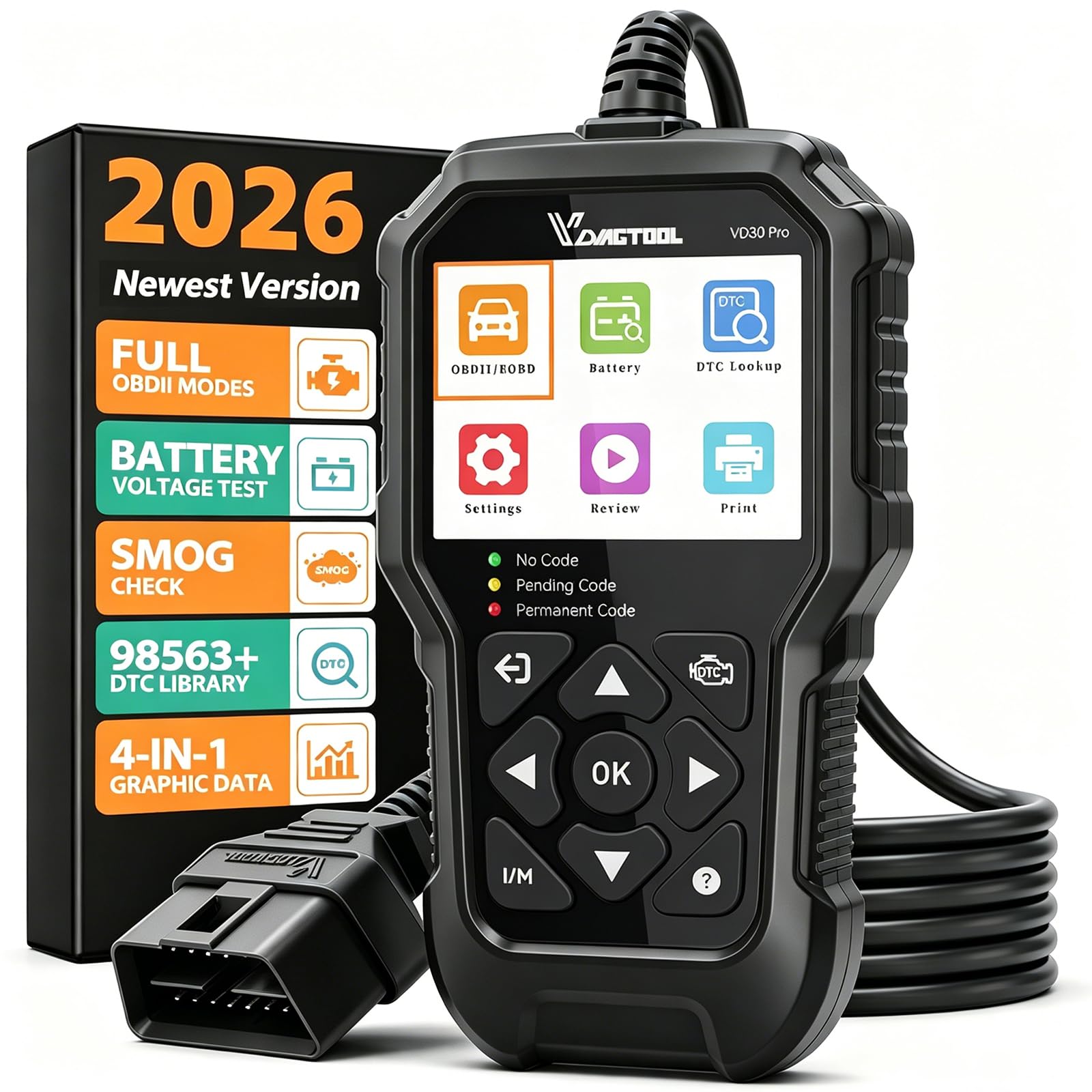
| VDIAGTOOL VD30 ProBest for DIYers | DIY Depth | 2.8 Inches | Engine (OBD2) | 4-in-1 Live Data Graph | Amazon |
| BlueDriver Pro Next Gen | Smartphone Power | Phone Screen | Engine, ABS, SRS, TPMS | VIN-Based Repair Reports | Amazon |
| INNOVA 5310 | ABS & SRS Diagnosis | 2.8 Inches | Engine, ABS, SRS | RepairSolutions2 App | Amazon |
| TOPDON AD600S | Service Resets | 5 Inches | Engine, Trans, ABS, SRS | 9 Reset Functions | Amazon |
| Autel MX808S | Bi-Directional Testing | 6.99 Inches | All Systems | 3,000+ Active Tests | Amazon |
| Autel MK900BT | Pro-Level Wireless | 8 Inches | All Systems | CAN FD & DoIP, 40+ Service | Amazon |
In‑Depth Reviews
1. TOPDON AL400 OBD2 Scanner
Our pick — over 4.5★ from 850+ verified ratings; the strongest balance of quality and price.
The scanner that packs professional feel into a truly budget-friendly body.
This is the crowd favorite for its reliable code reading and clear DTC definitions. — it nails the basics with a confidence that more expensive tools often miss. You get a 2.4-inch color screen (smaller than the A-Premium AD100’s 2.8-inch display, but noticeably brighter in sunlight or a dark garage) that shows you the DTC (Diagnostic Trouble Code) definition right on the device, so you never have to pull out your phone to Google what “P0420” means. The AL400 covers all 10 essential OBD2 functions including reading and clearing codes, viewing freeze frame data, and running I/M readiness tests for smog checks.
What wins people over is how easy it makes the entire process. Plug it in, the menu buttons are well-spaced, and the LED light on the front gives you a green / yellow / red health status before you even read a number — green means no fault codes, red means a permanent trouble code is stored. The tool also supports 7 languages (English, French, German, Spanish, Portuguese, Japanese, and Italian) so it fits multilingual households. Buyers report it “works wonders has saved me lot of money on unnecessary repairs” — a recurring theme in the feedback that keeps coming up.
What owners rave about
- Functionality is the most-discussed aspect — it simply reads and clears codes reliably across modern protocols like KWP2000, ISO9141, J1850, and CAN.
- Ease of use follows closely as the second-most-praised quality; first-time users report clearing lights within seconds of opening the box.
- Free lifetime software updates keep the DTC lookup library current, a feature usually reserved for pricier gear.
The honest trade-off
- It is an engine-only (OBD2) tool — it will not read ABS, SRS, or transmission codes.
- The connection can feel a bit slow compared to higher-end scanners, according to some owner notes on boot-up speed.
Reach for this if: you want a no-nonsense, standalone tool that reads and clears engine codes without needing a phone app or a subscription — and you value a clear LED “health check” at a glance.
Look elsewhere if: you need to diagnose airbag (SRS) or anti-lock brake (ABS) systems; those codes require a tool that communicates with other modules beyond the engine computer.
2. A-Premium AD100 Universal OBD2 Scanner
A surprising number of features for a tool that costs less than a full tank of gas.
The AD100 punches well above its price tag. Its biggest physical advantage over the TOPDON AL400 is the larger 2.8-inch screen (vs 2.4 inches) with a crisp 320×240 native resolution that makes reading data stream values comfortable even in low light. The built-in DTC library has an impressively large 100,000 fault code definitions, which means it rarely leaves you guessing what a code means. On top of basic read/clear functions, this scanner includes an O2 sensor test, EVAP system test, and a battery test — a feature missing from many budget readers. and can tell you if your battery voltage is healthy.
The real selling point, though, is how it works across a very wide model year range: 1996-2024 for US cars, 2000-2024 for European models, and 2008-2024 for Asian makes. The I/M readiness check runs all the key monitors (MIL, fuel system, misfire, catalyst) so you know exactly where you stand before a smog inspection. Owners sum it up as a “first scanner; saved hundreds,” and the feedback across the board praises its accuracy — the accuracy aspect alone has 21 positive mentions, a strong sign that the readings are trustworthy.
One gripe you should know: a handful of owners mention that connectivity on some older or less common vehicles can be hit-or-miss. The scanner also does not support full electric cars or 24V big trucks, so if you own a Tesla or a heavy-duty diesel, skip it.
Best for: the budget-conscious DIYer who wants more than just reading codes — the extra battery test and wide vehicle coverage make this a versatile companion for a multi-car household.
Not for: anyone needing ABS, SRS, or transmission diagnostics; that is beyond this tool’s job description.
3. VDIAGTOOL VD30 Pro Car Code Reader
The tool that turns raw sensor numbers into a picture you can actually understand.
What sets the VD30 Pro apart from the two budget picks above is its live data graphing ability — it can plot 4 data channels on the 2.8-inch screen simultaneously as real-time line graphs. This is huge if you have ever stared at a stream of numbers like “O2S12: 0.455V” and wondered if that is normal. A graph makes deviations jump out immediately. Beyond that, it runs all 10 essential OBD2 tests and adds a Mode 6 onboard monitor test, a component test, and a dedicated one-click I/M readiness hotkey that shows your emission monitor status on a single screen — no submenu hunting.
The VD30 Pro includes a built-in library of over 98,000 DTC definitions (only slightly smaller than the AD100’s 100,000), and it supports data playback, data printing, and a voltage test that catches a dying battery before it leaves you stranded. A long, flexible cable makes it easy to reach the OBD2 port in tight footwell areas, and the device is housed in rugged, drop-resistant plastic. The 3-year warranty (far longer than the 1-year coverage on most competitors) backs up the build quality. Owners consistently describe it as having “professional capabilities at a DIY price.”
What holds it back: Like the previous two, this is an engine-only OBD2 tool. It will not read ABS, SRS, TPMS, or airbag codes, which the manufacturer clearly states. Also, the interface, while intuitive, requires a brief learning curve to master the graphing functions and data playback features.
Reach for this if: you are ready to go beyond basic code reading and want to watch live sensor data in graph form to spot intermittent problems — the graphing alone makes it worth the slight premium over entry-level scanners.
Pass if: you only need to clear a code once a year and never look at live data; the simpler, cheaper picks above will serve you fine.
4. BlueDriver Pro Next Gen OBD2 Scanner
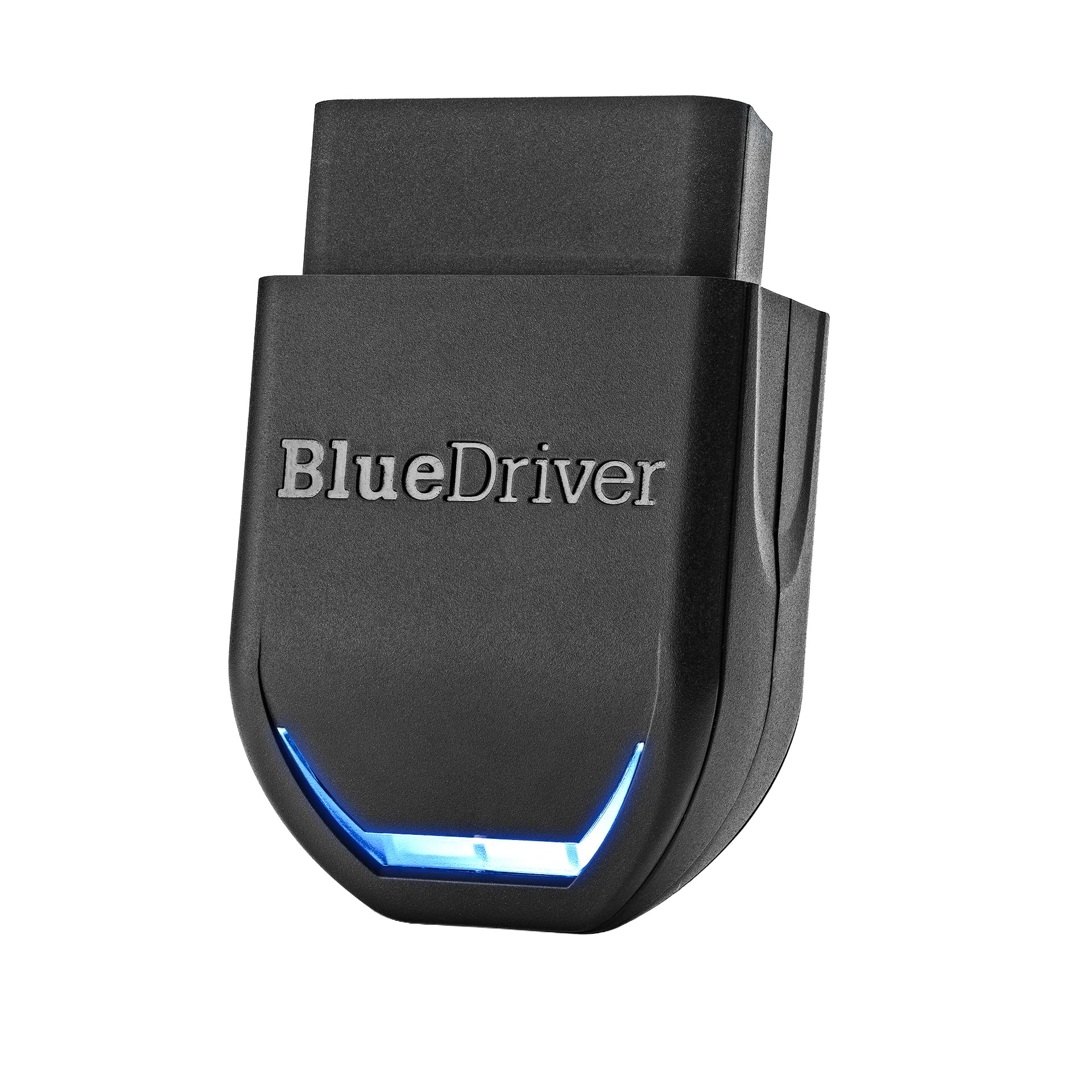
Your phone becomes a pro-level diagnostic tablet with zero monthly fees.
The BlueDriver Pro is the bestselling Bluetooth code reader for a simple reason: it gives you the full diagnostic picture — engine, ABS, SRS (airbags), TPMS (tire pressure), and transmission — through a free app on your phone or tablet. That means you can diagnose a flashing airbag light, a wobbling TPMS sensor, and a check engine code all from one tool. The killer feature is the VIN-matched, technician-verified repair report: you scan your VIN, read the code, and the app shows you what fix actually worked for other owners of the same vehicle, complete with a success-rate chart and links to the parts on Amazon.
It monitors live data as you drive (timing, fuel pressure, throttle position) and exports the history to a CSV file so you can show your mechanic a log of what the car was doing when the code appeared. The dongle supports iOS and Android, and the company does not sell your data or lock features behind a paywall — you own the full tool for the one-time purchase. The BlueDriver also runs smog readiness checks and Mode 6 analysis.
The honest catch: a portion of owners note that initial Bluetooth pairing can be finicky with newer phones (like iPhone 17 Pro Max or certain Android tablets), sometimes requiring an older secondary phone to establish the first connection. Once paired, the tool works reliably, but the initial handshake is the most commonly cited friction point. The dongle is also slightly larger than some competitors and may block adjacent OBD2 ports in tight fuse-panel spaces.
Reach for this if: you want to diagnose multiple systems (engine, ABS, SRS, TPMS) from your phone without paying a subscription, and you value VIN-specific repair data that tells you exactly what fix worked for other drivers.
Think twice if: you prefer a standalone handheld tool that works without a phone, or if you drive a pre-1996 vehicle — this requires an OBD2 port.
5. INNOVA 5310 OBD2 Scanner
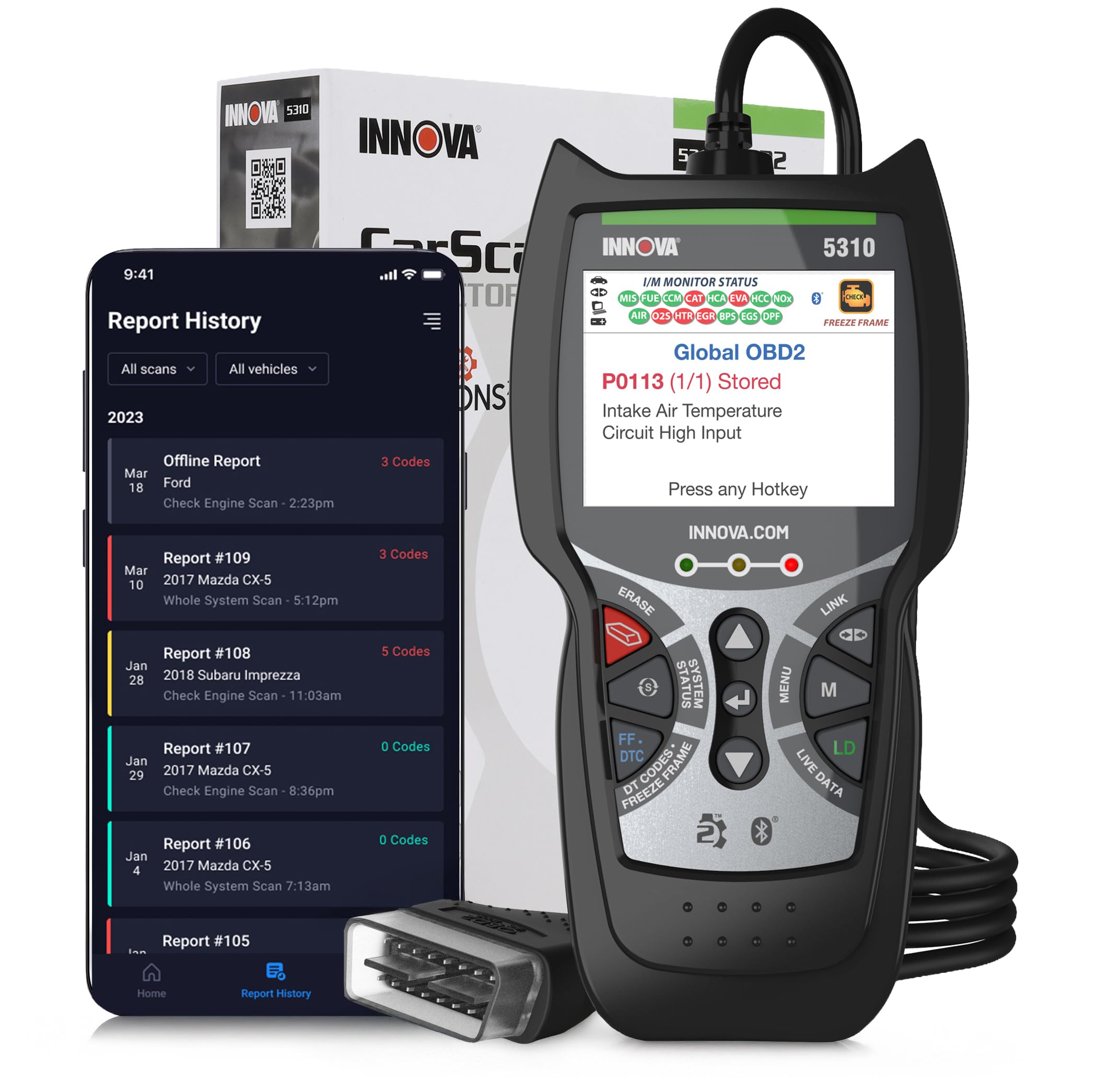
A handheld that digs into ABS and airbag codes while also checking your battery health.
The INNOVA 5310 bridges the gap between basic engine-only readers and the expensive tablet-style tools. It reads and clears codes for the engine, transmission, ABS (anti-lock brakes), and SRS (airbag) systems — so you can finally find out why that airbag warning light is staying on without paying a dealer scanning fee. It also runs a battery and alternator test to determine whether your charging system needs professional attention, plus an oil life monitor and trip cycle procedure to help reset maintenance reminders after a service.
The 2.8-inch screen works with the RepairSolutions2 app (available on iOS and Android) via Bluetooth, which gives you access to verified fixes, live data like RPM and oil temperature, and the ability to purchase the exact repair parts through the app. Owners of a 2012 Nissan Sentra report it reads codes clearly and very helpfully, and it saves money by telling a user exactly what a minor issue was before an expensive dealer visit. The unit supports English, Spanish, and French, making it a versatile choice for multilingual households.
What stands out
- ABS and SRS code reading is genuinely useful — most tools at this price skip those systems entirely.
- Battery and alternator tests give you a quick electrical health check before winter hits.
- Designed and supported in the USA, which matters to buyers who want domestic tech support.
The honest trade-off
- Some owners find the on-device menu system a bit clunky to navigate, with data acquisition being a mixed point in reviews (22 mentions, marked “mixed”).
- The app’s connectivity can be inconsistent for certain vehicle models, so check Innova’s online compatibility tool before buying for a rare car.
Best for: the owner of a 2000s-2010s car who is frustrated by a random airbag or ABS light and wants a dedicated handheld tool (not a phone dongle) that covers those systems.
Not ideal if: you want a simple plug-and-read device with no app pairing — this tool’s full value requires installing and using the RepairSolutions2 app.
6. TOPDON AD600S OBD2 Scanner

The step-up scanner that handles maintenance resets so you stop paying the shop for five-minute jobs.
The AD600S moves into a different class of tool — it runs Android 11 on a 5-inch 1280×720 high-definition display, so it feels like a small tablet dedicated to your car. It diagnoses 4 major systems: engine, transmission, ABS, and SRS. But the real draw is the 9 reset functions: Oil Reset, BMS (battery management system), ABS, SAS (steering angle sensor), EPB (electronic parking brake), DPF (diesel particulate filter), TPMS (tire pressure), throttle, and injector coding. If you do your own oil changes or brake jobs, one of these resets alone pays for the device by letting you clear the service reminder light without a dealer visit..
It supports 67+ global brands and over 10,000 vehicle models, with AutoVIN that automatically reads your vehicle identification number so you skip manual entry. The 32GB of internal storage (a bump up from the base model) keeps software running smoothly, and free lifetime updates come over Wi-Fi, not a tethered USB cable. Owners call it a “great scan tool” that has helped them “find and diagnose my issues” and “save money” on repairs they were previously paying shops to do.
The catch: the AutoVIN feature sometimes struggles to read the VIN on certain models, requiring manual entry. A very small number of owners note that the built-in DTC library and technical service bulletins (TSBs) are harder to navigate than expected, with generic code descriptions rather than model-specific guidance. For a seasoned technician, the interface may feel a step below a Autel.
Reach for this if: you do your own oil changes, brake pad swaps, and tire rotations and want to reset the service lights without driving to a shop — the 9 resets are the headline feature and the main reason to step up from a basic reader.
Hold off if: you only read engine codes and never touch service reminders; the extra complexity and cost are wasted on simpler needs.
7. Autel MaxiCheck MX808S
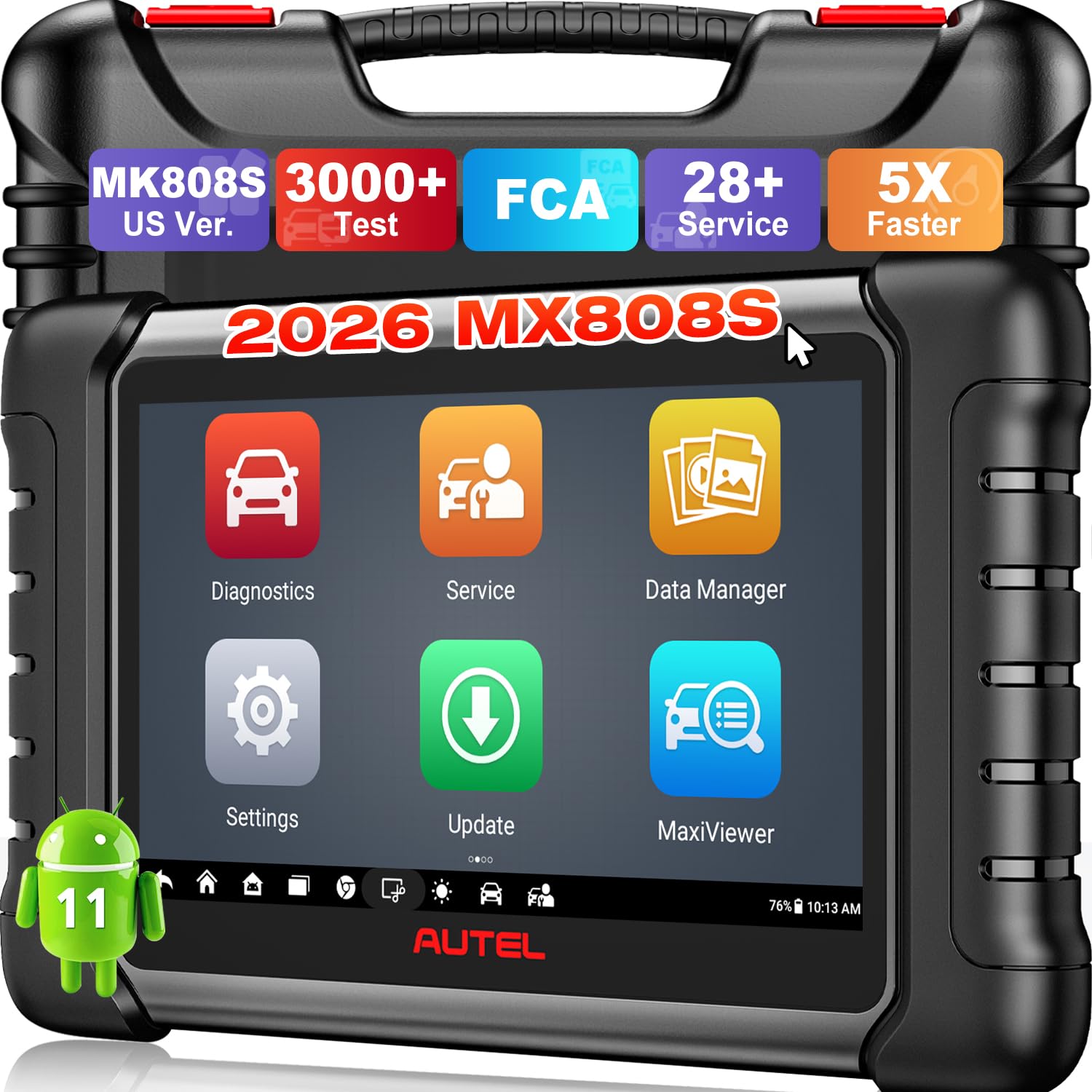
The scanner that talks back to your car, running tests to confirm a part is really bad before you buy a replacement.
This is where you move from “code reader” to “diagnostic scanner.” The MX808S is a bi-directional tool — it can send commands to your car’s components to test them. It runs over 3,000 active tests (EVAP solenoid activation, injector buzz test, fuel pump activation, cooling fan test, and more), letting you confirm a failed part before spending money on a replacement. The hardware is a clear step up from the TOPDON AD600S: a 6.99-inch 1024×600 screen, a Rockchip RK3566 quad-core CPU, 4GB RAM, and 64GB of storage running Android 11. Boot-up is measured in seconds, not minutes.
It accesses OE-level (original equipment) full system diagnostics on all available modules — engine, transmission, ABS, SRS, TPMS, battery, and more — across 10,000+ vehicles for 150+ brands. The 28+ service functions cover oil reset, ABS brake bleeding, EPB reset, BMS, SAS calibration, DPF, injector calibration, throttle relearn, and crankshaft relearn. Unlike the AD600S, the MX808S also supports FCA AutoAuth for 2018+ Chrysler, Jeep, Dodge, and Fiat vehicles that require security gateway access. Owners highlight that it is “easy to use” and “well-built,” with one praising its ability to “perform camshaft timing setting and advanced live diagnostics.”
What to be aware of: the software registration process can be frustrating (you must email Autel with your VIN to check compatibility before assuming a function works on your specific car). The free updates only last one year, after which a subscription costs extra — though the device remains usable with the software version you have at that point. Some older vehicles return “not supported” errors on the advanced bidirectional tests.
Best for: the serious DIY mechanic who wants to run component activation tests and full system diagnostics without paying for a shop-level subscription — the 3,000+ active tests make it the most powerful tool in its price class.
Too much if: you only need to read and clear engine codes; the MX808S’s complexity and subscription model would overwhelm a basic user.
8. Autel MaxiCOM MK900BT
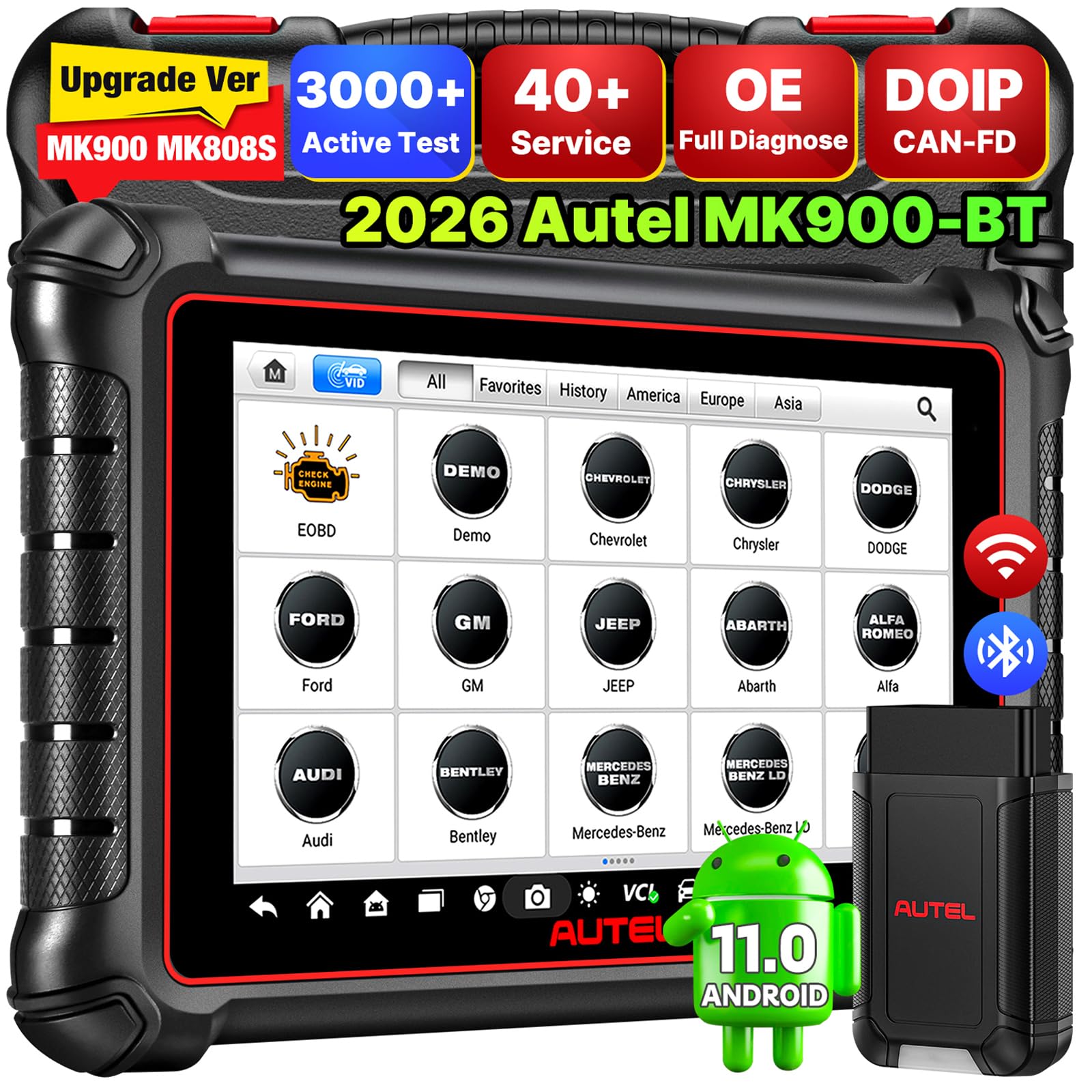
The flagship that wirelessly connects 33 feet away and talks to the newest car networks.
The MK900BT is Autel’s top-tier handheld diagnostic platform. It boasts an 8-inch 1280×800 display (the largest screen in this roundup) and comes with the MaxiVCI V150 wireless Bluetooth connector, so you can sit in the driver’s seat with the tablet while the dongle stays plugged into the OBD2 port — no more curling up under the steering wheel. The wireless range reaches 33 feet, making it useful even in a two-post lift situation. It offers 40+ maintenance service functions (beating the MX808S’s 28+), including advanced resets like rain/light sensor calibration and HVAC/SUS calibration.
The MK900BT adds two critical modern protocols: CAN FD (for 2019+ GM vehicles) and DoIP (Diagnostics over Internet Protocol) for Volvo 2018+, Jaguar Land Rover 2017+, and BMW F/G chassis models. If you drive a newer European or domestic vehicle with these networks, the MK900BT is one of the few tools here that can communicate with them. It also supports 3,000+ active tests (the same as the MX808S), battery test (requires optional BT506 module), endoscope support, and one-click WiFi printing of pre- and post-repair diagnostic reports. The tablet packs a 7700mAh battery for long sessions, and owners rave that the “Bluetooth connection is fast and stable.”
Why it earns its price
- CAN FD and DoIP support future-proofs the tool for modern luxury and domestic cars — a must if you own a 2019+ GM or a modern Volvo/BMW/Jaguar.
- 40+ resets cover almost every routine maintenance task a DIYer encounters; the injector coding and gearbox reset are rare at this tier.
- Wireless Bluetooth dongle with 33-foot range means you leave the tablet on the passenger seat and still control diagnostics.
Realities to accept
- The 1-year free software update window is standard at this level, but renewal costs are significant — around per year after year one.
- The immobilizer functions (key programming) reportedly do not work on all models, and the product descriptions can be misleading about what is actually supported on specific vehicles.
Reach for this if: you work on modern vehicles with CAN FD or DoIP protocols, or you need a wireless tablet-style scanner with the broadest service reset coverage — the 40+ reset functions and 33-foot Bluetooth range make it the easiest tool here for serious DIYers and small workshops.
Stick with a simpler tool if: you drive an older car (pre-2017) and only need basic engine diagnostic coverage; the MK900BT’s advanced networking features will go unused.
Understanding the Specs
OBD2 Protocols Explained
The protocol is the language your car’s computer speaks. All OBD2-compliant vehicles (1996 and newer in the US) use one of several standard protocols: KWP2000, ISO9141, J1850 VPW, J1850 PWM, and CAN (Controller Area Network). A reader with “CAN support” covers the most common modern protocol. If you buy a reader that supports all five listed protocols, you can plug into almost any 1996+ car or light truck.
Bi-Directional Control (Active Tests)
Standard code readers only receive data from the car. A bi-directional scanner sends commands back, telling a specific component to activate. For example, you can command the radiator fan to turn on and verify it spins, or tell a fuel injector to pulse so you can hear if it clicks. This is the feature that separates a code reader from a professional scanner, because it allows you to confirm a part really failed before you replace it.
I/M Readiness (Smog Check)
I/M stands for Inspection and Maintenance. A readiness test checks whether your car’s emission monitors (catalyst, O2 sensor, misfire, EVAP, etc.) have completed their self-diagnostic cycles. If a monitor says “Not Ready,” your car may fail a smog test even if there are no current trouble codes. A scanner with one-click I/M readiness shows you this status on a single screen so you know if you need to drive a few more cycles before heading to the testing station.
Freeze Frame and Live Data
Freeze frame is a snapshot of the engine’s operating conditions (RPM, coolant temperature, fuel trim, vehicle speed) at the exact moment a fault code was triggered. It tells you what the engine was doing when the problem happened. Live data is the real-time stream of those same sensors as you drive. Watching live data can reveal a sensor that is drifting out of range (like a mass airflow sensor reading 30% higher than normal) before it even sets a code.
FAQ
Will any OBD2 reader work on my 1996 or newer car?
Can a code reader tell me exactly which part is broken?
Do I need a separate reader for ABS and airbag codes?
How long do software updates last on these scanners?
Can I use a Bluetooth scanner with an iPhone or Android?
What is the difference between a code reader and a diagnostic scanner?
Does clearing a code fix the problem?
Can I use a code reader on a diesel truck?
What does “freeze frame data” show me?
Final Thoughts: The Verdict
For the majority of shoppers, the best engine code reader is the TOPDON AL400 because it gives you reliable code reading, a clear DTC lookup library, and lifetime software updates at a price that matches its huge user base — the crowd favorite with over 900 ratings and a clear 4.6-star sentiment.. If you want to diagnose ABS and airbag lights on your own terms, grab the BlueDriver Pro Next Gen for its phone-based multi-system coverage and VIN-matched repair reports that save you from guessing. And for the weekend mechanic who needs bi-directional testing and service resets, the Autel MX808S is the one to reach for — it talks to every module in the car and lets you confirm a part is truly bad before you spend your money.
How We Picked
We do not accept paid placement. Every pick is matched to a real buyer and a real use-case; we do not hands-on test units.
Sources & Methodology
Specifications: manufacturer listings and product documentation. Review insights: verified customer reviews, as of July 2026. Pricing: not shown on this page (it changes often); check the current price via the retailer link.
As an Amazon Associate, Trending Car earns from qualifying purchases. This does not affect which products we feature.