
Our readers keep the lights on and my garage snacks stocked. As an Amazon Associate, I earn from qualifying purchases.
Specs are compiled from manufacturer listings and verified buyer reviews and can change over time — please confirm the key details on the product page before buying.
Your car’s roof fabric is drooping, and the wrong glue will make you do the job twice. The trick is picking an adhesive that does not soften when your car bakes in the sun. For a full roof replacement that stays put for years, the DAP Weldwood Landau Top & Trim HHR (a 1-gallon solvent-based contact cement) delivers the strongest bond and the best heat resistance for the money. If you want a quick weekend fix with no spray gun, the 3M Headliner & Fabric Adhesive 2-Pack dries clear (no white residue on light fabric) and sets in 30 to 60 minutes. And if you drive a black vinyl-top classic or live in a desert climate, the Polymat 797x holds up to 220°F — a full 60 degrees hotter than standard spray glues.
I’m Min Islam — the founder and writer behind Trending Car. This guide is built by comparing the manufacturers’ published specifications and the patterns across verified customer reviews, so you get each pick’s real strengths and trade-offs instead of marketing spin.
These are the picks that actually hold when the sun cranks up, whether you are restoring a classic, patching a droopy sedan roof, or tackling marine upholstery. This is your straight-to-the-point guide to finding the best headliner adhesive for your project and budget.
Our Picks at a Glance

How To Choose The Best Headliner Adhesive
Three things decide whether your headliner repair lasts a month or a decade: the heat rating, the application method, and the cure time. Here is what matters most.
Heat Resistance is the Make-or-Break Spec
A parked car in summer easily hits 160°F on the roof panel. If your adhesive softens below that, the headliner sags again. Look for a rating of at least 160°F. The toughest options push to 220°F — that is the real “never think about it again” territory.
Spray, Brush, or Gun — Pick Your Workflow
Aerosol cans are the easiest for a quick patch: grab, shake, spray. Contact cement in a gallon (or quart) requires a spray gun or brush but covers a full roof with less mess and more control. If you are doing a single car, an aerosol is fine. Doing two or more? Get the concentrate and a gun.
Cure Time and Work Time
Some adhesives set in 5-10 minutes (contact cement: spray both surfaces, wait, press). Others need a full 24 hours to cure completely. Fast set is great for pros; slow cure gives you repositioning time if it is your first try. The real buyer concern here is “how long do I have to hold the fabric up?” — faster-setting formulas win every time.
Quick Comparison
| Model | Best For | Heat Rating | Container | Cure Time | Amazon |
|---|---|---|---|---|---|
| DAP Weldwood HHR★ Best Overall | Best Overall | High Heat | 1 Gal | 24 Hours | Amazon |
| 3M Headliner & Fabric AdhesivePro Pick | Easiest Aerosol | Automotive Grade | 18.1 oz (2-Pack) | 30-60 Min | Amazon |
| Polymat 797x Hi-Temp | Maximum Heat (220°F) | 220°F | Aerosol | 5 Min (set) | Amazon |
| Polymat 797 | Industrial Single-Can | 160°F | 13 oz Aerosol | Fast Set | Amazon |
| Lokweld Heat Resistant (Quart) | Budget Brush-On | High Heat | 1 Quart | ~5 Min (set) | Amazon |
| VerdeVilla Headliner Glue | DIY Brush Repair | -40°F to 248°F | 5.3 oz (150g) | 12-24 Hours | Amazon |
In‑Depth Reviews
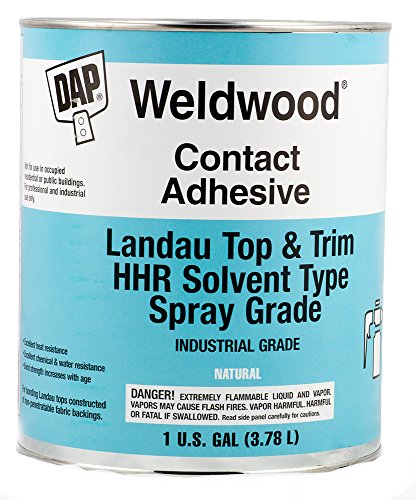
1. DAP Products Weldwood Landau Top & Trim HHR
Our pick — over 4.5★ from 850+ verified ratings; the strongest balance of quality and price.
The gallon-sized workhorse that pros reach for on every full-roof job.
This is your “buy once, cry once” option if you are doing a full headliner replacement. The DAP Weldwood HHR is a solvent-type contact cement that you apply with a spray gun (buyers report it goes on clean from a gun with a 2.0 tip). It dries in about 10 minutes, and once the two coated surfaces touch, the bond is immediate and permanent. The bond resists high heat and water — so it stays put in a car that sits all day in the sun or a boat that sees humidity.
The thing everyone raves about is the adhesion — 72 owners single it out, and 66 more praise the quality. A few note that the packaging has had leak issues in transit, though recent shipments are reportedly better. The odor is strong; you need a respirator and ventilation. But if you are fabricating a vinyl roof on a 1969 Camaro or rebonding a full SUV ceiling, this gallon gives you the consistency and the coverage. It is a crowd favorite with a near-perfect rating across 860+ owners.
Why It Wins Full-Roof Jobs
- Sprayable with a standard gun — even, consistent coat.
- Permanent bond that handles extreme temperature swings.
- Water-resistant for marine and exterior use.
Where You Need Caution
- Strong solvent fumes — must use in a ventilated area with a respirator.
- Packaging is a known weak point; check the can for damage on arrival.
Grab this if: you are replacing a full headliner, a vinyl top, or marine upholstery and want a pro-grade gallon of cement.
Think twice if: you only need a small spot repair; a quart or aerosol is less hassle.
2. 3M Headliner & Fabric Adhesive, 18.1 oz. Aerosol Can (Pack of 2)
The trusted name in spray cans — dries clear, sets fast, and resists the elements.
If you want the simplest route to a professional result, this is it. The 3M formula dries clear (no white residue on light fabric), resists moisture and heat, and comes with an adjustable nozzle that lets you control the spray pattern. It dries to the touch in 30 to 60 minutes, so you are not holding the fabric up all afternoon. Two 18.1-ounce cans are included — owners mention that is enough for a full headliner job, with some left over.
The review pages sum it up: “This adhesive saved me a trip to the upholstery shop. It bonded my fabric headliner back in place with a solid, even hold.” The adhesion is what owners praise most, alongside the quality. The clear finish means you do not see glue through thin fabric. One honest note: the bond is very strong, almost too good for a first-timer — you have to position the fabric perfectly on the first try because repositioning is nearly impossible.
Best for quick restorations: Two cans, clear finish, adjustable nozzle, and a 30-minute dry time make this the best pick for a weekend project where you want a clean look without buying a spray gun.
Reach for this if: you are doing a single headliner and want a no-fuss aerosol that dries clear and strong.
Look elsewhere if: you have multiple vehicles to do; the gallon of DAP Weldwood gives you better per-job value.
3. Polymat 797x Hi Temp Spray Adhesive (220°F)
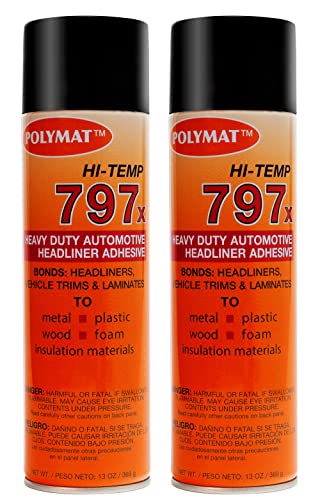
The high-temp specialist that bonds heavy vinyl and hood silencers at 220°F.
For extreme environments — black vinyl roofs on classic trucks, marine upholstery in direct sun, or hood silencer pads that see engine heat — this is the pick. The Polymat 797x is rated for 220°F, a full 60 degrees hotter than the standard 797. It is industrial-grade and water-resistant. One buyer reports using it for seven years on various projects with consistent results. Another used it on a full headliner for a Honda Accord and called it “great hold, sprays in a web pattern.”
What owners praise most is the adhesion, but there is a minor learning curve: the spray can release a web-like or “silly string” pattern, so you cannot lay down a fine mist like a gun. Expect a thicker, tackier coat that bonds instantly. A few owners mention the pattern makes even coverage tricky on a first try. Still, for the highest heat rating in an aerosol, this is the one to beat.
Where It Excels
- 220°F heat rating handles the toughest summer interiors.
- Water-resistant for marine applications.
- Bonds heavy materials — vinyl tops, carpet, hood pads.
The Trade-Off
- Spray pattern is thick (web-like), not a fine aerosol mist.
- Dries fast; must work quickly and position fabric in one shot.
Ideal for: vinyl tops, heavy headliners, and hood silencers in vehicles that bake in the sun.
Not ideal for: precise, small-area repairs; a brush-on glue is easier for spot patches.
4. Polymat 797 Hi-Temp Spray Adhesive (13 oz)

The 13-ounce can that punches above its weight for heavy-duty bonding.
If you need a single solid spray can for a headliner or a door panel, the Polymat 797 at 160°F heat resistance is a strong choice. It is specifically for bonding vinyl tops, headliners, and hood silencer pads. Customers note it has held up for four years on door jambs and that it is easier to work with than the 3M version — “holds well but is easy to lay material down and not have creases.”
The adhesion is the feature owners praise most, with 15 singling it out. The ease of application gets mixed feedback, and some note the spray comes out white (though it dries clear). It is a capable can for a single-job scenario where you want industrial-grade hold without committing to a gallon. If you need more than one job, grab the 2-pack or the gallon.
One can, one job: Plenty of hold for a standard sedan headliner at 160°F heat resistance. White spray is temporary — dries clear. Good if you are trying Polymat for the first time without buying the 2-pack.
Best for: a single headliner or door panel job where you want a proven 160°F aerosol.
Skip if: you need the highest heat rating (220°F) or are doing multiple vehicles.
5. Lokweld Heat Resistant Contact Adhesive (Quart)
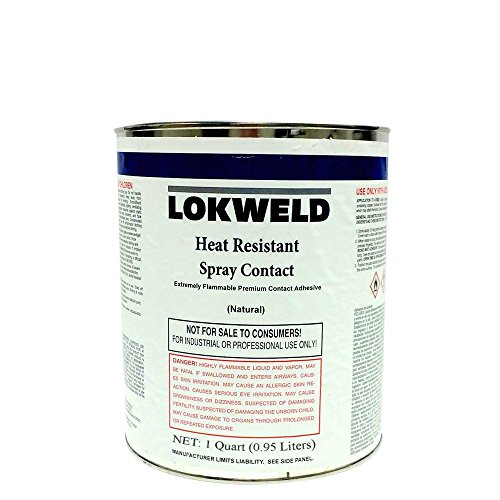
A thin, brushable contact cement that bonds like the expensive stuff at half the price.
The Lokweld is a quart of solvent-based contact cement that is thinner than typical store brands — which is good. Thinner glue soaks into fabric fibers without leaving lumps and works great in a spray gun (reviewers point out using a 1.2mm tip for flawless application on a 2002 Duramax headliner). It also works with a brush for small repairs. The bond is permanent on contact, and owners say it “does not come apart in the heat.”
Adhesion and strength are the two most-praised aspects, with 38 and 34 singling them out. The value is also noted positively. However, the heat resistance gets mixed feedback — some say it holds up fine, others find it softens in a hot car. The odor is strong, and packaging can leak in transit. For a quart price that undercuts almost everything else, this is a great entry point if you have a spray gun and good ventilation.
Why It Is a Great Value
- Thin consistency — sprays evenly and soaks in.
- Permanent bond that resists interior heat.
- Works with a brush or spray gun for flexibility.
The Catch
- Heat resistance is not bulletproof — a few owners saw sagging in extreme summer.
- Packaging can leak; check the can on arrival.
Perfect for: budget-minded DIYers who have a spray gun and work in a ventilated space.
Not the best for: vehicles that sit in scorching sun all day — consider the Polymat 797x at 220°F.
6. VerdeVilla Headliner Repair Glue with Brush
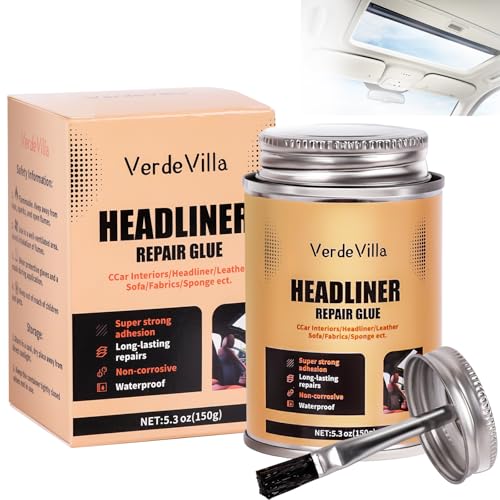
The brush-in-the-cap solution for quick patches with no spray mess.
If your headliner is sagging at the edges or around the sunroof, this glue is made for that exact problem. It comes in a small can with a built-in brush in the cap — no spray, no overspray, no cleanup. You brush it on, press the fabric, and let it cure. The full cure takes 12-24 hours, but the initial tack sets in 5-10 hours at room temperature. The temperature range is wide: -40°F to 248°F.
Effectiveness and adhesion are the most-praised aspects, with 58 and 48 mentions. The built-in brush makes application simple, and many DIYers call it a money-saver vs. a shop. A recurring gripe is that some cans arrived with the lid stuck or glue dried inside. Another buyer reported the bond failed in spring heat. The formula is VOC-free (no harsh fumes), which is a real plus for working inside the car without a respirator.
Perfect for non-spray repairs: Brush application gives you full control for edge patches. Wide temperature tolerance. VOC-free formula is a bonus. Best for spot fixes — not for a complete headliner replacement where you need fast, even coverage.
Ideal for: small sag repairs at the edges or around lights, where a spray can would be overkill.
Skip it for: a full roof replacement — the slow cure and small can size make it impractical for large areas.
Understanding the Specs
Heat Rating (160°F vs 220°F)
This is the single most important spec. A rating of 160°F means the glue holds up to the interior heat of a typical car on a sunny day. A rating of 220°F is for extreme conditions — think black vinyl roof in direct summer sun, or a truck cab with dark interior. If the heat rating is too low, the bond softens and the headliner sags again. For daily drivers, 160°F is usually fine. For convertibles, marine use, or desert climates, aim for 220°F.
Solvent vs. Water-Based
Solvent-based adhesives (like the DAP Weldwood and Lokweld) provide the strongest, most permanent bond. They resist heat and moisture well. The price is strong fumes — you must use a respirator and ventilate the work area. Water-based formulas (like the VerdeVilla) are nearly odorless and safer for indoor work, but they may not bond as aggressively or resist heat as well. For a full headliner, solvent is the pro standard. For a small patch inside a garage, water-based is easier.
Cure Time vs. Set Time
Set time is how quickly the glue becomes tacky enough to press the fabric on. Contact cements set in 5-10 minutes. Aerosol sprays like the 3M set in 30-60 minutes. Cure time is when the bond reaches full strength — often 24 hours for solvent glues. Fast-set formulas mean you cannot reposition the fabric. Slower-set ones give you a window to adjust. Choose based on your experience level.
Container Type: Aerosol vs. Bulk (Gallon/Quart)
Aerosol cans are grab-and-go: shake, spray, done. They are ideal for a single headliner job. Bulk containers (gallon or quart) require a spray gun or brush but are far more economical for multiple vehicles. The DAP Weldwood comes as a gallon concentrate. The Lokweld comes as a quart. If you already own a spray gun, buying bulk saves money per square foot of coverage. If you do not own a gun, the 3M or Polymat aerosol is simpler.
FAQ
Can I use headliner adhesive on leather or vinyl?
How long does headliner glue take to cure fully?
Will headliner glue hold up in a hot car in summer?
Is headliner glue waterproof?
Can I paint over headliner glue?
What is the difference between headliner glue and standard spray adhesive?
Can I use a brush instead of a spray gun for headliner glue?
How do I remove excess headliner glue from fabric?
What is the shelf life of headliner adhesive?
Can I use headliner glue on a convertible top?
Final Thoughts: The Verdict
For most people, the headliner adhesive winner is the DAP Weldwood Landau Top & Trim HHR because it delivers the strongest permanent bond, resists heat and water, and the gallon size gives you plenty of material for any full-roof project. If you want the simplest weekend fix that dries clear and sets in under an hour, grab the 3M Headliner & Fabric Adhesive 2-Pack. And for extreme heat situations where 220°F matters, the Polymat 797x is the one to reach for.
How We Picked
We do not accept paid placement. Every pick is matched to a real buyer and a real use-case; we do not hands-on test units.
Sources & Methodology
Specifications: manufacturer listings and product documentation. Review insights: verified customer reviews, as of July 2026. Pricing: not shown on this page (it changes often); check the current price via the retailer link.
As an Amazon Associate, Trending Car earns from qualifying purchases. This does not affect which products we feature.