
Our readers keep the lights on and my garage snacks stocked. As an Amazon Associate, I earn from qualifying purchases.
Specs are compiled from manufacturer listings and verified buyer reviews and can change over time — please confirm the key details on the product page before buying.
You want the full, aggressive sound of a straight-pipe exhaust when you hit the gas — but you also need a quiet, drone-free cabin for the morning commute. An exhaust cutout (a valve that bypasses your mufflers) gives you both. It acts like a remote-controlled switch that sends exhaust gases straight out for maximum volume or through your muffler for stock-level silence. The key is choosing a cutout that seals tightly when closed, withstands road grime and heat, and matches your exhaust pipe diameter. (the width of the pipe, measured in inches).
I’m Min Islam — the founder and writer behind Trending Car. This guide is built by comparing the manufacturers’ published specifications and the patterns across verified customer reviews, so you get each pick’s real strengths and trade-offs instead of marketing spin.
We looked at the real-world performance, build quality, and reliability data across six top-rated models to find the best exhaust cutouts for every build, from weekend track toys to daily-driven luxury sedans.
Our Picks at a Glance
How To Choose The Best Exhaust Cutouts
An exhaust cutout is a valve welded or clamped into your exhaust pipe. When it opens, it creates a bypass route that sends the exhaust gas directly out, bypassing your mufflers. This gives you a much louder, more aggressive exhaust note on demand. Choosing the right cutout requires matching pipe diameter, operating system (electric vs. vacuum), and durability features to your driving conditions.
Pipe Diameter: 2.5-Inch vs 3.0-Inch
This is the first thing to check. The cutout’s inlet and outlet connection sizes must match your exhaust pipe diameter exactly — either 2.5 inches or 3.0 inches. A 3-inch cutout on a 2.5-inch pipe will leak at the joint.
Electric Motor vs. Vacuum Pump Operation
Electric cutouts use a motor to rotate the butterfly valve (a round disc that opens or closes the pipe) open or closed, controlled by a wireless remote. They are simpler to wire but the motor can be vulnerable to water and road debris. Vacuum-operated cutouts use a vacuum pump (a device that sucks air to create negative pressure) that moves a diaphragm (a flexible membrane) to open the valve. They tend to be more reliable in wet conditions, but require running a vacuum line and hose clamps to prevent leaks. Vacuum systems also auto-shut off when not needed, which saves battery drain.
Build Material: 304 Stainless Steel vs. Alloy Steel
All cutouts sit under the car, exposed to road salt, mud, and extreme heat. 304 stainless steel is the most corrosion-resistant and will hold its polish well. Alloy steel with chrome plating (like the SPELAB kits) is strong and durable but can rust if the plating gets scratched. The valve’s butterfly plate should also be a thick, stiff material to prevent rattling when closed.
Control System: Remotes, Modes, and Water Resistance
Most cutouts come with one or two wireless remotes that operate a control box (the receiver that translates the remote signal into valve movement). Look for a system that offers three modes: fully open, fully closed, and partially open (for a balanced tone). A crucial weakness of many kits is the control box — if it is not waterproofed, a puddle can kill it. Some owners seal their receiver box with RTV silicone (a waterproof sealant) to prevent moisture damage. Remotes that operate on a 315MHz frequency (a specific radio band) offer a range of up to 100 meters.
Quick Comparison
| Model | Best For | Pipe Size | Operation Type | Material | Amazon |
|---|---|---|---|---|---|
| 3 Inch Valved Muffler (peastorm)★ Best Overall | OEM+ Quiet Cabin with On-Demand Roar | 3 Inches | Electric Motor | Stainless Steel | Amazon |
| Universal Vacuum Valve (CNRAQR)Best Value | Budget Custom Builds | 2.5 Inches | Vacuum Pump | 304 Stainless Steel | Amazon |
| QTP 10250 | Simple Mechanical Cutout | 2.5 Inches | Manual (Cap) | 304 Stainless Steel | Amazon |
| SPELAB Electric 3.0 Inch | Customizable Angle Control | 3 Inches | Electric Motor | Alloy Steel | Amazon |
| 2.5 Inch Electric (peastorm) | Easiest Install with Elbow Muffler | 2.5 Inches | Electric Motor | Stainless Steel | Amazon |
| SPELAB Electric 3.0 with Elbow | No-Leak Seal on 3-Inch Pipes | 3 Inches | Electric Motor | Chrome-plated Steel | Amazon |
In‑Depth Reviews
1. 3 Inch Valved Muffler Electric Exhaust Cutout (peastorm)
Our pick — over 4★ from 100+ verified ratings; the strongest balance of quality and price.
The valved muffler that disappears into the background at idle.
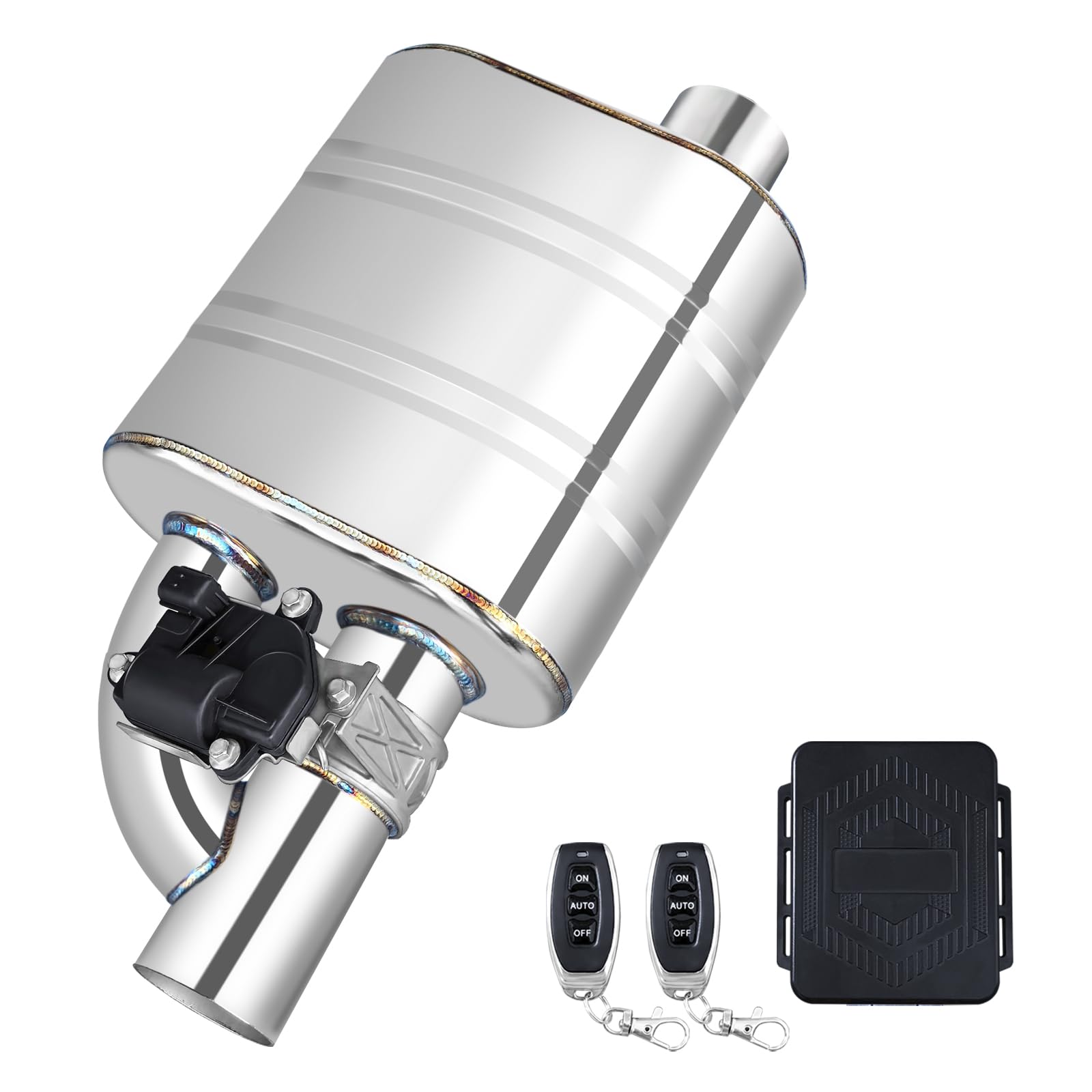
This is a unique concept — a complete muffler housing with a built-in electric valve, not just a standalone cutout. When you close the valve, the exhaust gases are routed through an advanced glass-pack muffler (a type of muffler that uses fiberglass packing to absorb sound), giving you a quiet, deep tone that owners say is “almost silent when closed” and sounds very close to factory when idling. Open the valve and the exhaust takes a straight-through path, delivering what buyers describe as an “aggressive roar.” The 3-inch inlet and outlet connection sizes make it a natural fit for higher-flow cat-back systems.
You get two remotes and a waterproof motor. The valve also has a partially open mode for a balanced, sporty rumble. On a VW Golf GTI mk7.5 with a built motor, buyers report “perfect function and quality.” The main concern is longevity — the motor is integrated into the large muffler housing, so a failure means replacing the entire unit.
What Wins Owners Over
- Three distinct modes (open, closed, partial) give real versatility for daily driving and weekend fun.
- Quality construction is the most-praised aspect — the unit feels solid and well-assembled.
- It eliminates drone completely for long highway trips.
Where It Compromises
- Even fully open, the muffler housing restricts flow compared to a straight pipe.
- The large muffler body is heavy (11.9 lbs) and may require extra hanger support or space confirmation under the car.
- The motor is not user-serviceable; if it fails, the whole muffler housing has to be replaced.
Grab this for: The driver who wants OEM-level quiet most of the time but a satisfying deeper tone on tap, all in one integrated package without extra welding.
Think twice if: You want the absolute loudest straight-pipe crackle — a dedicated cutout downstream of the factory muffler will be louder with the valve open.
2. Universal 2.5″ Vacuum Valve Exhaust Cutout (CNRAQR)
The vacuum-operated kit that skips the brand markup.
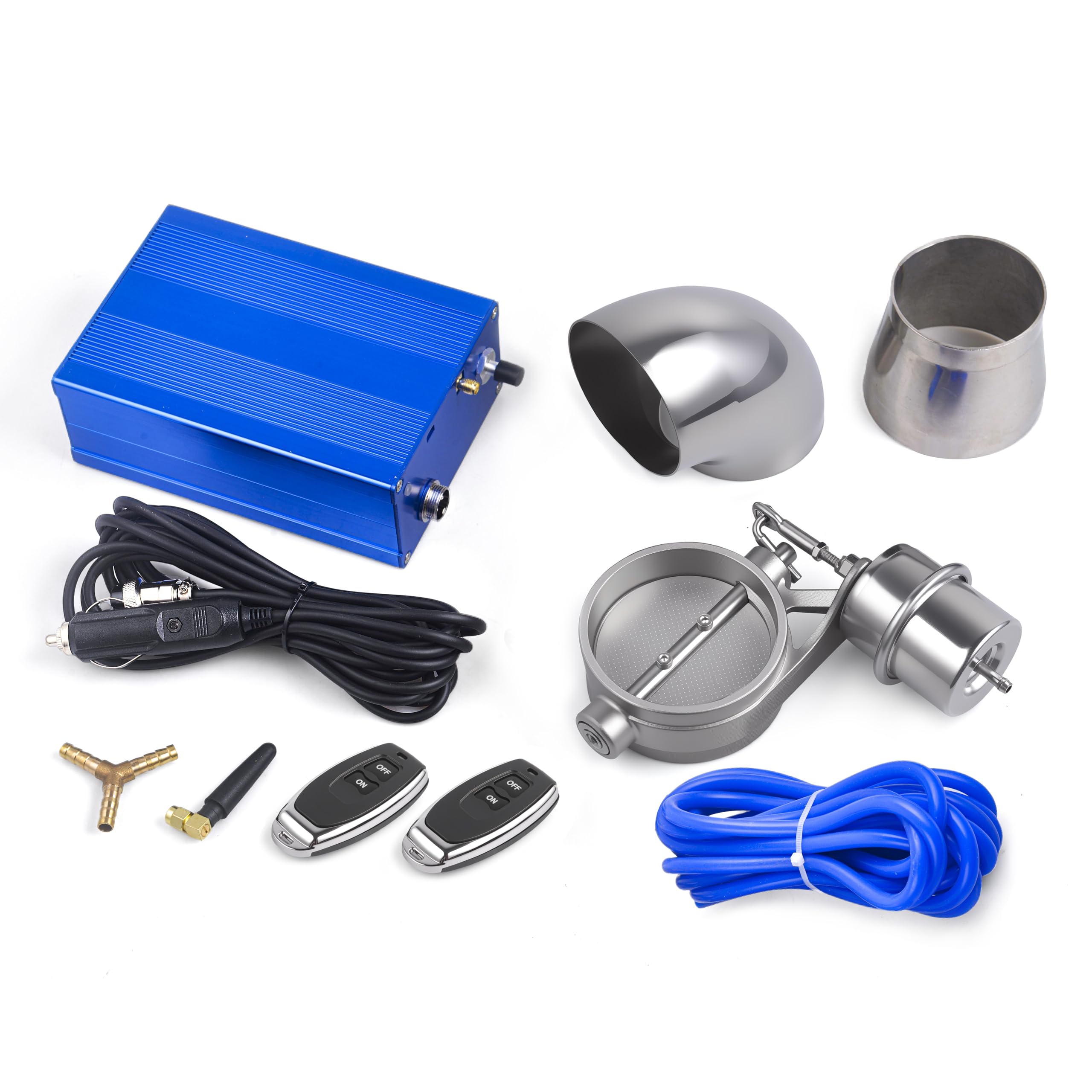
This vacuum-operated kit offers strong value by skipping the brand markup. Instead of an electric motor, it uses a high negative pressure vacuum pump to open the flapper-style valve (a type of valve that swings open like a door) — which means no exposed motor to short out in a puddle. The valve itself is made from 304 stainless steel (the reducer pipe and elbow muffler are 201 stainless steel), and the kit packs a lot of hardware: a vacuum pump, a reducer pipe, an elbow muffler to protect your chassis from heat, and a 315MHz remote control with a range of up to 100 meters. The valve is closed at free condition and only opens when the pump pushes it, providing an automatic shut-off that saves battery.
Owners mention that the stainless steel valve is “thick, durable, and welds cleanly.” One Corvette owner installed it on a C6 with NPP mufflers in about 20 minutes. The vacuum pump opens the flapper in seconds and holds vacuum even when the car is off — this is a big advantage over electric motors that can lose position. The trade-off is that you need to run vacuum hoses and occasionally add hose clamps to prevent vacuum loss. The kit is also 10 pieces, which gives a custom fabricator more to work with, but can be overwhelming for a DIY beginner who just wants a quick weld-in cutout.
Perfect for builders: The vacuum system is inherently more water-resistant than electric, so this is the pick for cars that see rain or mud regularly. The 2.5-inch size suits most naturally aspirated V8s and sport compacts. If you want a plug-and-play electric, look at a simpler motorized unit.
Best for fabricators: This is a project that rewards a skilled welder — you need to weld the 304 stainless valve and route the vacuum line. The effort is rewarded with a clean, reliable valve action that “just works,” according to owners.
Reach for this if: You value reliability over convenience and are happy to run a vacuum line. The lack of an electric motor means one fewer component to fail.
Look elsewhere if: You want a simple bolt-on that works with just a 12V connection — the vacuum pump and hoses add installation complexity.
3. QTP 10250 2.50 Inch Stainless Steel Exhaust Cutout
The manual cap that uncorks your exhaust for track day.
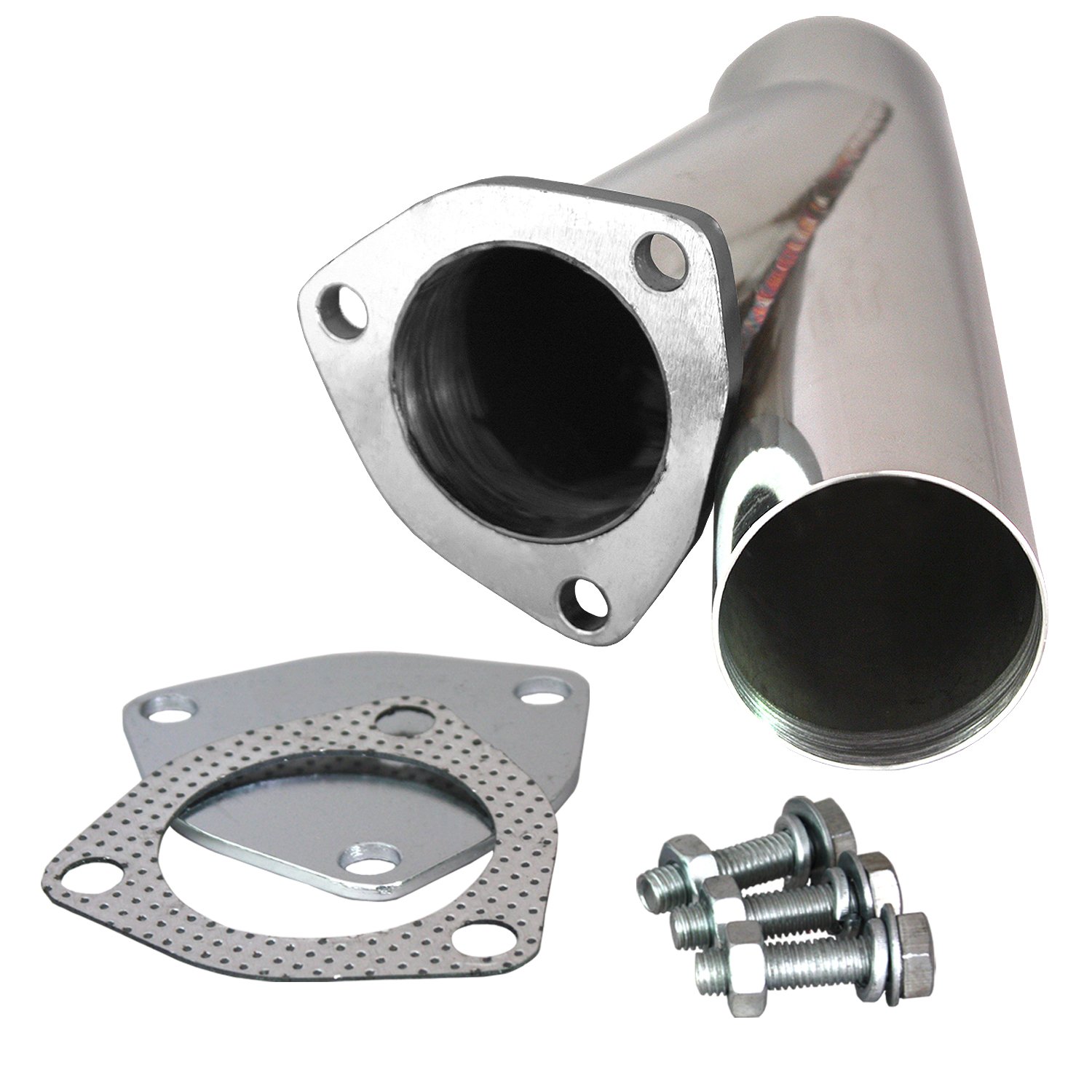
This manual cap cutout is the simplest design: a 2.5-inch 304 stainless steel pipe with a removable block-off plate. — a 2.5-inch section of 304 stainless steel pipe with a removable block-off plate and cap. There is no motor, no vacuum pump, no remote. You weld it into your exhaust, and when you want extra sound and power, you remove the cap to create an open Y-pipe (a split in the pipe that lets exhaust exit before the mufflers). The body is TIG-welded (a precise type of welding) with a 3/8-inch flange for maximum durability, and it comes with a gasket, bolts, and nuts. At 2.65 pounds, it is also the lightest cutout on our list — compared to the peastorm’s 11.9 lbs, this is a fraction of the weight.
Buyers on a Chrysler 300 say the cutout “works great” and creates a “mean exhaust sound on demand.” The build quality is praised as “higher quality than cheap alternatives.” However, the manual cap design means you have to get under the car to switch modes — there is no in-cabin control. A few owners also note that the thin stainless steel on the cap can discolor from heat, so they apply high-temp black paint to keep it looking clean. One owner of a 1962 Chevy 409 found the cutout would not fit in the stock exhaust space at all, so measure your clearance carefully.
Why It Stands Out
- Nothing electronic to fail — this is purely mechanical and will outlast any motorized unit.
- TIG-welded 304 stainless steel construction feels premium and resists corrosion well.
- The removable cap allows the choice of a straight-through path or a blocked-off stock path.
Where It Falls Short
- No remote or in-cabin control — you must physically remove the cap under the car each time.
- Some owners recommend locking nuts instead of the supplied bolts, as heat and vibration can loosen them.
- The cap design means there is a small area where leaks can develop if the gasket is not perfect.
Best for budget track builds: If you only need a loud mode on weekends at the strip and do not mind a few minutes of crawling under the car, this is a bulletproof and inexpensive option.
Skip it for daily driving: Without in-cabin control, this cutout is impractical for daily use where you switch modes frequently.
4. SPELAB Electric Alloy Steel Exhaust Cutout Valve 3.0 Inch

The electric cutout that gives you 3-inch flow with a variable position.
This SPELAB kit offers a 3.0-inch valve with variable-angle wireless control at a competitive price. by offering a 3.0-inch valve with a wireless remote that lets you adjust the opening angle freely — not just fully open or closed. You can dial in exactly how loud you want the exhaust, from a whisper to a full roar. The valve features a chrome-plated steel butterfly plate with a thickened pipe wall, and the kit includes an extension harness that is 3.5 meters long, making it easy to route the control box into the cabin. It is designed for single exhaust pipes and fits all vehicle types, provided you have a 3-inch exhaust pipe.
Owners consistently praise the build quality and straightforward installation. — owners find it “easy to weld and wire.” On a 2018 BMW 540i, the unit fit an oval low-profile exhaust well and produced a great sound. One owner notes that the valve retains its position when the power is disconnected, so it does not default open or closed. The main trade-off is reliability, with mixed owner feedback on motor and remote longevity. The Amazon summary flags reliability as mixed, and some customers note the remote stops working, the valve does not close all the way, or the motor fails early. A few owners recommend sealing the motor with RTV silicone because it is not fully waterproof. An occasional unit also drains the battery overnight if wired to constant power, so a switched fuse is better.
Best for the tuner: The variable angle control is a genuine benefit for fine-tuning exhaust volume, and the price is tough to top for the features. Just budget some time to waterproof the motor and receiver box during installation.
Honest caveat: The reliability feedback is split — many units work perfectly for years, but a fair number have early motor or remote failures. The 12-month warranty on quick-wear parts (motor, remote, control box) provides some safety net.
Choose this for: A 3-inch single exhaust build where you want precise acoustic control without spending premium money.
Be prepared for: Extra waterproofing work and the possibility of replacing the motor within the first year.
5. 2.5 Inch Electric Exhaust Cutout with Elbow Valved Muffler (peastorm)

The bolt-on-friendly cutout that includes an angled elbow to protect your chassis.
This kit from peastorm is designed for the DIY installer who wants a straightforward electric cutout that does not require a welding torch. It uses a clamping connection, so you can fit it onto your existing 2.5-inch exhaust pipe, and the included angled elbow directs hot exhaust gases away from your chassis to prevent heat damage. The motor is described as water-resistant, and the kit comes with two remotes and a 2-year warranty — the only full 2-year warranty on our list for an electric unit. It offers three modes: fully open, fully closed, and slightly open for a balanced tone.
Reviews are a mixed bag. On the positive side, owners praise the build quality, saying the longer Y-pipe design is “better than QTP or Badlanz” — it gives better clearance for the motor. The valve is fast to open and close, and a tension spring prevents valve rattle. It also works well on OEM exhaust systems after a short break-in period. The Achilles heel, however, is the wireless control module. Multiple reviewers point out that the control box gets “so hot it quits working,” with some units failing within a week. One owner had to seal all electrical connections with red RTV and drove through flooded streets without issue after that. If you keep the control box dry, the rest of the kit is solid.
What Shines
- Clamp-on installation means no welding needed — ideal for the home mechanic.
- The angled elbow is a thoughtful addition that protects your chassis from exhaust heat.
- Motor is water-resistant and can be adjusted to any opening position, even at highway speeds.
What To Watch
- The wireless control box is heat-sensitive and the most common failure point — insulating it or relocating it to the cabin is wise.
- Reliability and noise levels receive mixed feedback; some shoppers say the valve opens and closes inconsistently.
Reach for this if: You want a clamp-on, no-weld solution for a 2.5-inch daily driver and are comfortable doing a small modification to protect the control box.
skip it if: You live in a wet climate or drive through deep puddles — the control box has been the weak point for many owners.
6. SPELAB Electric Exhaust Cutout 3.0 Inch with Elbow Muffler
The 3-inch cutout that gets the seal right when closed.
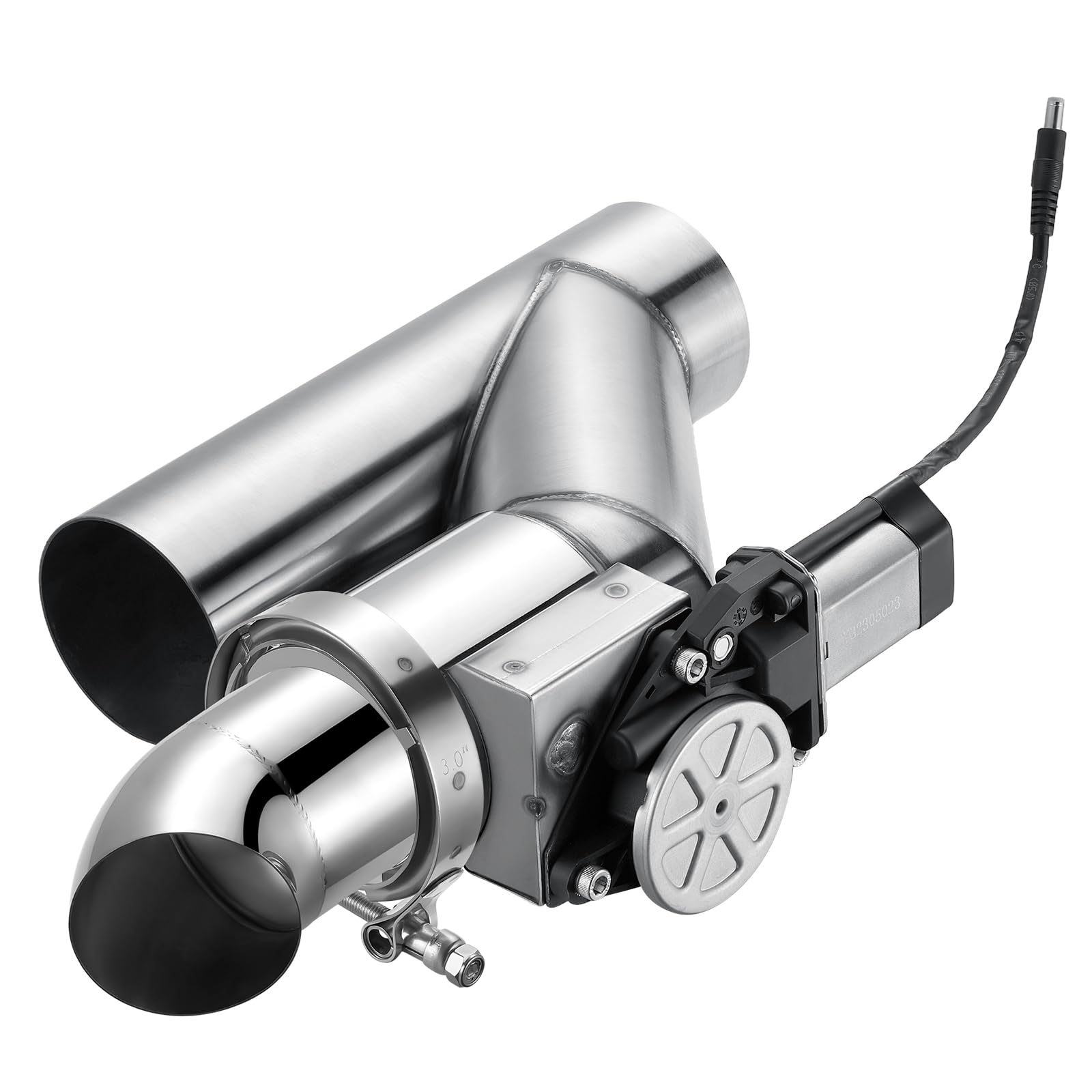
This SPELAB kit focuses on among the most annoying problems with cutouts — exhaust leak-by (gas escaping past the valve) when the valve is supposed to be shut. Owners consistently note the “good seal, no leak when closed,” and some even call it “absolutely badass” for its leak-proof performance. The valve uses a chrome-plated steel butterfly plate and thickened pipe wall, and it comes with an elbow muffler to help direct exhaust away from the underbody. It uses a flange-type inlet connection, which makes for a clean weld-in install. The remote control allows variable opening angles, so you can fine-tune the volume.
The kit includes a 3.5M extension harness for easy routing, and the wireless remote works well at a decent range. One owner uses it for a 3-inch turbo dump and loves the result. Reliability is the most-discussed aspect in reviews, with opinions split between trouble-free operation and early motor failures. While many units work fine, a notable number of buyers report the motor failing after just a few open-close cycles. “Motor broke prematurely,” says one owner. Another notes that the tubing is very thick, making it difficult for even an experienced exhaust shop to weld. So while the seal is excellent, the motor durability is a risk.
Best for those who prioritize a perfect seal: If you absolutely cannot stand exhaust drone or noise when the cutout is closed, this is the best 3-inch electric option for a leak-free butterfly valve.
Consider the risk: Reliability is the most-discussed topic in reviews, and it is split. Buy with a backup plan for the motor — it is replaceable and relatively affordable.
Grab this for: A 3-inch single exit where a quiet cabin when closed is non-negotiable, and you can accept that the motor may need attention down the line.
Think twice if: You expect a set-and-forget device that will last years without maintenance — the motor is the weakest link.
Understanding the Specs
Pipe Diameter (Inches)
This is the width of your exhaust pipe, measured in inches. Exhaust cutouts are designed for a specific pipe size — most commonly 2.5 inches or 3.0 inches. The cutout’s inlet and outlet connection sizes must match your exhaust pipe diameter so the joint seals tightly. A 3-inch cutout on a 2.5-inch pipe will leak at the weld or clamp, and a 2.5-inch cutout forced onto a 3-inch pipe will restrict flow. Measure the outer diameter of your exhaust pipe before buying.
Voltage and Power
Electric cutouts run on the car’s 12-volt system, drawing power through a fused connection to the battery or a switched fuse box. Vacuum cutouts use a separate vacuum pump that also runs on 12V but only activates when you open the valve, saving battery. An electric motor pulls a small current only when the valve is actively opening or closing, not when it is holding its position. Wiring to a constant 12V source can drain a battery overnight if the car sits unused, so a switched ignition source is better for daily drivers.
Remote Frequency (MHz)
Cutout remotes typically operate on a 315MHz radio frequency, which gives a range of up to 100 meters (about 330 feet). The receiver box under the hood picks up the signal and activates the motor or vacuum pump. A 315MHz frequency is standard for aftermarket car accessories and is unlikely to cause interference with your car’s factory key fob. Some kits include a spare remote, so you can keep one on your key ring and one in the glovebox.
Warranty Length
Warranties on cutout kits vary from 1 year to 2 years. The warranty usually covers the electric motor, remote control, and control box — the moving parts most likely to fail. The valve body itself (the stainless steel or alloy steel pipe section) is almost never the failure point unless physically damaged. A longer warranty is a good indicator that the manufacturer has confidence in the electronics, but it is not a guarantee of reliability since water ingress is the most common cause of failure and is often not covered.
FAQ
Will an exhaust cutout damage my engine or void my warranty?
What is the difference between 2.5-inch and 3.0-inch cutouts?
Can I install an exhaust cutout myself?
How do I waterproof my electric cutout motor and control box?
Will a cutout cause a check engine light?
How loud will my car be with a cutout open?
How long do electric cutout motors last?
Can I use an exhaust cutout for a true dual exhaust system?
Is it legal to have an exhaust cutout on public roads?
How do I choose between an electric and a vacuum cutout?
Final Thoughts: The Verdict
For most drivers, the best exhaust cutout to buy is the 3 Inch Valved Muffler (peastorm) because it gives you OEM-level quiet when closed with a satisfying deeper sound on demand — all in a single, easy-to-wire package that eliminates drone. If you prefer the bulletproof reliability of a vacuum system, the CNRAQR Universal 2.5″ Vacuum Valve is the value king that avoids electric motor failures. And for the DIY purist who needs a manual track-day solution, the QTP 10250 is a lightweight, no-nonsense mechanical cutout that will never fail due to electronics.
How We Picked
We do not accept paid placement. Every pick is matched to a real buyer and a real use-case; we do not hands-on test units.
Sources & Methodology
Specifications: manufacturer listings and product documentation. Review insights: verified customer reviews, as of July 2026. Pricing: not shown on this page (it changes often); check the current price via the retailer link.
As an Amazon Associate, Trending Car earns from qualifying purchases. This does not affect which products we feature.