
Our readers keep the lights on and my garage snacks stocked. As an Amazon Associate, I earn from qualifying purchases.
Specs are compiled from manufacturer listings and verified buyer reviews and can change over time — please confirm the key details on the product page before buying.
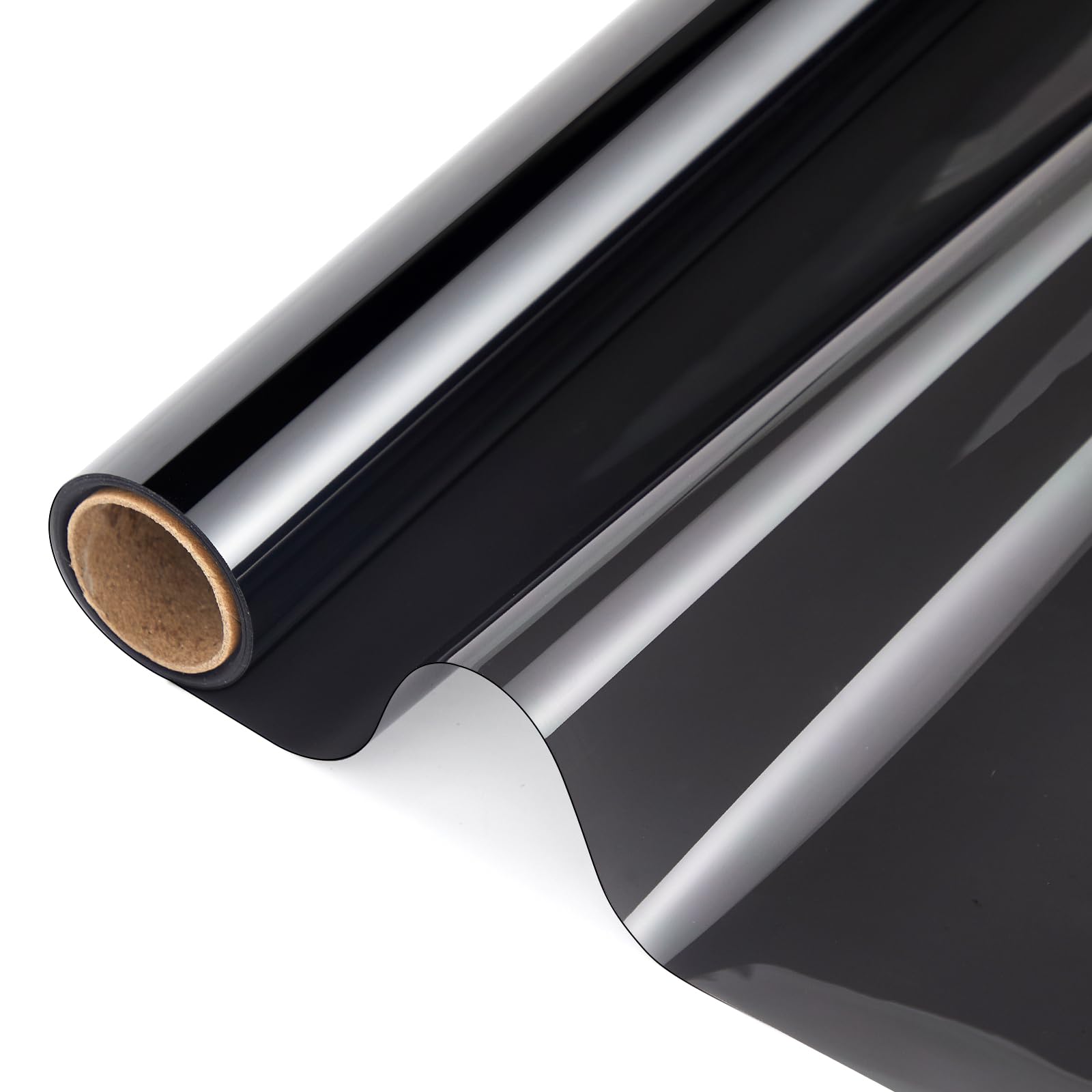
The right window film keeps rooms cooler, prevents car cabins from overheating, and provides daytime privacy without blocking your view. The Volcanics One Way film is the best DIY window tint for most homes because it balances a beautiful look with no-glue adhesion that buyers report holds up even in shower steam.
I’m Min Islam — the founder and writer behind Trending Car. This guide is built by comparing the manufacturers’ published specifications and the patterns across verified customer reviews, so you get each pick’s real strengths and trade-offs instead of marketing spin.
Our Picks at a Glance

How To Choose The Best DIY Window Tint
Your first decision is where you will apply the film. Car windows curve and slide, so they need a thin, heat-shrinkable film that sticks through car washes. Home windows sit still, which means you can use thicker static-cling films that peel off cleanly when you move out. Using a thick home film on a car’s rear defroster causes bubbling or lifting within weeks.
VLT (Visible Light Transmission)
This is the number that tells you how dark the film is. A 5% VLT means only 5% of visible light passes through — ultra-dark, excellent daytime privacy, but you will struggle to see at night or in a parking garage. A 35% VLT is much lighter: you lose almost no night vision while still getting noticeable heat reduction. For home front windows, a clear or near-clear film like the BDF NSN70 is the smarter play because it rejects heat without turning your living room into a cave.
Material: Ceramic, Dyed, Carbon, or Vinyl
Car tints typically fall into three tiers. Dyed film (the cheapest) darkens the glass but fades to purple over time. Carbon film stays black and rejects more heat without interfering with phone or GPS signals. Ceramic film does the best job of blocking infrared heat, which is what makes the car feel cooler, and it does not fade. Home films are usually vinyl or PET (polyester) with a metallic coating that creates the mirror effect.
Precut Kits vs. Roll Film
A precut kit is cut by computer for your exact car model. You unroll the pieces, remove the liner, and apply them — no trimming. Precut kits are ideal for beginners because a single cutting mistake on a roll ruins the entire window. Rolls offer more film per dollar for house windows, skylights, or multiple cars, but require measuring and cutting each piece.
Quick Comparison
| Model | Best For | VLT | UV Block | Size | Amazon |
|---|---|---|---|---|---|
| Volcanics One Way★ Best Overall | Home Privacy | Mirror (Opens) | 99% | 35.4″ x 78″ | Amazon |
| ARANA Ceramic 35%Best Car Heat Block | Car Heat Block | 35% | 99% | 20″ x 30 ft | Amazon |
| BDF EXS15 ExteriorExterior Specialist | Outside Home Tint | Dark Mirror | 99% | 48″ x 7 ft | Amazon |
| JNK NETWORKS Precut | Precut Car Kit | 5% / 15% / 30% | Yes | Custom Fit | Amazon |
| True Line Automotive | Custom Car Fit | Black | Yes | Custom Fit | Amazon |
| BDF NSN70 Clear | Clear Heat Rejection | Near-clear | 99% | 36″ x 14 ft | Amazon |
| Tview T2BK0536 5% | Bulk Car / Home | 5% | Yes | 36″ x 100 ft | Amazon |
| United 5% VLT | Value 5% Car Roll | 5% | 99% | 36″ x 100 ft | Amazon |
| United Nano Carbon 5% | Premium Car Tint | 5% | Yes | 40″ x 100 ft | Amazon |
In‑Depth Reviews
1. Volcanics One Way Window Privacy Film
Our pick — 4.5★ from 57,996 verified ratings; the strongest balance of quality and price.
The home film that owner after owner calls “gorgeous” — and the adhesive-free install means zero residue when you peel it off.
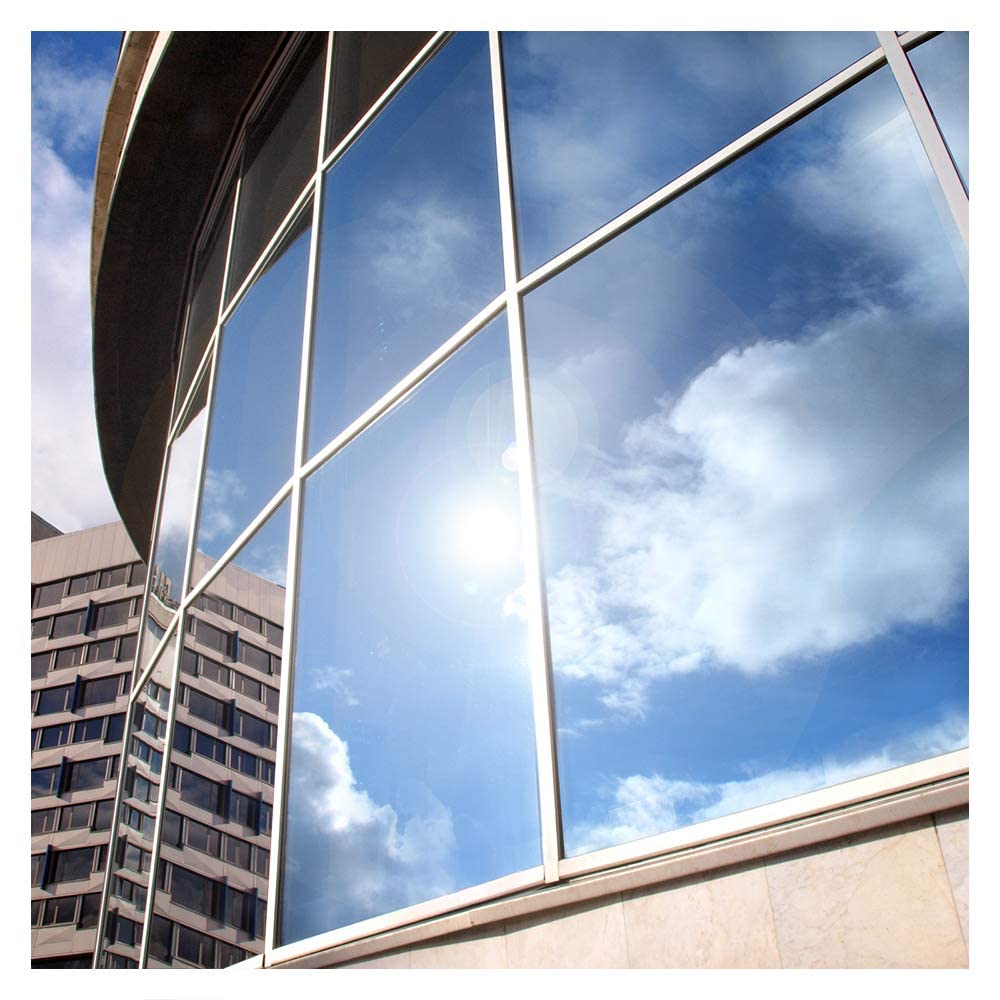
This static-cling film uses no glue at all. It sticks purely through static electricity, which means you spray the window with soapy water, squeegee the film flat, and it holds firm — no chemical smell, no adhesive to scrape off later. Over 57,000 ratings confirm the film looks beautiful, with a stained-glass effect that casts rainbow light. Owners mention that “after one month, still perfectly adhered, surviving shower steam and window use.”
At 35.4 inches by 78 inches (about 20 square feet), the roll covers a standard sliding door or a pair of large windows. It blocks 99% of UV (ultraviolet) rays and 85% of infrared rays, which owners say cuts energy bills noticeably. The main drawback is nighttime privacy: interior lights reverse the mirror effect, so curtains are still needed after dark.
What wins owners over is the appearance — over 5,100 people praise the look. The included tools (scraper, knife, watering can) make the kit complete right out of the tube.
Beautifully practical: This is the pick for renters and homeowners who want instant privacy and heat reduction without the permanence of adhesive. It is not designed for cars, and the nighttime see-through is a real trade-off to know about.
Reach for this if: you want a no-commitment home tint that looks stunning and blocks 99% of UV without glue.
Think twice if: you need around-the-clock privacy — the mirror effect disappears after sunset with lights on.
2. ARANA 35% VLT Ceramic Car Window Tint Film
Ceramic car tint that does not block your phone signal — and the 35% VLT keeps night vision intact.
Unlike dyed film, ceramic tint blocks infrared heat without using metals, so your GPS and cell reception are unaffected. The ARANA film is 20 inches wide by 30 feet long, enough for a full sedan with some to spare. It blocks 99% of UVA and UVB rays and the nano-ceramic construction rejects solar heat before it builds up inside the cabin.
The film is a 35% VLT (Visible Light Transmission), which is a moderate shade — darker than factory privacy glass on an SUV but significantly lighter than a 5% “limo” tint. Customers note that it is not as dark as they expected: a few say the advertised 35% looks more like 20% in practice. The adhesive is stable and resists peeling, though one professional installer flagged the material as “poor quality” and hard to stick on curved glass. The crowd is generally satisfied for the price, with the primary praise being value for money.
Signal-safe sun control: A good entry-level ceramic film for the daily driver. The 35% VLT is legal in most states and keeps the interior cooler while preserving nighttime visibility.
Best suited to: commuters who want ceramic heat rejection without losing cell signal or paying professional rates.
Skip it for: a show-car finish — the film is thin and creases easily during install.
3. BDF EXS15 Exterior Window Film
Designed to live on the outside of the glass — it reflects solar heat before it ever enters the house.
Most home tints go on the inside, but the BDF EXS15 is made for the exterior. This matters because it reflects solar energy before it passes through the glass, which makes it unusually effective on south- and west-facing windows. The film is a dark silver mirror finish with 99% UV protection, and it covers 28 square feet (48 inches by 7 feet).
The trade-off is that exterior installation is harder to get perfect. Small dust particles and pollen cause bumps, and the manufacturer recommends sealing the edges with silicone caulking after the film dries. The real verdict from a buyer with two years of data: “After 2 years on southern exposure, rooms are significantly cooler.” Another owner measured an untreated window at mid-80s°F while the treated window stayed at 70°F. The daytime privacy is excellent, but the mirror reverses at night just like the Volcanics film — interior lights mean people see in.
Outside-the-box heat rejection: Unbeatable for exterior use on brutally sunny exposures. Perfect for a controlled installation but challenging for a first-time tinter.
Ideal for: homeowners with a single hot wall of windows and the patience for careful exterior application.
Not for: renters who cannot seal edges with caulk — the film needs that edge seal to last.
4. JNK NETWORKS Precut Window Tint Kit
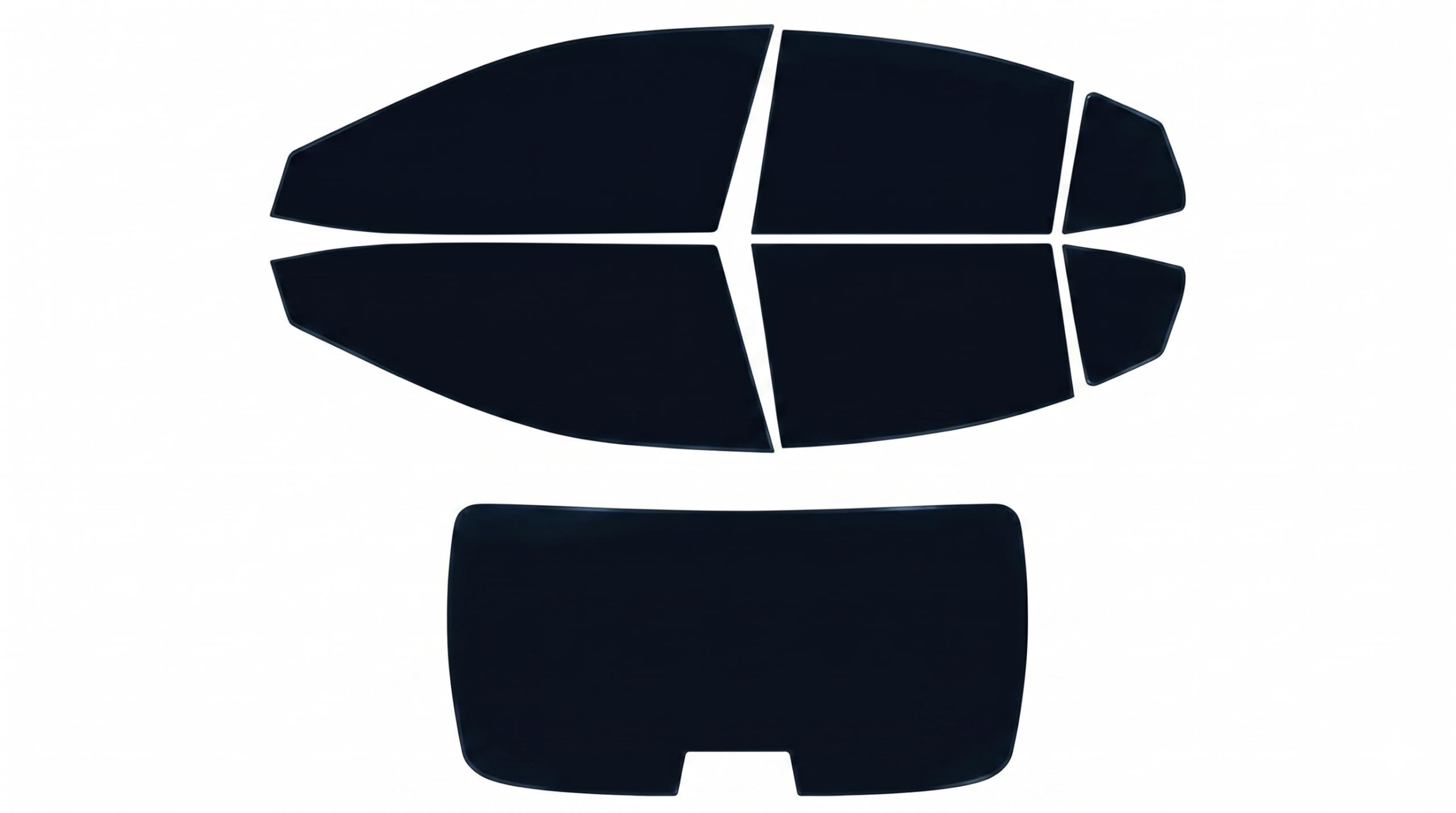
No measuring, no cutting — enter your car model and the tint arrives shaped for every window.
These kits are computer-cut to fit your specific vehicle, covering all side windows and the rear windshield. You choose between 5%, 15%, or 30% VLT, and the film is a heat-shrinkable polyester that wraps around curved window glass. An experienced tinter with multiple vehicles reports the cuts are “dead-on,” even skipping the door-flashing removal step. The South Korean polyester material is thicker than some roll films and resists fading or purpling over time.
Consistency is the catch. Some owners find the rear windows oversized and needing trim, and a few pieces arrive creased. At 3.9 stars across nearly 1,000 ratings, the feedback is more mixed than the other picks — the film quality is praised for value, but adhesion and heat blocking are not on the same level as the premium rolls. The 5% VLT is so dark that night driving becomes uncomfortable.
Convenience-first design: Perfect for a one-car project where you want professional-looking results without a vinyl cutter. Keep your workspace dust-free and install all pieces in one session.
Grab this if: the thought of cutting tint by hand gives you pause — the precut fit takes the hardest part out of DIY.
Pass if: you want strong heat rejection or plan to tint multiple vehicles — a roll gives more film and predictable quality.
5. True Line Automotive Custom Precut Tint Kit
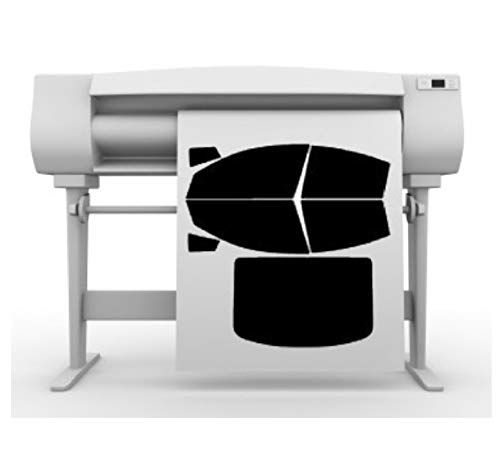
Custom-cut to your car’s windows with a strong adhesive the maker says lasts decades.
The same premise as the JNK kit — provide your car’s make and model, receive precut pieces for all side and rear windows. The tint claims a strong adhesive that stays put for decades unless you peel it off manually. Quality is the most-praised aspect by owners, and the company’s customer service earns frequent shout-outs; one owner tore their film and received a free replacement.
The biggest split among owners is the fit and installation. Some say the pieces match perfectly, while others report the cuts are wrong or the rear windshield does not curve right. The film scratches easily during installation — a common complaint on this material type — and the 4.0-star average reflects that the results vary depending on your car model.
Good service, inconsistent fit: A decent option if your specific car is well-documented in their database, but check recent reviews for your model before ordering.
Works well for: popular sedans and SUVs (2007 Avalon, 2023 CR-V) where the cut pattern is proven.
Risky for: unusual models or older vehicles where the pattern database may be incomplete.
6. BDF NSN70 Window Film (Near-Clear)

Almost invisible, yet owners say it drops room temperature by 10-15 degrees during peak sun.
If you cannot stand the look of tinted windows but your room cooks in the afternoon, the NSN70 is the answer. It is a “near-clear” film that lets most visible light through while blocking 99% of UV (ultraviolet) and rejecting a serious amount of infrared heat. One owner layered four sheets under a skylight and cut heat by 95%, noting the light became “white, gentle, and even.”
The film is 36 inches by 14 feet and covers 42 square feet. It is a high-performance PET (polyester) material that is sensitive by nature — a fold creates a permanent wrinkle, and the adhesive can grab itself if you pull the liner wrong. Patience during installation is mandatory, but owners who invest the time call it “the best window film I’ve ever used.”
Invisible workhorse: The pick for preserving your view while taming solar heat. Small windows are forgiving; large ones test your patience.
Buy this if: you want the heat-blocking power of tint without changing how the window looks from either side.
Avoid it if: you are impatient or working in a dusty outdoor space — every spec of dust shows under this film.
7. Tview T2BK0536 2ply Window Film 5% VLT

100 feet of 5% film at a price per foot that is tough to top — and it resists bubbling on curved glass.
This is a bulk roll for people doing multiple vehicles or large home projects. The 2-ply construction (two layers of film bonded together) makes it thicker and more durable than single-ply rolls, and owners with experience say it is the easiest to install among the super-dark films. One owner who “tried almost every tint” calls it the easiest to install, with a strong balance of darkness: “can’t see in but can see out with ease.”
The 5% VLT (Visible Light Transmission) is extreme. Daytime privacy is total, but nighttime visibility is poor — reversing in a dark driveway requires rolling down the window. The 4.5-star rating across 400+ owners is the highest in the car-tint category here, though the “Tint” aspect is mixed because some notice a slight purple hue in direct sun.
High-volume value: The best price-per-square-foot for 5% film, but the purple cast and dark-night visibility are real trade-offs to weigh.
Pick this for: tinting multiple cars or a large garage with one roll — the 2-ply material is forgiving for beginners.
Skip it for: a daily driver that needs night driving — 5% is dangerously dark after sunset.
8. United 5% VLT Professional Window Tint Film
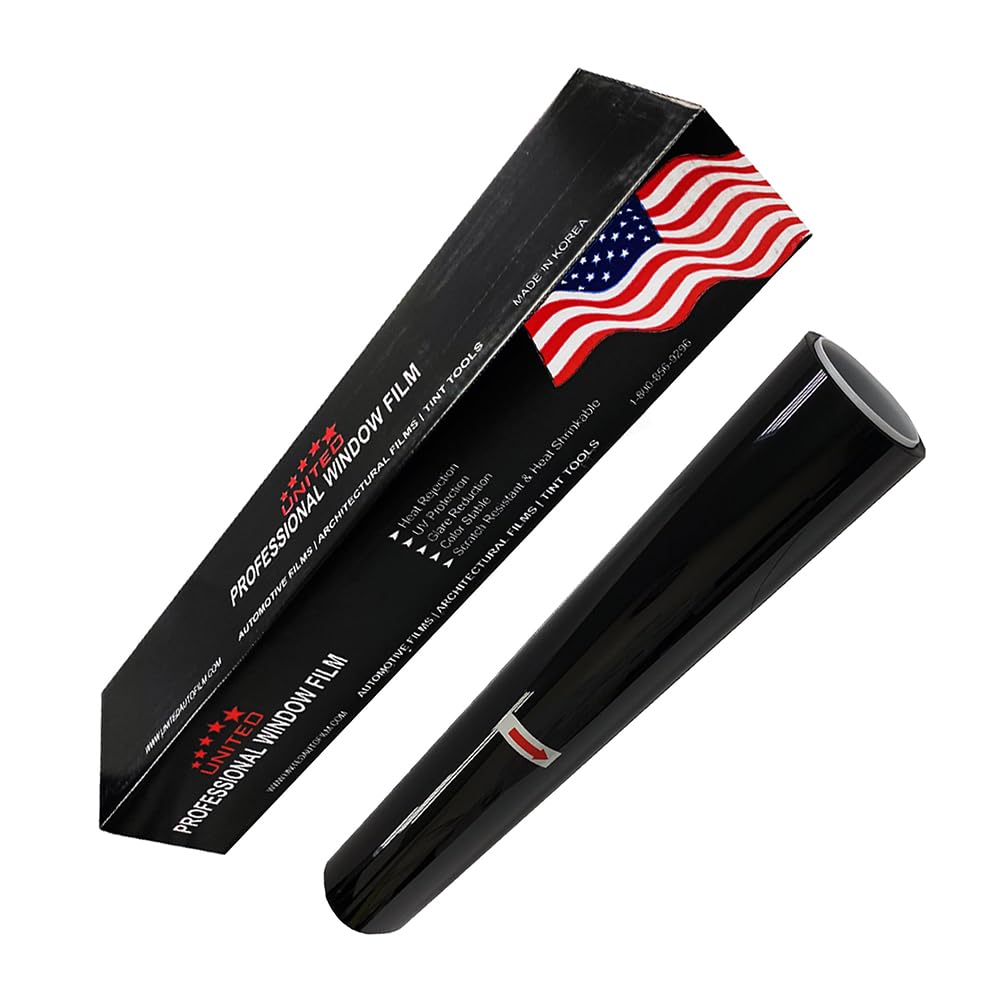
An upgraded 1-mil (1/1000 inch) dyed PET film that blocks 99% of UV and fits cars, trucks, and home windows.
The United 5% VLT is a straightforward deep-shade roll — 36 inches by 100 feet, enough for multiple cars or a home sunroom project. The upgraded PET (polyester) material uses a dyed construction with low reflectivity, which gives it a clean matte finish rather than a shiny mirror look. Reviewers point out good heat reduction and easy installation, and for the price, the value is widely praised.
The recurring pain point is the liner. Several owners mention that separating the clear cover from the tint is “an absolute nightmare.” The adhesiveness is the most-discussed aspect, and its MIXED verdict from Amazon means some batches stick well while others do not. Heat shrinking is possible, so professional installers can get a tight fit on curved glass.
Budget-friendly darkness: Works well for static home windows or straight car glass. The liner separation is frustrating but manageable with patience.
Best for: price-conscious buyers who have a clean workspace and are willing to fight through the liner process.
Not for: complex rear window curves where a misbehaving liner could ruin the piece.
9. United Nano Carbon Window Tint 5% VLT
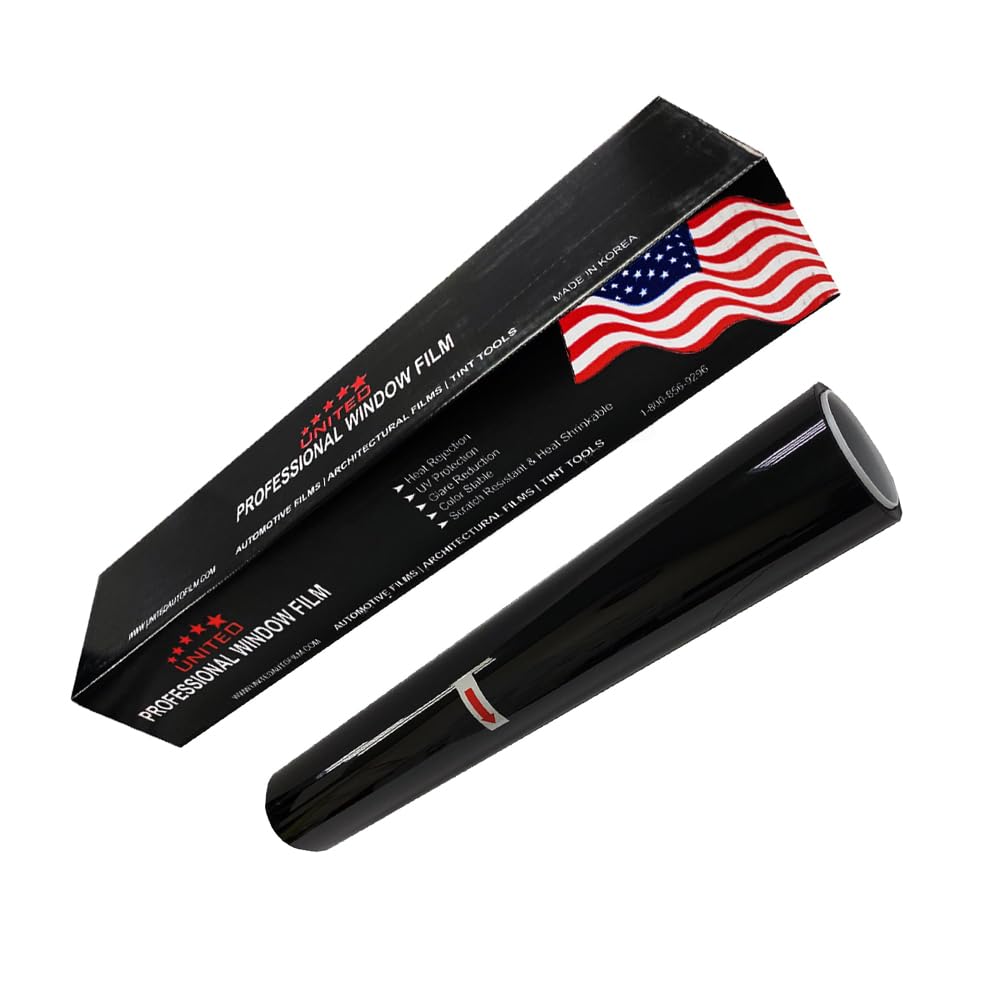
Nano carbon technology that rejects infrared heat without fading — and promises lifetime color stability.
This is the most expensive roll in the lineup and the widest at 40 inches by 100 feet. The 2-ply carbon film uses clear polyester (non-dyed PET) made through nano technology, which gives it outstanding optical clarity. Unlike dyed film, it will not purple or fade over time — hence the “lifetime color stability” claim. Owners use it on cars, home windows, and even screen doors, with strong adhesion and real heat reduction being the main praise.
Quality and Tint are the most-praised aspects, and the 4.4-star average across 442 ratings makes it one of the stronger performers here. The film is slightly thinner than the Gila brand but does not crease easily. Some adhesion issues appear in the reviews, but the majority report that a good soapy-water slip solution solves the shifting problem. It is designed for wet/dry heat shrinking, so it conforms to curved glass well.
Premium clarity, long-term value: For someone who wants the best-looking carbon tint and plans to keep the car or house for years, this roll delivers.
Ideal if: you want the cleanest possible tint with zero purple fade — the nano carbon construction keeps it black.
Overkill if: you only need film for a single small window — the roll volume is enormous for one project.
Understanding the Specs
VLT (Visible Light Transmission)
This is the percentage of light the film lets through. A 5% VLT is extremely dark — it blocks 95% of visible light. A 35% VLT is roughly what many factory-tinted SUVs come with. Home mirror films do not use VLT numbers because their reflectivity changes depending on whether it is brighter inside or outside the glass. Know your local laws before buying a very low VLT for a car.
Ceramic vs. Carbon vs. Dyed vs. Static Cling
Ceramic tint (like the ARANA) uses nano-ceramic particles to block infrared heat while staying non-metallic — your GPS and phone signal pass through unblocked. Carbon film uses carbon particles that stay black and never fade to purple, but it blocks less heat than ceramic. Dyed film is the cheapest but fades and loses heat rejection over time. Static-cling film (like the Volcanics) uses no adhesive at all — perfect for renters.
FAQ
Will DIY window tint damage my car’s rear defroster?
Can I use a home window film on my car?
How long does DIY car tint last?
What tools do I need for a DIY tint job?
Does window tint really lower home cooling costs?
What does 35% VLT look like on a car?
Can I apply exterior window tint to double-pane windows?
How do I clean tinted windows?
Final Thoughts: The Verdict
For the majority of shoppers, the best diy window tint overall is the Volcanics One Way film because it combines stunning aesthetics with a no-adhesive install that leaves zero residue. If you need ceramic heat rejection for your car without losing phone signal, grab the ARANA 35% VLT. And for invisible heat rejection that keeps your view intact, the BDF NSN70 is the one to reach for.
How We Picked
We do not accept paid placement. Every pick is matched to a real buyer and a real use-case; we do not hands-on test units.
Sources & Methodology
Specifications: manufacturer listings and product documentation. Review insights: verified customer reviews, as of July 2026. Pricing: not shown on this page (it changes often); check the current price via the retailer link.
As an Amazon Associate, Trending Car earns from qualifying purchases. This does not affect which products we feature.