
Our readers keep the lights on and my garage snacks stocked. As an Amazon Associate, I earn from qualifying purchases.
Specs are compiled from manufacturer listings and verified buyer reviews and can change over time — please confirm the key details on the product page before buying.
That glowing check-engine light is often your downstream O2 sensor telling you the air-fuel mix is off — and picking the wrong replacement wastes time, triggers the same code, and costs you at the pump. The good news is the right sensor drops in, clears the code, and restores fuel economy, all without a trip to the dealership. This guide cuts through the fitment confusion and part-number maze so you grab the exact match for your make and model.
I’m Min Islam — the founder and writer behind Trending Car. This guide is built by comparing the manufacturers’ published specifications and the patterns across verified customer reviews, so you get each pick’s real strengths and trade-offs instead of marketing spin.
Whether you drive a Chevy Silverado, a Ford F-150, a VW Jetta, or a Dodge Journey, the downstream o2 sensor you need depends on your year, engine, and bank position — and the ratings of over 4,000 buyers make the top contenders clear.
Our Picks at a Glance


How To Choose The Best Downstream O2 Sensor
A downstream oxygen sensor sits after your catalytic converter and monitors how efficiently the converter is cleaning the exhaust. Picking the right one means matching your vehicle’s year, engine code, and sensor position — and deciding if you want the original manufacturer’s part or a high-quality aftermarket equivalent.
Match the Part Number and Connector
Every downstream sensor has a specific OE number (like 234-4012 or 213-1702) that corresponds to a unique plug shape and wiring configuration. Simply buying a sensor that “looks right” often results in a code that won’t clear because the connector pins or harness length are off.
Decide Between Single Sensors and Multi-Packs
Some vehicles have multiple downstream sensors (one per bank), and many sellers bundle upstream and downstream sensors together. A two-pack saves money if you are replacing both banks at once, but a single sensor is all you need if only one has failed.
Check for Heated vs Non-Heated
Most modern downstream sensors include a built-in heater (four wires — two for signal, two for power). This lets the sensor reach operating temperature in seconds rather than minutes. Non-heated sensors, typically found on older vehicles, take longer to deliver accurate readings.
Quick Comparison
| Model | Best For | OE/OE-Fit Material | Harness Length | Wiring Type | Amazon |
|---|---|---|---|---|---|
| GM Genuine Parts 213-1702★ Best Overall | GM truck downstream replacement | GM OE (Metal) | 8.2 in | 4-wire Heated | Amazon |
| Walker Products 350-34039Easy Install | Easy direct-fit installation | Ceramic, Metal | 5.9 in | 4-wire Heated | Amazon |
| Denso 234-4012OE Grade | OE-level reliability for GM/Chevy | Stainless Steel | 15.35 in | 4-wire Heated | Amazon |
| Bosch 15895 | Wide GM/truck compatibility | Stainless Steel | 5.83 in | 4-wire Heated | Amazon |
| BOSCH 15284 | Budget-friendly premium tier | Stainless Steel | 5.83 in | 4-wire Heated | Amazon |
| Sangyue 2PCS (Dodge/Jeep) | Multi-pack for Chrysler fleet | Aluminum Oxide, Stainless Steel | — | 4-wire Heated | Amazon |
| ACAUTO 15717 (Ford) | Ford multi-model coverage | Platinum, Stainless Steel | — | 4-wire Heated | Amazon |
| JOYOMSTW 234-4242 (2-Pack) | Budget Chevy/Equinox fix | Stainless Steel | — | 4-wire Heated | Amazon |
| A-Premium (VW/Audi) | German make downstream | Stainless Steel | — | 4-wire Heated | Amazon |
In‑Depth Reviews
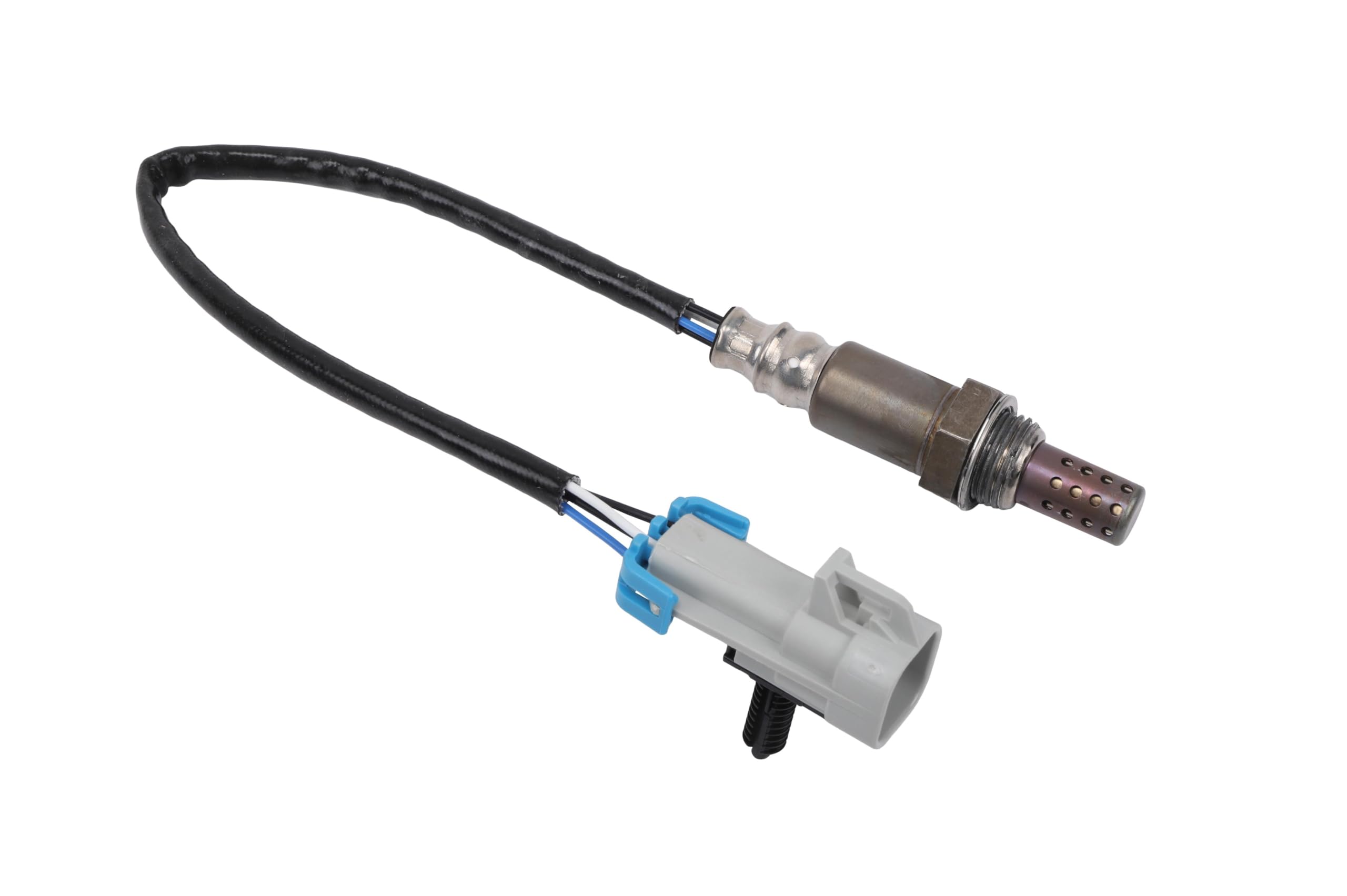
1. GM Genuine Parts 213-1702 (12587785) Heated Oxygen Sensor
Our pick — over 4.5★ from 550+ verified ratings; the strongest balance of quality and price.
The factory-correct drop-in that eliminates guesswork for Chevy and GMC trucks from 2003 to 2005.
If you drive a 2003-2005 Silverado, Tahoe, Yukon, Suburban, or Avalanche with a 1500-series chassis, this GM Genuine part matches the original factory component exactly. Buyers report that the connector polarity is male and the metal construction feels identical to what they pulled off. The harness measures 8.2 inches long — a detail that matters because buyers of 2005 Silverado 5.3L models confirm the wire length is perfect for the downstream position.
What wins people over is how predictably it works. Functionality earns the highest praise, with many describing it as “plug and play.” The trick is knowing that this sensor is designed for the downstream location, not upstream — the wires are intentionally shorter to reach the post-cat connector without extra slack. A few owners note the check engine light came back if the underlying exhaust issue hadn’t been fully resolved, but that is true of any O2 sensor.
GM-bolt-on certainty: If your truck is listed in its fitment guide, you can order this with confidence. It ships in a GM Delco box and buyers call it “high quality, perfect fit.”
Fitment caveat: Verify your exact original GM part number (the listing is compatible with downstream sensors like GM#12576131, not the earlier upstream units). For 2003-2005 GM 1500-series trucks, this is as straightforward as it gets.
Reach for this if: you own a 2003-2005 Chevy or GMC truck and want a part that fits like the one the dealer would hand you, at a fraction of the dealer price.
Look elsewhere if: you drive a Ford, Dodge, or any non-GM vehicle, or if your truck is outside the 2003-2005 1500-series range.
2. Walker Products 350-34039 Oxygen Sensor 4-Wire Direct Fit
A premium direct-fit O2 sensor that delivers OE-like performance at a fraction of the auto-parts-store price.
Walker Products coats this sensor’s electrodes with gas-permeable platinum, which helps it read oxygen levels accurately over a long service life. The 4-wire design means it is heated, so it reaches the proper temperature quickly and starts sending reliable data within seconds. One owner of a 2013 Wrangler said the sensor “cleared the code” immediately, while another reported all four sensors went in “super easy took about 30 minutes.”
At roughly half the cost of what local auto parts stores charge, the value-for-money feedback is strong. The ceramic and metal construction includes a protective coating that resists erosion from combustion residue and exhaust particulates — a detail that matters for downstream sensors exposed to the hot, dirty gas stream leaving the catalytic converter. Over a year of use with no returned codes is a common outcome.
Platinum-precise reading: The gas-permeable electrode coating and fast heater mean this sensor jumps into accurate operation quickly, which is exactly what you need to clear a persistent check engine light.
The honest trade-off: Because it is a universal-fit design, it uses a flange mount and 4-wire configuration that requires your vehicle’s harness to match. Use the Amazon Confirmed Fit tool before ordering.
Grab this if: you want a premium aftermarket sensor that’s known for easy installation and long code-free operation, especially for GM and Jeep models.
Think twice if: your vehicle uses a non-standard connector or you need a sensor with a very short harness — verify the 5.9-inch length will reach your downstream plug.
3. Denso 234-4012 Oxygen Sensor, Original Version
The first-choice alternative when GM’s own sensors have failed you — and a reputation for clearing codes other brands couldn’t.
Denso’s 234-4012 uses a refined zirconia element for faster sensor response and a PTFE filter that blocks efficiency-robbing contaminants before they reach the sensing tip. The stainless steel construction resists corrosion, and the 15.35-inch wiring harness gives you plenty of reach to route the cable cleanly away from exhaust heat. Owners of 1996-2005 Chevy S10s, Blazers, and Silverado 1500s report it as a direct fit with a threaded mount that requires no modification.
The most striking feedback comes from owners who tried other brands first (including Bosch) and saw the check engine light return. Switching to this Denso sensor, they report the faults cleared automatically on the first startup.
Stubborn-code killer: The refined zirconia element and PTFE filter give this sensor an edge in accuracy and durability, and the review pages suggest it resolves some O2 codes that other sensors cannot.
Fitment alert: One Silverado 4.8L owner noted Amazon’s fit checker flagged the wrong part for a Canadian-built truck (the correct sensor was 234-4650). Double-check your VIN and connector shape.
Choose this if: you have a 1996-2005 Chevy, GMC, or GM-platform vehicle and want an OEM-level sensor that other brands couldn’t match.
skip it if: your Silverado was built in Canada (2001+), where a different connector design may require the 234-4650 instead.
4. Bosch 15895 Premium OE Fitment Oxygen Sensor
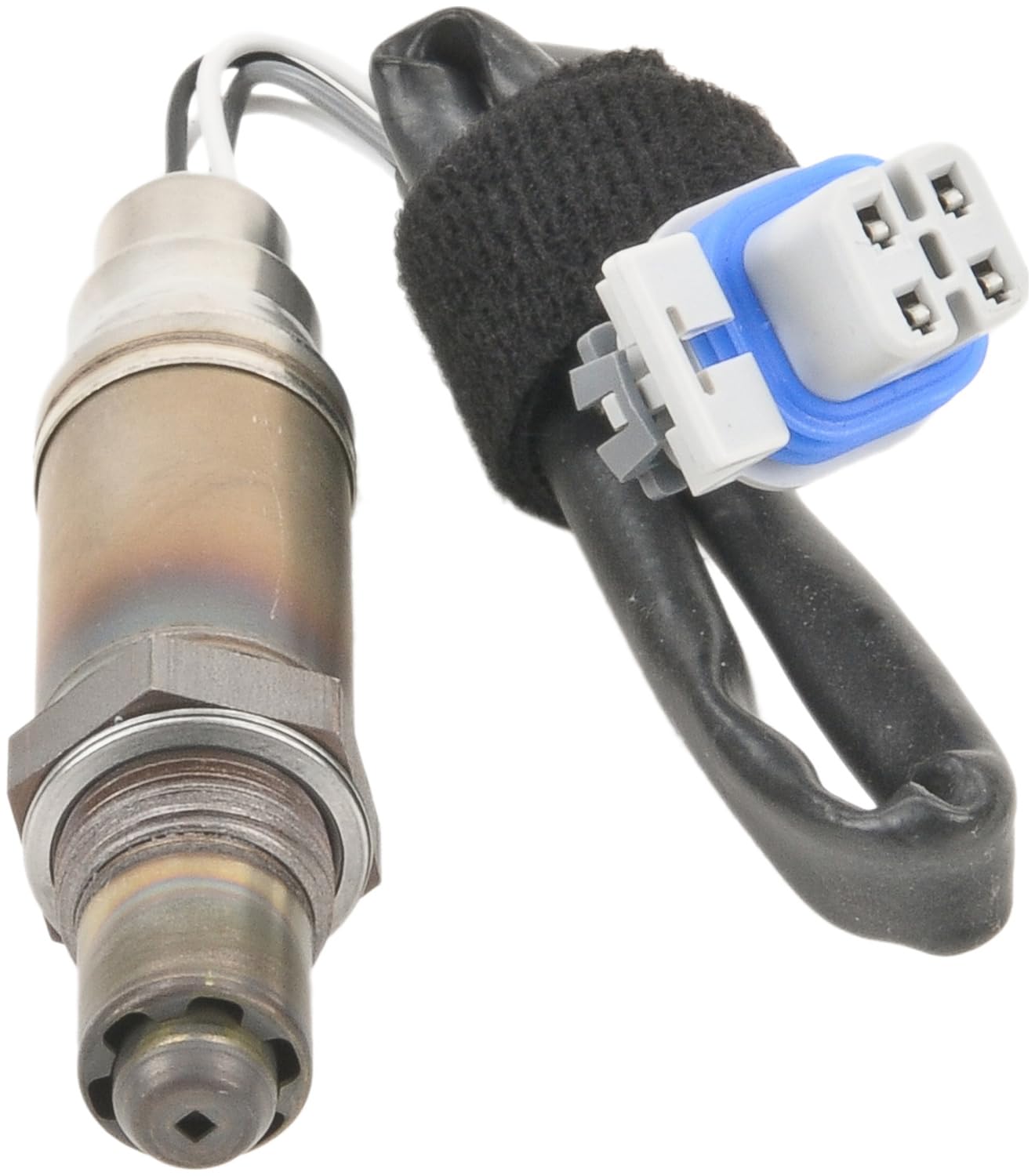
An industry-originator sensor that covers a massive 2000-2007 GM vehicle range with direct-fit connectors right from the start.
Bosch invented the automotive oxygen sensor in the late 1960s, and the 15895 model carries that engineering heritage forward with a double laser-welded stainless steel body that is fully submersible and sealed against exhaust emissions. The threads come pre-coated with anti-seize compound, which is a real time-saver when you are wrenching in a tight spot under the truck. Owners of 2003-2007 Silverados, Tahoes, and Yukons consistently call the fit “perfect” and report fast heat-up times.
The compatibility list is impressive — it spans Buick, Cadillac, Chevrolet, GMC, Hummer, Isuzu, Oldsmobile, Pontiac, Saab, and Saturn from the early 2000s. Several owners mention that at roughly an eighth of the price local parts stores charge for the same Bosch part, it is a no-brainer. One Yukon owner fixed a Bank 2 Sensor 2 code and cleared the SES light, confirming the sensor does its job when the underlying exhaust system is sound.
Mass-market coverage: With a fitment list covering over a dozen brands and a thousand individual model-year combos, this is the single most versatile downstream sensor on the list.
The catch: The 5.83-inch harness is adequate for downstream positions on compatible trucks but may be short for some body styles. Confirm your vehicle’s connector location before ordering.
Buy this if: you drive a 2000-2007 GM-platform vehicle and want the brand that invented the O2 sensor, with pre-applied anti-seize for low-maintenance installation.
Pass if: you need a multi-pack or your vehicle is a Ford or Chrysler product — this is GM-family focused.
5. BOSCH 15284 Premium OE Fitment Oxygen Sensor

Bosch’s 100% factory-tested downstream sensor that punches well above its price tier for 2003-2006 GM trucks and SUVs.
Every Bosch 15284 undergoes a full functional quality test at the factory — that seared appearance on the protection tube is your visual proof it passed. The stainless steel body is double laser-welded to be totally submersible, and the fast-acting heater (part of the Planar/Thimble sensor design) brings the sensor online within seconds. Owners of 2003-2005 Chevrolet Silverados, Tahoes, and Avalanches (5.3L) report it as a “perfect fit for Bank 2 oxygen sensors.”
The value equation is especially strong for drivers of 2004-era trucks. One Escalade owner who replaced a mangled downstream sensor on Bank 1 said the sensor has “solid construction, feels premium,” and he was already buying a second unit. A 2005 Tahoe owner reported drastically improved MPG and cleared error codes. Compared to the GM Genuine part above, the 15284 is roughly half the price but covers a slightly narrower model range.
Factory-tested confidence: The 100% functional quality test and 5-year Bosch engineering pedigree mean you are getting the same sensor technology that first hit the market in the 1960s, only refined.
One owner’s note: A few drivers report the check engine light may persist if the PCM dislikes the switching rate, though the engine runs fine — this is rare but worth knowing.
Pick this over the GM Genuine if: you are on a tighter budget but still want a Bosch-level sensor for your 2003-2006 GM truck or SUV — it matches the fitment for Escalade, Avalanche, Silverado, Suburban, and Tahoe.
Avoid if: you specifically want a GM-branded part for a 2005 Chevy 1500 — in that case, the GM Genuine 213-1702 above has slightly more positive fitment feedback.
6. Sangyue 2PCS Oxygen O2 Sensor Upstream + Downstream for Dodge Journey 2.4L 2011-2020

A two-in-one replacement kit that covers both upstream and downstream positions for a wide range of Chrysler, Dodge, and Jeep models.
The Sangyue pack includes both the upstream (sensor 1) and downstream (sensor 2) units, saving you from buying them separately. It fits the Dodge Journey 2.4L from 2011 through 2020, plus the Chrysler 200, PT Cruiser, Jeep Compass, Liberty, Patriot, and Wrangler — a broad cross-section of the Chrysler family. The construction uses aluminum oxide and stainless steel, and the maximum supply voltage is 12 volts, which is standard for modern O2 heater circuits.
Quality is the aspect buyers praise most, and the value-for-money rating is strong — multiple owners mention that replacing 200,000-mile original sensors with this kit gave them confidence. One Dodge Caliber 2.0L owner noted these sensors did not cause the check engine light to flicker for days like a previous set had. The one-year unlimited mileage guarantee adds an extra layer of confidence if you are skeptical about aftermarket sensors.
Full set for a fair price: Getting upstream and downstream together for the price of a single dealer sensor makes this a genuine value play for fleet or DIY maintenance.
Mixed functionality noted: A minority of customers note error codes (P2096) appearing the same day on 2017 Dodge Journey models. The aspect data shows functionality is mixed — it works perfectly for most but not every single installation.
Buy this if: you own a 2011-2020 Dodge Journey 2.4L or any of the listed Chrysler/Jeep/Dodge models and want to replace both sensors at once.
pass on it if: you only need a single downstream sensor for one bank — the two-pack might leave you with an unused upstream unit.
7. ACAUTO 15717 Oxygen Sensor Upstream Downstream 2 Pack

A two-pack that bundles both upstream and downstream sensors for Ford, Lincoln, Mercury, and Mazda models with OE-style direct-fit connectors.
ACAUTO uses platinum, ceramics, and 310S stainless steel in the 15717 to deliver accurate oxygen readings. The fast-acting heater brings Planar and thimble-type sensors to operating temperature in seconds, and the threads come pre-coated with anti-seize. The compatibility list is deep: Ford F-Series, Ranger, Escape, Explorer, Mustang, Focus, Expedition, plus Lincoln, Mazda, Jaguar, and Mercury models — though the fitment checker should be your final confirmation.
Ford reviewers point out that these sensors are downstream-only despite the “upstream downstream” title on some sets. One 2010 Ford Fusion 3.0 V6 owner noted he went through four different sets before realizing they were all downstream — these installed quickly and “got rid of the check engine light for cheap.” An 2003 Ford Escape owner reported them working after one month and praised the value, though he wished cable stand-off mounts were included so the wires stay away from exhaust heat.
Platinum-tipped accuracy: The combination of platinum electrodes and 310S stainless steel means the sensor resists thermal degradation and reads reliably for a long service life.
Compatibility caution: While the list is extensive, some Ford models (like 2010 Fusion) only received downstream sensors. Verify you aren’t expecting an upstream sensor if you only need a downstream replacement.
Choose this if: you drive a Ford, Lincoln, Mercury, or Mazda from the 2000s and want a two-sensor set that covers both downstream positions for under.
Pass if: you need a single sensor — the two-pack may be overkill, or if you drive a GM/Chrysler vehicle that isn’t in the compatibility list.
8. JOYOMSTW O2 Oxygen Sensor Upstream Downstream 234-4242 234-4530 2-Pack
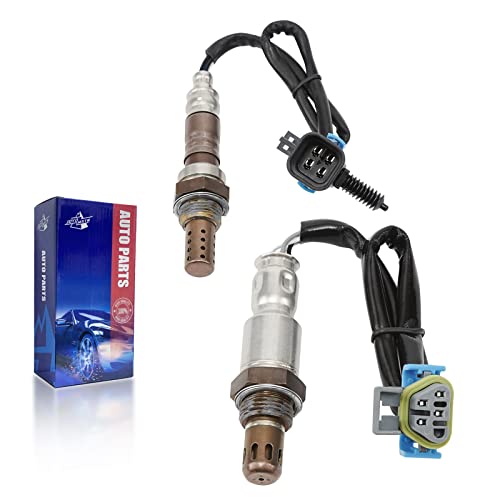
A value-focused two-sensor kit built around a white ceramic heating element rated to 650 degrees Celsius for fast light-off.
The JOYOMSTW pack covers the Chevy Captiva Sport 2.4L (2012-2015), Equinox 2.4L (2011-2014), and GMC Terrain 2.4L (2011-2015) — a focused but useful range. The internal white ceramic heater is designed to reach 650 degrees Celsius, accelerating ignition and improving fuel efficiency. An OEM chip inside the sensor aims for high measurement accuracy, and the breathable membrane keeps the sensitive components insulated from moisture.
The aspect data shows fit as the top positive trait — owners confirm it fits “perfectly” for the listed GM models. One buyer using it as a cheap alternative to Honda parts reported it working after 10 miles with no O2 sensor codes. However, reliability receives mixed feedback: some shoppers say the sensor solved all their issues, while others had a mechanic flag that all sensors in the pack were identical and wouldn’t work for their specific bank position.
Ceramic fast-heat design: The 650-degree-Celsius white ceramic heater is a real technical feature for a sensor at this price point, helping it reach operating temperature quickly.
Mixed reliability note: The aspect counts show reliability as the most-discussed topic, with some owners calling them great and others reporting they didn’t work. The return window timing is worth checking.
Best for: budget-conscious Equinox/Terrain/Captiva owners who want a two-pack to try before spending dealer-level money on individual sensors.
Not for: anyone who cannot confirm the connector matches their original part exactly — the listing explicitly warns to verify the O2 sensor connector matches your old part.
9. A-Premium O2 Oxygen Sensor for VW/Audi
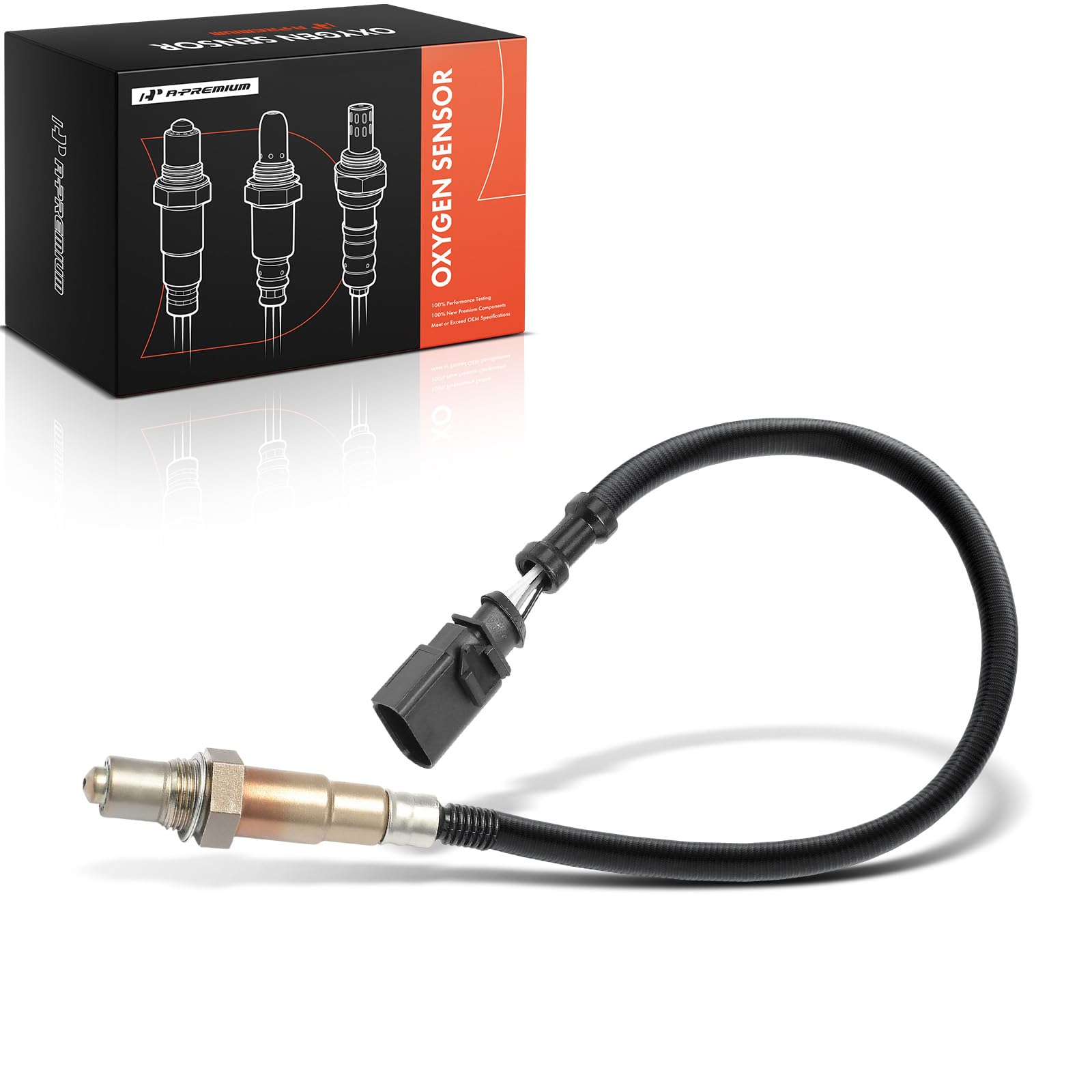
A dedicated downstream sensor for VW and Audi 2.0T and 2.5L engines that competes with OEM brands at a fraction of the cost.
Most sensors on this list target domestic trucks, but the A-Premium part zeros in on German models: Audi A3/A4/A5/A6/Q3/Q5, VW Jetta, Passat, Tiguan, Golf, Beetle, CC, GTI, Eos, and even the Porsche Cayenne. The fitment data is unusually detailed, specifying downstream, downstream rear, center, downstream L, and downstream R positions — so you can pinpoint exactly which bank and location you need. The 4-wire heated design uses a threaded mount with male connector gender.
Quality gets consistently positive marks from owners. One long-term user of an Audi A4 Premium Plus 2.0T reported buying an NTK brand sensor that failed within 5 miles, then switching to this A-Premium and seeing no check engine light — and the sensor was still going strong two years later. The stainless steel construction and ±1% measurement accuracy match the specs of much pricier OE sensors. The main caveat is the narrowness of the compatibility: this is not a universal sensor, and ordering the wrong sub-position (downstream vs downstream rear) will give you the wrong part.
What VW/Audi owners love
- Detailed position labeling (downstream L, downstream R, etc.) prevents order mistakes
- One owner reported it outlasted an NTK sensor that failed in under 5 miles
- Stainless steel build feels “premium quality” according to buyers
What to watch
- Compatibility is limited to VW/Audi/Porsche family — no domestic truck coverage
- Functionality receives mixed feedback; most owners are happy but a small number report codes returning
Reach for this if: you drive a 2009-2018 Audi or Volkswagen with a 2.0T or 2.5L engine and want a sensor that multiple owners say outperformed more expensive aftermarket brands.
Look elsewhere if: you drive a domestic or Asian make — this sensor is engineered specifically for the VW Group footprint and connector style.
Understanding the Specs
Heated vs Non-Heated (4-Wire vs 1/2-Wire)
A heated downstream sensor has four wires: two for the oxygen signal and two for the internal heater circuit. This heater brings the sensor to operating temperature within seconds, so the engine computer gets accurate readings almost immediately after a cold start. Most vehicles made after the mid-1990s use 4-wire heated sensors. Non-heated sensors (1 or 2 wires) rely solely on exhaust heat and take longer to respond. If your car originally had a 4-wire sensor, always replace it with a 4-wire heated unit.
Harness Length and Connector Shape
Downstream sensors typically have shorter wiring harnesses than upstream sensors because they sit closer to the rear of the exhaust system. A harness that is 5.8 inches may fit perfectly in one chassis but leave you stretching in another. Before buying, measure the rough distance from the sensor bung to the vehicle-side connector. The connector shape — rectangular or oval, with specific tab positions — must also match exactly, or the plug won’t seat.
FAQ
Can I use an upstream O2 sensor in the downstream position?
How do I know if I need a downstream sensor or an upstream sensor?
How long does a downstream O2 sensor typically last?
Will any downstream sensor fit my 2005 Chevy Silverado 1500?
What is the difference between Bank 1 and Bank 2 for downstream sensors?
Do I need to reset the ECU after replacing a downstream O2 sensor?
Will a downstream sensor improve my fuel economy?
Can a bad downstream sensor cause a misfire?
Why does my new downstream sensor still show a check engine light after installation?
How difficult is it to install a downstream O2 sensor myself?
Final Thoughts: The Verdict
For most buyers, the downstream o2 sensor that balances factory-correct fitment, proven owner satisfaction, and reasonable cost is the GM Genuine Parts 213-1702 — a part that owners of 2003-2005 GM trucks praise for its perfect wire length and genuine OE quality. If you need a broader vehicle range or want a sensor at a lower price point, the BOSCH 15284 is a strong runner-up with its 100% factory-tested build and stainless steel body. And for VW/Audi owners who have been frustrated by other aftermarket sensors, the A-Premium has earned a dedicated following for its long-term reliability in German-engine cars.
How We Picked
We do not accept paid placement. Every pick is matched to a real buyer and a real use-case; we do not hands-on test units.
Sources & Methodology
Specifications: manufacturer listings and product documentation. Review insights: verified customer reviews, as of July 2026. Pricing: not shown on this page (it changes often); check the current price via the retailer link.
As an Amazon Associate, Trending Car earns from qualifying purchases. This does not affect which products we feature.