
Our readers keep the lights on and my garage snacks stocked. As an Amazon Associate, I earn from qualifying purchases.
Specs are compiled from manufacturer listings and verified buyer reviews and can change over time — please confirm the key details on the product page before buying.
Your head is the most expensive part of the car, yet a shocking number of track-day helmets treat safety as an afterthought. A proper racing helmet isn’t just about passing tech inspection — it is the one piece of gear that stands between you and life-altering injury in a rollover or high-speed crash. This guide cuts through the noise to show you the few models that actually carry the certifications your track day or racing series demands, without blowing your budget on brand hype.
I’m Min Islam — the founder and writer behind Trending Car. This guide is built by comparing the manufacturers’ published specifications and the patterns across verified customer reviews, so you get each pick’s real strengths and trade-offs instead of marketing spin.
Whether you are hitting autocross cones for the first time or chasing lap records, the right car racing helmets share one non-negotiable: a current Snell SA2020 certification paired with a fit that won’t distract you at 100 mph. Here are the three that actually deliver.
Our Picks at a Glance
How To Choose The Best Car Racing Helmets
Buying a racing helmet is not like buying a pair of sneakers. The wrong fit or an expired certification can get you turned away from the grid — or worse, fail you when you need it most. Here are the three things that separate a safe helmet from a dangerous one.
Certification: Snell SA2020 Is The Gold Standard
Most sanctioning bodies (SCCA, NASA, autocross clubs) require a Snell SA2020 rating. DOT alone is for the street — it does not pass tech for wheel-to-wheel racing. SA2020 helmets are tested for impact energy management, shell penetration resistance, and flame resistance. An expired SA2015 or SA2010 helmet is a wall hanger, not a race-ready piece of gear.
Shell Material & Weight
Fiberglass and FRP (Fiber Reinforced Plastic) shells are the most common entry-to-mid-range options. A lighter helmet reduces neck fatigue over a full track day, but weight usually climbs with affordability. Premium helmets use carbon or Kevlar blends — lighter but pricier. Either way, a Snell-certified FRP or fiberglass shell is a safe choice for weekend warriors.
HANS Compatibility
Threaded M6 brass inserts in the shell allow you to install a HANS (Head and Neck Support) device. This is not optional for most racing series — it is mandatory. Every helmet on this list has HANS threaded inserts, so you can upgrade your safety system without buying a new helmet.
Quick Comparison
| Model | Best For | Certification | Weight | Shell Material | Amazon |
|---|---|---|---|---|---|
| ILM Model 760★ Best Overall | Best Value & Fit | Snell SA2020 | 2.25 Kilograms | Fiber Reinforce Plastic (FRP) | Amazon |
| RaceQuip PRO20 | Race-Proven Safety | Snell SA2020 | 4.7 Pounds | FRP Composite | Amazon |
| Typhoon SA2020 | Budget Entry-Level Cert | Snell SA2020 / DOT | 3.75 Pounds | Fiberglass | Amazon |
In‑Depth Reviews
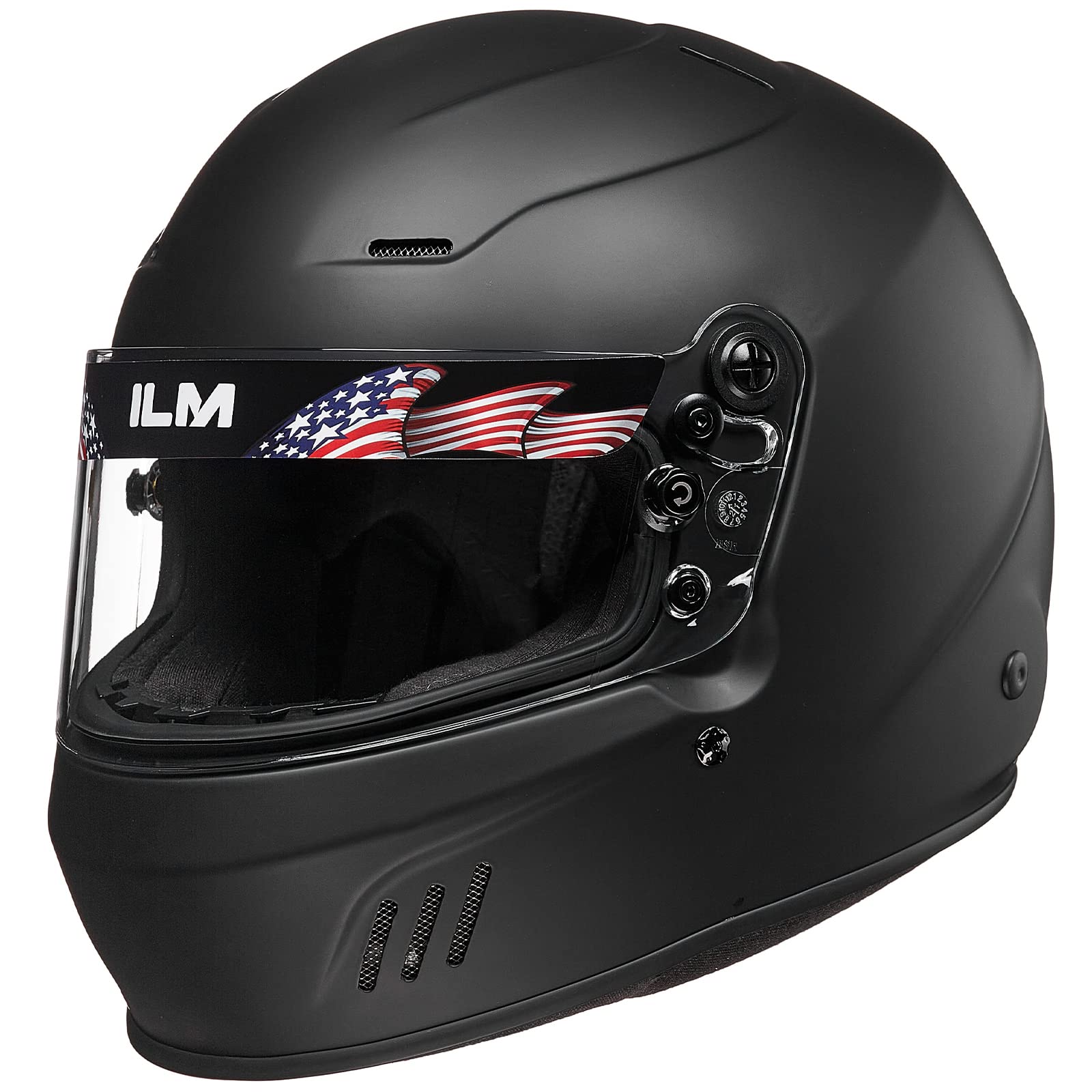
1. ILM Snell SA2025 Full Face Auto Car Racing Helmets for Men and Women Model 760
Our pick — over 4.5★ from 150+ verified ratings; the strongest balance of quality and price.
Autocrossers and road-course regulars rave about this Snell SA2020 helmet for its fit.
The ILM Model 760 is the crowd favorite for a reason — it combines a Snell SA2020 certification, a lightweight FRP shell, and HANS threaded inserts without demanding a premium price. At 2.25 kilograms, it is lighter than the RaceQuip (4.7 pounds), and the fiber reinforcement plastic construction keeps the shell stiff enough to meet Snell’s strict penetration test. The 16 vents (number of vents) channel enough airflow to keep you cool between sessions, and the matte finish avoids glare on sunny days.
What wins people over is the fit. Quality and comfort are the most-discussed aspects, with owners calling it “a great fit” and “comfortable” right from the start for autocross and road-course use. The 40mm sunshade film across the top of the visor cuts the glare that causes giddiness on long straight sections, and the tear-off posts let you peel away mud during a wet session. Unlike the RaceQuip, which runs heavier and more purpose-built, the ILM feels like a daily-driver track helmet that is ready to go the moment you buckle the D-ring.
The only real limitation is the visor. A few owners note the tear-off post spacing could be tighter, and the included shield is adequate but not optically perfect like the premium RaceQuip unit. Yet for the price and the Snell SA2020 cert (a safety standard that means it passed impact and flame tests), the ILM is tough to top.
Helmet Highlights
- Light FRP shell (2.25 kg) reduces neck fatigue
- 16 vents for airflow between sessions
- HANS threaded inserts (M6) compatible (not included) for head restraint
- 40mm sunshade film reduces glare on sunny track days
Trade-Offs to Note
- Visor optics are decent but not distortion-free premium
- Tear-off posts are adequate but not as sturdy as pro-level kits
Best for: Autocrossers and track-day drivers who want a Snell SA2020-certified helmet with a comfortable, lightweight shell at a reasonable price point.
skip it if: You need the absolute lightest helmet or demand premium optically-correct face shields.
2. RaceQuip Full Face Helmet PRO20 Series Snell SA2020 Rated Gloss Black Large 276005

Buyers report this helmet survived a real racecar rollover crash.
The RaceQuip PRO20 carries a Snell SA2020 rating and is built around an FRP (Fiber Reinforced Plastic) composite shell. At 4.7 pounds, it is the heaviest helmet in this roundup — 4.7 pounds versus the Typhoon’s 3.75 pounds. That extra heft reflects a dense EPS (Expanded Polystyrene) liner and a Nomex interior that is both fire-retardant and comfortable for long stints. The Kevlar chin strap and a silicone eyeport seal that keeps dust out of the face shield are touches you expect on a more expensive lid.
One buyer reports, “It held up great during my husband’s racecar rollover crash. Saved his head!” Beyond that track record, owners like the Hook & Loop fastened cheek pads (you adjust the fit by peeling and re-sticking them) and the adjustable friction lock on the aluminum pivot that keeps the shield where you set it, even at triple-digit speeds. The tear-off posts (small studs that hold clear plastic layers you rip off mid-race) are hand-ratcheted to eight positions, so you clear mud and debris on a wet track lap without lifting the visor.
The trade-off is weight. At 4.7 pounds, you feel it on the straights during a long day, especially if you have not built up your neck muscles. The chin spoiler also gives it a look some find aggressive — but that aero shaping also reduces lift at high speed. If you race wheel-to-wheel or do frequent track days and want a proven safety record, this is the one.
Why it wins: Real rollover survival stories from owners, a snug Nomex-lined fit, and all the Snell SA2020 protection you need for serious track work.
The honest weight penalty: Heaviest at 4.7 pounds — not ideal for ultra-long endurance sessions or drivers with neck injuries.
Reach for this if: You want a helmet with a verified real-world crash survival story and are willing to accept a heavier shell for that level of protection.
Look elsewhere if: Every ounce of neck fatigue matters to you and you prefer a lighter fiberglass shell.
3. Snell SA2020 DOT Certified Full Face Helmet (Typhoon Helmets)

An entry-level Snell certified helmet that gets you on track without emptying your wallet.
The Typhoon SA2020 from BSR is the lightest helmet here at 3.75 pounds, thanks to its fiberglass outer shell. That weight savings — 3.75 pounds versus the RaceQuip’s 4.7 pounds — translates directly to less neck fatigue during a full day of autocross or lapping. It carries both a Snell SA2020 certification and a DOT approval, meaning it can pull double duty on the street if you do a canyon run before your track session.
The safety package is thorough for the price: a Kevlar chin strap with D-ring closure (you thread the strap through two metal rings to lock it), fire-retardant liner materials, a 3mm optically correct hard-coated face shield with eyeport gaskets (rubber seals around the visor opening) to keep out dust and debris, and HANS threaded inserts in the shell so you can bolt on a head restraint system. The rear exhaust vents help pull hot air out, and the plush polyester inner lining is soft against the skin. Owners call it “a very nice helmet to use for auto cross events” and note it “runs a little big” — which is actually ideal if you wear a balaclava (a thin fire-resistant hood) underneath.
The plastic shell also feels less premium than the ILM’s FRP or the RaceQuip’s Nomex interior. If you are on a tight budget and just need a Snell SA2020 cert to pass tech inspection for a weekend HPDE or drift event, the Typhoon delivers. But if you plan to log heavy seat time, the ILM is worth the upgrade.
Why it works: Lightest shell at 3.75 pounds, dual Snell/DOT certs, and a Kevlar strap — all at the most accessible price point.
Where it cuts corners: The shield profile is less aerodynamic and the interior lacks the premium feel of more expensive options.
Best for: First-time track-goers and budget-conscious drivers who need a proper Snell SA2020 cert without spending beyond their means.
Think twice if: You want a premium-feeling interior or a more aerodynamic shell for high-speed work.
Understanding the Specs
Snell SA2020 Certification
This is the safety standard most racing organizations (SCCA, NASA, autocross clubs) require. It tests impact energy absorption at multiple temperatures, shell penetration (a sharp object must not pierce the shell), chin-strap strength, and flame resistance of the liner. A helmet with an expired Snell SA2015 or SA2010 is not legal for competition. Always check the sticker inside the shell — if it does not say SA2020 or newer, you need a new helmet.
HANS Threaded Inserts
HANS (Head and Neck Support) devices protect your neck from whiplash in a crash by tethering your helmet to a yoke on your shoulders. The helmet must have two threaded M6 brass inserts (6-millimeter metal nuts embedded in the shell) behind the lining — one on each side — to accept the HANS posts. Every helmet in this guide has them, so you can bolt on a HANS device without drilling or glue.
Shell Material: FRP vs Fiberglass
FRP (Fiber Reinforced Plastic) and fiberglass are the two most common shell materials for entry-to-mid-range racing helmets. FRP is a composite that offers a good strength-to-weight ratio — stiff enough to pass Snell penetration tests and light enough for a full day of driving. Fiberglass shells are slightly heavier but often feel more premium and offer a bit more vibration dampening. Neither is inherently safer than the other at Snell-certified levels.
FAQ
How long does a Snell SA2020 helmet last before it expires?
Can I use a DOT-only motorcycle helmet for car racing?
What does HANS compatible mean exactly?
Do I need a full-face helmet for autocross?
How do I measure my head for a racing helmet?
What is a fire retardant liner and why does it matter?
Will a Snell SA2020 helmet fit my existing HANS device?
What does tear-off posts on the visor do?
Is a heavier helmet always safer?
Can I wear glasses with a full-face racing helmet?
Final Thoughts: The Verdict
For most buyers, the car racing helmets winner is the ILM Model 760 because it delivers a Snell SA2020 cert, a lightweight FRP (fiber-reinforced plastic) shell, 16 vents, and HANS threaded inserts at a price that undercuts premium competitors — all backed by a crowd of owners who call it comfortable right from the start. If you want a helmet with a proven real-world crash survival story and a fire-retardant Nomex interior (a heat-resistant fabric), grab the RaceQuip PRO20. And for a budget-conscious first timer who just needs a Snell cert to pass tech inspection, the Typhoon SA2020 is the lightest entry point at 3.75 pounds.
How We Picked
We do not accept paid placement. Every pick is matched to a real buyer and a real use-case; we do not hands-on test units.
Sources & Methodology
Specifications: manufacturer listings and product documentation. Review insights: verified customer reviews, as of July 2026. Pricing: not shown on this page (it changes often); check the current price via the retailer link.
As an Amazon Associate, Trending Car earns from qualifying purchases. This does not affect which products we feature.