
Our readers keep the lights on and my garage snacks stocked. As an Amazon Associate, I earn from qualifying purchases.
Specs are compiled from manufacturer listings and verified buyer reviews and can change over time — please confirm the key details on the product page before buying.
The difference between a productive day on the water and a frustrating one often depends on one thing: a battery that still has power at 4 p.m. If your current setup has you watching the voltage drop before lunch, it is time to look at a deep cycle marine battery that actually delivers what it promises.
I’m Min Islam — the founder and writer behind Trending Car. This guide is built by comparing the manufacturers’ published specifications and the patterns across verified customer reviews, so you get each pick’s real strengths and trade-offs instead of marketing spin.
Lithium remains the overwhelming choice for boaters and RV owners, and we have sorted through the top contenders to bring you a practical look at the deep cycle marine battery options that actually deserve your hard-earned cash.
Our Picks at a Glance

How To Choose The Best Deep Cycle Marine Battery
A deep cycle marine battery is built to deliver a steady amount of power over a long period, unlike a car battery that dumps all its energy in a few seconds to start an engine. You need the right chemistry, capacity, and physical size for your boat or RV.
Chemistry — Why Lithium is the New Standard
Lithium iron phosphate (LiFePO4) batteries weigh about 20-23 pounds, compared to a lead-acid battery that can weigh 40-50 pounds. They also let you use nearly all of their rated amp hours without damaging the battery, whereas a lead-acid battery is typically only safe to drain to 50% of its capacity. That means you can use nearly all of the rated capacity, whereas lead-acid provides only 50% usable — so a 100Ah lithium gives 100Ah usable, while a 100Ah lead-acid gives only 50Ah usable.
Capacity — How Many Amp Hours Do You Actually Need?
Every trolling motor or RV fridge draws a certain number of amps. If your trolling motor pulls 30 amps and you want a full day of use — say six hours — you need at least 180Ah of usable capacity. Because lithium gives you nearly 100% of its rated capacity, a 100Ah lithium battery can run that same motor for roughly 3 hours. Always match your daily energy draw to the battery’s amp-hour rating.
BMS — The Safety Brain Inside the Battery
A Battery Management System (BMS) is a circuit board inside the battery that automatically shuts things down if it detects overcharging, over-discharging, a short circuit, or dangerously high or low temperatures. A good BMS is what stops you from killing your battery by accidentally draining it too far or charging it when the temperature is below freezing.
Quick Comparison
| Model | Best For | Capacity | Weight | Dimensions | Amazon |
|---|---|---|---|---|---|
| Litime 165Ah Bluetooth★ Best Overall | Best Overall | 165Ah | 32.2 lbs | 13 x 6.77 x 8.5 in | Amazon |
| Generic 50Ah LiFePO4Budget Entry | Budget Entry | 50Ah | 14 lbs | 5.43 x 8.98 x 8.27 in | Amazon |
| Yeagulch 100Ah Group 31Trolling Power | Heavy Trolling | 100Ah | 21.6 lbs | — | Amazon |
| HRBEENERGY 100Ah Group 24 | Compact Power | 100Ah | 20.9 lbs | 6.6 x 10.23 x 8.5 in | Amazon |
| SUPER EMPOWER 100Ah | Cold-Weather Use | 100Ah | 21.6 lbs | 6.49 x 10.24 x 8.98 in | Amazon |
| GrenerPower 100Ah | Premium Build | 100Ah | 22.6 lbs | 6.61 x 10.23 x 8.3 in | Amazon |
| Dumfume 150Ah | High Capacity | 150Ah | 43.0 lbs | — | Amazon |
| Dyness 100Ah Mini TM | Kayak & Small Boat | 100Ah | 20.9 lbs | 10.2 x 6.6 x 8.2 in | Amazon |
| Wattcycle 100Ah | Proven All-Rounder | 100Ah | 23.2 lbs | 10.2 x 6.6 x 8.2 in | Amazon |
In‑Depth Reviews
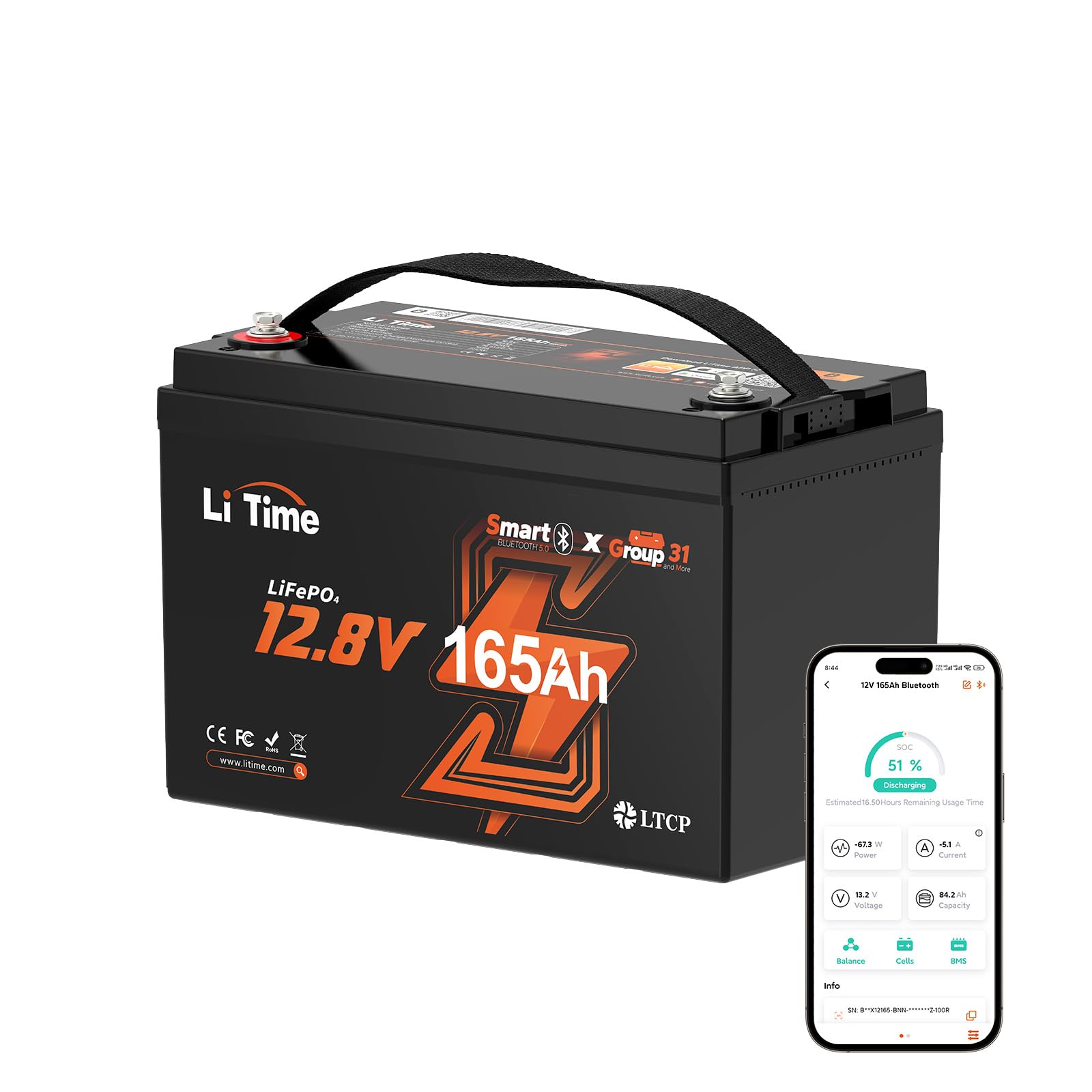
1. Litime 12V 165Ah Bluetooth Group 31 LiFePO4
Our pick — over 4.5★ from 550+ verified ratings; the strongest balance of quality and price.
The 165Ah flagship that delivers a full day of trolling without flinching.
Anytime you run a battery for hours on end, the limiting factor is usable capacity. The Litime gives you 165 amp hours (Ah) of lithium iron phosphate (LiFePO4) power — 165Ah versus the 50Ah budget options. Buyers report using it for a four-hour session on a 16-foot jonboat with three men aboard into an 8-mph headwind, and the battery barely discharged. That is the real-world definition of “day-long power.”
It also packs Bluetooth 5.0 so you can check the charge level from your phone, and the built-in Battery Management System (BMS — the safety board) covers over 20 protections including low-temperature cutoff below 32°F. The Group 31 size (13 x 6.77 x 8.5 inches) fits standard battery trays, and the IP65 waterproof rating means splashes from the bilge won’t kill it.
The weight at 32.2 pounds is noticeable — 32.2 pounds versus the 50Ah models at 14 pounds — but the capacity is in a different league. The crowd favorite across 900+ ratings gives it the edge over any smaller unit for serious boaters and RV owners who need real endurance.
What wins people over
- 165Ah capacity easily outlasts a full fishing day, even against wind
- Bluetooth 5.0 for real-time monitoring from your phone
- IP65 waterproof rating shrugs off spray and rain
- Expandable to 33.79kWh for larger RV or home backup setups
The honest trade-offs
- Weighs 32.2 pounds — noticeably heavier than smaller 100Ah units
- Price is a significant jump over entry-level lithium options
- Bluetooth app has a learning curve for first-time users
Reach for this if: you fish long days or run a 24V trolling motor and want one battery to handle the whole trip without worry.
Look elsewhere if: weight is your top priority for a kayak, or your budget is under the mid-range mark.
2. 12V 50AH Lithium Battery Generic LiFePO4
A lightweight 50Ah lifeline for small boats and solar setups on a tight budget.
Not everyone needs a 165Ah monster. For smaller electronics, a fish finder, or a couple of USB fans, the 50Ah LiFePO4 is a massive upgrade from a heavy lead-acid battery. At 14 pounds, it is lighter than the 21.6-pound 100Ah units, and owners mention it replaces a seven-year-old lead-acid starter battery that weighed over 50 pounds. The same owner ran his GPS and sonar all day without any voltage drop.
The built-in 50A BMS handles overcharge, overdischarge, overcurrent, short circuit, and overtemperature protection. With a lifespan of 5000 to 7000 cycles, this battery can outlast most boat electronics. The compact size (5.43 x 8.98 x 8.27 inches) is small enough to stash in tight compartments — though the mixed reaction on size suggests you should measure your box first.
A few customers note that the actual capacity tested closer to 40Ah, and one unit failed after winter storage. The battery life is the most-praised aspect, but these warnings mean you should treat the 50Ah as a budget-friendly option for lighter loads, not a heavy-trolling workhorse.
What stands out
- Weighs only 14 pounds — a fraction of the old lead-acid it replaces
- 5000-7000 cycle lifespan means it can last for over a decade in light use
- Small footprint fits in tight battery compartments
What to watch for
- Capacity may test under 50Ah — a few owners measured closer to 40Ah
- Not enough power for a full day of heavy trolling motor use
- Mixed reports on reliability after a season of storage
Best for: the angler who just needs to keep a sonar and radio running, not push a boat all day.
Think twice if: you plan to run a 55lb+ trolling motor for extended hours.
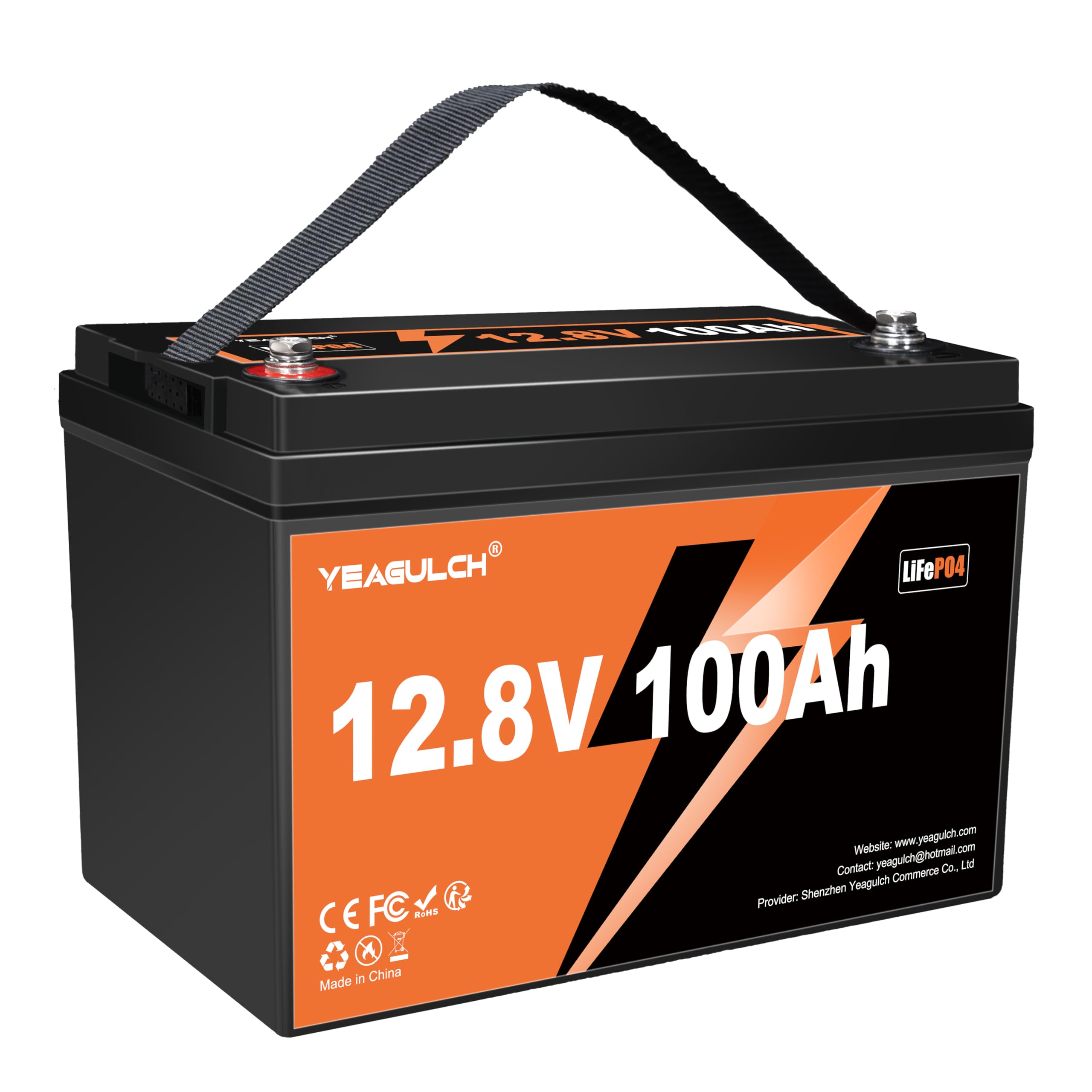
3. Yeagulch 12V 100Ah LiFePO4 Group 31
A 100Ah workhorse that handles a 70lb thrust motor for days on end.
Trolling motor owners often find the balance at 100Ah — enough for a long weekend without the weight of a 165Ah. The Yeagulch delivers 12.8 volts and 1.28kWh of energy, and the reviews confirm it runs a 70lb thrust motor for a three-day trip without needing a recharge. Build a 48V system by wiring four in series, or expand capacity with four in parallel.
At 21.6 pounds, it is lighter than an equivalent lead-acid battery (which can weigh 40-50 pounds). The built-in 100A BMS protects against overcharge, overdischarge, overcurrent, short circuit, and overtemperature.
The company warns against using it in high-power trolling motors exceeding 700W, so check your motor’s rating. The wiring can be a bit messy internally, but the reliability and battery quality are the top praises.
The highlights
- 100Ah capacity runs a 70lb trolling motor for three days of steady use
- Weighs just 21.6 pounds — weighs 21.6 pounds, compared to lead-acid at 40-50 pounds
- Stable 12.8V output improves motor speed and efficiency
Limitations
- Not recommended for motors exceeding 700W of power draw
- No Bluetooth BMS — you cannot monitor charge from your phone
- Wiring inside the case is functional but not the cleanest
Ideal for: the weekend angler with a 70lb or lower thrust motor who wants reliable power without the premium Bluetooth price.
Avoid if: you need to track your battery’s state of charge remotely via an app.
4. HRBEENERGY 12.8V 100Ah LiFePO4 Group 24

A Group 24 100Ah that packs big power into a smaller footprint.
Not every battery tray can fit a Group 31. The HRBEENERGY uses the BCI Group 24 form factor (6.6 x 10.23 x 8.5 inches), so it slips into tighter compartments while still delivering 100Ah at 12.8 volts. With 1280Wh of total energy, it supports 8000+ deep cycles (8000+ cycles versus lead-acid’s 300-1500 cycles) and features a built-in 100A BMS with low-temperature cutoff.
Buyers running 55lb trolling motors find it charges fast with a lithium-specific charger and performs on par with more expensive brands for a half-day trip. One owner wired three in series for a 36V golf cart that ran ten hours. The battery life gets mixed marks — some report it fades faster than expected under constant high draw, but the excellent battery quality and lightweight 20.9-pound build are almost universally praised.
It is an excellent value if your box demands a Group 24 size, but the mixed longevity feedback means it might not suit a daily-driver trolling motor at full throttle.
What works
- Group 24 size fits where larger Group 31 batteries will not
- 8000+ cycle lifespan outlasts typical AGM batteries by years
- Weighs only 20.9 pounds for easy handling
The catch
- Battery life is mixed — some reviewers point out capacity loss under sustained load
- Requires a LiFePO4-specific charger for best results
- Not ideal for full-day heavy trolling without a mid-day charge
Reach for it: when your battery compartment is Group 24 sized, and you need a reliable 100Ah for moderate use.
Pass on it: if you plan to draw 50+ amps continuously for hours every weekend.
5. SUPER EMPOWER 12V 100Ah LiFePO4 Group 24
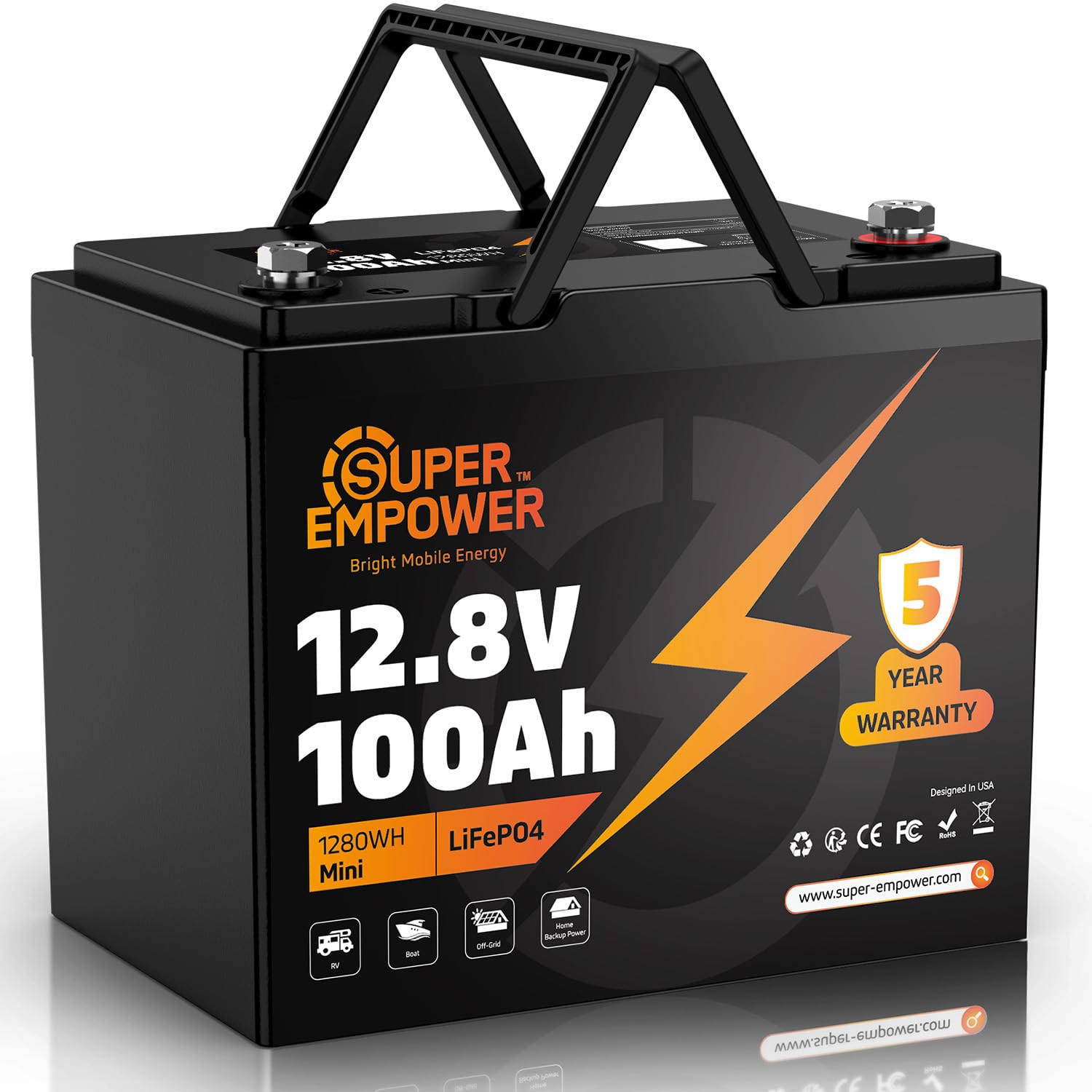
A Group 24 LiFePO4 built to keep charging even when the thermometer dips below freezing.
Most lithium batteries stop charging below 32°F — a safety feature that protects the cells. The SUPER EMPOWER handles this by automatically pausing the charge at 32°F and cutting off discharge at -20°C (-4°F). That makes it a strong pick for winter RV boondocking or early-season fishing in cold climates.
It offers 100Ah capacity and 1280Wh of energy with a 100A BMS. The battery life and performance are the top positive aspects, with owners noting it powers an electric blanket for three nights and recharges quickly via solar. At 21.6 pounds with built-in folding handles, it is easy to move around. The 5-year warranty provides extra confidence.
The BMS prevents charging below 32°F in all conditions, so if you accidentally leave your charger plugged in during a cold snap, the battery protects itself. You need a 12V LiFePO4 charger (14.4-14.6V, CC/CV profile) for best results.
Strong points
- Low-temperature charge cutoff protects cells below 32°F
- Rated for 5000 cycles at 100% depth of discharge
- Folding handles and 21.6-pound weight make it easy to carry
Downsides
- No Bluetooth monitoring — you have to check voltage manually
- Not rated for engine starting, only deep-cycle use
- Needs a specific LiFePO4 charger for optimal charging
Best for: cold-weather campers and RV owners who need a battery that can take a charge in near-freezing temperatures.
Skip if: you need app-based monitoring or plan to pull high current for starting a motor.
6. GrenerPower 12V 100Ah LiFePO4 Group 24
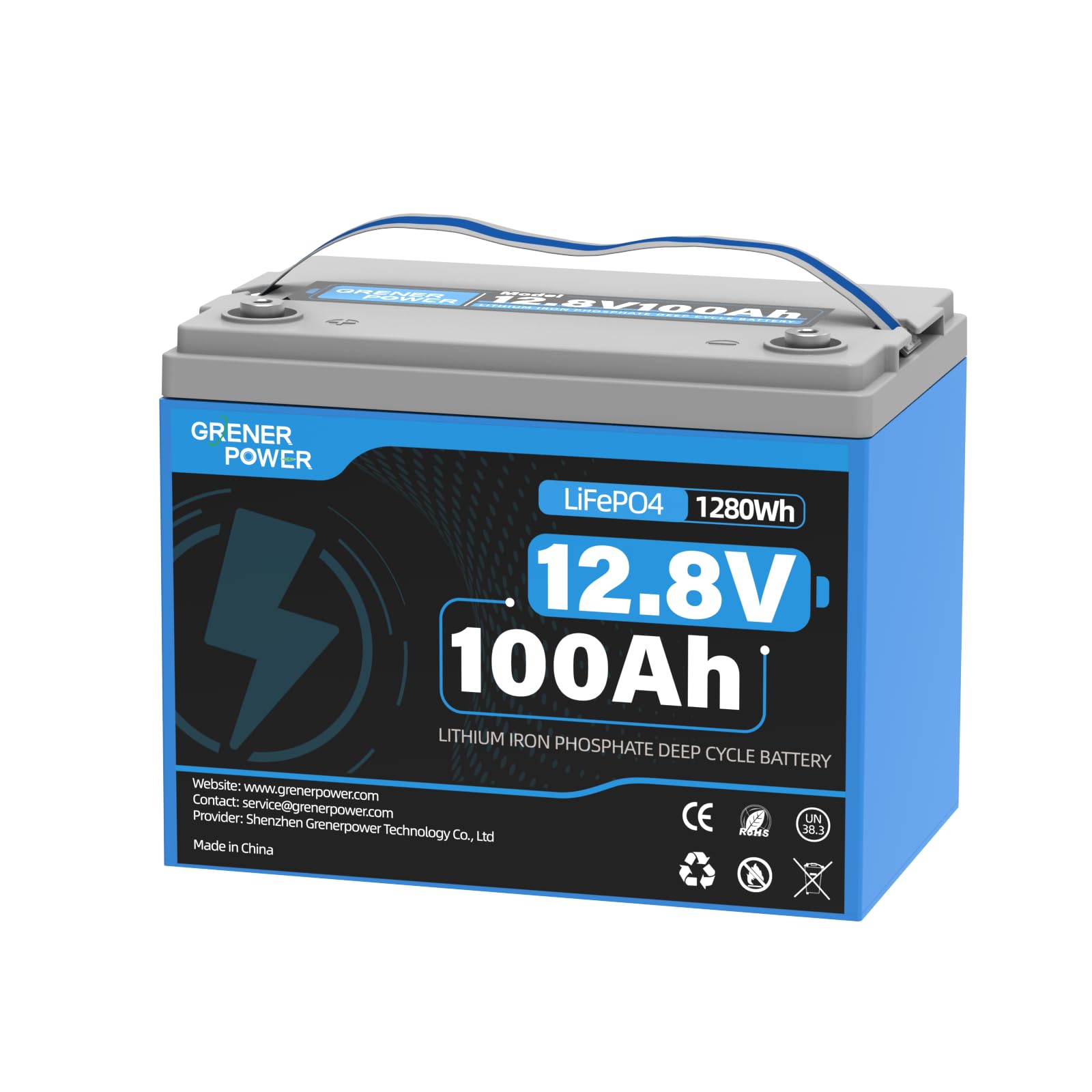
A Grade A+ cylindrical cell 100Ah that balances weight, build quality, and safety certifications.
GrenerPower uses cylindrical cells (the same form factor as many high-end electric vehicles) instead of the flat prismatic cells most budget batteries use. This design allows for better heat dissipation and structural rigidity. The 100Ah battery delivers 1280Wh at 12.8 volts with a 100A BMS that provides five layers of protection.
At 22.6 pounds, it is one of the lighter 100Ah units, and the BCI Group 24 size makes it a drop-in for most RV compartments. The performance and battery quality are the most mentioned aspects. One owner ran a 90% discharge test at 60A for 90 minutes and reported the voltage held steady at 12.8V throughout — a sign of strong cell consistency.
It supports up to 4S4P configurations (16 batteries for a 20.48kWh system), and comes with a 5-year warranty. The foldable handles and compact footprint make it a favorite for solar generator builds.
Why it shines
- Grade A+ cylindrical cells offer consistent voltage under high load
- Passed a real-world 60A discharge test with stable 12.8V output
- Compact 22.6-pound build with foldable handles for easy transport
Minor drawbacks
- Higher price than some comparable 100Ah batteries
- No Bluetooth BMS — you cannot check charge from your phone
- Designed for energy storage, not engine starting applications
Ideal for: solar power builders and RV owners who want a high-quality cylindrical cell battery with a strong BMS.
Not for you if: you need Bluetooth monitoring or are on the tightest possible budget.
7. Dumfume 12V 150Ah LiFePO4 Group 31
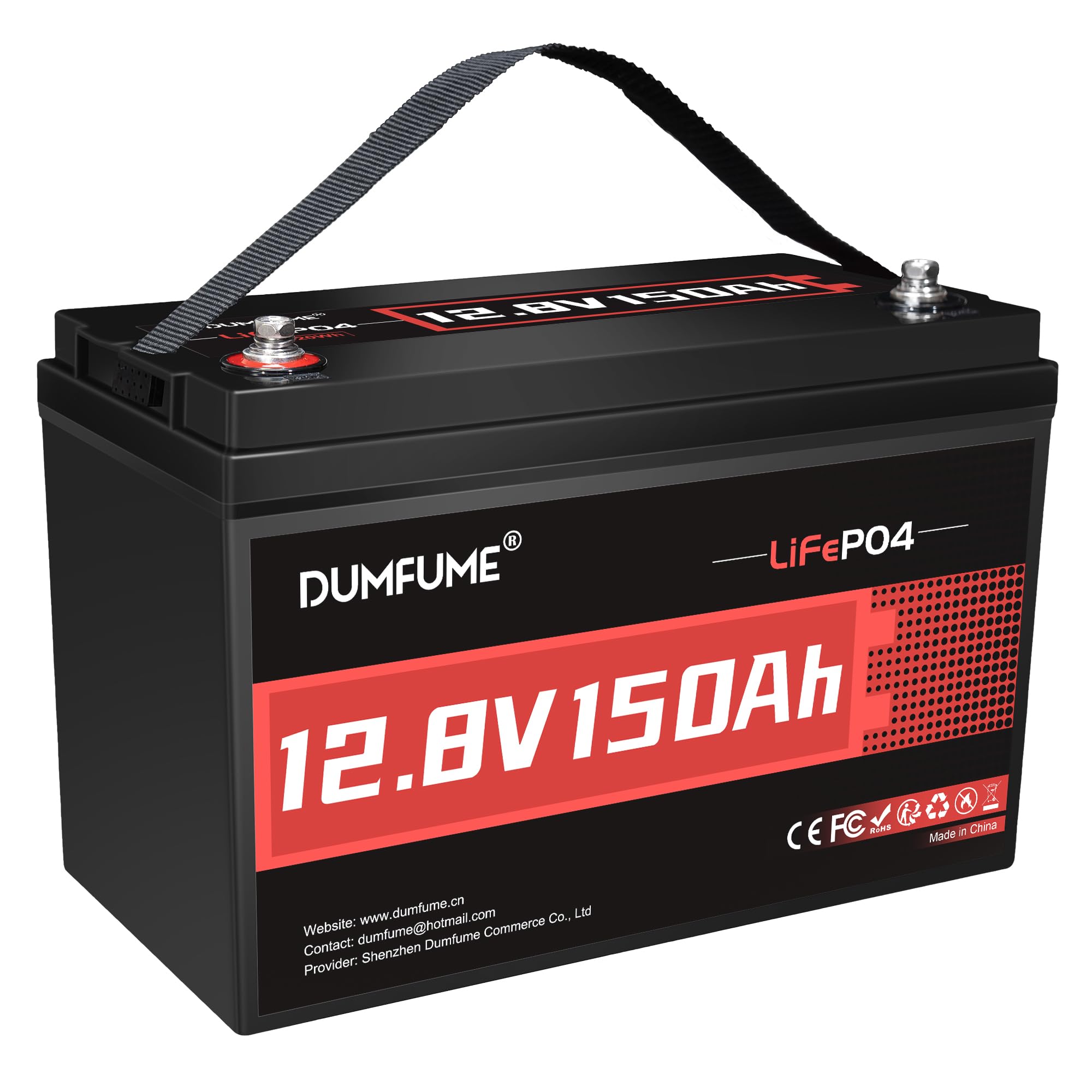
A 150Ah energy bank with 1920Wh that runs a fridge and lights for days.
If you need sustained runtime for an RV residential fridge or a full solar backup, the Dumfume 150Ah delivers 1920Wh of stored energy. The 100A BMS protects against overcharge, overdischarge, short circuit, and overheating, and the battery supports up to 4S4P expansion for a 20.48kWh system.
Owners running four units in parallel report each battery exceeded its rated capacity by about 7Ah in testing, and the lightweight build (around 24.5 pounds per unit) makes them easy to carry. The build quality includes ring terminals, foam padding, and silicone adhesive inside. Battery life across 4000+ cycles to 80% capacity makes it a long-term investment.
There are reports of some units arriving with low voltage that required a parallel jump from a charged battery to wake them up. A few owners had DOA units due to shipping damage, though the company handled replacements. The 5-year warranty applies to direct purchases, so buy accordingly.
Where it excels
- 150Ah capacity provides 1920Wh for extended off-grid trips
- Many units test slightly above-rated capacity in real-world use
- Well-constructed internals with foam padding and ring terminals
What to watch
- Some units arrive with low voltage and need a jump-start to wake up
- Odd physical size may need a custom enclosure in some boats
- Warranty support is better direct than through the Amazon listing
Best for: RV owners with a residential fridge who need endurance above all else, or solar installers building a large battery bank.
Think twice if: you need a simple plug-and-play install without any potential wake-up issues.
8. Dyness 12V 100Ah Mini TM Group 24
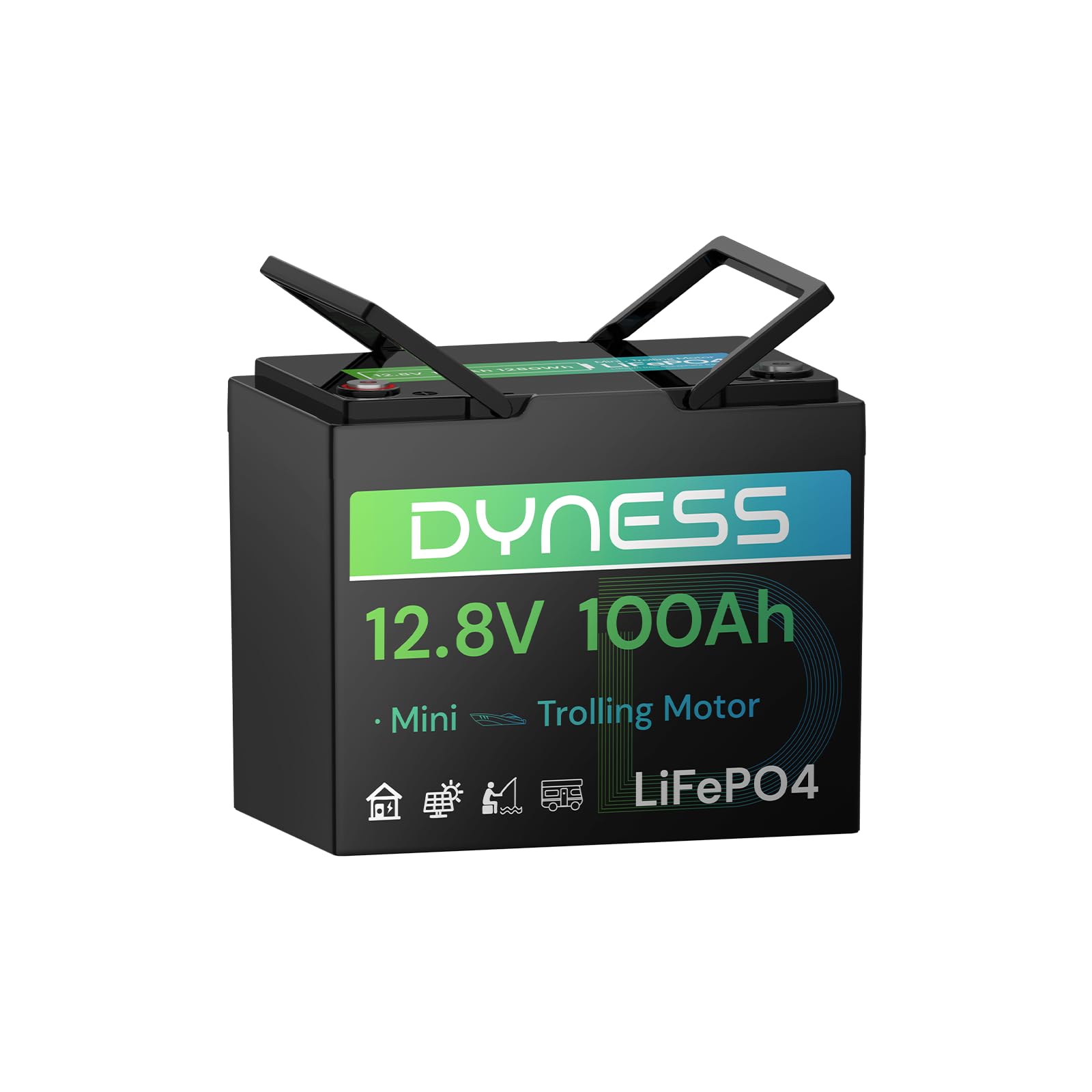
A 20.9-pound 100Ah mini battery designed specifically for 30-68lb trolling motors.
The Dyness Mini TM is engineered for the exact motors most kayak anglers and small boat owners run. It comes in a Group 24 size (10.2 x 6.6 x 8.2 inches) versus Group 31 (13 x 6.77 x 8.5 inches), freeing up critical deck space. The IP65 rating means splashes and rain will not damage it, and the 20.9-pound weight is light enough to carry one-handed.
Owners on kayaks report it powers a 38lb Minn Kota for a full day at 50% thrust — about 6 hours of run time. The built-in 100A BMS includes low-temperature protection that cuts off charging below 32°F and shuts down entirely at -4°F. Grade A+ LiFePO4 cells deliver 6000+ deep cycles and a 10-year design lifespan.
The compact build does come with slightly less energy density than a bigger battery, but for most kayakers and jonboat users, 100Ah is plenty. The premium price reflects the focused design and certifications (FCC, CE, RoHS, UN38.3).
Why it fits
- Ultra-compact footprint (10.2 x 6.6 x 8.2 inches) versus Group 31 (13 x 6.77 x 8.5 inches)
- 20.9 pounds is ideal for kayak carry and tight compartments
- IP65 waterproof rating protects against rain and splashes
Considerations
- Premium price for the form factor
- Not suited for large trolling motors above 68lbs of thrust
- Smaller case means slightly less cell protection than full-size units
Reach for this if: you kayak or run a light jonboat and every inch and ounce matters on the deck.
Look elsewhere if: you run a heavy 24V trolling motor or need maximum capacity in a single battery.
9. Wattcycle 12V 100Ah LiFePO4 Group 24
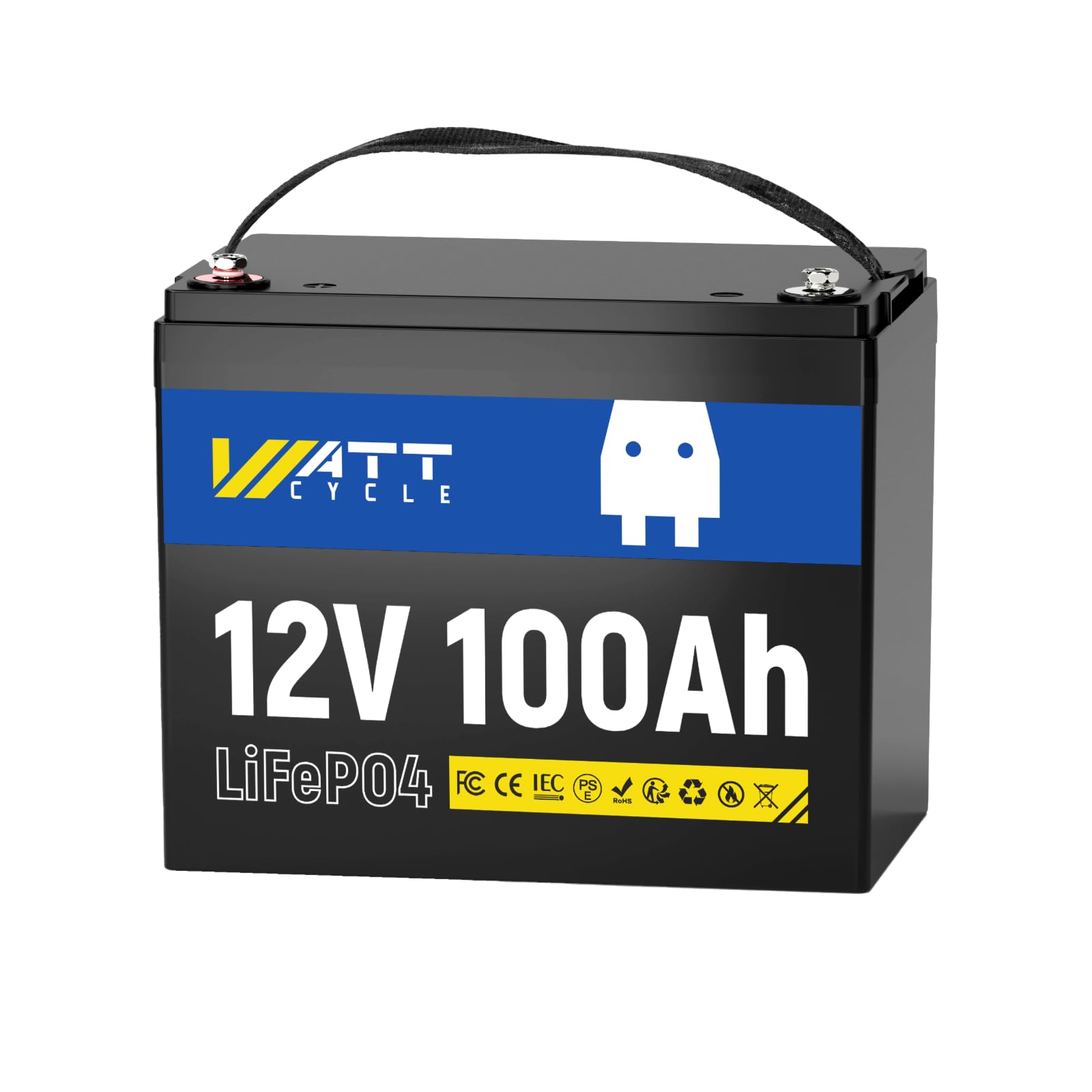
A well-reviewed 100Ah lithium battery that balances price, quality, and charging speed.
With over 400 ratings, the Wattcycle is among the most popular choices in the 100Ah space. It uses A+ grade cells and delivers 100Ah at 12.8 volts with a 100A BMS. The quality and performance are the most praised aspects, and the charging speed is a standout — shoppers say recharging from 75% depth of discharge in about 12.5 hours with a 6A charger.
The Group 24 size (10.24 x 8.23 x 6.61 inches) fits most standard trays, and the 23.2-pound weight is still easy enough to move. Safety certifications include SDS, UN38.3, FCC, CE, and ROHS. It supports up to 15,000 cycles at 60% depth of discharge, which translates to a very long service life for most users.
The only common complaint is the short bolt posts — you may need to buy M8x16mm bolts and washers if you plan a parallel connection. Otherwise, it is a solid, no-surprises choice that consistently delivers on its promises.
What works well
- Consistent 100Ah real-world performance confirmed by buyers
- Fast charging speed — recharges from 75% DoD overnight
- Full safety certifications (SDS, UN38.3, FCC, CE, ROHS)
Small gripes
- Bolts are too short for easy parallel wiring; you will need longer M8 hardware
- No Bluetooth or app monitoring
- Battery life reviews are mixed — some buyers report gradual capacity loss
Best for: boaters and RV owners who want a proven, well-reviewed 100Ah battery at a fair price without frills.
Pass if: you need app monitoring or want a plug-and-play parallel connection with the included hardware.
Understanding the Specs
Amp Hours (Ah) — What It Actually Means for Your Day
Amp hours tell you how much energy the battery can deliver over time. A 100Ah battery can theoretically deliver 1 amp for 100 hours, or 10 amps for 10 hours. In real life, your trolling motor draws a certain amperage — a typical 55lb thrust motor pulls about 30-40 amps at full speed. So a 100Ah LiFePO4 battery would give you roughly 2.5 to 3 hours of full-throttle trolling, or much longer at slower speeds.
BMS (Battery Management System) — The Safety Guard You Never See
The BMS is an internal circuit that monitors every cell. It shuts down charging if the voltage gets too high, stops the battery from being drained below safe levels, and cuts power if a short circuit or overheating occurs. A good BMS is the difference between a battery that lasts a decade and one that dies in a year. Look for at least overcharge, overdischarge, short circuit, and temperature protection.
FAQ
What is the difference between a deep cycle marine battery and a starting battery?
Can I use a lithium LiFePO4 battery with my existing lead-acid charger?
How long does a 100Ah lithium battery run a trolling motor?
What does Group 24, Group 27, or Group 31 mean for a marine battery?
Can a lithium deep cycle battery be used in cold weather?
How do I connect multiple lithium batteries in series or parallel?
What is the typical lifespan of a LiFePO4 deep cycle battery?
Can I use a lithium deep cycle battery to start my outboard motor?
What does the BMS do when it detects a problem?
What size fuse do I need for a 100Ah lithium battery?
Final Thoughts: The Verdict
For most people, the deep cycle marine battery winner is the Litime 165Ah Bluetooth because its 165Ah capacity, Bluetooth monitoring, and IP65 waterproofing make it the single best option for heavy trolling motor users and RV owners who need reliable all-day power. If you want a compact, lightweight 100Ah battery for a kayak or small boat, grab the Dyness 100Ah Mini TM. And for cold-weather RV boondocking, the SUPER EMPOWER 100Ah with its low-temperature protection is the one to reach for. Across nearly a thousand ratings, the build quality and real-world endurance of these picks consistently rise to the top.
How We Picked
We do not accept paid placement. Every pick is matched to a real buyer and a real use-case; we do not hands-on test units.
Sources & Methodology
Specifications: manufacturer listings and product documentation. Review insights: verified customer reviews, as of July 2026. Pricing: not shown on this page (it changes often); check the current price via the retailer link.
As an Amazon Associate, Trending Car earns from qualifying purchases. This does not affect which products we feature.