
Our readers keep the lights on and my garage snacks stocked. As an Amazon Associate, I earn from qualifying purchases.
Specs are compiled from manufacturer listings and verified buyer reviews and can change over time — please confirm the key details on the product page before buying.
Finding the right 1.5-inch exhaust pipe means wrestling with wall thickness, material grade, and length—all before you make a single cut or weld. Get the combo wrong and you are looking at rust in six months or a tube that slips right off the flange. This guide breaks down the five strongest contenders so you match the exact pipe to your project—whether that is a dirt bike, a generator shed, or a full custom exhaust build.
I’m Min Islam — the founder and writer behind Trending Car. This guide is built by comparing the manufacturers’ published specifications and the patterns across verified customer reviews, so you get each pick’s real strengths and trade-offs instead of marketing spin.
And if you are hunting for the best 1 1 2 exhaust pipe that balances weldability with long-term corrosion resistance, the picks below draw a clear line between budget mild steel and premium stainless steel options.
Our Picks at a Glance
How To Choose The Best Exhaust Pipe
To make your exhaust repair last, you need to pick the right material, wall thickness, and shape (straight or bent) for your job. A 1.5-inch exhaust pipe that matches those three variables will give you a weld that holds, not one that cracks.
Material: Mild Steel vs. Stainless Steel
Mild steel is cheaper and welds easily—buyers report it takes color well after heat cycles—but it needs a protective coating or paint or it will rust. Stainless steel (304 or T304 resists corrosion far better) but can be trickier to work with if you are using basic tools. For a daily driver or generator exposed to weather, stainless is worth the step up.
Wall Thickness and Bending
A thicker wall (0.06 inches and up) resists dents and vibration fatigue, which matters on a long straight run. A thinner tube bends easier by hand but can collapse if you try a tight radius without a bender. For a J-bend or flex section, you want enough flexibility without sacrificing strength at the weld joint.
Straight, Pre-Bent, or Flex Pipe
A straight section is your basic building block for extending a tailpipe or building a custom line. A pre-bent J-bend saves you the trouble of trying to curve a straight tube yourself. A flex pipe absorbs vibration between the engine and the rest of the system—essential if you are dealing with misaligned hangers or a solid-mounted muffler.
Quick Comparison
| Model | Best For | Material | Length | Wall Thickness | Amazon |
|---|---|---|---|---|---|
| Patriot Exhaust H7013★ Best Overall | Off-road & small engine welding | Mild Steel | J-Bend | Standard | Amazon |
| SKYMIRO Flex PipeBest Value | Vibration absorption & generator exhaust | 304 Stainless | 17 in. | Multi-layer | Amazon |
| HiBuyer T304 Straight | Clean, polished tailpipe extension | T304 Stainless | 18 in. | Standard | Amazon |
| TORDXICS Flex Pipe | Long-run generator & equipment venting | 304 Stainless | 36 in. | Single roll-band | Amazon |
| Hicarer 304 Tube | Industrial & marine fabrication | 304 Stainless | 24 in. | 0.06 in. | Amazon |
In‑Depth Reviews
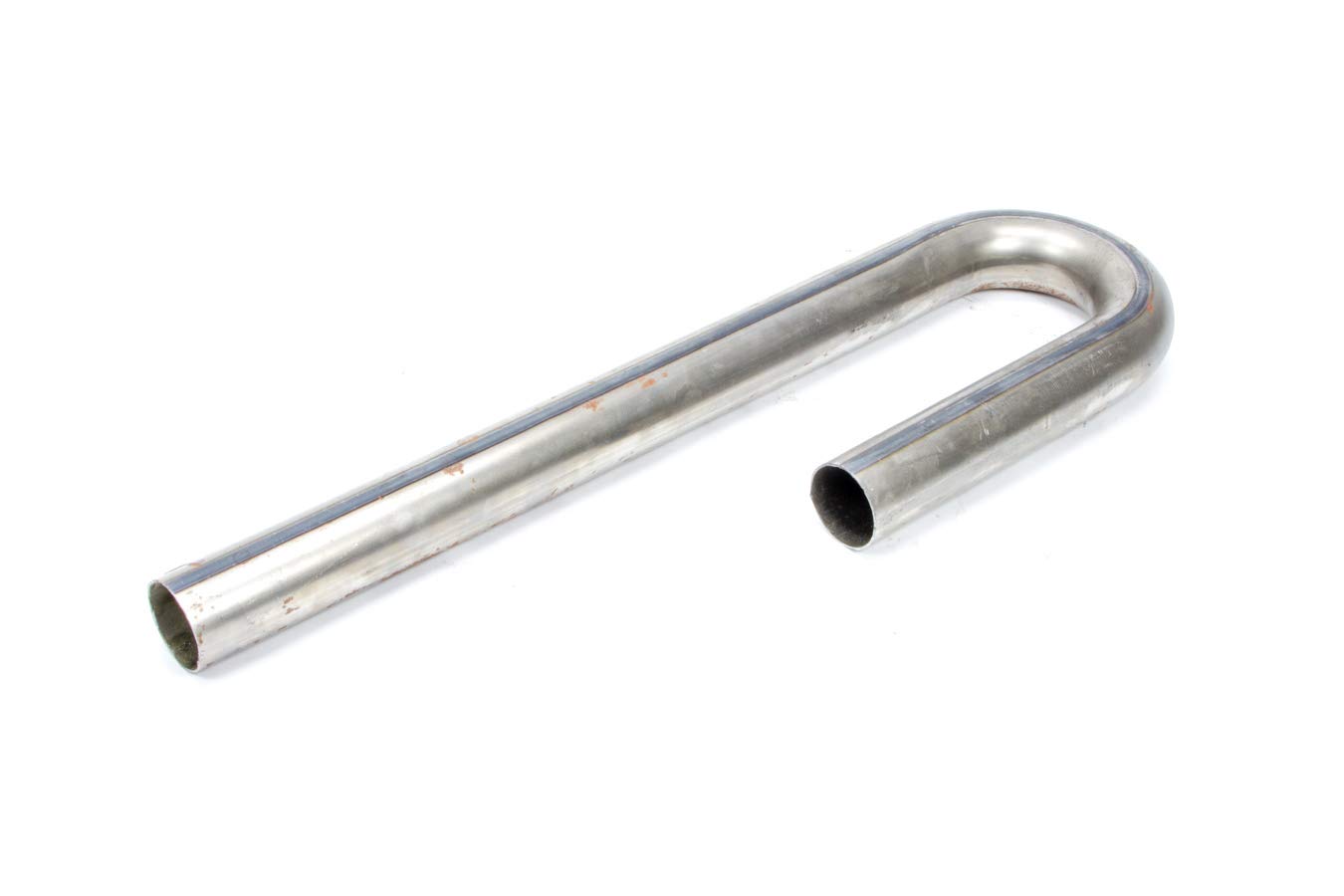
1. Patriot Exhaust H7013 1-1/2″ Mild Steel J-Bend
Our pick — over 4.5★ from 100+ verified ratings; the strongest balance of quality and price.
The go-to pre-bent section for small-bike and ATV exhausts that you weld once and ride.
Owners mention that this mild steel J-bend welds beautifully and develops a nice color after a few heat cycles—exactly what you want when fabricating a custom line for a dirt bike, ATV, or vintage garden tractor. The U-shape lets you route a pipe around a frame rail without buying a bender; owners mention cutting the bend and flipping it to clear a tight spot on an ATV chassis.
The honest trade-off is that the outside radius is thin, so you need a careful hand when welding to avoid burning through. Buyers also point out it is mild steel, meaning it will rust if you do not coat it. For a restoration or off-road toy that lives in a garage, that is a fair price to pay. For a year-round daily driver, you may want stainless.
Hands-Down Favorite for Welders
- Takes a weld cleanly and colors up nicely after heat cycles
- J-bend shape provides flexibility around frame obstacles
- Made in the United States
What to Watch For
- Thin outside radius—easy to burn through if you are not careful
- Uncoated mild steel will rust outdoors; plan on painting or coating it
Reach for this if: you are welding a custom exhaust on a small-engine vehicle and want a pre-bent section that is easy to modify.
Look elsewhere if: your project sits outside year-round or you want a pipe that resists corrosion without any coating.
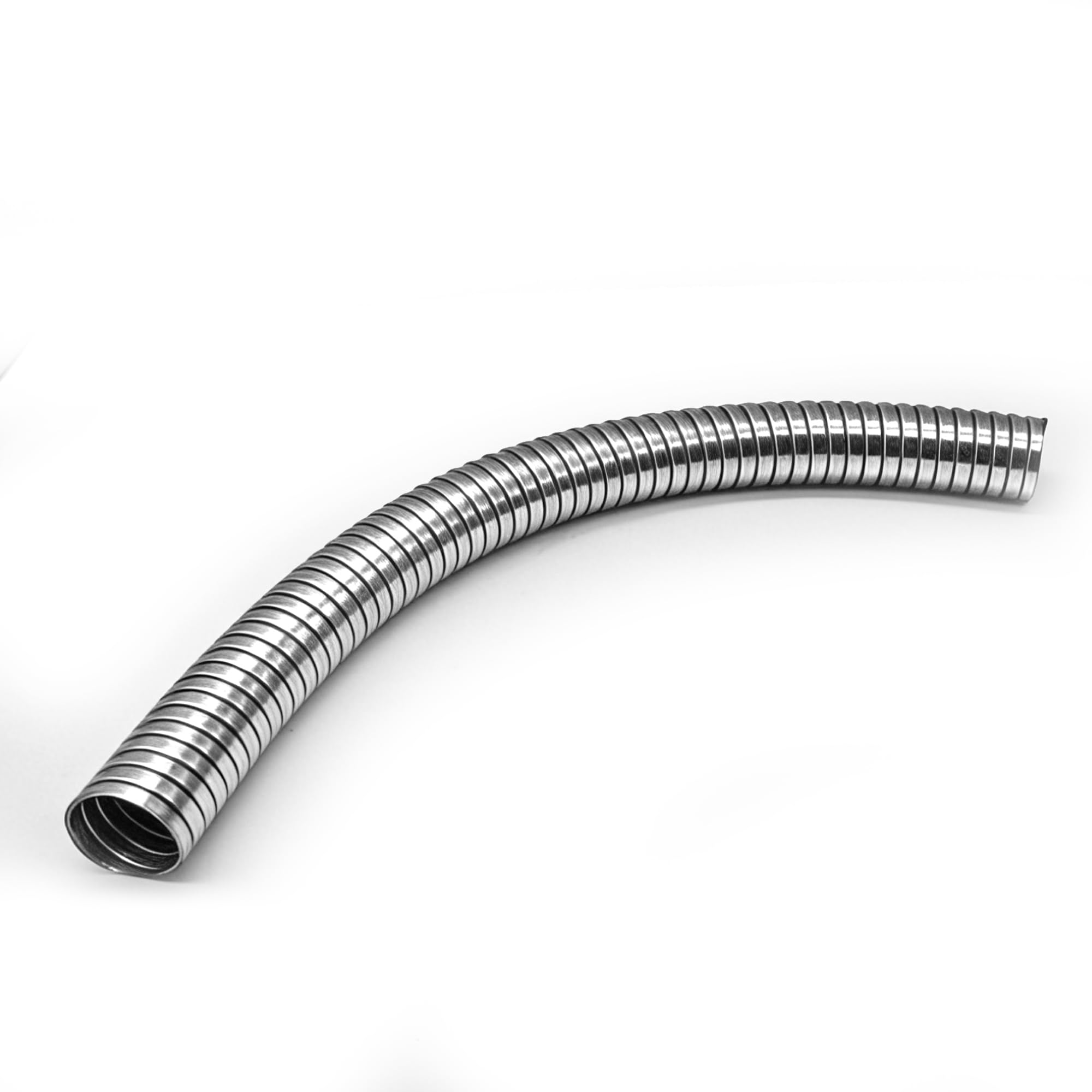
2. SKYMIRO 1.5″ Exhaust Flex Pipe, 304 Stainless Steel 17″
A budget-friendly stainless flex section that kills vibration and resists corrosion from day one.
The 304 stainless steel construction here outlasts galvanized or aluminized options, especially in wet or salty environments. The single-roll-band and multi-layer design keeps the joint leak-proof while isolating engine shake from the rest of the pipe—owners who used it on generator mufflers and restoration projects call the fit perfect and the quality excellent.
Customers note that if you try to use plain u-bolt clamps rather than welding, the connection will leak. The fix is high-temp epoxy puddy or a proper weld. At this price point, the 17-inch pre-cut length works well for short bridge sections between a header and a cat-back system.
Smart compromise: stainless durability at a mild-steel price, but plan on welding rather than clamping for a truly leak-free joint.
Who it beats: any aluminized flex pipe that would rust after one winter. skip it if: you need a longer section—buyers wish it was three times longer for generator exhaust routing.
3. HiBuyer 1.5″ T304 Stainless Straight Exhaust Tubing 18″
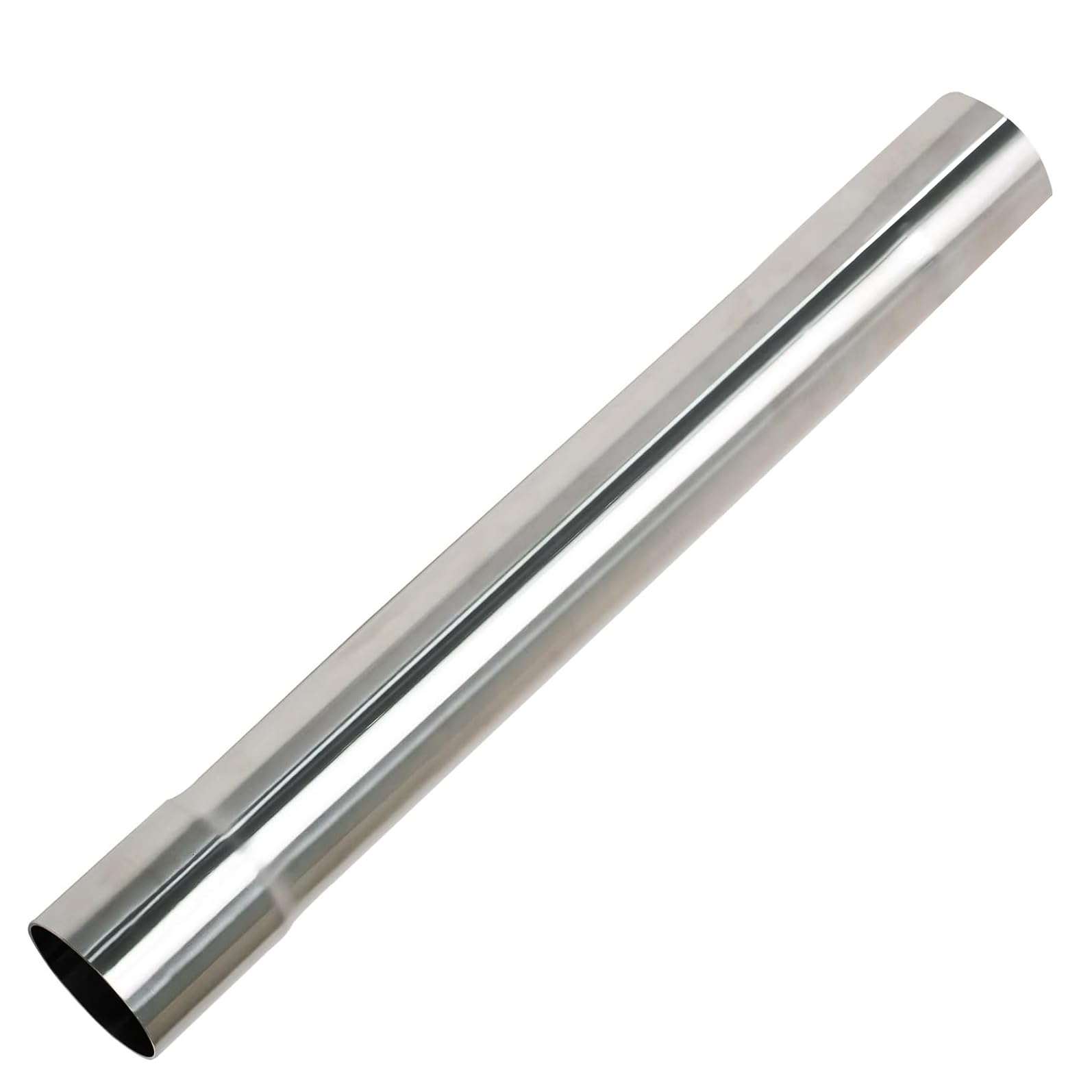
A polished 18-inch straight section in T304 stainless that looks good and fights rust equally hard.
The thing everyone raves about here is the quality—16 owners single it out and 11 more mention the smooth, polished appearance. T304 stainless is the top-tier corrosion-resistant alloy, and the straight 1.5-inch tube comes with perfectly sized inner and outer diameters so it slides right into a muffler or existing tailpipe without reaming.
Buyers who installed this 18-inch-long pipe on a truck or custom build report that it improves exhaust flow and engine performance, and the polished body is ideal for a visible tip. A few note the tube arrives with a welded jointed end, which looks fine under the car but is an unusual configuration if you expected a smooth straight piece. At 18 inches long, it is a precise extension for most universal exhaust systems.
The standout trait: appearance and corrosion resistance in equal measure—this is the pipe you want on a show exhaust where the tip is visible.
Grab it for: a tailpipe extension or visible exhaust tip upgrade where a polished T304 finish matters. Hold off if: you need a flex section or a pre-bent curve—this is straight pipe only.
4. TORDXICS Universal T304 Stainless Flex Pipe 36″
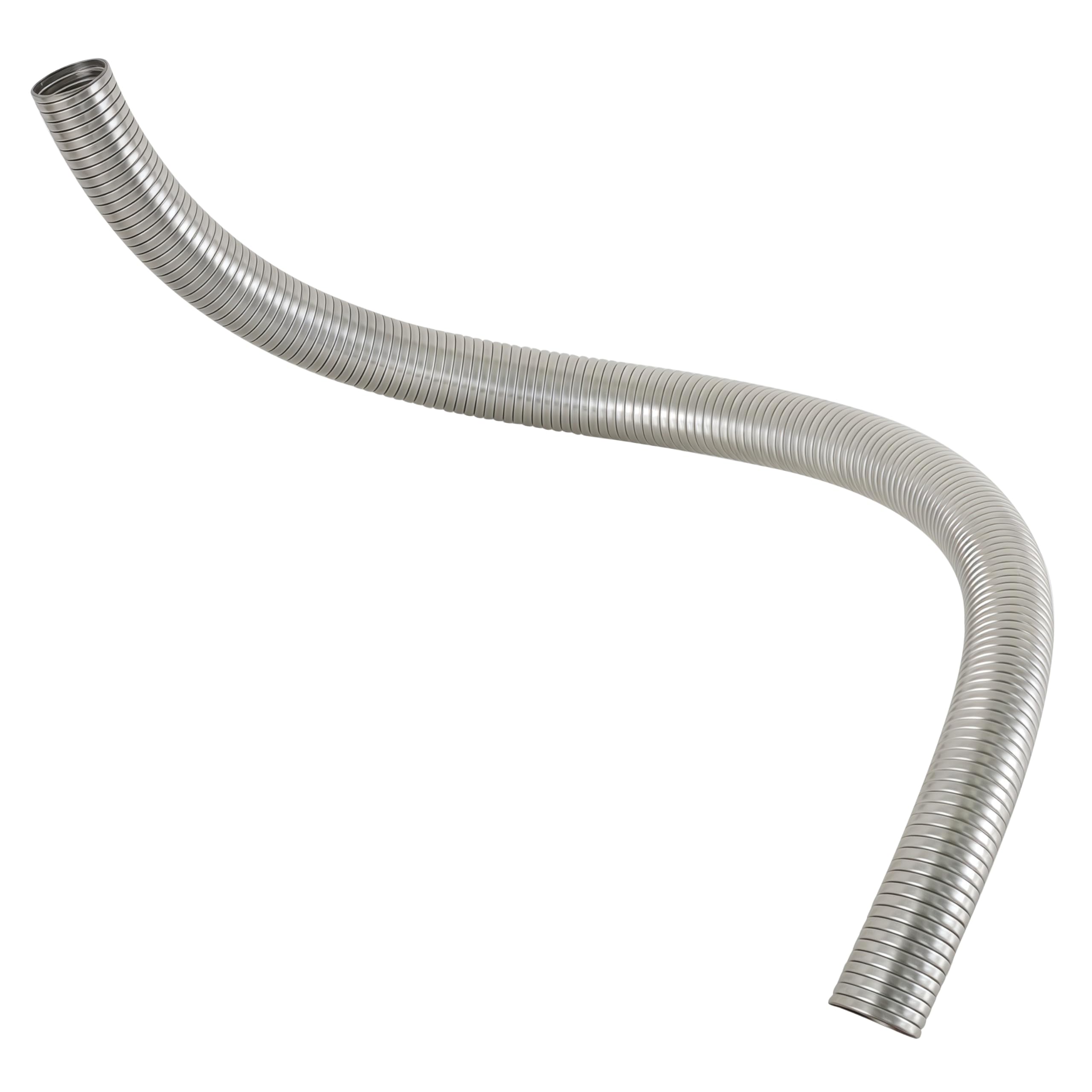
A full 3-foot stainless flex pipe that routes generator exhaust safely out of a shed or trailer.
At 36 inches long, this is the longest single-piece flex pipe in the lineup, and buyers are putting it to work exactly where that reach matters—venting portable Generac generators out of enclosures so the carbon-monoxide safety system does not shut the unit down. The 304 stainless steel construction (a corrosion-resistant alloy) with single roll-band design handles heat without fatiguing. Owners also use it on semi trucks to route exhaust from an auxiliary power unit.
One recurring note is that the 1.5-inch inner diameter can be tight over a 1.5-inch outer-diameter flange—reviewers point out needing an exhaust pipe expander or a bit of persuasion to get it started. After expanding, the pipe works perfectly and the quality holds up. For a generator or stationary engine that needs a long, corrosion-resistant flex section to exit a building, this is the pick.
Why Owners Choose This
- 36-inch length removes the guesswork for long generator exhaust runs
- 304 stainless resists rust and holds up to engine heat
- Flex-lock design absorbs vibration from generator or engine shake
The Fit Note
- May not slide over a 1.5-inch OD flange without expanding first
- Gets hot in use—plan on heat-wrap or foil shielding at door seals
Who it fits: the portable generator owner who needs a full 3-foot flex run to vent outside. Not for: direct exhaust system repairs on a car—this is a utility-grade flex pipe for stationary engines and equipment.
5. Hicarer 1-1/2″ OD 304 Stainless Tubing 24″

A thick-walled 2-foot straight tube in 304 stainless for industrial welding and marine projects.
The Hicarer pipe stands out for its 0.06-inch wall thickness—noticeably heavier than standard thin-wall tubing. That extra thickness makes it ideal for structural fabrication, marine components, or any project where the tube takes a mechanical load beyond just flowing exhaust. The polished surface is smooth, and buyers confirm the cuts are precise and the tube matches the listed 1.5-inch outer diameter perfectly.
Owners are using it for everything from actual exhaust fabrication to creative uses like a heavy-duty dowel for cable spools. The 24-inch length gives you plenty of material for a single long run or two shorter sections. The trade-off is that thicker stainless is harder to bend without a proper bender—do not expect to shape this tube by hand around a curve. It is designed for cutting and welding, not freehand bending.
Best for: fabrication jobs that need a sturdy, corrosion-resistant tube that can take a weld and handle some physical abuse. Check your plan: if you need a tight-radius bend, this thickness may fight you.
Reach for it when: strength and wall thickness matter more than easy bending—think marine railing, shop jigs, or a structural exhaust hanger. Pass if: you need a pre-bent section or a flexible pipe for vibration isolation.
Understanding the Specs
Stainless Steel Grade: 304 vs. T304
Both resist rust far better than mild steel. T304 is a specific alloy designation often used in automotive exhausts for its high corrosion resistance and clean appearance after polishing. 304 stainless is the broader grade—still excellent against rust, but T304 is the version you see on show-quality visible tips. For a part that sits under the car, either grade is a solid upgrade over plain steel.
Wall Thickness
Most 1.5-inch exhaust tubing uses a standard wall around 0.049 to 0.065 inches. Thinner walls (0.049 in.) bend more easily by hand but are prone to dents from rocks or road debris. Thicker walls (0.06 in. and up) handle vibration without cracking and resist physical damage, but you need a mechanical bender for tight curves. A 0.06-inch wall is common for straight sections and industrial applications.
FAQ
Will a 1.5-inch exhaust pipe fit my car or generator?
Can I weld a mild steel pipe to a stainless steel pipe?
How do I stop my mild steel exhaust pipe from rusting?
What is the difference between a flex pipe and a straight pipe for exhaust repair?
Can I clamp a flex pipe instead of welding it?
How long does a stainless steel exhaust pipe last compared to mild steel?
Can I bend a 0.06-inch wall stainless tube by hand?
What is a J-bend exhaust pipe used for?
Final Thoughts: The Verdict
If you want one dependable pick, the best 1 1 2 exhaust pipe winner is the Patriot Exhaust H7013 because it gives you a weld-friendly J-bend shape at a price that makes sense for small-engine, ATV, and dirt bike projects. If you need a polished T304 straight section that resists rust and looks clean on a visible tailpipe, grab the HiBuyer T304 18-inch tube. And for a full 3-foot flex run that vents a stationary generator or auxiliary engine outdoors, the TORDXICS 36-inch flex pipe is the one to reach for.
How We Picked
We do not accept paid placement. Every pick is matched to a real buyer and a real use-case; we do not hands-on test units.
Sources & Methodology
Specifications: manufacturer listings and product documentation. Review insights: verified customer reviews, as of July 2026. Pricing: not shown on this page (it changes often); check the current price via the retailer link.
As an Amazon Associate, Trending Car earns from qualifying purchases. This does not affect which products we feature.