
Our readers keep the lights on and my garage snacks stocked. As an Amazon Associate, I earn from qualifying purchases.
Specs are compiled from manufacturer listings and verified buyer reviews and can change over time — please confirm the key details on the product page before buying.
The wrong rear tire turns a relaxed Sunday cruise into a white-knuckle fight with every curve. You need rubber that plants the bike through a corner, sheds water in a sudden downpour, and still has tread left after a full season of weekend rides. This guide cuts through the brand noise to help you pick a cruiser tire that actually matches how you ride, based on real specs and feedback from owners who have already put the miles on.
I’m Min Islam — the founder and writer behind Trending Car. This guide is built by comparing the manufacturers’ published specifications and the patterns across verified customer reviews, so you get each pick’s real strengths and trade-offs instead of marketing spin.
Whether you ride a bagger, a V-Twin cruiser, or a metric custom, these are the best cruiser motorcycle tires you can buy right now, ranked by what actually matters on the road.
Our Picks at a Glance


How To Choose The Best Cruiser Motorcycle Tires
Picking a tire for a cruiser is different than picking one for a sportbike. You carry more weight (yours, a passenger, saddlebags), you spend most of your time on the highway or back roads, and you typically want a tire that wears evenly over thousands of miles. The three specs that matter most are the load capacity, the ply rating, and the tread design’s ability to handle water without cupping over time.
Load Index and Ply Rating — The Real Weight Limit
The load index tells you the maximum weight a single tire can safely carry. A load index of 83, for example, means the tire can support 1,074 pounds at full pressure. The ply rating (6-ply, 10-ply, or 14-ply) describes how many layers of reinforcing material are under the tread. More plies generally mean a stiffer sidewall and better stability under a heavy touring load, but the ride tends to feel firmer. On a heavy cruiser or bagger, 6-ply or higher is the safe starting point.
Speed Rating — What the Letter Means
The speed rating is a letter that marks the maximum safe speed the tire can sustain. An H-rating means it is tested up to 130 mph, which covers any legal highway cruising you will do. A V-rating (149 mph) or Z-rating (over 149 mph) exists for sportier riding but offers no real-world advantage on a cruiser that rarely sees triple digits. Stick with H-rated rubber and use the savings on better treadwear or load capacity.
Bias-Ply Construction — The Cruiser Standard
Almost every cruiser tire on our list uses bias-ply construction. Plies run diagonally across the tire, creating a stronger sidewall that handles the upright, heavy-load nature of a cruiser well. The trade-off is a slightly stiffer ride at low speeds compared to a radial tire, but on a heavy bike the difference is minimal. Bias-ply also tends to cost less than radial, which matters when you are buying a set of two or more.
Quick Comparison
| Model | Best For | Load Capacity | Ply | Speed Rating | Amazon |
|---|---|---|---|---|---|
| Dunlop D402 Front★ Best Overall | Harley Touring | 783 lbs | 3-ply + 2 belts | H | Amazon |
| Kenda K671Also Great | All-Around Value | 1,073.7 lbs | 6-ply | H | Amazon |
| Bridgestone Exedra MaxPremium Touring | Touring Load Hauler | 1,005 lbs | 14-ply | H | Amazon |
| Dunlop D404 Rear | Budget Grip | — | Bias-ply | H | Amazon |
| Shinko SR777 170/80-15 | Metric Cruiser Rear | 1,074 lbs | Belted reinforced | H | Amazon |
| Shinko 777 White Wall | Classic Style + Touring | 2,755 lbs | 4-ply aramid | H | Amazon |
| Michelin Scorcher 31 | Premium OEM Replacement | — | Bias | H | Amazon |
In‑Depth Reviews
1. Dunlop Harley Davidson D402 Front Tire — MT90B-16
Our pick — over 4.5★ from 800+ verified ratings; the strongest balance of quality and price.
The official Harley-Davidson touring tire, co-engineered for maximum performance on baggers and dressers.
The D402 is not just another Dunlop tire — it was built and tested alongside Harley-Davidson to be the approved touring tire for their bikes. The three-ply polyester casing with two fiberglass belts gives it a stable, heavy-duty feel that resists flex under the weight of a full-dress bagger. The computer-tune tread profile includes an offset center groove that improves confidence when riding over rain grooves and steel-grated bridges, and it also helps reduce cupping (uneven tread wear that causes a thumping noise).
At 783 pounds, the load capacity is lower than some alternatives (the Kenda K671 handles 1,073.7 pounds), so this is better suited as a front tire on a medium-weight touring bike than as a rear on a fully loaded rig. Shoppers say previous Dunlops lasted well and they returned after trying other brands, which speaks to the trust this tire earns. The 25.3-inch diameter is the tallest on the list — it is 4.1 inches bigger than the Shinko SR777 150/80-16 (21.2 inches), so double-check that your front fender has clearance. If you want the exact tire the dealer would install on a Harley, this is it.
Factory-level tuning: Because Dunlop engineered this tire with Harley-Davidson, the tread profile, compound, and casing are specifically matched to the weight and handling characteristics of Harley touring models.
Front-only recommendation: The 783-pound load capacity is adequate for a front tire but would be marginal on the rear of a heavy touring bike with luggage. The Kenda K671 or Bridgestone Exedra Max offer higher load ratings for the rear.
Best for: Harley-Davidson touring riders (Road Glide, Street Glide, Electra Glide, or baggers) who want a front tire that matches the bike’s original engineering spec.
Not for: Metric cruiser owners or anyone needing a rear tire with a load capacity above 800 pounds — the D402 is available as a rear, but the front version is what we cover here.
2. Kenda Cruiser K671 Motorcycle Street Tire — 170/80H-15
The Kenda K671 packs a 1,073.7-pound load rating into a 6-ply tire that corners with real confidence.
You get a stiff sidewall that handles heavy cruisers without squirming, plus an H-rating that keeps you legal up to 130 mph. The deep offset tread sips (tiny grooves cut into the rubber) push water out from under the contact patch, so you do not lose grip when the road gets wet. The wide contact patch also spreads the load over more rubber, which helps the tread last longer than some thinner alternatives — buyers report getting around 15,000 miles on a Shadow VT1100c from the related Kenda Kruz model.
At 19.6 pounds, this is a heavier tire than the Dunlop D404 rear (which weighs 13 pounds), but that extra heft comes from the 6-ply construction that resists punctures and squaring-off better over time. One owner noted it rides great even on an unbalanced spoke wheel, which hints at how well the carcass holds its shape. The 300 kPa max pressure (around 43 PSI) is lower than the Shinko 130/90-16’s 350 kPa spec, but the Kenda still feels planted on gravel driveways and blacktop, according to another reviewer. If you want a single do-everything rear tire that does not break the bank, this is it.
Real-world edge: The 1,073.7-pound load capacity beats the Dunlop D402 front (783 pounds) by a notable margin, making the K671 a smarter pick for a fully loaded touring bike.
The one trade-off: Some riders coming from the Kenda Kruz 673 noted that tire had a flatter contact patch, making it harder to lean into turns. The K671 addresses that with a more rounded profile, but you still get a slightly firmer ride over expansion joints compared to a softer-compound tire like the Dunlop D404.
Reach for this if: You ride a mid-to-large cruiser (like the Shadow VT1100c) and want a 6-ply tire that lasts, handles wet pavement confidently, and costs less than a premium brand.
Look elsewhere if: You need a specific Harley-Davidson touring fitment with OEM-level tuning — that is where the Dunlop D402 or Michelin Scorcher 31 might serve you better.
3. Bridgestone Exedra Max Replacement Bias Tire — 150/80-16
A 29.8-pound, 14-ply monster engineered for the heaviest touring loads and cross-country miles.
The Exedra Max was designed with a unique wide shape that reduces rider fatigue on long trips, and the rubber compound is tuned specifically for cruiser applications that demand high mileage. The 1,005-pound load capacity gives it enough headroom for a Goldwing 1800 with a passenger and luggage, which matches what buyers are actually doing — one owner rode it across the US on Route 66 and reported it held up well, though they did notice a slow pressure loss (2-3 PSI every 8-9 days).
At 29.8 pounds, it is significantly heavier than most other tires on this list (the Michelin Scorcher 31 weighs 1,724 grams, or about 3.8 pounds), and the 14-ply construction makes sidewall flex minimal. That translates into a very stable, planted feel at highway speeds but a firmer ride over sharp bumps. The rubber compound and tread pattern are designed to enhance water evacuation, so you still get decent wet grip despite the touring-oriented profile. A solid choice for riders who prioritize stability and longevity over a cushy ride and plan to keep the bike loaded for weeks at a time.
Long-haul strength: With a 14-ply rating, the Exedra Max offers far more structural reinforcement than any 6-ply or 10-ply tire on this list, which directly counters the squirm you feel on a heavily loaded bike.
The weight penalty: At nearly 30 pounds, this tire robs some acceleration feel and makes the steering heavier than a lighter option like the Kenda K671 (19.6 pounds).
Best for: Riders of Goldwings, full-dress baggers, or any heavy touring machine who cover thousands of miles per season and want a tire that will not squirm under a full load.
skip it if: Your bike is a lighter metric cruiser (under 600 pounds) and you value a nimble feel over brute-force stability — the Shinko SR777 line will suit you better.
4. Shinko 777 Rear H.D. Motorcycle Tire — 170/80B-15 (83H) White Wall

A white-wall cruiser tire with aramid belting and a 2,755-pound load rating that looks as good as it grips.
This is the only white-wall option on the list, and it hides serious touring capability behind its vintage looks. The 4-ply aramid belt construction keeps the carcass stable under the heavy weight of large V-Twins, and the H-rating (130 mph) means you are not giving up any highway safety. The tread pattern includes functional siping and grooves that give you predictable traction in both dry and wet conditions — buyers have put 25,000 miles on a set fitted to a VTX1300R and noted they still had good grip and were not too soft.
At 15 pounds, it is one of the lighter tires here despite the reinforced construction, which helps with acceleration and steering effort. The 310 kPa max pressure is lower than the Shinko 130/90-16’s 350 kPa spec, but the aramid belting compensates with a stiff, planted feel. One owner called it “smooth riding with style to spare” and confirmed it held up to spirited riding. If you want the classic look without sacrificing modern rubber technology, this is the tire.
Style + substance: The white-wall sidewall adds a vintage custom look that most other tires in this category cannot match, while the 4-ply aramid construction gives it real touring-grade strength.
Fitment check: This is a 15-inch rear tire, so it will not work on bikes with 16-inch rims. Double-check your rim diameter before ordering — the 16-inch black-wall Shinko SR777 is the alternative.
Grab this for: A custom cruiser like the VStar 1100 or VTX1300 where you want the classic white-wall look without compromising on highway-speed grip or load capacity.
Pass if: White walls are not your style, or you need a 16-inch fitment — in that case, the standard Shinko SR777 in black wall is a better match.
5. Michelin Scorcher 31 — 150/80-16 (77H)

Michelin’s semi-slick design delivers exceptional dry grip with a compound pulled from their race-winning technology.
The Scorcher 31 uses a semi-slick tread pattern (a nearly smooth center with only shallow grooves) that boost the rubber touching the pavement for superior dry traction. The compound itself comes from Michelin’s racing development, so you get a blend that balances grip with durability — owners mention very little wear after about a thousand miles, unlike the Dunlop Harley tires that started showing wear before 500 miles. The tune grooves handle water evacuation when it rains, so you still have reliable wet grip despite the aggressive dry-weather focus.
At 1,724 grams (about 3.8 pounds), this is the lightest tire on the list by a wide margin. The low weight reduces unsprung mass, which helps the suspension react faster to bumps and improves handling feel. The bias-ply construction keeps the sidewall firm enough for a bagger, and the H-rating means it is safe at highway speeds. One rider said it changed their whole ride and recommended it without hesitation. If you are looking for an OEM-level replacement with noticeably better grip than generic budget rubber, this Michelin delivers.
Cornering confidence: The semi-slick design gives you a larger contact patch than a traditional treaded cruiser tire, so you feel more planted when leaning into a turn at moderate speeds.
Wet-weather caution: While the grooves do evacuate water, the semi-slick pattern is not as capable in sustained heavy rain as a fully siped tire like the Kenda K671. If you ride daily in wet conditions, a more aggressively treaded tire may be safer.
Ideal for: Riders who mostly cruise on dry highways and want the best possible dry grip and lightest weight for sharper handling.
Not for: Heavy touring with full luggage or long-distance riding in frequent rain — the lower load capacity and semi-slick tread are less suited to those conditions.
6. Shinko 87-4594 777 Rear H.D. Motorcycle Tire — 130/90b-16 (73H) Black Wall
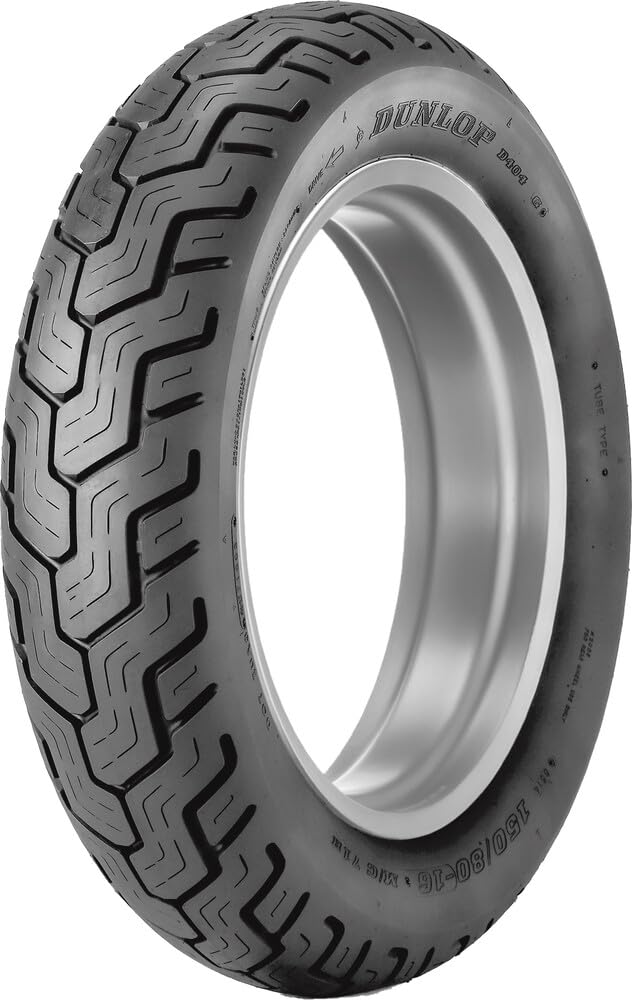
A lightweight, affordable Dunlop that balances grip and mileage, but expect shorter tread life than premium options.
The D404 is a classic entry-level replacement that uses a tread compound designed to deliver a reasonable balance of mileage and grip. The front and rear tread patterns work together to enhance water evacuation and wet grip, making it a decent choice for a daily commuter who does not push the bike hard in corners. At 13 pounds, it is the lightest tire on the list by a significant margin — that helps reduce unsprung weight and makes the bike feel a bit more responsive on takeoff and over bumps.
The honest trade-off is longevity. One buyer who installed it on a 2002 Harley Sportster 1200 Custom reported getting about half a year of riding out of it before showing wear, which worked out to around 4,500 miles. The same reviewer called it a very affordable tire but noted you do get what you pay for. Another owner praised the amazing grip and fair price, saying they trusted it on their bike.
Light and affordable: At 13 pounds, this is the easiest tire to mount manually and the cheapest entry point for a Dunlop-brand cruiser tire.
Mileage limitation: The soft compound that gives good grip wears relatively quickly — reviewers point out 4,500 to 5,000 miles before noticeable wear, compared to 15,000+ miles reported for the Kenda K671.
Reach for this if: You have a smaller cruiser like a Sportster 1200, ride fewer than 5,000 miles per year, and want a budget-friendly tire with dependable grip.
Look elsewhere if: You do high-mileage touring or want a tire that will last multiple seasons — the Kenda K671 or Bridgestone Exedra Max will give you far more miles per dollar.
7. Shinko SR777 HD Black Wall Bias Rear Tire — 170/80B15 83H

A 1,074-pound load rating in a 15-inch rear tire that balances grip, longevity, and a budget-friendly price.
This is the 15-inch version of the Shinko SR777 HD line, sharing the same reinforced carcass design and rubber compound formulated for maximum grip and comfort on cruiser motorcycles. The tread pattern uses functional siping and grooves that give you traction you can feel when accelerating, braking, and cornering. At 19.8 pounds, it is comparable in weight to the Kenda K671 (19.6 pounds) but uses a belted reinforced construction instead of Kenda’s 6-ply design.
Buyers consistently praise this tire for its value. One owner who compared it to the Dunlop D404 noted it has less grip but lasts longer, is cheaper, and offers good rain traction with a smooth ride — they even mentioned it chirps on hard downshifts but regains traction quickly. Another rider called it a great budget commuter tire that wears well and does not break the bank. The H-rating covers highway speeds up to 130 mph, so you are not limited on the freeway. If you need a 15-inch rear tire for a metric cruiser and want the best blend of load capacity and price, this is a smart pick.
Long-wearing alternative: Compared to the Dunlop D404’s reported 4,500-mile lifespan, this Shinko’s reinforced carcass and heavier construction suggest significantly better mileage, especially on heavier bikes.
Grip trade-off: The harder compound that extends tread life also means slightly less cornering grip than a softer tire like the Dunlop D404 or Michelin Scorcher 31 — the trade-off is worth it if mileage is your priority.
Reach for this if: You have a 15-inch rear rim on a metric cruiser (like a VTX1300, VStar, or Shadow) and want a tire with a 1,074-pound load rating that will outlast a budget Dunlop without costing premium money.
Look elsewhere if: You ride a 16-inch rim — grab the 150/80B16 version of the same tire, or the Shinko 87-4594 130/90b-16 if you need the 10-ply heavy-duty build.
Understanding the Specs
Load Index — The Real Weight Limit
A tire’s load index is a number that corresponds to a specific maximum weight capacity — for example, load index 83 equals 1,074 pounds. For cruiser tires, this is critical because your bike already weighs 700-900 pounds, and adding a passenger, luggage, or a trailer can push you over a lower-rated tire’s safe limit. Always match or exceed your bike’s original equipment (OE) load index. If you have a heavy touring machine, look for load index 77 (908 pounds) or higher.
Ply Rating — Layers of Strength
Ply rating tells you how many layers of material (typically nylon, polyester, or aramid) reinforce the tire’s carcass. A 4-ply tire is standard for light to medium cruisers. A 6-ply tire (like the Kenda K671) adds stiffness for heavier loads and better puncture resistance. A 10-ply or 14-ply tire (like the Shinko 777 HD or Bridgestone Exedra Max) is overkill for a light cruiser but essential on a full-dress bagger with a passenger. More plies also mean a firmer ride.
FAQ
What is the difference between a cruiser tire and a sportbike tire?
Can I use a bias-ply tire on a bike that came with radial tires?
How do I know if a tire will fit my cruiser?
What does the H speed rating mean on these cruiser tires?
How many miles should a cruiser tire last?
What is cupping on a motorcycle tire?
Is a white-wall tire less durable than a black-wall tire?
Can I mount a tubeless tire on a tube-type rim?
Should I replace front and rear tires at the same time?
What tire pressure should I run in cruiser tires?
Final Thoughts: The Verdict
For most riders, the best cruiser motorcycle tires winner is the Kenda Cruiser K671 because it combines a 1,073.7-pound load rating, 6-ply puncture resistance, an H-rating for 130 mph highway cruising, and proven 15,000-mile longevity at a price that undercuts premium touring tires by a wide margin. If you want classic white-wall style with aramid belt strength, grab the Shinko 777 White Wall. And for riders who haul a passenger and luggage across state lines and need the brute stability of a 14-ply touring tire, the Bridgestone Exedra Max is the toughest option on the list.
How We Picked
We do not accept paid placement. Every pick is matched to a real buyer and a real use-case; we do not hands-on test units.
Sources & Methodology
Specifications: manufacturer listings and product documentation. Review insights: verified customer reviews, as of July 2026. Pricing: not shown on this page (it changes often); check the current price via the retailer link.
As an Amazon Associate, Trending Car earns from qualifying purchases. This does not affect which products we feature.