
Our readers keep the lights on and my garage snacks stocked. As an Amazon Associate, I earn from qualifying purchases.
Specs are compiled from manufacturer listings and verified buyer reviews and can change over time — please confirm the key details on the product page before buying.
Packing for a day on the trail often means wrestling with a pile of smelly pads, heavy boots, and a fragile helmet that rolls around in the trunk. A proper mtb gear bag solves that by giving each piece of gear its own spot, so you grab and go instead of digging and cursing. This guide breaks down five real options built for mountain bikers, comparing capacity, build quality, and how they handle the stuff you actually carry.
I’m Min Islam — the founder and writer behind Trending Car. This guide is built by comparing the manufacturers’ published specifications and the patterns across verified customer reviews, so you get each pick’s real strengths and trade-offs instead of marketing spin.
Understanding the capacity and compartment layout of your mtb gear bag makes the difference between a smooth exit and a last-minute scramble, if you need something for a weekend race or a full-season road trip.
Our Picks at a Glance

How To Choose The Best MTB Gear Bag
A good gear bag saves you from packing Tetris every time you head out. Focus on three things: capacity, compartment layout, and durability against dirt and rough handling.
Capacity: How Much Gear Do You Carry?
Capacity is measured in liters and tells you raw volume, but the real test is whether your boots and helmet fit in dedicated pockets. Bags under 80 liters suit day trips with light gear, while 100-liter-plus options handle full race kits for multiple riders.
Compartment Layout: Separate Sweat from Clean
The best bags give you a separate boot compartment, a padded helmet zone, and smaller pockets for tools, glasses, and chargers. A single giant tub forces everything to mix, which means mud on your jersey.
Durability and Portability
Look for heavy-duty zippers (YKK is a reliable bet), reinforced stitching, and a material like 600-denier polyester or nylon that survives being dragged across gravel. If you fly with your bag, consider a wheeled model to save your shoulder.
Quick Comparison
| Model | Best For | Capacity | Dimensions | Material | Amazon |
|---|---|---|---|---|---|
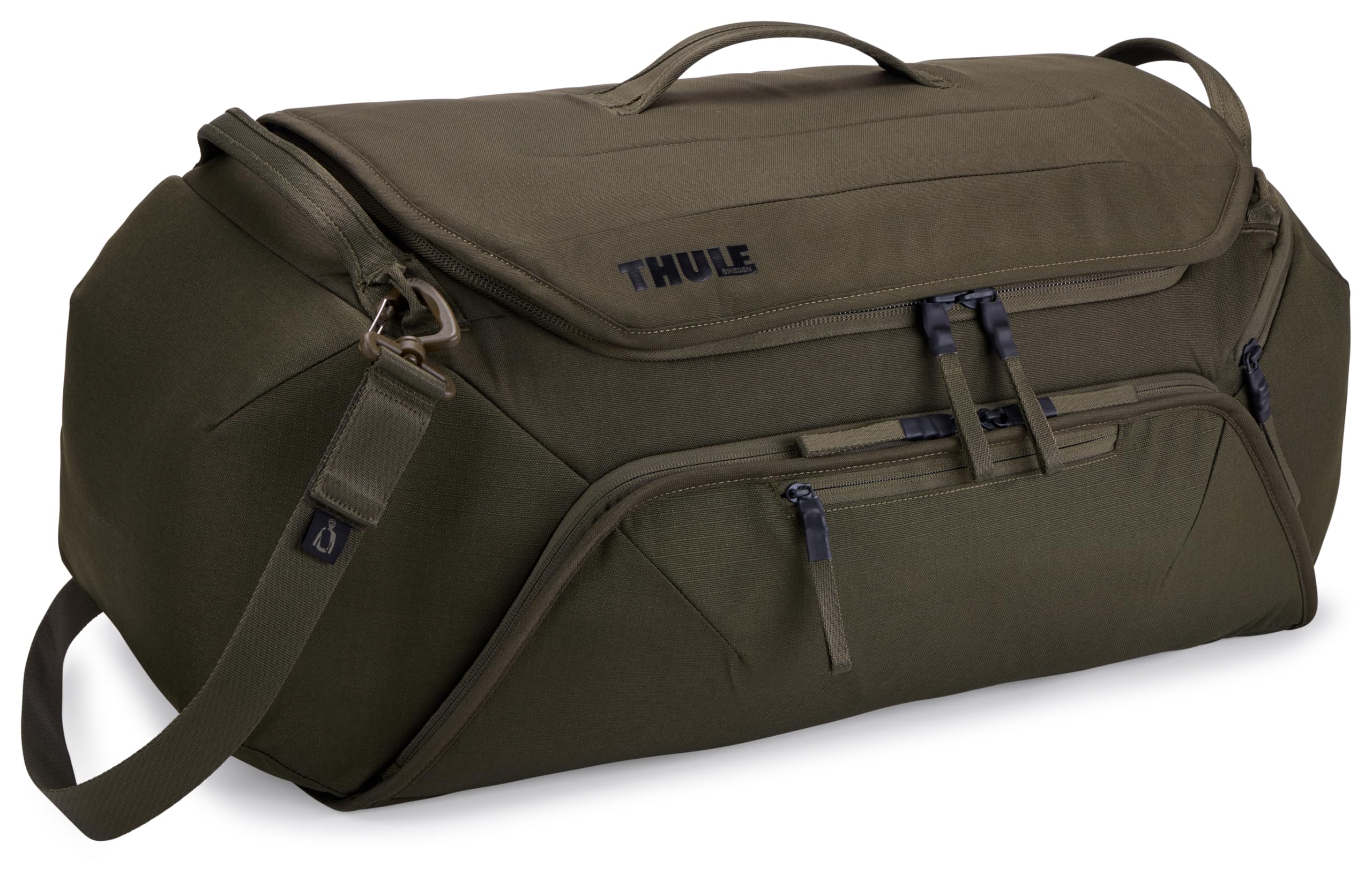
| Thule RoundTrip 80L Duffel★ Best Overall | Organized road trips | 55 liters | 23″L x 16″W x 5″H | Polyester | Amazon |
| MSR Gear BagBest Value | Budget-friendly packed days | 100 liters | 19″L x 15″W x 17″H | Polyester | Amazon |
| O’Neal TX8000 Gear Bag | Max cargo | 147.51 liters | N/A | 600 denier polyester | Amazon |
| KLIM Drift Gear Bag | Premium duffel versatility | N/A | N/A | Nylon | Amazon |
| OGIO Rig 9800 | Air travel and heavy hauling | N/A | 36.5”H x 17”W x 15.25”D | N/A | Amazon |
In‑Depth Reviews
1. Thule RoundTrip 80L Duffel
Our pick — over 4.5★ from 700+ verified ratings; the strongest balance of quality and price.
The Thule duffel that thinks like a toolbox, not just a sack.
This bag keeps all your gear organized without needing to unpack. It uses cell pockets inside the main compartment and a dedicated boot pocket on the end, so you can separate a sweaty jersey from clean gloves. With a 55-liter capacity, it holds enough for a 3- to 5-day road or mountain bike trip. Buyers report taking it on a 9-day trip: it carried “all cycling kit, spare shoes, small tools; needed one small bag for street clothes.”
The build quality matches the Thule reputation — heavy-duty ripstop polyester, bulletproof zippers, and a padded divider that protects your helmet and visors. One owner noted it is “phenomenal” for knee pads, goggles, tools, three days of riding gear, and shoes, though a full-face helmet does not fit in the internal pocket. The bag structure and wide opening give you visibility into everything at once.
Unlike the O’Neal TX8000 that fits three people’s gear, the Thule is a focused single-rider bag that prioritizes organization over raw volume. It comes with a dry bag for wet kit, and the manufacturer backs it with a Limited Lifetime warranty.
Spacious 80L duffel
- Cell pockets keep daily kit bundles separate
- Rugged Thule canvas and YKK zippers feel built for years of abuse
- Includes a wet/dry pocket for muddy gear
Bulky when full
- 55-liter capacity is modest — full-face helmets may need to clip outside
Big trips: you pack light and organized, and want a bag that survives your entire MTB career.
Light packers: you carry gear for two riders or need to fit a full-face helmet inside.
2. MSR Gear Bag
A massive 100-liter holdall that punches way above its cost.
For the price, this bag gives you more literal space than most options double its cost. At 19″L x 15″W x 17″H, the main compartment swallows a chest guard, four goggles, a helmet, multiple jerseys, and a hydration pack — plus boots in the side compartment if you orient them correctly. Owners mention size 12 boots fit, though “size 13 may not.” That is a meaningful limit if you wear large boots.
The 100-liter capacity is nearly double the Thule’s 55-liter volume, making this a strong pick for weekend warriors who pack for themselves and maybe a second rider. The fabric is heavy-duty polyester with YKK zippers, and the full-length zipper opens wide for easy loading. Customers note the quality is “not the highest compared to others 3x the price,” but for the cost, it is more than enough for regular use.
The main trade-off is depth: at 17 inches tall, the bag is deeper than the Thule’s 5-inch collapsed profile when empty, so it takes up more space when stored.
Durable construction
- Huge 100-liter capacity for multi-rider or full-kit packing
- Two compartments separate boots from the rest
- YKK zippers and heavy-duty fabric for the price
No wheels
- Boot compartment is a tight squeeze for size 12 or 13 boots
Rugged use: a rider on a budget who needs maximum cargo space without spending big.
Rolling preference: you wear size 13 boots or need dedicated pockets for small accessories.
3. O’Neal TX8000 Gear Bag

The gear bag that outpaces even a family’s weekend race loadout.
At 147.51 liters, this is the biggest capacity bag in this lineup — nearly 2.7 times the Thule’s 55 liters. One buyer summed it up: “holds 2 helmets, 2 riding pants, boots, gloves, charger, plus extra space for 3 people’s gear.” The design splits into one primary compartment, two end boot pockets, and one side pocket, giving you dedicated spots for boots and a helmet without them crushing your jerseys.
Build quality comes from 600-denier polyester with heavy-duty zippers, so it handles being dragged, dropped, and tossed without tearing. Reviewers point out it is “very durable and sturdy.” The end pockets are large enough for full-size adult motorcycle helmets or large motocross boots. The main compartment itself runs at half capacity after holding all your riding gear, which leaves plenty of room for a second rider’s kit.
The trade-off is sheer size — this bag is genuinely huge, so it will dominate a car trunk and may not fit small storage spaces. It also lacks the organizational cell pockets of the Thule, so smaller items like glasses and tools may need their own pouch.
Padded compartments
- Massive 147.51-liter capacity fits gear for 3 people
- Dedicated boot pockets and side pocket
- Tough 600-denier polyester survives rough handling
Heavy empty
- Big footprint makes storage and trunk space a challenge
Protective gear: families or anyone who carries multiple riders’ gear and wants a single bag solution.
Weight conscious: you only have a small car trunk or prefer a bag with lots of small compartments.
4. KLIM Drift Gear Bag

A rugged duffel that looks good strapped to a trailer or in a hotel lobby.
KLIM built this bag for powersports, and it shows in the details. It uses a large duffle format with a padded and removable helmet compartment divider, so your helmet sits protected without taking up space when you do not need it. The bag has five compartments total, including openings in the webbing so you can tie it down to a truck bed or trailer.
The build material is nylon, which typically resists abrasion better than standard polyester. Buyers confirm the craftsmanship: one reviewer called it “ultimate gear bag for riders” with “top-notch build quality,” and another bought a second for their wife. The bag fits a full set of gear including boots, helmet, bib, and extra layers. Smooth zippers and padded straps make hauling it comfortable.
Compared to the O’Neal TX8000, the KLIM Drift has a more premium look and better organization, but it lacks the massive 147.51-liter cargo capacity. It sits in the premium mid-range of the list, offering a refined carry experience without the monster volume.
Waterproof shell
- Removable helmet divider doubles as a padded top plate
- Nylon construction and smooth zippers
- Webbing loops for tie-down in a truck bed
Limited pockets
- No published capacity in liters — harder to gauge total volume at a glance
Wet conditions: you want a sleek, truck-bed-ready bag with premium feel and a separate helmet compartment.
Organization: you need a spec-sheet capacity number or the absolute maximum cargo volume.
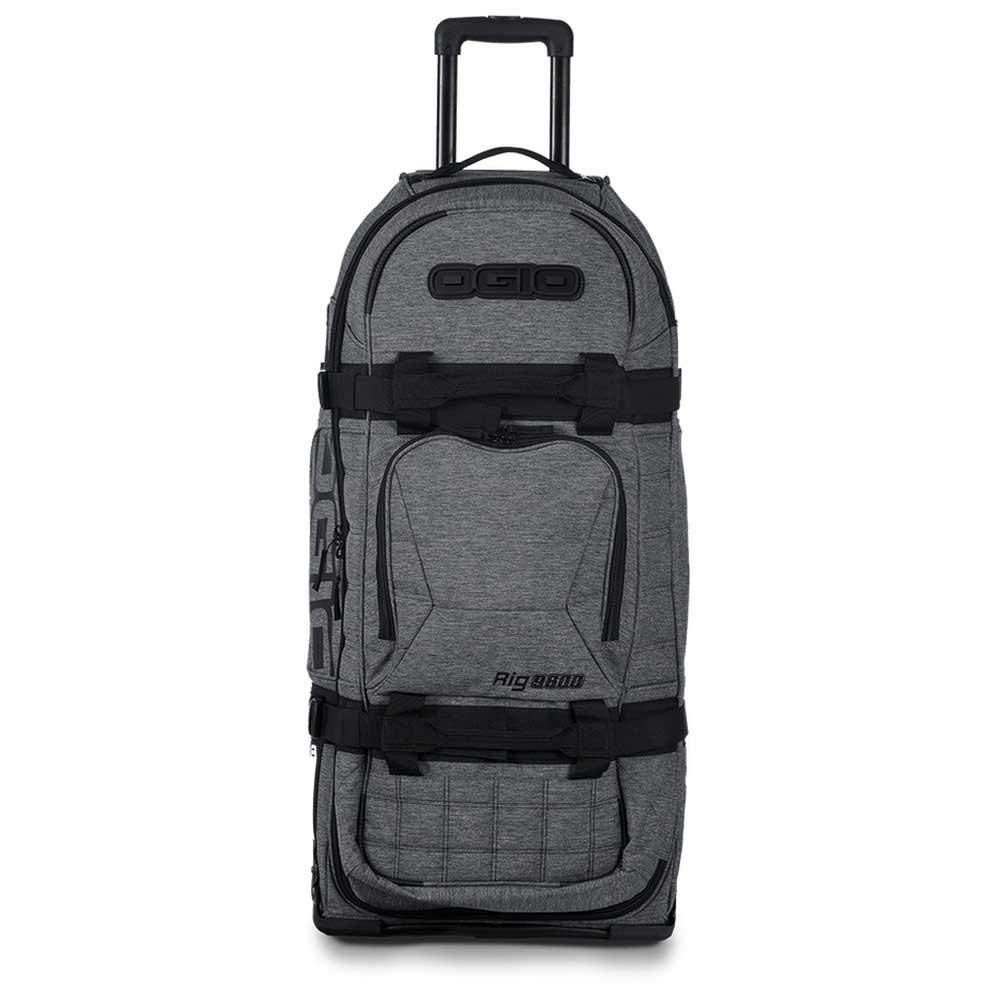
5. OGIO Rig 9800 Wheeled Suitcase
The wheeled beast that pro riders have trusted for two decades.
This is not a duffel — it is a wheeled suitcase built to survive airport baggage handlers and still roll smoothly at 16 pounds empty. The OGIO Rig 9800 uses iFOM (Integrated Foam) construction for added protection, heavy-duty oversized wheels with extra clearance, and a telescopic pull handle. It measures 36.5″H x 17″W x 15.25″D, making it a checked-bag-size piece that fits a full moto kit.
Shoppers say incredible durability: one owner is on their third Rig 9800 in a decade and still uses the first one. The bag features internal tie-down straps to hold boots or clean clothes in place, multi-use under-lid compartments for smaller gear, and an ID window on top. One reviewer noted it “moves and slides easily with just two fingers in the handle,” though also pointed out the bag is heavy on its own, limiting what you can pack when flying.
Compared to the Thule or KLIM duffels, the OGIO Rig 9800 is built specifically for air travel and heavy hauling. It includes options for an integrated boot bag and helmet bag (sold separately). The trade-off is weight and price — it sits at a premium tier and weighs 16 pounds before you put anything inside.
Smooth roller wheels
- Wheeled design with telescopic handle for easy airport navigation
- iFOM construction and internal tie-downs protect gear
- Legendary OGIO durability — buyers report decade-long use
Large footprint
- Heavy empty weight (16 lbs) reduces your packing allowance for flights
Airport travel: riders who fly to races and need a bombproof wheeled case for their full kit.
Tight spaces: you only drive to local trails and prefer a lighter, simpler duffel.
Understanding the Specs
Capacity (Liters)
This number tells you the total internal volume of the bag. A 55-liter bag like the Thule works for one rider’s 3- to 5-day kit. A 100-liter bag like the MSR fits a full race loadout plus extra. The O’Neal TX8000 at 147.51 liters can carry gear for three people. More liters means more cargo, but also a bigger footprint.
Compartment Layout
A single open tub forces everything to mix. Look for bags with a dedicated boot compartment, a padded helmet section, and smaller pockets for tools and chargers. The Thule uses cell pockets for daily kit bundles, while the O’Neal uses end boot compartments. The OGIO Rig 9800 adds internal tie-down straps to keep gear from shifting during travel.
FAQ
Will my full-face helmet fit in an MTB gear bag?
How many liters do I need for a weekend race trip?
Can I fly with a gear bag as checked luggage?
What is the difference between a gear bag and a regular duffel?
How do I clean a muddy MTB gear bag?
Can I use an MTB gear bag for snowmobiling or skiing?
What material is most durable for a gear bag?
How much does a typical MTB gear bag weigh empty?
Final Thoughts: The Verdict
For most buyers, the mtb gear bag winner is the Thule RoundTrip 80L Duffel because it combines smart organization, bombproof build quality, and a Limited Lifetime warranty in a focused 55-liter package. If you want the maximum cargo capacity for under a premium price, grab the O’Neal TX8000 Gear Bag at 147.51 liters. And for those who fly to races and need a wheeled case that airline handlers cannot destroy, the OGIO Rig 9800 is the proven choice.
How We Picked
We do not accept paid placement. Every pick is matched to a real buyer and a real use-case; we do not hands-on test units.
Sources & Methodology
Specifications: manufacturer listings and product documentation. Review insights: verified customer reviews, as of July 2026. Pricing: not shown on this page (it changes often); check the current price via the retailer link.
As an Amazon Associate, Trending Car earns from qualifying purchases. This does not affect which products we feature.