
Our readers keep the lights on and my garage snacks stocked. As an Amazon Associate, I earn from qualifying purchases.
Specs are compiled from manufacturer listings and verified buyer reviews and can change over time — please confirm the key details on the product page before buying.
You slide toward an intersection, your right foot searching for the brake pedal that is already on the floor, and the truck just keeps gliding over the packed snow. That moment is exactly why the rubber between your truck and the road is the most important winter purchase you will make. A dedicated winter tire built for a light truck (an LT-rated tire with stiffer sidewalls and higher load capacity than a standard passenger tire) is the difference between that white-knuckle slide and a controlled stop. This guide breaks down the four best options for your pickup or SUV, comparing their real-world snow traction, tread life, and load ratings so you can pick the set that fits how you drive.
I’m Min Islam — the founder and writer behind Trending Car. This guide is built by comparing the manufacturers’ published specifications and the patterns across verified customer reviews, so you get each pick’s real strengths and trade-offs instead of marketing spin.
Whether you are hauling gear through a mountain pass or just trying to get the kids to school on a snow day, the right light truck winter tire handles ice, slush, and deep powder without leaving you stranded or rattling your spine on dry pavement.
Our Picks at a Glance

How To Choose The Best Light Truck Winter Tire
Picking the wrong winter tire for your light truck is not just a waste of money — it can be dangerous if the load rating is too low for your payload or if the tread pattern is not aggressive enough for the snow depth you actually drive through. Here are the three most important specs to check before you order.
Load Index and Range — the weight your tires can safely carry
The load index (a number like 104 or 121 stamped on the sidewall) tells you the maximum weight each tire can support at full pressure. Your truck’s Gross Axle Weight Rating (GAWR — the maximum weight the axle is designed to carry) divided by 2 gives the minimum load index per tire you need. LT-tires also carry a Load Range letter (C, D, E, or F) that corresponds to the ply rating, or how many layers of rubber and fabric reinforce the carcass. A Load Range E tire, for example, can handle heavier loads and higher air pressure than a Load Range D tire, so it resists squirming under a heavy camper or a loaded bed.
The three-peak mountain snowflake certification — a real traction standard
Look for the three-peak mountain snowflake (3PMSF) symbol on the sidewall. This is not a marketing sticker — it means the tire passed a specific ASTM traction test on medium-packed snow that is more demanding than the standard M+S (mud and snow) rating. Any winter tire worth buying for a light truck should carry this certification. Without it, you are gambling that the tire’s compound stays soft enough below freezing to grip at all.
Studdable vs studless — when to add metal pins
A studdable tire has small pre-drilled holes so you (or a shop) can insert metal studs for extra bite on sheer ice. Studs help dramatically on glare ice, but they are illegal in some states and provinces, they create more road noise, and they wear faster on dry pavement. If you live in a region where roads are mostly packed snow and ice for months, studs make sense. If you drive on plowed asphalt most of the winter, a studless winter tire with a softer compound and deeper sipes (thin slits in the tread blocks) will be quieter and last longer.
Quick Comparison
| Model | Best For | Load Capacity | Item Weight | Load Index | Amazon |
|---|---|---|---|---|---|
| BFGoodrich All Terrain T/A KO2★ Best Overall | Year-round all-terrain use with winter certification | 2,535 Pounds | 44.6 Pounds | 113 | Amazon |
| Cooper Discoverer Snow Claw | Heavy-duty pickups needing deep-snow performance | 3,042 Pounds | — | 120 | Amazon |
| Nexen Winguard Winspike | Maximum load capacity and studdable ice traction | 3,086 Pounds | — | 121 | Amazon |
| HANKOOK Winter ipike X SUV | Lighter SUVs and crossovers needing a budget winter tire | 1,984 Pounds | 31.4 Pounds | 104 | Amazon |
In‑Depth Reviews
1. BFGoodrich All Terrain T/A KO2
Our pick — over 4.5★ from 900+ verified ratings; the strongest balance of quality and price.
The one tire that handles snow, mud, and highway miles without making you switch sets twice a year.
The BFGoodrich KO2 is the rare tire that earns a three-peak mountain snowflake rating (a certification that proves it passes ASTM snow-traction tests, not just marketing talk) while also being built for rocks, dirt, and gravel. Its interlocking tread elements (little rubber bridges between the tread blocks) keep the center of the tread stable on the highway and also create extra biting edges when you need grip on a snowy trail. Buyers report that “proper inflation/rotation/alignment yields 60k miles and 2 NH winters” — impressive longevity for an aggressive all-terrain tire that weighs 44.6 pounds per corner. The Load Range D construction (an 8-ply rated carcass) handles a 2,535-pound load capacity per tire, so a heavy camper or a loaded toolbed is no problem.
The trade-off is weight and price. At 44.6 pounds, this is a heavy tire, and it is noticeably heavier than the Hankook Winter ipike X at 31.4 pounds. It is also the most expensive tire on this list, which makes sense if you plan to run it year-round rather than switching to a dedicated summer set. The KO2 is not a pure winter tire; it trades some deep-snow bite for year-round all-terrain durability. If you drive on sheer ice regularly, a dedicated winter tire with more siping will stop shorter.
What makes it stand out
- Three-peak mountain snowflake certified for real winter traction
- Owners mention up to 60,000 miles with proper maintenance
- Quieter on pavement than many all-terrain tires — customers note nearly no humming
Where it falls short
- At 44.6 pounds, it is the heaviest tire here, which can impact fuel economy
- Price is premium — you pay for year-round versatility, not pure winter performance
Best all-rounder for: Truck and SUV owners who need a single set of tires that work on snow, dirt, and dry pavement without swapping twice a year. Also great for heavy loads, with a 2,535-pound capacity.
skip it if: You drive mostly on sheet ice and want a dedicated studdable winter tire — a softer-compound winter specialist will stop shorter on ice.
2. Nexen Winguard Winspike Studdable Winter Tire

The heaviest-duty winter tire here, with a Load Range E carcass and a studdable tread for northern winters.
If you haul serious weight — a gooseneck trailer, a slide-in camper, or a bed full of tools — the Nexen Winguard Winspike is built for the job. That means you can run higher tire pressure and carry heavier loads without the sidewalls squirming. The load index of 121 also beats the Cooper Discoverer Snow Claw’s 120, though the gap is narrow. Reviewers point out that the Nexen delivers “excellent winter traction on RWD CVPI in deep snow” and stays “quiet at highway speeds after 5K miles” — a rare combination for an aggressive studdable winter tire.
The catch is fitment and availability. The Nexen only comes in a limited set of sizes — the LT245/75R17 tested here is the only light-truck variant — so it may not fit every truck or SUV. It is also the most expensive tire in this roundup, though shoppers say it is a “great value vs. Bridgestone.” Since it is studdable (you can insert metal pins into pre-drilled holes for extra ice bite), you have the option of running it pinned in states where studs are legal or unpinned for a quieter ride on clear winter roads. One reviewer noted “minimal wear after 4 months” and another reported the fronts lasted over 62,000 miles.
Why you would pick this one
- Massive 3,086-pound load capacity — the highest in this comparison by a clear margin
- Studdable design gives you the option of extra ice traction or quieter operation
- Buyers report 62,000+ miles on front tires with proper rotation
What to watch out for
- Limited to one LT size (245/75R17) — check your wheel diameter before buying
- Premium price reflects the Load Range E construction; cheaper options exist if you do not need the capacity
Heavy hauler’s choice: Perfect for a 3/4-ton or 1-ton pickup that regularly carries heavy loads through snow. The all-steel Load Range E casing handles high pressure without flex.
Not for smaller trucks: If your SUV or half-ton pickup runs LT245/75R16 or a passenger-car size, this Nexen simply will not fit — check the Coopers or Hankooks below.
3. Cooper Discoverer Snow Claw Winter LT245/75R16

A dedicated winter tire that delivers deep-snow bite without the huge price tag of premium competitors.
Cooper engineered the Discoverer Snow Claw with what they call Snow Groove Technology — essentially, tiny teeth-shaped ridges inside the tread that trap snow and use that packed snow to grab the road, because snow-on-snow traction is actually stickier than rubber-on-snow. It carries a three-peak mountain snowflake certification and can be pinned with studs for severe ice conditions. The Load Range E construction (a 10-ply rated tire) supports a 3,042-pound load capacity, so it is close behind the Nexen in sheer carrying power. At 30.6 inches in diameter, it is larger than the Hankook’s 28-inch rolling diameter — a size difference that can fill your wheel well and give you a touch more ground clearance, though you need to check that it clears your truck’s fenders and suspension at full lock.
Buyers confirm the Snow Claw’s real-world snow chops: one reviewer running 265/70R17s on a 2021 4Runner called it “awesome” after 500 miles of upstate New York winter, noting “no traction loss or hydroplaning” in snow and slush. The same reviewer reported stable, low-noise dry-road behavior, which is rare for a dedicated winter tire. The trade-off is that the Cooper is a pure winter tire — its rubber compound is designed to stay soft below 45°F (a winter tire’s compound is a different blend than an all-season’s, so it grips cold pavement but wears fast in summer heat). Do not plan to run these year-round. Also, the Snow Claw is priced in the mid-range of this group, making it a better value than the KO2 if you only need winter performance and not year-round versatility.
What earns the value label
- Snow Groove Technology uses trapped snow for extra traction — a unique design detail
- 3,042-pound load capacity compared to the BFGoodrich’s 2,535 pounds, at a mid-range price
- Three-peak mountain snowflake certified and studdable for the iciest roads
The catch to accept
- Winter-only compound wears fast in warm weather — not a year-round tire
- At 30.6 inches in diameter, check your truck’s fitment before buying, especially if lowered
Best dedicated winter tire for the money: Pick the Snow Claw if you want serious snow performance and a high load rating without paying the premium for the Nexen or the year-round versatility of the BFG.
Skip it unless you store your summer tires: If you only have one set of wheels and need a tire that works in July as well as January, choose an all-terrain with a snow rating instead.
4. HANKOOK Winter ipike X SUV W429A
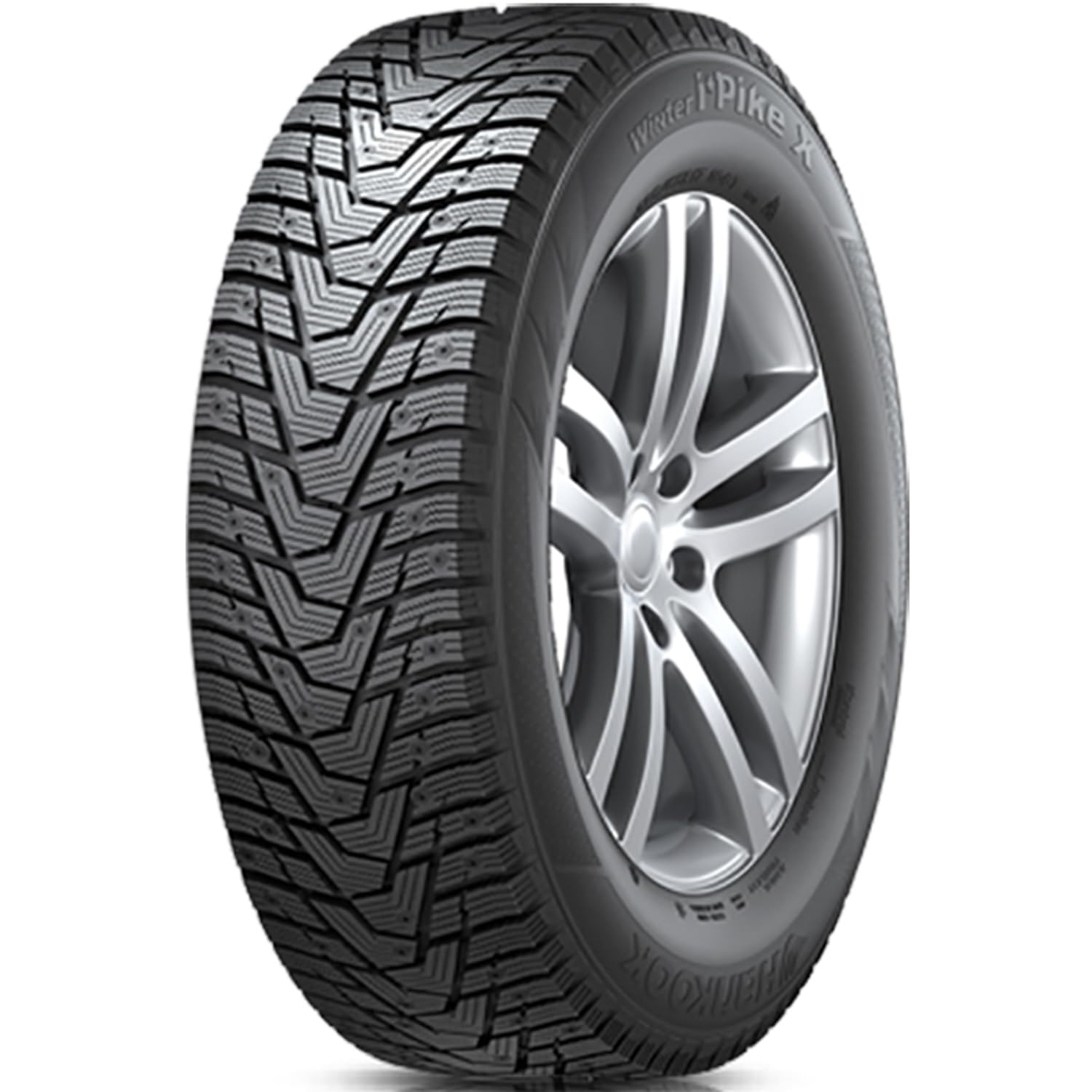
A budget-friendly winter tire that focuses on CUVs and lighter SUVs rather than heavy-duty pickups.
The Hankook Winter ipike X SUV is a studdable winter tire that carries a three-peak mountain snowflake certification, meaning it is a legitimate winter performer and not just a “mud and snow” badge. Its XL (Extra Load) casing supports a 1,984-pound load capacity per tire and a load index of 104, which is perfectly adequate for a midsize SUV like a Buick Enclave (one reviewer drove an all-wheel-drive Enclave up a steep, snow-covered hill “extremely easily” with these tires) or a half-ton pickup with a light payload. The tire weighs just 31.4 pounds per corner, so it does not punish your fuel economy or make steering feel heavy the way the 44.6-pound BFGoodrich KO2 does.
Where the Hankook gives ground is load capacity. The 104 load index is also lower than the Nexen’s 121, which means you cannot safely run the same air pressure for heavy payloads. That said, buyers love the value: one reviewer “got almost 60,000 miles out of the first set,” which is remarkable tread life for a winter tire. The tread pattern is designed with a wide center block for snow and ice traction, and the rubber compound is designed to stay flexible in cold weather.
What makes it affordable
- Lightest tire here at 31.4 pounds — reduces unsprung weight and improves ride comfort
- Owners mention 60,000-mile tread life, which is excellent for a winter tire
- Studdable with TSMI #12 pins for severe ice conditions where legal
Where you compromise
- 1,984-pound load capacity vs. the Nexen’s 3,086 pounds — not for heavy hauling
- Load index of 104 limits maximum pressure and safety margin for loaded trucks
Best for lighter SUVs and half-ton trucks on a budget: If you drive a midsize SUV, a crossover, or a light-duty pickup (F-150, Silverado 1500) with modest payload needs, the Hankook delivers proven winter traction at a more accessible price.
Not for heavy work: Skip this one if your truck regularly carries a camper, a heavy trailer tongue, or a full bed of materials — you need the higher load index of the Nexen or Cooper.
Understanding the Specs
Load Index and Load Range
The load index (a number like 113 or 121 stamped on the sidewall) tells you the maximum weight each tire can carry when inflated to its rated pressure. A tire with a load index of 121 can support 3,197 pounds at maximum pressure, while one with 104 can support just 1,984 pounds. The Load Range letter (C, D, E, or F) corresponds to the tire’s ply rating — essentially how many internal layers of rubber-coated fabric reinforce the carcass. A Load Range E tire (typically a 10-ply rating) can handle higher pressures and heavier loads than a Load Range D (8-ply) or C (6-ply) tire, making it essential for heavy pickups and trucks that carry payloads near their GVWR (Gross Vehicle Weight Rating — the total maximum weight your truck is rated to carry, including passengers, cargo, and the truck itself).
Three-Peak Mountain Snowflake (3PMSF) Certification
This is a real standardized test, not a marketing gimmick. The 3PMSF symbol (three mountain peaks with a snowflake inside) means the tire passed the ASTM F1805 test, which measures acceleration on medium-packed snow. The test requires the tire to achieve a traction index at least 110 on the ASTM scale, while the reference tire scores 100 — providing greater snow traction than a standard mud-and-snow tire. Any winter tire worth buying for a light truck should carry this symbol. Without it, you cannot be sure the compound stays soft and grippy below freezing temperatures.
FAQ
What does the LT in LT245/75R17 mean?
Can I use a passenger-car winter tire on my light truck?
Should I buy studdable tires even if studs are illegal in my area?
How long do light truck winter tires typically last?
What is the difference between Load Range D and Load Range E?
Can I mix different winter tire brands on my truck?
Do I need winter tires if I have four-wheel drive?
What tire pressure should I run in winter for light truck tires?
What is the difference between the Cooper Discoverer Snow Claw and the BFGoodrich KO2 for winter use?
Will an LT245/75R17 tire fit my Ford F-150 or Chevrolet Silverado?
Final Thoughts: The Verdict
Across the board, the light truck winter tire winner is the Cooper Discoverer Snow Claw because it combines a high 3,042-pound load capacity with proven three-peak snowflake performance at a mid-range price — it is the best pure winter value for a heavy pickup. If you want year-round versatility and can live with a slightly lower load rating, the BFGoodrich All Terrain T/A KO2 is the do-everything champion thanks to its 2,535-pound capacity and three-peak certification. And for maximum load hauling through snow, the Nexen Winguard Winspike with its 3,086-pound capacity and studdable tread is the heavy-duty specialist.
How We Picked
We do not accept paid placement. Every pick is matched to a real buyer and a real use-case; we do not hands-on test units.
Sources & Methodology
Specifications: manufacturer listings and product documentation. Review insights: verified customer reviews, as of July 2026. Pricing: not shown on this page (it changes often); check the current price via the retailer link.
As an Amazon Associate, Trending Car earns from qualifying purchases. This does not affect which products we feature.