
Our readers keep the lights on and my garage snacks stocked. As an Amazon Associate, I earn from qualifying purchases.
Specs are compiled from manufacturer listings and verified buyer reviews and can change over time — please confirm the key details on the product page before buying.
If you have ever tried rubbing out a scratch by hand, you know the honest truth: it barely works, your arm aches within minutes, and the paint still looks hazy. A real paint-correction tool spins and oscillates at the same time, so it levels the clear coat without leaving the deep swirls a rotary buffer can burn in. The decision depends on how much time you want to spend, how big the correction job is, and whether you plan to do this once or every season.
I’m Min Islam — the founder and writer behind Trending Car. This guide is built by comparing the manufacturers’ published specifications and the patterns across verified customer reviews, so you get each pick’s real strengths and trade-offs instead of marketing spin.
This lineup of the best polisher for paint correction covers every budget and skill level, from value-packed kits to professional cordless tools.
Our Picks at a Glance

How To Choose The Best Polisher for Paint Correction
The right paint-correction polisher is not the most expensive one — it is the one that matches the work you actually do. Beginners need a tool that stops spinning when you push too hard (that is the dual-action safety net), while pros look for a wide orbit that covers more surface per pass. Here is what to check before you click buy.
Dual Action vs Rotary vs Long Throw
Every polisher in this list is a dual-action (DA) random orbital. That means the pad both spins on its center and wobbles in a small circle. A rotary spins only one way and can burn clear coat in seconds if you hesitate. A DA polisher stops cutting if you lean into it, which is why beginners and pros alike use it for scratch removal without the risk. Long-throw models (15mm orbit) move the pad in a wider ellipse, so they cover more area per pass and finish panels faster than a standard 8mm or 9mm machine.
Variable Speed and Torque Management
Paint correction uses three broad phases: cutting (heavy compound, low speed), polishing (mid speed), and finishing (high speed, light pad). A variable-speed dial lets you switch between these without swapping tools. Torque management — electronic feedback that keeps the pad spinning at the speed you set even when you press down — is the difference between a consistent cut and a tool that bogs down over every body line.
Throw Length (Orbit Size)
The orbit size, measured in millimeters, tells you how wide the wobble is. A 9mm orbit is fine for applying wax or doing small spots, but it takes longer to correct a whole hood. A 15mm orbit clears more paint per second, making it the standard for serious paint correction. The trade-off is a slightly larger tool body and a bit more vibration at full speed.
Quick Comparison
| Model | Best For | Orbit / Throw | Max Speed | Power (Watts) | Amazon |
|---|---|---|---|---|---|
| BATOCA 6″ DA★ Best Overall | Budget-friendly full kit | Standard DA | 3800 RPM | 700W | Amazon |
| Adam’s Polishes 9mm DAAlso Great | Beginners & all-in-one kit | 9mm | 6500 RPM | 1000W | Amazon |
| Maxshine M15 Pro | Best value 15mm long throw | 15mm | 5000 RPM | 1000W | Amazon |
| Rupes LHR 15ES | Professional-grade finish | 15mm | — | 500W | Amazon |
| Milwaukee M18 Fuel | Cordless freedom & pro use | 15mm | 5100 RPM | — | Amazon |
| Chemical Guys TORQ15DA | Complete kit with pads & compounds | 15mm | 3000 RPM | — | Amazon |
| Meguiar’s MT300 | Lightweight control & torque | Standard DA | — | — | Amazon |
In‑Depth Reviews
1. BATOCA 6″ Dual Action Random Orbital Car Polisher Kit
Our pick — 4.5★ from 900+ verified ratings; the strongest balance of quality and price.
The heavy-value kit that handles three cars in one day without a hiccup.
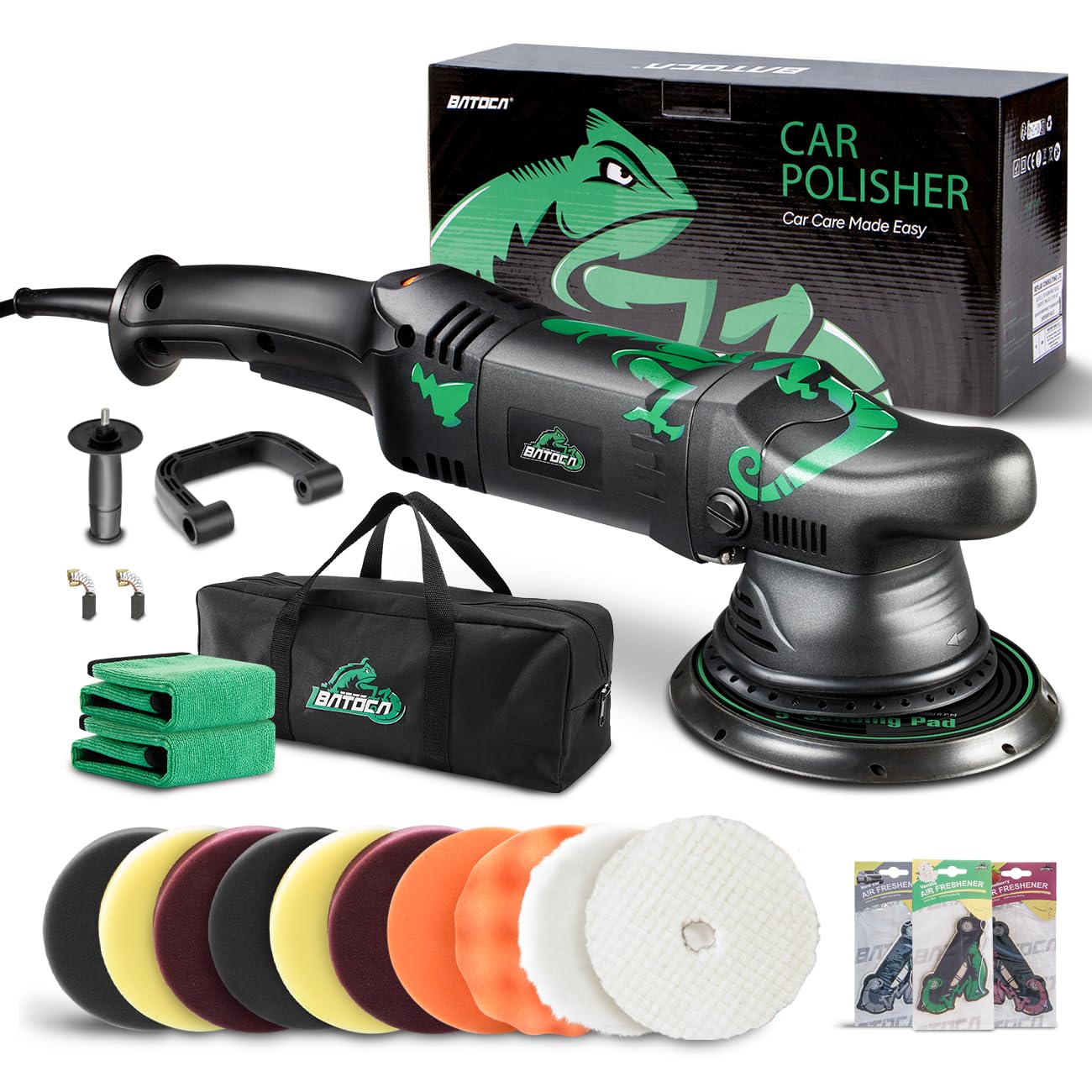
BATOCA packs a 700W motor, six speeds (1,000 to 3,800 OPM), and a full accessory set — foam pads, wool pads, sanding paper, a microfiber towel, a tool bag, and even a pair of disposable gloves — into a kit that seriously undercuts the competition on price. One buyer summed it up: “Used to detail 3 cars for 8 hours total. Worked flawlessly.” That kind of endurance from a sub- polisher is exactly why beginners and budget-conscious detailers keep picking this one. The 9.15-pound weight is noticeable (the Meguiar’s MT300 is 5.4 pounds, for reference), but the curved D-handle and side grip give you leverage to work through a full correction.
The eccentric design (dual action) makes it safe for beginners — you cannot burn the paint because the pad stops cutting under too much pressure. Owners mention that the pads are a bit stiff from the start but break in nicely after a few passes. The included carbon brushes are meant for periodic replacement about every six months, which extends the motor life if you keep up with it. The green chameleon decal is mostly cosmetic, but it does help you spot this machine in a messy garage.
At 700W and 3,800 RPM, it is notably less powerful than the 1000W Adam’s Polishes (which runs 6500 RPM), so heavy cutting on hard clear coats will take longer. The ABS plastic body also feels less dense than the alloy-steel construction of pricier models.
Kit value is real: Pads, wool bonnets, sandpaper, a bag, and a towel all in the box for the lowest entry price — one buyer used it on three cars in eight hours with no issues.
The honest trade-off: At 9.15 pounds it is heavy, and the 3800 RPM maximum speed means it cuts slower than high-end models on stubborn defects.
Best for: The first-time buyer who wants a complete kit with everything to start polishing immediately and does not want to spend a lot.
it’s not for you if: You need a lightweight tool for long sessions or you plan to do heavy professional correction that demands 6500+ RPM speed.
2. Adam’s Polishes 9mm Dual Action Car Polisher (Polishing Kit)
The 9mm kit that hands a DIYer the same power a pro would pick.
This polisher delivers 1000W of power for paint correction, yet it weighs only 5.5 pounds and has a 16-foot cord so you are not dragging an extension ladder behind you. It caps at 6500 RPM (versus the BATOCA’s 3800 RPM), which means it levels scratches and swirls faster than most machines in its price tier. Buyers report that one session — “4 and a half hours detailing the finish of my 2021 Jeep Wrangler” — turned a daily driver into a showpiece.
The kit includes compound, polish, and pads, so you can open the box and start on a 20-year-old clear coat without hunting for extra supplies. One reviewer specifically said their 20-year-old Lexus paint came out great in prep for graphene ceramic treatment, which is a real test of how smooth the finish gets. The concave rubber grip points absorb vibration, and the soft-touch head cover keeps the body clean.
Because the orbit is 9mm rather than 15mm, it will take more passes on heavily oxidized panels compared to a long-throw model. But for a first-time buyer who wants one machine that does correction, polish, and wax without needing a second tool, this is the easiest onramp.
Kit is king: Adam’s packs pads, polish, and a 16-foot cord into a sub-5.5-pound package that runs 1000W — so beginners have everything they need for their first full correction.
The honest limit: The 9mm orbit is slower on large flat panels than a 15mm machine, and the kit does not include a backing plate for smaller pads.
Reach for this if: you are new to paint correction and want a complete kit that lets you correct and finish a whole car in one afternoon.
Look elsewhere if: you are a pro trying to cut cycle time on large panels or you already own pads and compounds.
3. Maxshine M15 Pro Dual Action Polisher
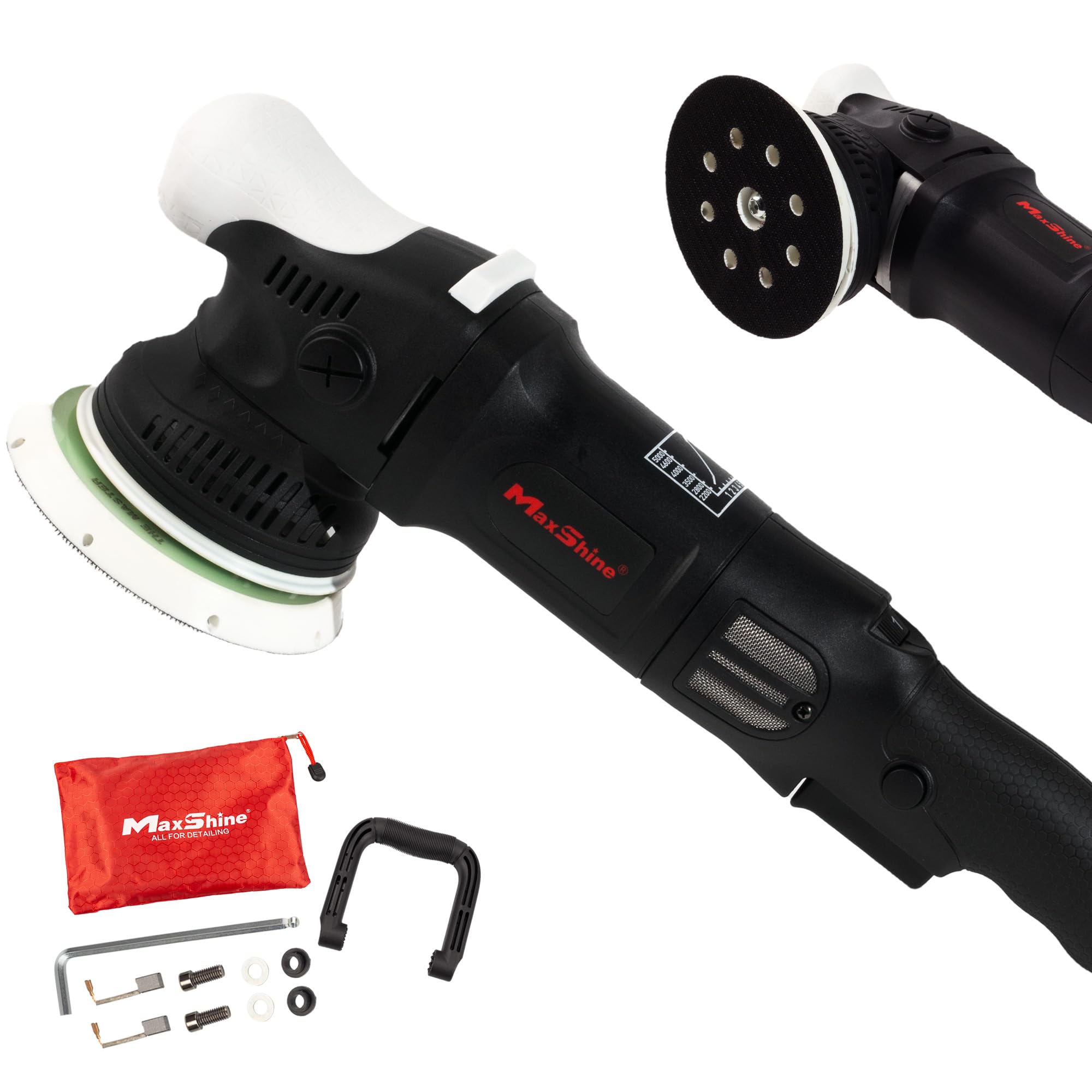
The 15mm long-throw that delivers Rupes-like results for roughly half the price.
Maxshine packs a 1000W motor and a true 15mm orbit (compared to the 700W BATOCA) into a 5.2-pound body that owners mention is “lighter, quieter, easier to control, and less fatiguing” than a Porter-Cable 7424xp. The variable speed adjusts from 2,500 to 5,000 OPM (orbits per minute), so you can cut hard at low speed and finish glossy at high speed without swapping tools.
Customers note that the 15mm long throw covers more surface area per pass than a standard 9mm machine — one reviewer upgraded from a budget-priced DA and said a single pass with a 5-inch pad on dark paint “revived my passion for detailing.” The tool includes a 5-inch backing plate standard, and users say results compare to Rupes and Flex.
The built-in variable speed trigger gives precise control, but the machine lacks a soft-start feature, so the initial spin-up can throw a dollop of compound if you are not ready. It is also corded, so you are tethered to an outlet for every panel.
Long-throw at a mid-range price: The 15mm orbit and 1000W motor give it the coverage and cut of high-end polishers without the price tag — buyers call it “the best polisher ever.”
One catch: No soft-start means the pad jerks to life on trigger pull, and the tool does not come with foam pads or extra backing plates.
Who it fits: The detailer who wants long-throw speed on a mid-range budget and is comfortable buying pads and compound separately.
Who should pass: Beginners who want a ready-to-run kit with step-by-step instructions might prefer the Adam’s package.
4. Rupes LHR 15ES Big Foot Random Orbital Polisher

The Italian-made standard that sets the benchmark for smooth, swirl-free correction.
Rupes invented the long-throw dual-action category, and the LHR 15ES still defines it. The 15mm orbit coupled with a 500W motor and electronic feedback control keeps the pad speed constant across door panels and hoods, so you get a consistent cut rate without bogging down. The soft-start feature ramps up speed gradually, preventing the compound splatter that cheaper polishers cause on trigger pull.
Experienced users report that the anti-spinning feature prevents the pad from rotating at high speed if you lift it off the surface, which means no accidental swirls. One buyer who spent 20+ hours with this machine on a large job said the low vibration and ergonomic grips made the time on the tool manageable — “it went super smoothly.” Another reviewer called the Rupes “the best polisher in the game” for its vibration control and feel.
The unit is heavy at first feel, but pros note the weight sits on the pad, not your arms. The 500W motor is less powerful than the Maxshine’s 1000W, yet the feedback control makes it feel stronger because it never lags. It ships as a bare tool — no pads, no kit — and the 1-year warranty is shorter than some competitors offer.
Pro-grade feel: The 15mm orbit with constant electronic feedback and soft start delivers a swirl-free finish that has earned Rupes its reputation — reviewers who own both this and a Porter-Cable say the difference is night and day.
The obvious trade-off: At 500W, it is less powerful in raw wattage than the 1000W Maxshine, and the bare-tool packaging means you spend extra on pads, backing plate, and a case.
Best for: The detailer who values vibration-free operation and flawless finish over raw speed and needs a tool that will hold its value for years.
skip it if: You want a complete kit with pads, a carrying case, or more raw power for heavy cutting on large fleet vehicles.
5. Milwaukee M18 Fuel 15mm Random Orbital Polisher

The cordless powerhouse that finishes a whole car on one battery charge.
Milwaukee brought its Fuel platform to paint correction with an 8-speed dial that ranges from 2,650 to 5,100 RPM and a variable-speed trigger for precise feathering. The 15mm orbit means it covers ground fast, and the premium electronic motor feedback keeps the pad speed steady under load — a cordless machine that does not bog down when you press into a defect. The lock-on switch lets you run it without holding the trigger, which saves your hand during an hour-long cutting session.
Reviewers point out that a single 6.0Ah battery finishes a track car from heavy correction to final wax — no switching packs mid-polish. One reviewer noted it delivers “superior results” that clients immediately noticed. The bare tool weighs 96 ounces (6 pounds), so it is heavier than some corded models (like the 5.4-pound Meguiar’s), but you trade a few ounces for the freedom of no cord snagging on mirrors or tires.
The tool ships with no battery or charger, so if you are not already in the M18 ecosystem, the entry cost jumps significantly. It is also a bare tool only — no pads or backing plate included — and the ergonomic grip, while good, is not as cushioned as the Rupes.
No cord, no compromise: The 8-speed dial, variable trigger, and motor feedback create a cordless machine that keeps consistent speed through a full correction — shoppers say battery life (6.0Ah) covers an entire car on one charge.
The real cost: The bare tool price is just the start; you need M18 batteries and a charger, which pushes the real investment well into premium territory.
Reach for this if: You already own M18 tools and batteries and want a cordless polisher that keeps constant speed under load.
Look elsewhere if: You are starting fresh — the battery cost makes this the most expensive option, and a corded machine will give you the same power for less.
6. Chemical Guys TORQ15DA 15MM Long-Throw Random Orbital Polisher Kit

The 8-piece kit that gives you pads, compounds, and a 15mm orbit in one box.
Chemical Guys sells the TORQ15DA as a complete system: the 15mm long-throw polisher, three Hex-Logic foam pads (cutting, polishing, finishing), and four V-Line compounds that range from heavy cut to final polish. The variable-speed adjustment gives you plenty of control, and the dual-action design stays safe on clear coat — it stops cutting when you push too hard, so beginners are less likely to burn through. Weighing 3.9 kg (about 8.6 pounds), it is heavier than the Meguiar’s MT300 (5.4 pounds) or the Maxshine M15 Pro (5.2 pounds), but the extra weight comes with the included pads and chemicals.
Reviewers with auto-body collision experience say the machine is “powerful” and “ideal for DIY and pro use,” noting that the long throw reduces heat buildup compared to a rotary and is forgiving on trim. Another buyer highlighted that it corrects semi-deep scratches even on the first attempt when paired with the right foam pad. The body is made of ABS plastic and alloy steel, and it runs on a corded 122-volt power supply.
The digital speed indicator is a nice touch, but users note some vibration at lower RPM (around 1800 OPM), and the plastic housing around the speed control feels less premium than metal-bodied machines. The 30-day warranty through Amazon is also shorter than the industry standard.
Everything included: Three foam pads and four compounds in one box means you can start cutting, polishing, and waxing immediately without buying anything else — one reviewer called it a “GEM” for the convenience.
Worth knowing: The 30-day warranty is unusually short, and the tool body vibrates more at low speed than premium metal-chassis machines.
Best for: The buyer who wants a single-box solution with both pads and chemicals so they do not have to research what product to buy separately.
pass on it if: You want a lightweight tool — this kit is heavier than most corded polishers — or you prefer using your own compounds.
7. Meguiar’s MT300 Variable Speed Dual Action Polisher

The lightweight DA that corrects a decade of weathering without tiring you out.
It uses digital torque management to electronically adjust power and keep the loaded speed consistent — so when you push down on a heavy scratch, the pad keeps spinning at the same RPM instead of slowing. The soft-start technology eases the motor on gently, preventing the sudden jerk that flings compound across the panel.
Buyers report that this tool “effectively corrected 9-year-old weathered clearcoat,” which is exactly the kind of oxidation-heavy job that challenges a weak polisher. The multi-position D-handle improves comfort whether you are working on a low rocker panel or a high roofline. Reviewers also mention it is easy to maintain with spare brushes and that the billet counterweight keeps vibration minimal compared to the previous-generation model.
The cord is slightly short — no extension cord, you will feel it — and the handle fasteners can loosen during use. It also ships as a bare tool with no pads or backing plate, so you have to budget for those separately.
Built for comfort: At 5.4 pounds with digital torque management, this polisher stays balanced and consistent through hour-long correction jobs — one buyer corrected a 9-year-old clearcoat in a single session.
Two things to know: The cord is shorter than most competitors, and it does not come with pads or a backing plate, which adds to the real cost.
Reach for this if: You want a lightweight machine that keeps speed under pressure, especially for long correction sessions on multiple vehicles.
Look elsewhere if: You want an all-in-one kit or need a long-throw orbit for faster coverage on large panels.
Understanding the Specs
Orbit / Throw (9mm vs 15mm)
The orbit size describes how wide the pad wobbles. A 9mm orbit creates a small circular motion — fine for applying wax or correcting small sections, but it takes longer to cover a hood. A 15mm orbit sweeps a larger area per revolution, so you finish panels faster. The trade-off is that 15mm machines can vibrate more and are better suited to experienced users who can manage the broader motion. For serious paint correction on a full vehicle, a 15mm long-throw is the modern standard.
Variable Speed & Torque Management
Variable speed (usually 1,000 to 5,000+ OPM) lets you choose the right speed for each step: low for cutting compound, medium for polishing, high for final wax. Torque management, also called electronic feedback control, automatically adjusts power to keep the pad spinning at your set speed even when you press down. Without it, the pad slows or stalls under pressure, which reduces cut consistency and forces you to slow down. Tools with digital torque management feel more predictable and finish more evenly.
FAQ
What is the difference between a dual-action polisher and a rotary polisher?
Is a 15mm throw better than a 9mm throw for paint correction?
Can I use any foam pad with any dual-action polisher?
How long does a paint-correction polisher last?
Do I need a separate backing plate for smaller pads?
Will a cheap polisher damage my car’s paint?
What power source is best — corded or cordless?
Can I use a paint-correction polisher for waxing and polishing?
How do I maintain my DA polisher between uses?
What speed should I use for each polishing stage?
Final Thoughts: The Verdict
If you want one dependable pick, the best polisher for paint correction winner is the Adam’s Polishes 9mm DA Kit because it combines 1000W power, a 16-foot cord, and all the pads and compound you need in one box — no guesswork, no extra shopping. If you want a long-throw machine that finishes panels faster than a 9mm at a mid-range price, grab the Maxshine M15 Pro. And for the detailer who demands cordless freedom and already owns M18 batteries, the standout is the Milwaukee M18 Fuel for run-and-gun mobile detailing.
How We Picked
We do not accept paid placement. Every pick is matched to a real buyer and a real use-case; we do not hands-on test units.
Sources & Methodology
Specifications: manufacturer listings and product documentation. Review insights: verified customer reviews, as of July 2026. Pricing: not shown on this page (it changes often); check the current price via the retailer link.
As an Amazon Associate, Trending Car earns from qualifying purchases. This does not affect which products we feature.