
Our readers keep the lights on and my garage snacks stocked. As an Amazon Associate, I earn from qualifying purchases.
Specs are compiled from manufacturer listings and verified buyer reviews and can change over time — please confirm the key details on the product page before buying.
The greasy, baked-on crud under the hood is not just ugly — it hides leaks, traps heat, and makes future repairs messier than they need to be. The right cleaner cuts through that grime in minutes, so you spot problems before they become breakdowns and your engine bay looks like something you are actually proud to open.
I’m Min Islam — the founder and writer behind Trending Car. This guide is built by comparing the manufacturers’ published specifications and the patterns across verified customer reviews, so you get each pick’s real strengths and trade-offs instead of marketing spin.
Whether you are detailing a classic car or maintaining a daily driver, the right motor degreaser saves elbow grease and reveals what is actually happening under your hood.
Our Picks at a Glance


How To Choose The Best Motor Degreaser
Picking the right cleaner does not need to be complicated, but the wrong one can damage plastic trim or leave a sticky residue. Here are the three things to consider before you buy.
Concentrate vs Ready-to-Use
A concentrate, like the 5-gallon pail from Oil Eater, lets you mix your own strength for light surface cleaning or industrial-grade stripping. Ready-to-use sprays, like the Adam’s All Purpose Cleaner, are perfect for quick jobs where you do not want to measure anything — just spray and wipe.
Gel vs Liquid
If you are cleaning a vertical engine block or a bell housing, a gel like GUNK Engine Brite clings in place and does not drip off before it has time to work. A standard liquid is fine for flat surfaces and parts you can soak, but it runs off vertical metal too fast.
Surface Safety
Not every degreaser is safe on plastic, rubber hoses, or painted valve covers. The SONAX and Griot’s Garage formulas are explicitly designed to avoid staining or softening those components, while some strong solvents can strip paint off a valve cover in seconds.
Quick Comparison
| Model | Best For | Volume | Item Weight | Formula | Amazon |
|---|---|---|---|---|---|
| Oil Eater 5 Gallon★ Best Overall | Heavy-duty shop use | 5 gallons | 45 Pounds | Concentrate | Amazon |
| Adam’s All Purpose CleanerBest Value | Dilutable versatility | 16 oz | 1.1 Pounds | Ready-to-use | Amazon |
| Oil Eater 32 oz 2-Pack | USDA-approved kitchen-to-garage | 32 oz (each) | 2 Pounds | Concentrate | Amazon |
| SONAX Engine Cleaner | Safe on plastic & rubber | 500 ml | — | Ready-to-use | Amazon |
| KRAKEN BOND Engine Cleaner | Quick spray-and-wipe | 2×12.3 fl. oz | 1.9 Pounds | Aerosol spray | Amazon |
| Griot’s Garage Engine Cleaner | Professional-grade detailing | 1 gallon | 8.7 Pounds | Ready-to-use | Amazon |
| GUNK Engine Brite Gel | Vertical surface cling | 15 fl. oz (case of 12) | — | Gel | Amazon |
In‑Depth Reviews
1. Oil Eater AOD5G35438 Original 5 Gallon Cleaner/Degreaser
Our pick — over 4.5★ from 600+ verified ratings; the strongest balance of quality and price.
The 45-pound pail that powers a professional shop’s parts cleaner for months on end.
If you maintain multiple vehicles or run a garage, this is the volume play that changes how you work. The 5-gallon pail of concentrated formula gives you enough cleaner to fill a 40-gallon parts washer and still have plenty left for engine bays and concrete floors. Since it is a concentrate (a thick liquid you mix with water yourself), you decide the strength — use it full force on a greasy transmission or dilute it for lighter cleanup work.
Buyers report that it “works great in a 40-gallon parts cleaner” and that it “smells good, cleans quickly without scrubbing in ~2 hours.” That soak-and-rinse capability is the whole point: drop oily parts in, walk away, and come back to clean metal. The 45-pound pail also means you are buying once for a long time. Just note that it needs “thick rubber gloves” — this is industrial stuff, not a gentle spray.
It is made in the United States and the formula is biodegradable (meaning microbes in the environment can break it down naturally), so you are not dumping harsh solvents down the drain. The catch is obvious: a 5-gallon pail takes up serious shelf space, and at 45 Pounds you are not tossing it in a shopping cart casually — you plan for it.
The Bulk Advantage
- Concentrate — mix at any strength you need
- Biodegradable formula is safer for drains and driveways
- Works without scrubbing when you let it soak
Space and Effort
- 45 Pounds — heavy to move around
- 5-gallon pail is large for home storage
- Requires thick rubber gloves for skin protection
Best for fleet owners: If you have a parts washer, a shop, or several engines to clean every season, this concentrate saves you money and trips to the store.
skip it if: You only need a quick engine bay detail once a year — a smaller spray bottle suits that job better.
2. Adam’s All Purpose Cleaner (16oz) – Professional Heavy Duty Industrial Cleaner & Degreaser
The one-bottle solution that goes from full-strength degreaser to gentle interior cleaner with a splash of water.
Adam’s All Purpose Cleaner earns its spot because it pulls double duty better than anything else here. Used full strength, one reviewer noted it “quickly removed heavy grease/dirt under Jeep engine with brush” — that is the same punch as a dedicated degreaser. But dilute it 90% with water, and it becomes gentle enough for interior panels, carpets, and even leather.
That flexibility means you keep one bottle on the shelf instead of five. The 16-ounce size is handy — at 1.1 Pounds it is the lightest option here, so you can grab it for a quick wheel clean or an engine bay spritz without hauling a heavy gallon jug. Buyers also mention it has a mild, pleasant smell, which is a nice change from the chemical blast of many degreasers.
The trade-off is that at full strength you will go through a 16-oz bottle fast if you are tackling a big, oily engine. The bottle is small, so for heavy shop use you will want to stock a few or step up to a larger size.
Why It Works Everywhere
- Dilute up to 90% for delicate surfaces — one bottle for engine and interior
- Mild sweet smell, not a harsh chemical odor
- Effective on stubborn tire and wheel grime where other cleaners fail
Small Bottle Limitation
- 16 ounces runs out fast on a big engine job
- Full strength is effective but you use a lot per session
One-bottle household: Ideal for the home mechanic who wants a single cleaner that handles engine grease, bug splatters, and interior spots without a cabinet full of chemicals.
If volume is your need: Look at the gallon-sized options below if you are degreasing engines weekly.
3. Oil Eater Original 32 oz All-Purpose Cleaner and Degreaser – Pack of 2

The concentrated degreaser a professional engine builder trusts for final cleaning before reassembly.
This Oil Eater 2-pack sits in a balance — you get a concentrate powerful enough for a shop floor scrubber or a fryer hood, yet the 32-ounce bottles are easy to handle and store. The formula is USDA-approved for food service facilities (ratings A1, A4, A8), so it meets standards that many auto-only degreasers do not. It is also biodegradable (microbes break it down) and noncorrosive (it won’t eat away metal), which means it is kinder to your tools and your skin than solvent-based alternatives.
One reviewer, a professional engine builder, uses Oil Eater “full strength with brushes for final cleaning” then “rinses with hot water, sprays WD40, blows dry.” That detailed method tells you this degreaser leaves zero residue that could interfere with fresh gaskets or seals. Buyers also use it on garage floor oil drips and as a hand cleaner — it pulls double duty. Just be aware that it “will remove factory paint” if left on too long, and one buyer warns it leaves white spots on blacktop or asphalt surfaces, so rinse thoroughly wherever you spray.
The 2-pound per-bottle weight is manageable, and having two bottles means one stays in the garage while the other goes to the driveway or kitchen.
Versatile Strength
- USDA-approved for food facilities — safe enough for commercial kitchens
- Biodegradable and noncorrosive — no harsh solvent smell
- Works as engine degreaser, laundry prewash, and concrete cleaner
Surface Cautions
- Can strip factory paint from engine parts if left on
- Leaves white spots on asphalt or blacktop — rinse immediately or avoid
Smart two-pack: Great for the detailer who wants a trusted concentrate for engines and the ability to use the same bottle on kitchen grease or laundry stains.
Watch your surfaces: Not ideal for painted valve covers or blacktop driveways unless you are prepared to seal or rinse immediately.
4. SONAX Engine Cleaner | Powerful Engine Degreaser for Oil & Grease Removal

The phosphate-free formula that dissolved 300,000 miles of grime without damaging a single plastic hose.
SONAX engineered this cleaner specifically for cautious detailing. The formula is phosphate and solvent-free (it contains no harsh chemical softeners), so it is safe on metal, plastic, and rubber surfaces that a harsh solvent could soften or discolor. That is a huge relief if you have an engine bay full of original plastic clips and hoses you do not want to replace. The cleaner also has “outstanding infiltration ability” — it seeps into tight spaces between intake runners (the tubes that feed air into your engine) and behind pulleys where a brush cannot reach.
One buyer mentioned that they “cleaned a car with 300,000 miles of engine grime to a like new look almost easily” — which is the kind of result that turns a grudge job into a satisfying weekend project. Another detailer used it on their BMW X3 and 3-Series, noting one bottle cleaned two vehicles with some left over. The 500-ml (milliliter) bottle is compact, so it stores neatly on a shelf, but you may need two bottles for a heavily soiled V8 or diesel engine.
It is not the cheapest per ounce — one reviewer called it “overpriced” compared to bulk options like the Oil Eater 5-gallon pail — but the safety margin on delicate components justifies the cost for high-value cars.
Why Detailers Choose It
- Solvent-free and phosphate-free — safe on rubber hoses and plastic trim
- Penetrates hard-to-reach areas without scrubbing
- Restores a like-new appearance even on high-mileage engines
Cost Per Job
- Small 500-ml bottle may need two for a large dirty engine
- Higher per-ounce price than bulk degreasers like Oil Eater
Premium protection: If you drive a BMW, Audi, or any car with delicate plastic engine covers and hoses, this is the safest bet to avoid expensive replacement parts.
pass on it if: You are degreasing a fleet or a junkyard motor — get a concentrate like the Oil Eater instead and save money.
5. KRAKEN BOND Engine Cleaner Spray – (2×12.3 fl. Oz) Engine Degreaser for Engine Bay | 2 Pack
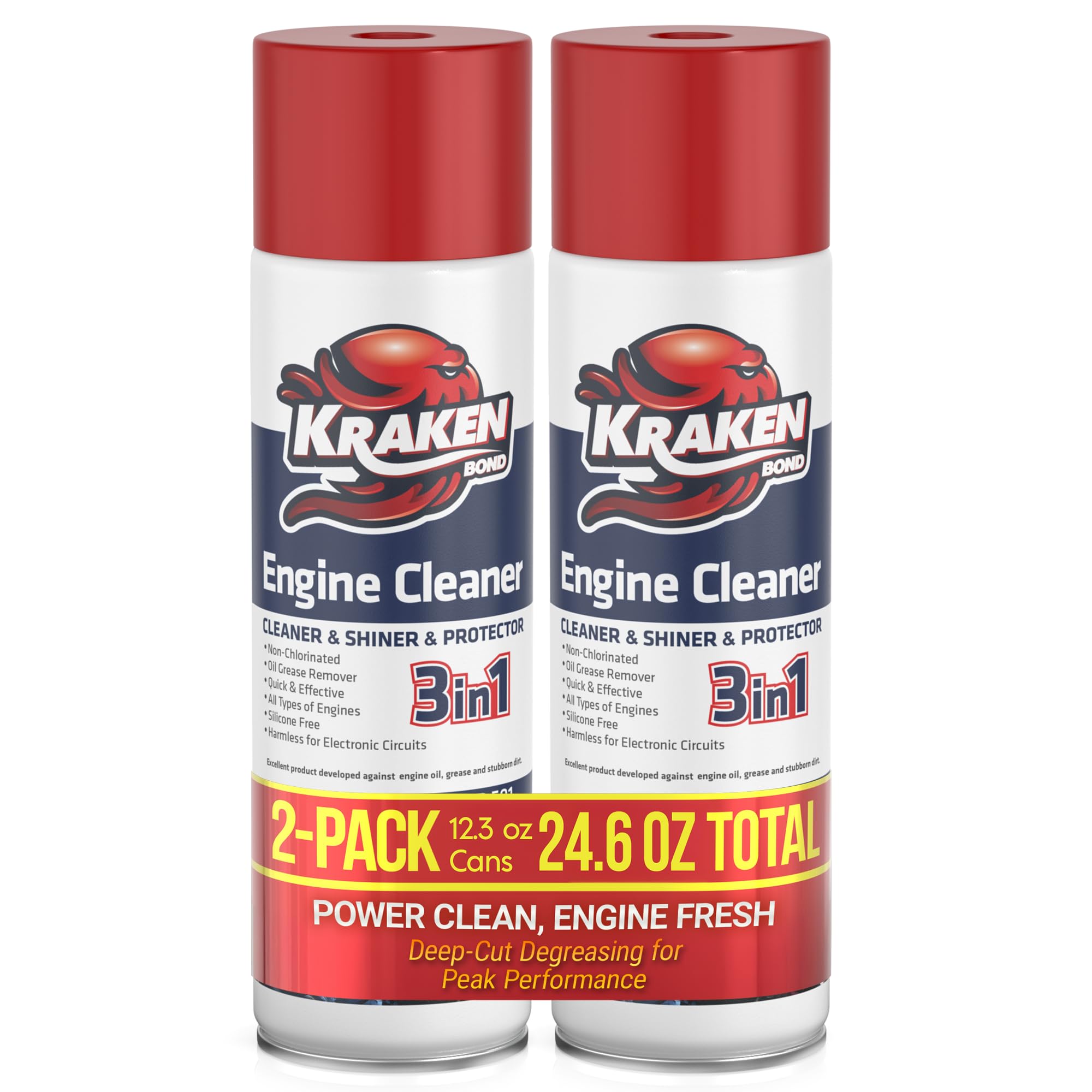
The aerosol that cuts through baked-on oil around valve covers with a simple spray and wipe.
KRAKEN BOND comes in a 2-pack of 12.3-ounce aerosol cans, which makes it the easiest grab-and-go option in this lineup. You do not need a spray bottle, a measuring cup, or a hose — just point, spray, and wipe with a microfiber cloth. The formula is designed to be safe for electronic circuits and uses ozone-friendly propellants, so you are not harming the environment or your engine’s sensors.
Owners mention that it “removes old grease and stains instantly from engine and bay” and “restores original color and decals.” One owner cleaned a filthy 2008 Accord engine bay and noted the product “shines black plastic and removes grime from metal” — though they noted a 4-hour drying time before you can drive, so plan your detail session. It handles burned oil around valve covers and cooked-on dirt on the engine cover, but it will not do much for oxidation on bare metal parts.
The aerosol app is fast, but you get less product per can than a liquid concentrate. For a single deep clean it is fine; for repeated heavy use you will run out quickly.
Grab-and-Go Ease
- Aerosol — no measuring, no mixing, no spray bottle needed
- Safe for electronic circuits and uses ozone-friendly propellants
- Restores original decal and plastic color instantly
Limited Volume
- 12.3 oz per can goes fast on a full engine bay
- Needs 4 hours drying time before you can drive
- Not effective on metal oxidation — only grease and grime
Perfect for a quick detail: If you want to spruce up your engine bay before a car meet or a resale photo, this spray delivers instant results with zero setup.
Not for heavy scrubbing: If you are cleaning a transmission that has been leaking for years, go with a full-strength concentrate (like the Oil Eater 5-Gallon) and a brush.
6. Griot’s Garage Engine Cleaner for Car, Motorcycle, Boat, RV, and Truck – One Gallon
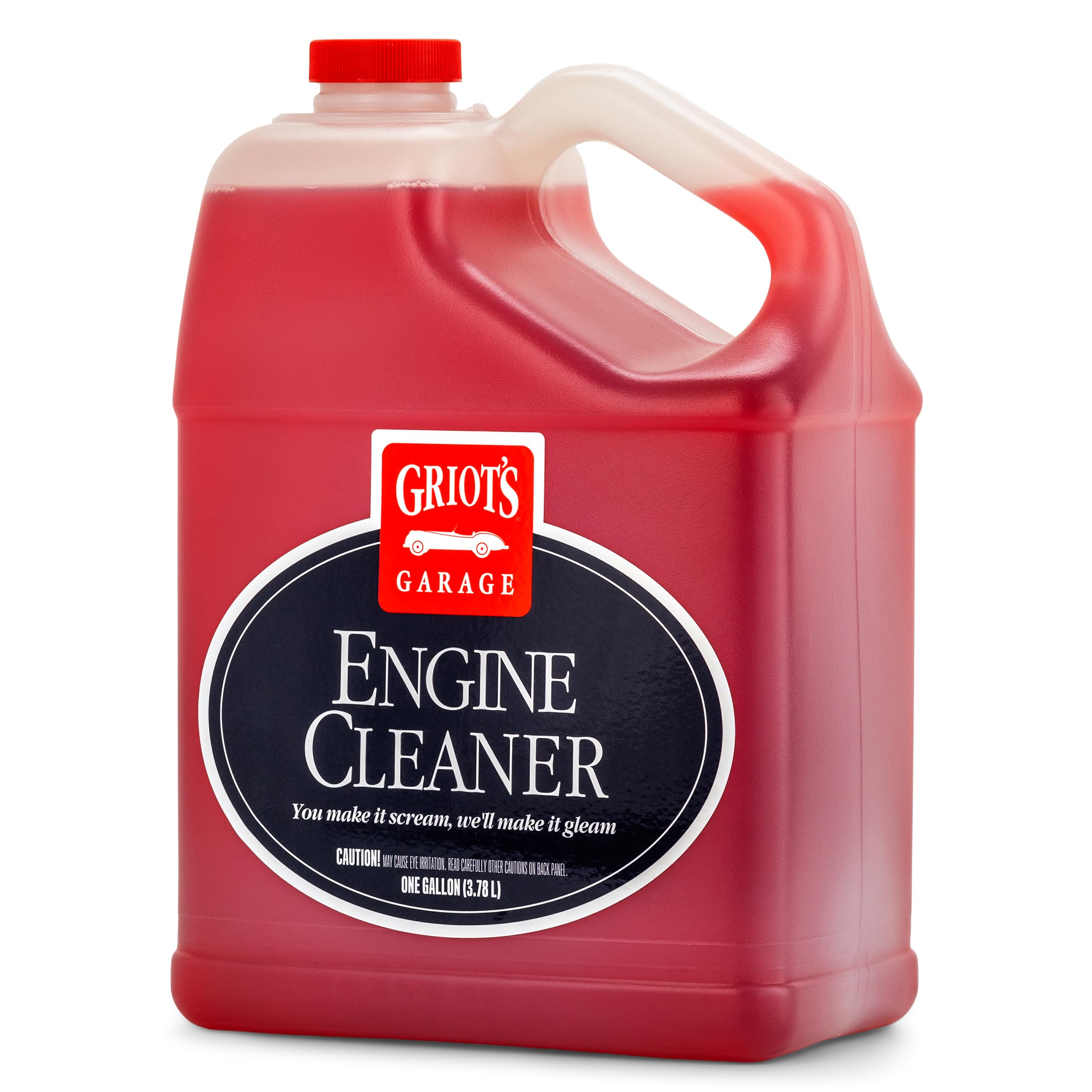
The professional-grade gallon that makes a neglected lawn mower engine look ready for a car show.
Griot’s Garage built its reputation on premium car care, and this one-gallon engine cleaner carries that same detailer-first philosophy. The formula is powerful enough to break down years of grease and oil residue, yet it is engineered to be safe on plastics, rubber hoses, and painted components when you follow the directions. Reviewers consistently praise how “a light mist, brief dwell time (the time you let it sit before wiping), and agitation with a soft brush is usually all it takes” — no heavy scrubbing or harsh chemicals.
One buyer used it on a greasy lawn mower engine that came out “clean and smugly ready to mow in polite society again.” Another detailed a 2002 Ford Taurus engine bay and got excellent results using just the cleaner before applying an engine bay dressing. The 8.7-pound gallon jug is a practical size — big enough for multiple jobs but not as unwieldy as a 5-gallon pail, like the Oil Eater.
The main drawback is that the gallon jug does not include a sprayer, so you need to supply your own trigger spray bottle or pump. It is also a premium price per gallon compared to the concentrated options, but the safety margin and ease of use justify it for serious detailers.
Detailing Standard
- Safe on plastic, rubber, and painted components when used as directed
- Breaks down years of grease with minimal scrubbing
- One gallon provides multiple full-engine cleanings
Read Before You Buy
- No sprayer included — buy a separate bottle
- Higher per-gallon price than concentrated alternatives like Oil Eater
For the dedicated detailer: If you take pride in a spotless engine bay and want a cleaner that will not damage trim or paint, this is the safest high-performance option.
Budget-conscious shop: If you are degreasing parts in bulk, the Oil Eater concentrate gives you more volume for less money.
7. GUNK EBGEL-12PK ‘Engine Brite’ Engine Degreaser Gel – 15 oz. (Case of 12)

The gel that sticks to vertical bell housings and valve covers instead of dripping onto your floor.
GUNK has been around for more than 75 years, and this gel formula solves the single biggest annoyance of liquid degreasers: runoff. The thick gel clings to engine surfaces — even the bottom of the oil pan or the side of the transmission — and stays put long enough to dissolve grease rather than sliding off before it works. It is safe on most under-hood rubber, plastic, and paint, which makes it a safe bet for daily drivers and classic cars alike.
Customers note it “effectively removed 12-15 years of grease/grime, burnt oil, and transmission fluid” from a pickup, though they noted it “revealed new leaks and cracks” — which is actually good news because you want to know about those. The gel also works well on overhead surfaces, though you may need multiple applications and a brass brush for caked-on grime. One buyer emphasized that the smell is “very potent,” so work outdoors or with good ventilation.
The case of 12 cans is a bulk buy aimed at shops or serious enthusiasts. Each can is 15 fluid ounces, so a single can handles one engine bay, and the case gives you a year’s supply for a busy garage.
Why Gel Wins
- Gel clings to vertical and overhead surfaces — no messy drips
- Safe on most under-hood rubber, plastic, and paint
- Proven brand with over 75 years of trust in the market
Use With Care
- Very strong chemical smell — use only with good ventilation
- May need multiple applications for deeply caked-on grime
- Case of 12 is a large commitment — not a single-can purchase
Vertical surface specialist: If you are degreasing the bottom of a lifted truck or the sides of a transmission, the gel stays where you spray it and works without dripping.
One-time users: Unless you run a shop, look for a single can of this rather than the full case-of-12 — it is potent stuff and a little goes a long way.
Understanding the Specs
Volume and Concentration
The number on the bottle — 16 ounces, 32 ounces, 5 gallons — tells you how much cleaner you are buying, but also whether it is ready-to-use or a concentrate. A concentrate like the Oil Eater 5-gallon pail lets you mix it weaker for light duty or full-strength for the toughest jobs. A ready-to-use spray like the Adam’s All Purpose Cleaner is convenient but you pay for the water that is already in the bottle.
Gel vs Liquid vs Aerosol
A liquid degreaser is the standard choice for soaking parts or cleaning flat surfaces. A gel, like the GUNK Engine Brite, sticks to vertical engine parts and does not drip off before it has time to dissolve the grease. An aerosol spray, like the KRAKEN BOND, is the fastest to use — point and spray — but you get less product per dollar and the propellant adds waste.
FAQ
Can I use a motor degreaser on a hot engine?
Will a degreaser damage plastic or rubber under the hood?
How long should I let a degreaser sit before rinsing?
Can I use motor degreaser on my driveway or garage floor?
What is the difference between a degreaser and an all-purpose cleaner?
How much degreaser do I need for a single engine bay?
Is it safe to use a motor degreaser on my motorcycle engine?
How do I rinse a degreaser off without getting water into electrical parts?
Can I use a motor degreaser to clean my BBQ grill or kitchen hood?
Why does my degreaser smell so strong?
Final Thoughts: The Verdict
For most buyers, the motor degreaser winner is the Oil Eater 5 Gallon because its concentrate gives you the most cleaning power per dollar and handles everything from a parts washer to driveway stains. If you want a single versatile bottle that works on engine grease and interior panels, grab the Adam’s All Purpose Cleaner. And for a safe, delicate clean on a high-value engine bay without damaging plastic or rubber, the standout is the SONAX Engine Cleaner.
How We Picked
We do not accept paid placement. Every pick is matched to a real buyer and a real use-case; we do not hands-on test units.
Sources & Methodology
Specifications: manufacturer listings and product documentation. Review insights: verified customer reviews, as of July 2026. Pricing: not shown on this page (it changes often); check the current price via the retailer link.
As an Amazon Associate, Trending Car earns from qualifying purchases. This does not affect which products we feature.