
Our readers keep the lights on and my garage snacks stocked. As an Amazon Associate, I earn from qualifying purchases.
Specs are compiled from manufacturer listings and verified buyer reviews and can change over time — please confirm the key details on the product page before buying.
A dead electric fuel pump leaves you cranking endlessly with an engine that refuses to fire — it is the silent failure that stops a car dead, often without warning signs. The right pump for your ride depends on whether you run a carbureted classic or a high-pressure EFI build, and the worst choice is a random one that does not match your system’s flow or pressure needs.
I’m Min Islam — the founder and writer behind Trending Car. This guide is built by comparing the manufacturers’ published specifications and the patterns across verified customer reviews, so you get each pick’s real strengths and trade-offs instead of marketing spin.
From carburetor-friendly low-pressure units to high-volume EFI pumps that feed forced-induction builds, this roundup covers the best electric fuel pump choices for real-world drivers and builders alike.
Our Picks at a Glance

How To Choose The Best Electric Fuel Pump
Choosing a fuel pump is not about picking the biggest number — it is about matching the pump’s pressure and flow to your engine’s fuel system. A carbureted engine needs about 4-7 PSI and a modest flow rate, while a modern EFI system demands higher pressure (often 40-75 PSI) to push fuel past the injectors. The wrong pump will either starve your engine or overwhelm your carburetor’s needle and seat.
Match Pressure to Your Fuel System Type
The single most critical spec is operating pressure. Carbureted systems work with low pressure, typically under 10 PSI, and a pump like the Holley 12-801-1 with a maximum pressure of 7 PSI is a perfect match. EFI systems, on the other hand, need pumps that maintain 40-80 PSI under load — the BOSCH 044 is designed for exactly that high-pressure environment.
Flow Rate: How Much Fuel Does Your Engine Need?
Flow rate is measured in gallons per hour (GPH) or liters per hour (LPH) at a given pressure. A stock motor may only need 30-50 GPH, while a built forced-induction engine can demand 300+ LPH (about 80 GPH). The Aeromotive 340 LPH pump covers high-output naturally aspirated, turbo, and supercharged builds without breaking a sweat.
Inline vs. In-Tank: Placement Matters
Inline pumps mount externally along the frame rail, making them easier to service but often louder and more prone to vapor lock if mounted high. In-tank pumps, like the Aeromotive 11540, sit submerged in fuel, which keeps them cool and quiet — but installation requires dropping the tank or modifying the hanger assembly. The EVIL ENERGY inline pump must be installed below the tank for gravity-fed flow, a detail many first-time builders overlook.
Quick Comparison
| Model | Best For | Flow Rate | Pressure | Weight | Amazon |
|---|---|---|---|---|---|
| Holley 12-801-1★ Best Overall | Carbureted street/strip | 97 GPH | 7 psi | — | Amazon |
| BOSCH 044 / 61944Premium Pick | High-performance / motorsports | 80 GPH | 75+ PSI | 906 Grams | Amazon |
| Aeromotive 340 LPH (11540) | High-output EFI / turbo builds | 340 LPH | 40+ PSI | 1.2 Pounds | Amazon |
| EVIL ENERGY 300LPH | Universal EFI on a budget | 300 LPH | 75 PSI | 1.29 Kilograms | Amazon |
| Mr. Gasket 12S | Light-duty / transfer pump | — | 4 psi | 1 Pounds | Amazon |
In‑Depth Reviews
1. Holley 12-801-1 97 GPH RED® Electric Fuel Pump
Our pick — over 4.5★ from 450+ verified ratings; the strongest balance of quality and price.
The carburetor king that delivers steady fuel with no regulator needed.
At 97 GPH free flow and a maximum pressure of just 7 PSI, this Holley Red pump is built specifically for carbureted engines — not EFI. That low pressure means you can run it directly with an Edelbrock carb without installing a separate regulator, saving time and fittings. The tumble polished billet body and redesigned lower housing casting improve fuel flow and give it a clean look under the hood.
Buyers confirm its reliability in classic conversions — one owner reported the “Holley Red pump works flawlessly for carburetor conversion on early Dodge pickup; no regulator needed with Edelbrock carb.” The motor draws only 2 amps of current, so your electrical system sees minimal load. Just note that the pump runs louder than some expect, as multiple reviews mention a noticeable hum, but nobody reports it starving for fuel under hard driving.
Why it earns the top spot
- Flows 97 GPH with a constant, pulsation-free stream — perfect for engines up to about 600 hp on carburetion
- Aluminum body resists corrosion, and the 7 psi maximum pressure eliminates the need for an external regulator on most carbs
- Simple three-wire hookup with relay recommended (Holley 12-753) keeps install clean
The honest trade-offs
- Cannot be used on EFI systems — 7 psi is far too low for injectors that need 40-80 psi
- Audibly louder than in-tank pumps; some owners call it “a little louder than expected” in reviews
Stick with this if: you run a carbureted street car, truck, or boat and want a proven pump that flows 97 GPH with zero pulsation and no regulator fuss.
Look elsewhere if: your engine uses EFI, requires more than 7 PSI, or you want in-tank mounting for quieter operation.
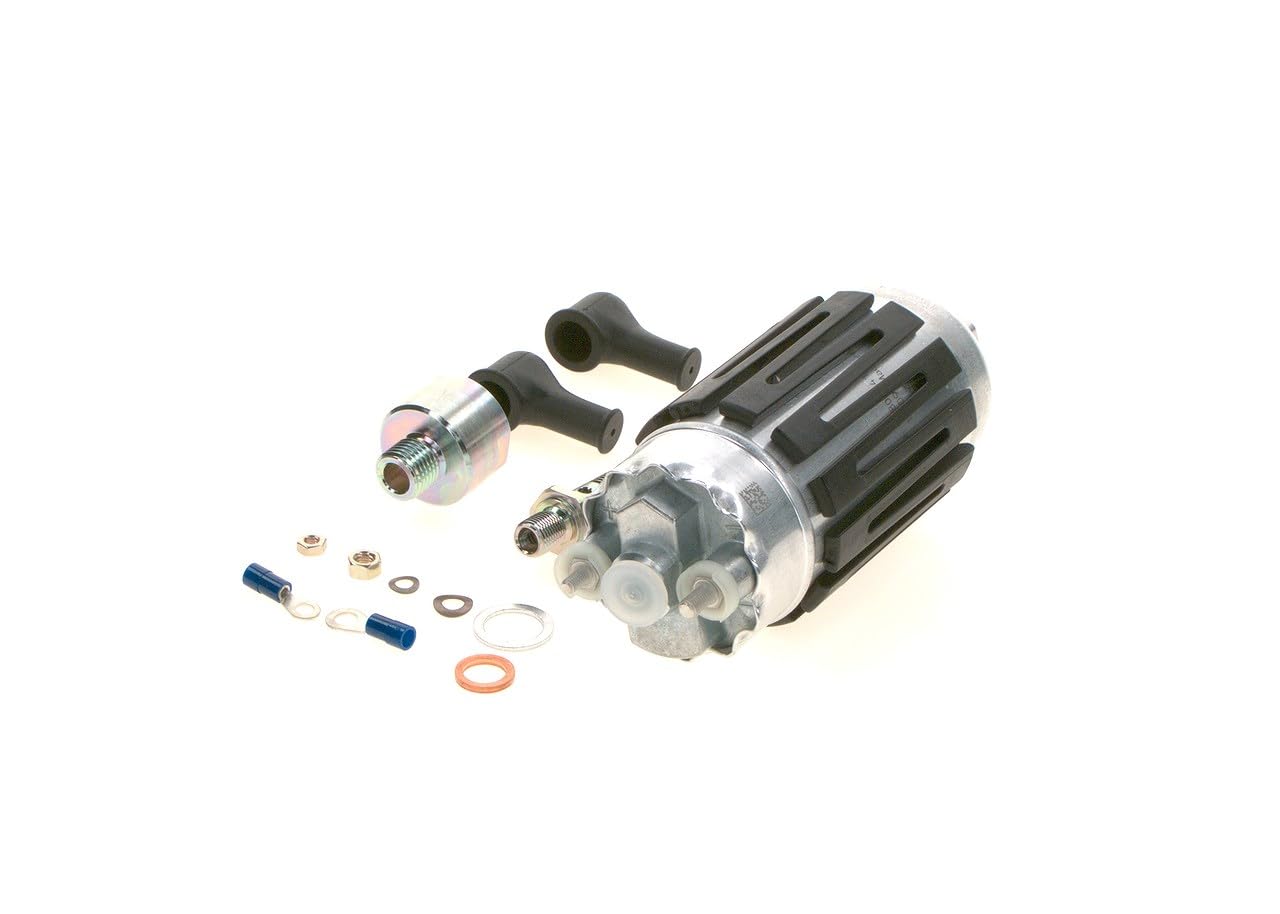
2. BOSCH 044 / 61944 Universal Inline Fuel Pump
The motorsports legend that solved fuel starvation at 72 PSI where others failed.
With an 80 GPH flow rating and the ability to hold pressure above 75 PSI, the BOSCH 044 is the go-to inline pump for high-performance builds, rally cars, and serious track machines. It uses patented Turbine Pump technology that virtually eliminates the fuel pulsation and hot-start problems that plague older pump designs. At just 2.76 x 2.8 x 8.46 inches, it fits tight spaces along the frame rail, and weighs 906 grams — noticeably more compact than the Holley’s 6.9-inch-wide body.
One buyer specifically noted that the 044 “solved fuel starvation at 72 PSI on a car where other pumps failed,” which speaks to its ability to maintain consistent pressure at the top of the fuel curve. Reviewers also point out that the check valve is somewhat weak, sometimes requiring an aftermarket unit if you need quick pressure retention after shutdown. Because of the Bosch reputation, counterfeit units are a real concern — some buyers report receiving non-functional knockoffs, so sourcing from a trusted seller matters.
Built for the hard stuff
- End-of-line factory tested before shipping; built on same lines as actual OE Bosch pumps
- Delivers 75-80 PSI at wide-open throttle, enough for turbocharged and supercharged EFI engines
- Operates in extreme temperatures and low-fuel conditions without losing prime
Know before you buy
- Weak internal check valve may let fuel drain back to the tank, requiring a separate aftermarket valve (~ from Speedflow per one review)
- Counterfeit units are circulating; verify the seller to avoid getting a pump that cannot hold pressure above 280 hp
Reach for this if: you are building a high-pressure EFI system for a track car, rally build, or forced-induction motor that needs reliable 75+ PSI under load.
Reconsider if: your build is a simple carbureted cruiser, or you do not want to deal with sourcing a genuine unit from a verified seller.
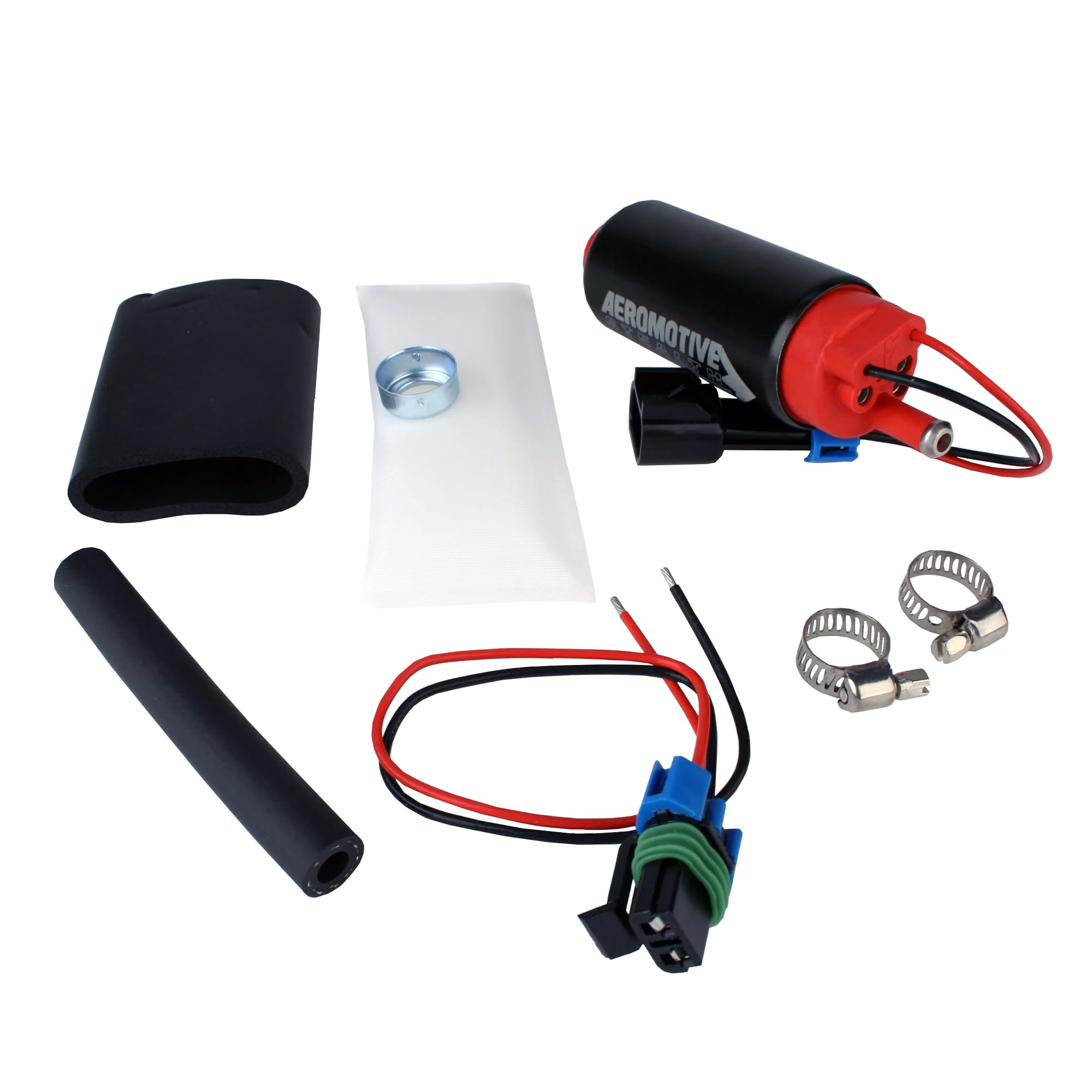
3. Aeromotive 340 LPH In-Tank Fuel Pump (11540)
The in-tank workhorse that flows 340 LPH while staying silent under fuel.
The turbine-style rotor keeps operation quiet compared to external gear pumps, making it a favorite for daily-driven builds where noise matters. At just 1.2 pounds, versus the Mr. Gasket 12S at 1 pound — but that extra weight comes from a more sturdy alloy body built for continuous EFI duty.
The kit includes a universal filter sock, wiring pigtail, rubber hose, clamps, and grommet, so you have everything for a clean install. One buyer called it “overkill flow but quiet vs OEM,” noting it works on most 90s Fords. The Aeromotive also requires checking the application catalog for proper fitment on your specific vehicle’s hanger assembly.
Designed for serious power
- 340 LPH supports naturally aspirated, turbo, and supercharged builds with consistent delivery across a wide pressure range
- In-tank mounting keeps the pump cool and quiet, eliminating the external whine of inline pumps
- Compatible with both gasoline and E85 fuels, plus pulse-modulated or constant-voltage systems
The fine print
- Fitment is not universal — you need to confirm the 39mm body works with your factory hanger or purchase an aftermarket bracket
- A minority of owners mention early failure within the first year; some recommend stepping up to Deatschwerks for higher reliability
Choose this for: high-horsepower EFI builds that need 340 LPH on tap, especially if you prefer the quiet, cool operation of an in-tank setup.
skip it if: your car uses a carburetor (too much pressure), you need drop-in fitment without checking a catalog, or you want a warranty track record with fewer defect complaints.
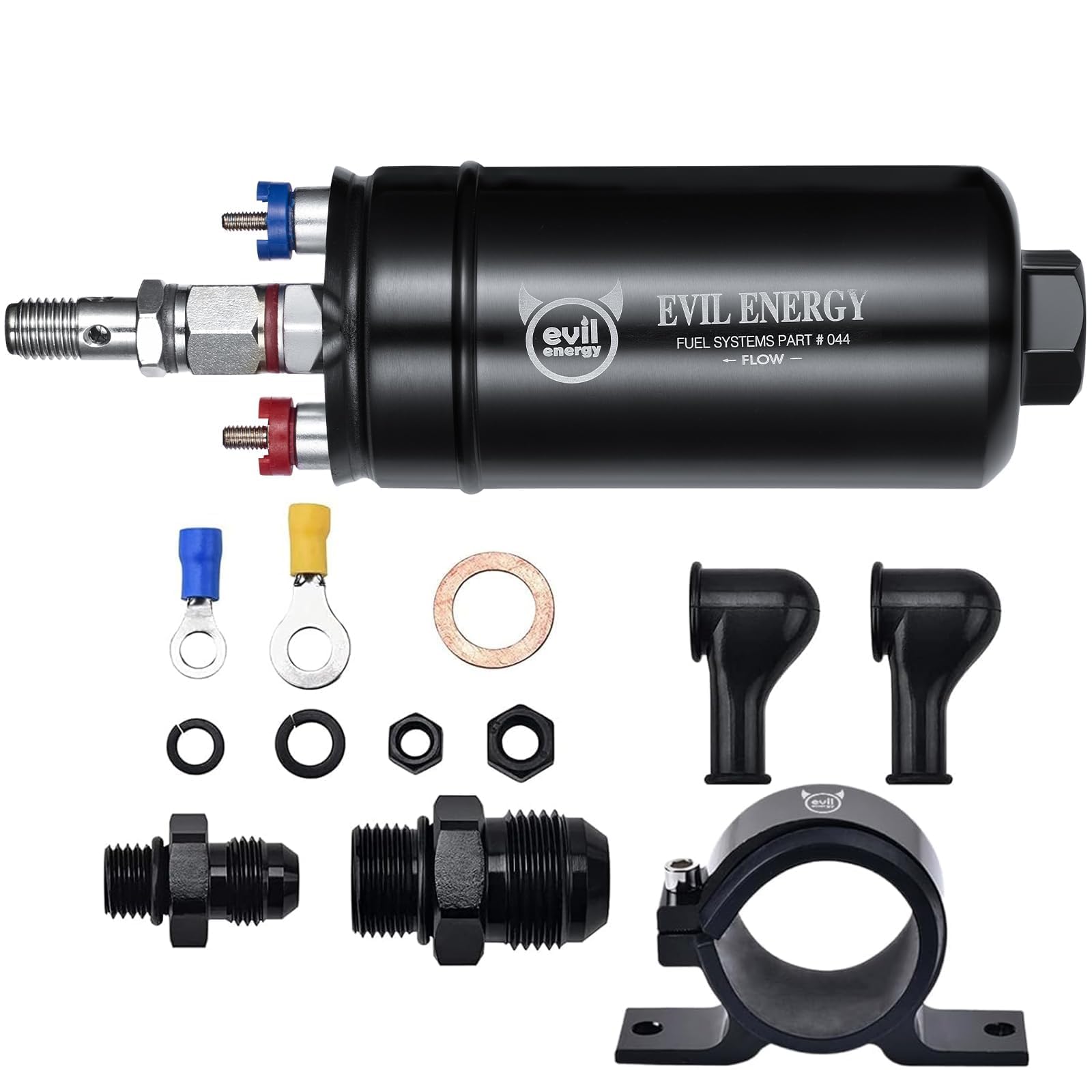
4. EVIL ENERGY External Inline Fuel Pump 300LPH
Solid EFI pressure for a fraction of the Bosch price, if you nail the install.
This universal inline pump delivers 300 LPH at 43 PSI (13.5V) and can hold up to 75 PSI operating pressure — enough to feed most moderate EFI builds. Test specs show flow drops to 200 LPH at 75 PSI and 12V, meaning you lose headroom under lower voltage. One purchaser reported “Pressure reads 80+ psi vs stated 75,” so the real-world output can actually exceed the spec, though that may require tweaking a regulator. The included mounting bracket, AN adapters (10AN inlet, 6AN outlet), gaskets, and rubber connection covers make this a complete package for DIY builders.
The catch is install placement — the pump must be mounted below the tank so fuel flows by gravity, or it may lose prime and overheat. Buyers are split: one review says it “holds 60psi quietly” and calls it an excellent pump, while another had two units fail, the second lasting only 15 minutes. The operating temperature range spans -68°F to 194°F, so it handles extreme cold and engine bay heat without issue.
The upside
- High flow of 300 LPH at moderate pressure covers most street EFI systems up to about 500-600 hp
- Comes complete with AN adapters, gaskets, mounting bracket, and rubber hose covers — almost nothing extra to buy
- Works with gasoline, race gas, and diesel across a wide -68°F to 194°F range
The downside
- Inconsistent quality control — some customers note failure within minutes, others get years of service
- Extremely loud at startup according to some reviews, though other owners say it is quiet
Best for: budget-conscious builders who understand gravity-fed installation and can tolerate some risk to get 300 LPH of EFI flow at a low price.
Not for: anyone who needs guaranteed reliability on a daily driver, or who cannot mount the pump below the fuel tank level.
5. Mr. Gasket 12S Micro Electric Fuel Pump

The budget-friendly helper for transfer jobs and low-demand carb setups.
At just 1 pound and built from polymer, the Mr. Gasket 12S is the lightest pump in this lineup — at 1 pound versus the Aeromotive 340 LPH at 1.2 pounds. It is a self-priming, universal pump that works on 12-volt negative ground systems and can handle methanol, E85, and race gas in addition to pump gasoline. The included barbed fittings and mounting hardware mean you can be pumping fuel in minutes without special tools. Many buyers use it as a fuel transfer pump to move gas between jugs and tanks, and it handles that job well.
The downside is durability. Reviewers point out that the 12S “worked properly for less than one week and then slowly failed” in a 1969 Corvair 140 application. The polymer housing can strip the barbed inlet if overtightened — one owner had to buy a second pump because the metal ring inside the plastic body gave out. If your engine demands even moderate daily driving, the failure rate is too high to trust for anything beyond a spare or a garage transfer pump.
What works
- Ultra-light 1-pound design with self-priming capability makes it easy to mount anywhere
- Works with diverse fuels: gasoline, E85, methanol, and race fuel — useful for test benches
- Low purchase price and includes all necessary fittings for simple installation
What fails
- Multiple shoppers say pump failure within days or weeks, especially in permanent vehicle installations
- Polymer housing can strip at the inlet fitting if overtightened, requiring a replacement unit
Grab it for: occasional fuel transfer from jugs to tanks, or as a temporary pump for a project you will replace soon.
Avoid it for: any daily-driven vehicle or build where you cannot afford to be stranded — the failure rate is too steep for permanent duty.
Understanding Fuel Pump Specs
Flow Rate (GPH / LPH)
This tells you how much fuel the pump can move in an hour — gallons per hour (GPH) or liters per hour (LPH). A carbureted engine running 400 hp might need about 40-50 GPH, while a turbo EFI build at 800 hp can demand 300+ LPH. Always match the pump’s flow at your system’s operating pressure, because flow drops as pressure rises.
Pressure Rating (PSI)
Fuel pressure (pounds per square inch) must match your fuel system type. Carburetors need low pressure — typically 4-7 PSI — or they flood. EFI injectors require high pressure, usually 40-80 PSI, to atomize fuel correctly. A pump that makes 75 PSI will overwhelm a carburetor, and a pump that makes 7 PSI will starve an EFI engine.
Inline vs. In-Tank Mounting
Inline pumps mount externally along the frame and are easier to access, but they are louder, can suffer from vapor lock if mounted high, and need to sit below the fuel tank for gravity feed. In-tank pumps sit submerged in fuel, which keeps them whisper-quiet and cool, but installation requires dropping the tank or modifying the hanger assembly — a bigger job upfront.
Fuel Compatibility
Most pumps list the specific fuels they handle: pump gasoline, E85 ethanol blends, methanol, race gas, or diesel. Ethanol fuels can corrode certain metals and rubbers, so check that the pump’s body material and seals are rated for the fuel you plan to run. The Mr. Gasket 12S, for example, explicitly handles methanol and E85, while the Aeromotive 11540 is E85-compatible but not diesel-rated.
FAQ
Can I use a carbureted fuel pump on an EFI engine?
How do I know what GPH or LPH flow rate I need?
Can an inline fuel pump be mounted inside the tank?
Why is my new electric fuel pump so loud?
How do I prevent vapor lock with an electric fuel pump?
Do I need a fuel pressure regulator with an electric pump?
Will an electric fuel pump work with diesel or biodiesel?
How do I spot a counterfeit Bosch 044 fuel pump?
Final Thoughts: The Verdict
For most carbureted builds, the electric fuel pump winner is the Holley 12-801-1 because it flows 97 GPH at a safe 7 PSI with no pulsation and no regulator needed. If you need high-pressure EFI performance for a track or turbo car, grab the BOSCH 044 — it is the motorsports standard that delivers 80 GPH at 75+ PSI. And for a budget-friendly inline option that covers most street EFI needs, the EVIL ENERGY 300LPH gives you the flow at a fraction of the premium price, provided you nail the install.
How We Picked
We do not accept paid placement. Every pick is matched to a real buyer and a real use-case; we do not hands-on test units.
Sources & Methodology
Specifications: manufacturer listings and product documentation. Review insights: verified customer reviews, as of July 2026. Pricing: not shown on this page (it changes often); check the current price via the retailer link.
As an Amazon Associate, Trending Car earns from qualifying purchases. This does not affect which products we feature.