
Our readers keep the lights on and my garage snacks stocked. As an Amazon Associate, I earn from qualifying purchases.
Specs are compiled from manufacturer listings and verified buyer reviews and can change over time — please confirm the key details on the product page before buying.
The biggest lie in the $500 electric bike world is the range sticker. You see “up to 80 miles” on the box, but what you actually get depends entirely on how you ride, how much you weigh, and whether you hit a hill. This guide cuts past the marketing numbers and compares what real buyers report getting out of these budget-friendly commuters and trail bikes.
I’m Min Islam — the founder and writer behind Trending Car. This guide is built by comparing the manufacturers’ published specifications and the patterns across verified customer reviews, so you get each pick’s real strengths and trade-offs instead of marketing spin.
The goal here is to separate honest value from empty promises, helping you confidently choose the best $500 electric bike that actually fits your commute, your terrain, and your real-world daily routine.
Our Picks at a Glance
How To Choose The Best $500 Electric Bike
Finding a dependable e-bike under this budget means knowing where manufacturers cut corners and where you absolutely cannot compromise. Focus on these three areas before clicking buy.
Motor Power: Peak vs. Continuous Ratings
The “1500W” number you see big and bold is the peak wattage — a short burst the motor can handle. The continuous rating (often 500W or 750W) is what it sustains. For flat city streets, 500W continuous is plenty. If you live among steep hills, you want a 750W peak or higher to avoid crawling up at walking speed.
Battery Capacity & Real-World Range
Battery size is measured in watt-hours (Wh). A 374Wh pack is bare-minimum; a 499Wh pack gives you a serious cushion. Expect the advertised “up to 50 miles” to drop by 30-50% if you use the throttle heavily, ride at max speed, or tackle hills. Look for removable batteries so you can charge at your desk, not just near an outlet.
Frame Type & Weight
A step-thru frame is a lifesaver if you hop on and off frequently or wear work clothes. A traditional step-over frame is stiffer and slightly lighter. At this price, steel frames are common (heavier but durable) while aluminum is lighter but less common. Expect most bikes here to weigh between 49 and 63 pounds.
Quick Comparison
| Model | Best For | Motor (Peak) | Battery | Claimed Range | Amazon |
|---|---|---|---|---|---|
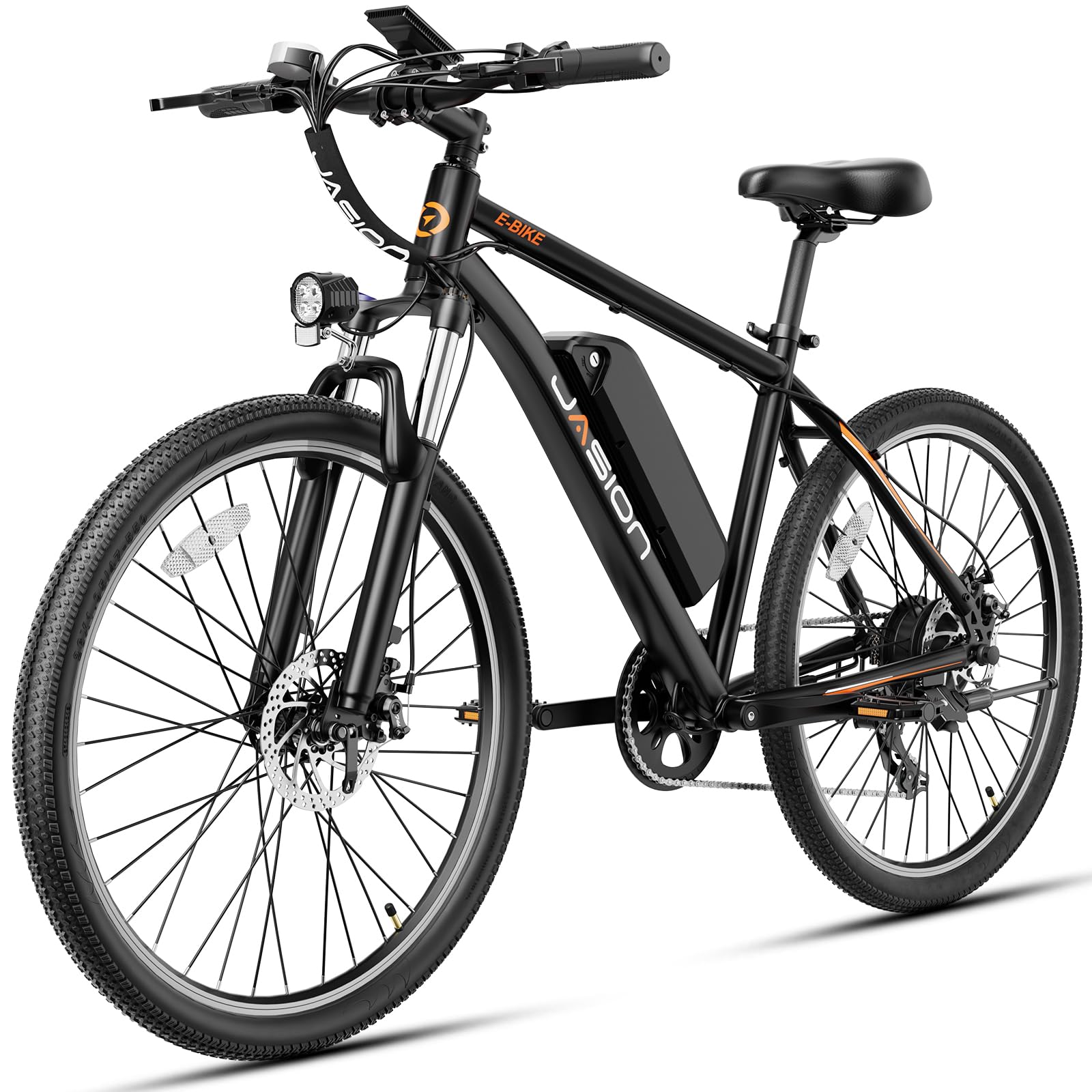
| Jasion EB5★ Best Overall | Lightweight commuter | 1000W | 500Wh | 40 mi | Amazon |
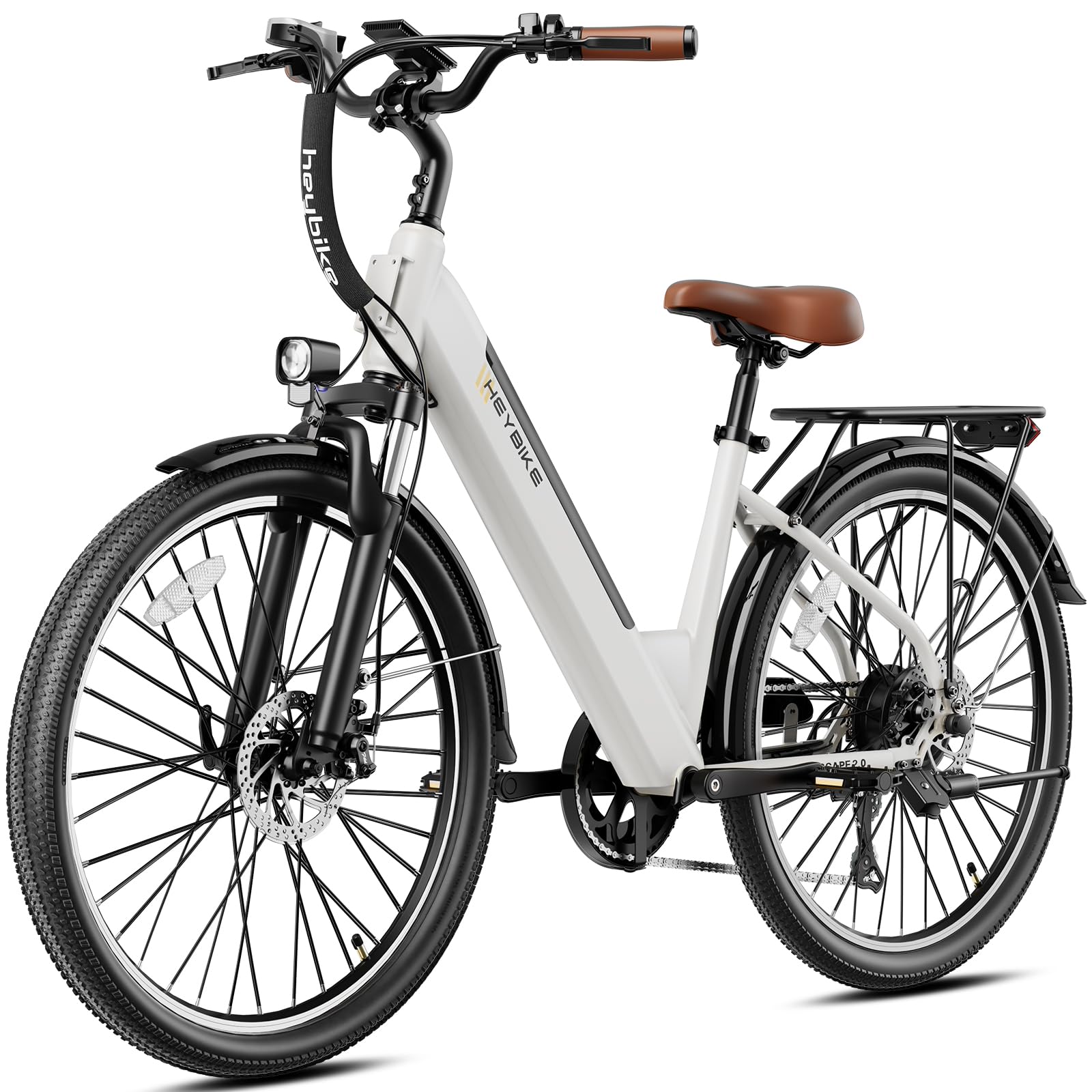
| Heybike Cityscape 2.0Also Great | Reliable all-rounder | 1200W | 468Wh | 50 mi | Amazon |
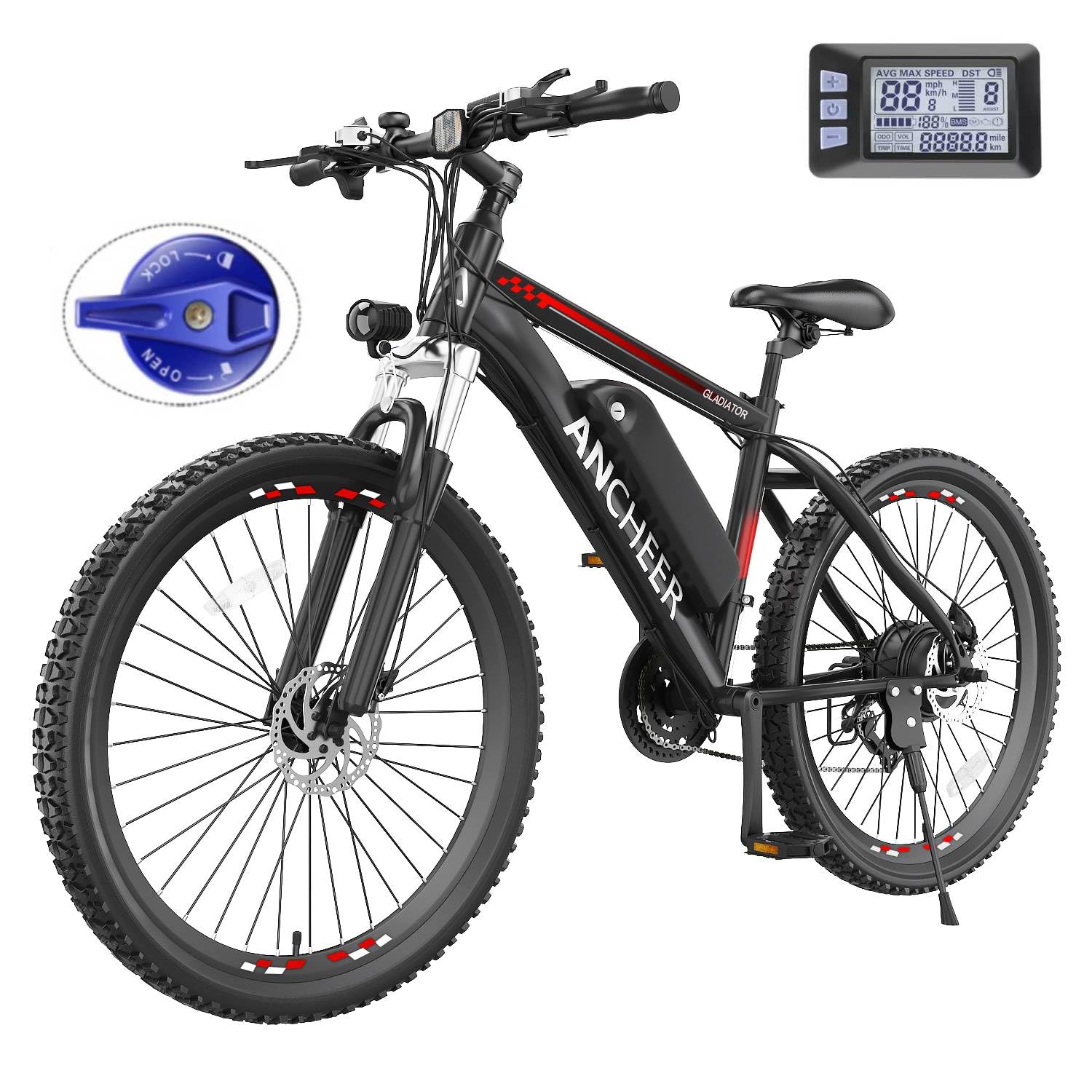
| ANCHEER 26″Fast Charge Pick | Fast-charge convenience | 749W | 499Wh | 50 mi | Amazon |
| Vivi MT20UL | Foldable for trunk storage | 749W | 499.2Wh | 50 mi | Amazon |
| RPINT 20″ Mountain | Full suspension off-road | 1500W | 720Wh | 60 mi | Amazon |
| Gotrax Dolphin | Entry-level simplicity | 500W | 280.8Wh | 30 mi | Amazon |
| Funhang Step-Thru | Comfort cruiser | 1000W | 374.4Wh | 50 mi | Amazon |
| HopCycle EB3S | Longest real-world range | 1500W | 374.4Wh | 80 mi | Amazon |
| URLIFE 20″ Fat Tire | Compact fat-tire traction | — | 48V/13Ah | 80 mi | Amazon |
| Hoverfly 26″ | Versatile trail+commute | 750W | 374.4Wh | 40 mi | Amazon |
| Qlife Racer Fat Tire | Budget mountain fun | 1200W | 499Wh | 50 mi | Amazon |
In‑Depth Reviews
1. Jasion EB5 Electric Bike
Our pick — over 4★ from 2,000+ verified ratings; the strongest balance of quality and price.
The lightest bike here at 49.6 lbs, with a 500Wh battery for real commuting range.
If you have to carry your e-bike up a flight of stairs or onto a train, the Jasion EB5 is the pick. At 49.6 lbs, it is 27% lighter than the Funhang’s 62.83 lbs — a difference you absolutely feel on a staircase. The 1000W peak motor (500W continuous) hits 20 mph, and the 500Wh removable battery delivers a claimed 25-40 miles per charge. The 5-6 hour charge time is slower than the HopCycle’s 3-4 hours, so you need to plan ahead.
Real-world reports from a commuter who rides 22-25 miles daily confirm the range holds up: after 11 miles, the battery was at 33%, giving a realistic total of 33-35 miles. That’s a 3.2x gap in confirmed range compared to the Jasion EB5’s own 25-40 mile claim, but the battery life is solid for the price. The 26″ puncture-resistant tires, front fork suspension, and 7-speed gears handle mixed terrain well.
The biggest reliability concerns come from reviews: the throttle fell off on one bike (replaced for ), the rear inner tube got a hole near the valve stem, and one buyer received a dead battery that Jasion could not replace, forcing an Amazon refund. The high-carbon steel frame is stable but scratches easily.
Lightweight advantages
- Easiest to carry and maneuver in this price range
- Realistic 33-35 mile range per owner reports
- Simple, sleek city-style design
Quality concerns
- Some units arrive with dead batteries or defective parts
- Customer service is reportedly unhelpful with replacements
- Small quality issues (loose screws, thin tires, squeaky brakes)
Reach for this if: You need a lightweight e-bike for multi-modal commuting (bike + train) and are comfortable handling minor assembly tweaks.
Look elsewhere if: You want out-of-the-box reliability and strong manufacturer support.
2. Heybike Cityscape 2.0
The commuter that makes you forget you spent under five hundred bucks.
The Cityscape 2.0 is the rare bike that feels more expensive than it is. Its 500W brushless motor (peaking at 1200W) delivers enough torque to keep you gliding up hills without breaking a sweat. The UL-certified 468Wh IPX6 battery is both water-resistant and removable — you can charge it at your desk while the bike stays locked outside. In real-world riding, owners mention covering 35 miles of mixed terrain without draining the battery completely, which beats many competitors at this price.
One reviewer who also owns an Aventon said this bike performed to expectations and that they could buy three of these for the cost of one of the premium brand. The 7-speed drivetrain with 26″ x 1.95″ puncture-resistant tires balances speed and stability well on pavement. The main complaint you’ll hear is that the included instructions can be confusing, with differences between the printed manual and the online video guide.
The 1200W peak motor here is a 1.6x gap over the 749W peak motor on the ANCHEER below — noticeable if your daily route includes steep, sustained climbs.
Owners confirm it: After two weeks of Chicago potholes and an 80-minute max-speed round trip, one reviewer noted the battery still had charge left. The seat-post slipping issue was resolved quickly with a replacement part from the seller.
Reach for this if: You want a solid daily commuter with enough power for hills and a battery that comes off easily for indoor charging.
Look elsewhere if: You need a step-thru frame or plan to do serious off-road trail riding.
3. ANCHEER 26″ Electric Bike
Charges in 3.5 hours and still gives you 50 miles of pedal-assist range.
Most e-bikes at this price take 5-6 hours to refill, but the ANCHEER’s 48V 10.4Ah lithium battery uses fast-charge tech that cuts that to 3.5 hours. That’s a 67% faster recharge than the Jasion EB5’s 5-6 hour charge time — a huge difference when you forget to plug it in overnight. The 500W continuous motor (peaking at 749W) pushes you to a top speed of 19.8 mph, which is slightly below the 20 mph cap on most competitors but still covers commuting distances efficiently.
Buyers consistently praise the build quality and how easy it is to assemble. One reviewer called it “very well engineered” and noted the ride felt awesome on the first try. The aluminum frame keeps the weight reasonable compared to the steel-frame bikes in this list. The main gripes are the uncomfortable seat (a common budget e-bike issue) and some owners wishing the handlebars were adjustable for height.
A small but important detail is the cruise control feature — hold the “-” button once you’re moving above 6 mph and the bike maintains speed without holding the throttle. The IPX4 waterproof plug is a nice assurance for wet-weather commuters.
The honest catch: One buyer mentioned constant E11 error codes that stranded them, though the majority of owners have a trouble-free experience. The overall rating of 4.4 out of 5 across 128 ratings suggests the bike is generally reliable.
Grab this if: Fast charging is your priority and you ride mostly on pavement or packed trails.
skip it if: You need a more powerful peak motor for very steep, sustained hills.
4. Vivi MT20UL Foldable Electric Bike
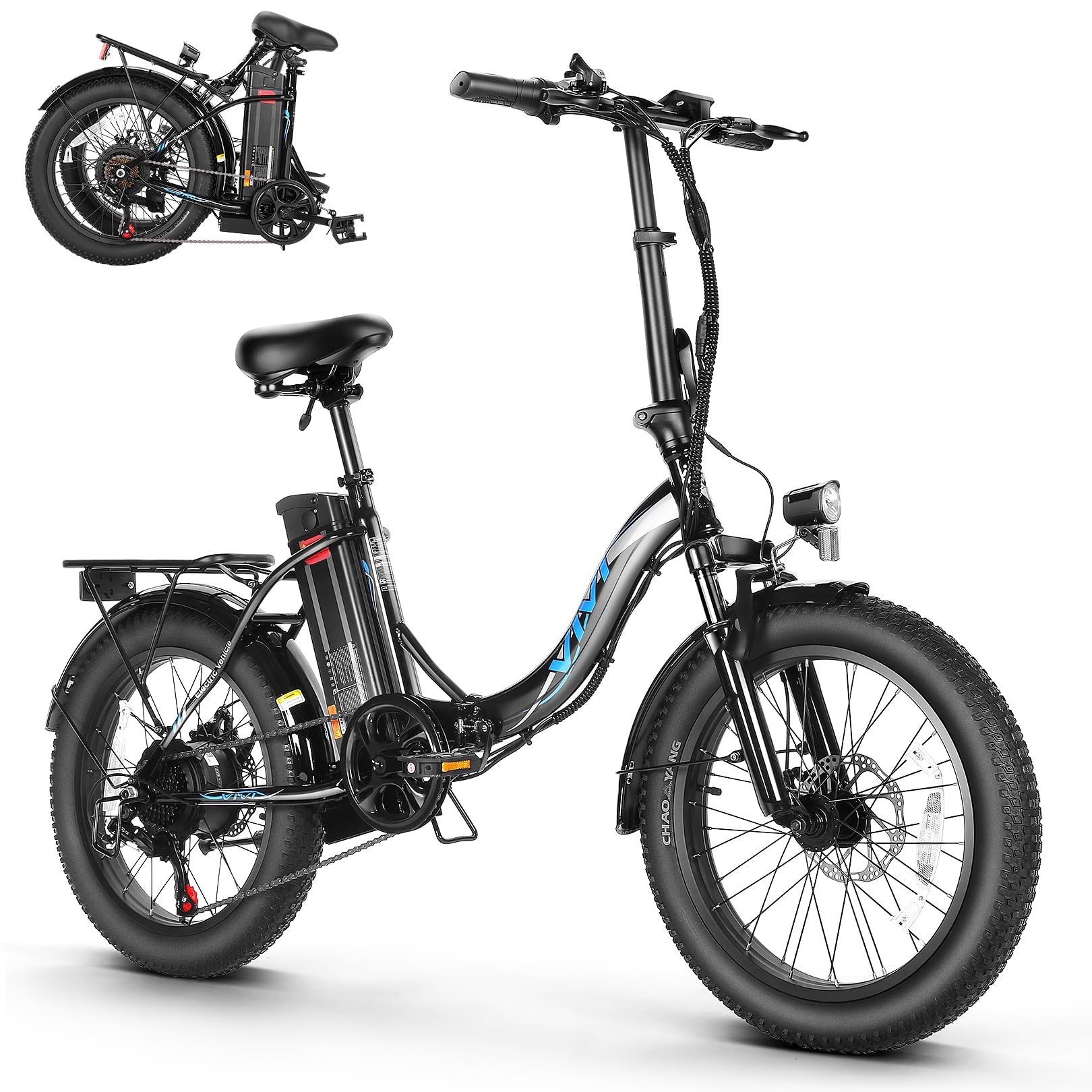
A foldable frame with fat tires that hides in your car trunk.
The Vivi MT20UL is built for the rider who needs an e-bike that shrinks down for storage. Its 20″ x 3.0 fat tires absorb bumps on gravel, sand, and snow in a way a standard 1.95-inch tire simply cannot match. The 48V 499.2Wh removable battery offers 22-25 miles in pure electric mode and up to 44-50 miles with pedal assist. That battery capacity is essentially identical to the ANCHEER’s 499Wh, so you get the same potential range in a package that fits inside a car trunk.
One buyer who stands 6’0″ and weighs 210 lbs reported sustained speeds of 18-22 mph and found the seat comfortable for about two hours of riding. The foldable design and SGS UL2849 certification give confidence for both safety and portability. Owners note the initial acceleration is excellent and the bike feels sturdy and well-built.
The trade-off is that the proprietary 20×3.0 tube tire can be difficult to find replacement parts for in the US, and one owner reported replacement parts for the battery and charger are no longer available. Also, the bike requires a key to turn on, which adds a theft-deterrent step but is one more thing to keep track of.
What riders say: One owner confirmed it meets the stated specifications with a tested top speed of approximately 22 mph, and called it a great first e-bike.
Ideal for: Apartment dwellers, RV travelers, and anyone short on storage space who still wants fat-tire stability.
Not ideal for: Riders who need easy access to replacement parts or who prefer a standard tire size.
5. RPINT 20″ Electric Mountain Bike
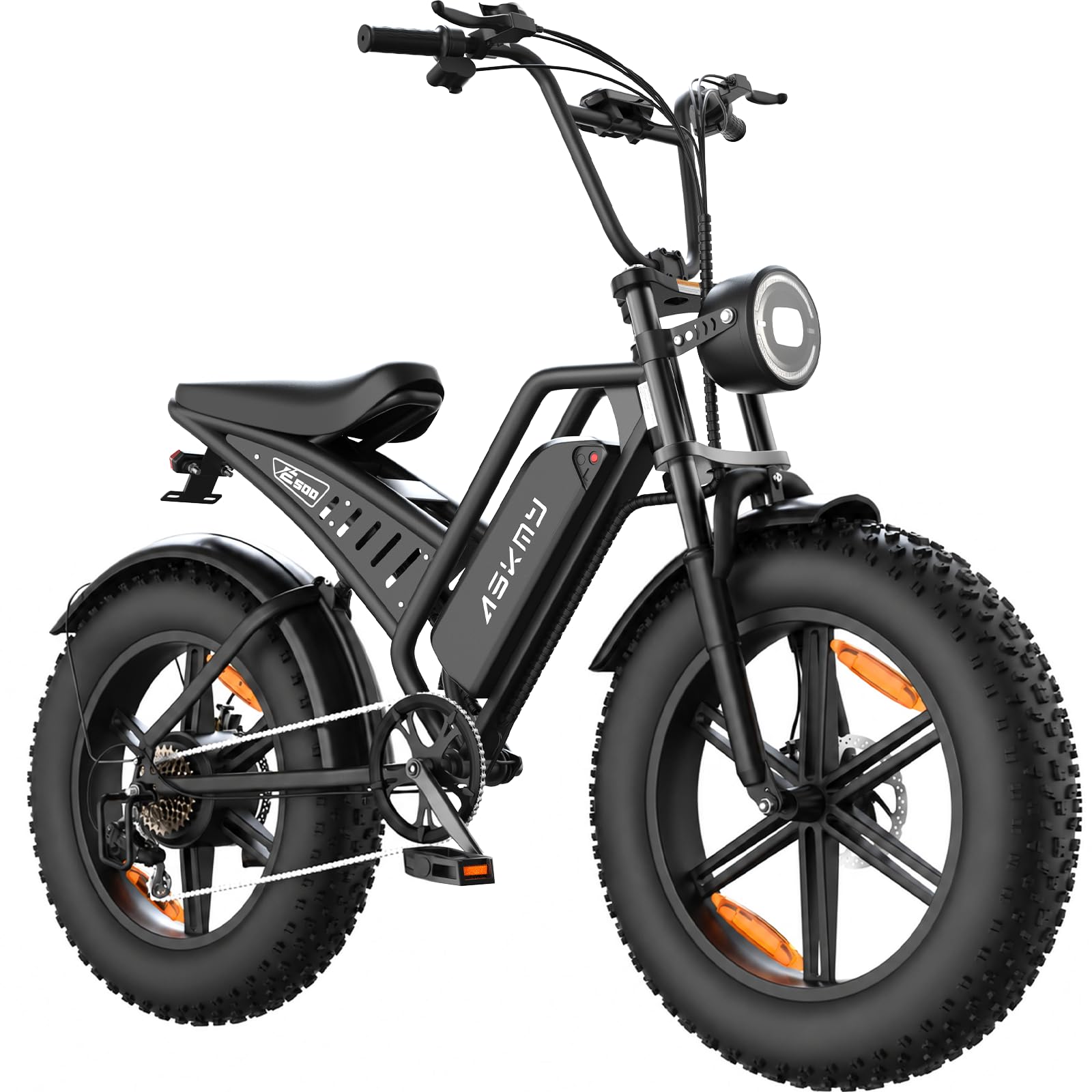
The closest you’ll get to a full-suspension electric dirt bike at this price.
The RPINT is a different beast. This translates to a claimed 40-60 miles in pedal-assist mode, and buyers confirm it: one owner reported 25 miles on half battery using throttle-only (no pedaling). The 20″ x 4.0 fat tires with hydraulic front and rear suspension eat up potholes, rocks, and uneven terrain better than anything else here.
Buyers love the speed — one review says it easily hits 35 mph, which is well above the 20 mph Class 2 limit of most other picks here. The full array of headlight, turn signals, brake light, and horn make it feel like a small moped rather than a bicycle. But the high speed is also the biggest safety criticism, with one buyer calling it unsafe at 35 mph and noting the brakes take about five seconds to stop from maximum speed.
The RPINT’s peak motor power is 1.5x higher than the Jasion EB5’s 1000W peak, making it the clear choice for off-road climbs and fast, throttle-heavy riding.
What impressed owners
- Excellent off-road performance on sand, dirt, and hills
- Turn signals, horn, and bright display included
- One reviewer says it went 100 miles with zero issues
What frustrated owners
- Terrible assembly instructions (6 vague steps, broken tool)
- Rear shock broke on arrival for one buyer
- Weak brakes that struggle at top speed
Best for: Adventurous riders who want full suspension, fat tires, and plenty of speed for off-road trails.
Not for: Beginners or safety-conscious commuters — the brakes and build quality require careful inspection and upgrades.
6. Gotrax Dolphin 26″ Electric Bike

A barebones entry-level commuter that gets the job done without frills.
The Gotrax Dolphin is the simplest, most straightforward e-bike on this list, and that’s its strength. The 350W brushless motor (peaking at 500W) pushes you to 20 mph with five levels of pedal assist. The 280.8Wh removable battery is on the smaller side — you get 15.5 miles on pure electric and up to 30 miles on pedal assist. That’s roughly half the range of the ANCHEER or HopCycle, but the trade-off is a bike that weighs around 50 lbs and is easy for a beginner to understand.
Buyers who have ridden it for over 200 miles over four months call it a solid, reliable Class 2 e-bike. The Shimano 7-speed system shifts smoothly, and the beach-cruiser-style handlebars reduce wrist strain on longer rides. Assembly is straightforward for most, though a few owners note the disc brakes need adjustment from the start.
The Dolphin is UL2849 certified, so it meets electrical safety standards. The biggest downside reported is build quality variability — one buyer had screws loosen, the seat slide down, and the front wheel fall off during a ride, which is concerning. But the majority of the 427 ratings are positive, with a 4.3 out of 5 average.
One customer observed: “Entry-level Class 2 e-bike, solid, barebones, and customizable.” The hard seat is a common complaint, easily fixed with a gel cover.
Reach for this if: You want the lowest-cost entry into e-biking and don’t need extreme range or speed.
Look elsewhere if: Your commute is longer than 15 miles round trip or you want full suspension.
7. Funhang Electric Bike Step-Thru
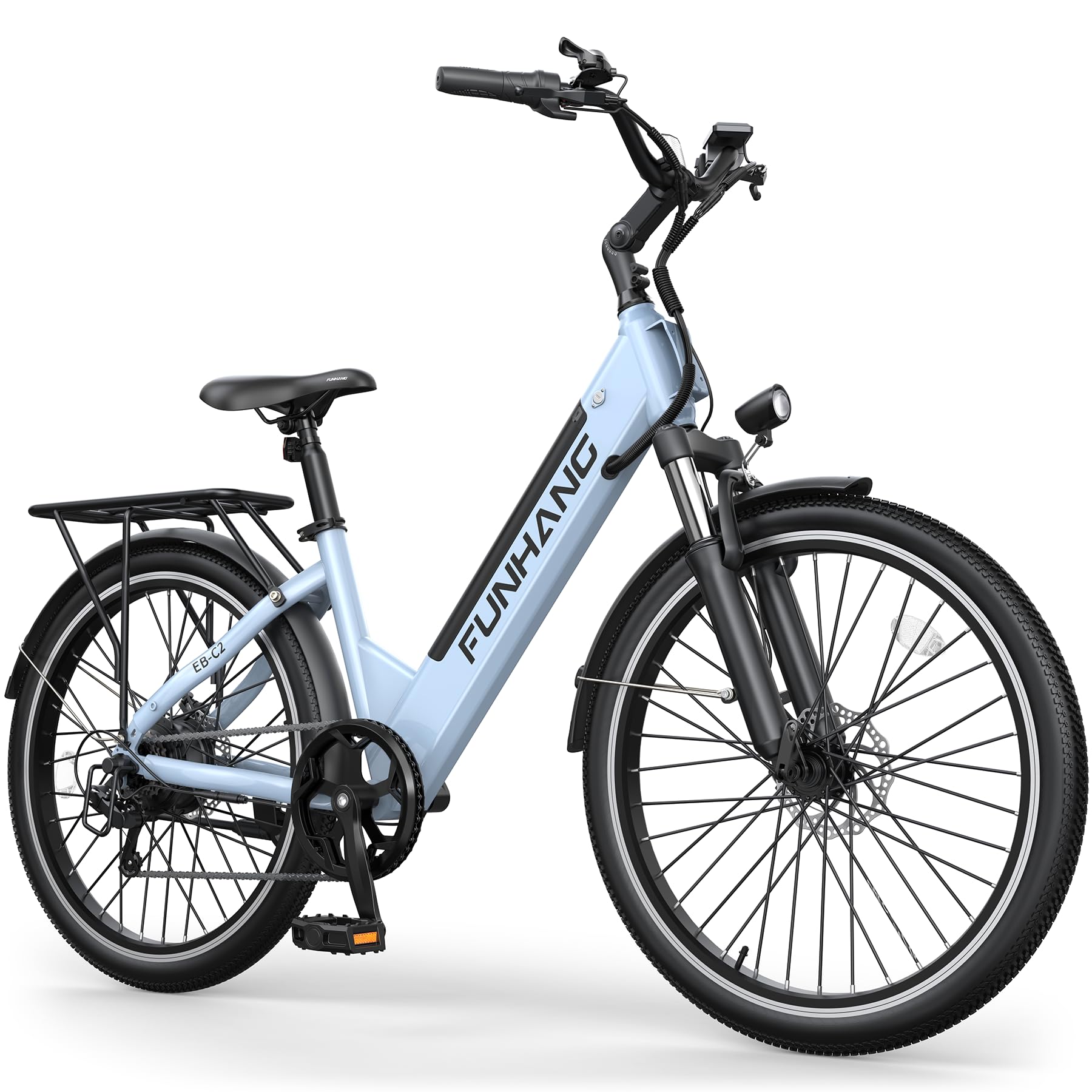
A step-thru cruiser with a 1000W peak motor and 50-mile pedal-assist range.
The Funhang targets comfort above all else. The step-thru frame makes mounting and dismounting easy, especially if you’re carrying groceries or a bag. The 500W brushless motor (1000W peak) with 62 Nm of torque handles 15% grade hills on assist level 2 out of 5, according to one buyer living on a steep hill. The 48V 374.4Wh battery is IPX5 waterproof and removable, delivering 40-50 miles in pedal-assist mode and 20-30 miles on throttle alone.
Buyers consistently mention the excellent value for the price. One couple in their 40s said they researched for six months before picking Funhang and were not disappointed. The bike comes 85% pre-assembled — one buyer got it together in 45 minutes solo. The 62.83 lb weight is heavier than most, but the step-thru design and included rear rack, fenders, and kickstand make it a practical everyday runner.
One honest critique: at 5’11”, one buyer found the handlebars felt too close even when adjusted, making the steering “twitchy.” The brake cables were too short to swap the stem for a longer one, so taller riders may feel cramped.
Customers note: “The battery is holding up great. I ride it daily and roughly 2-9 miles of hills, paved trails, and town and haven’t charged it in 6 days.”
Best for: Riders who value easy mounting, a cushioned ride, and full urban accessories from the start.
Not for: Riders over 6’0″ or anyone wanting a lightweight bike to carry up stairs.
8. HopCycle EB3S Electric Bike
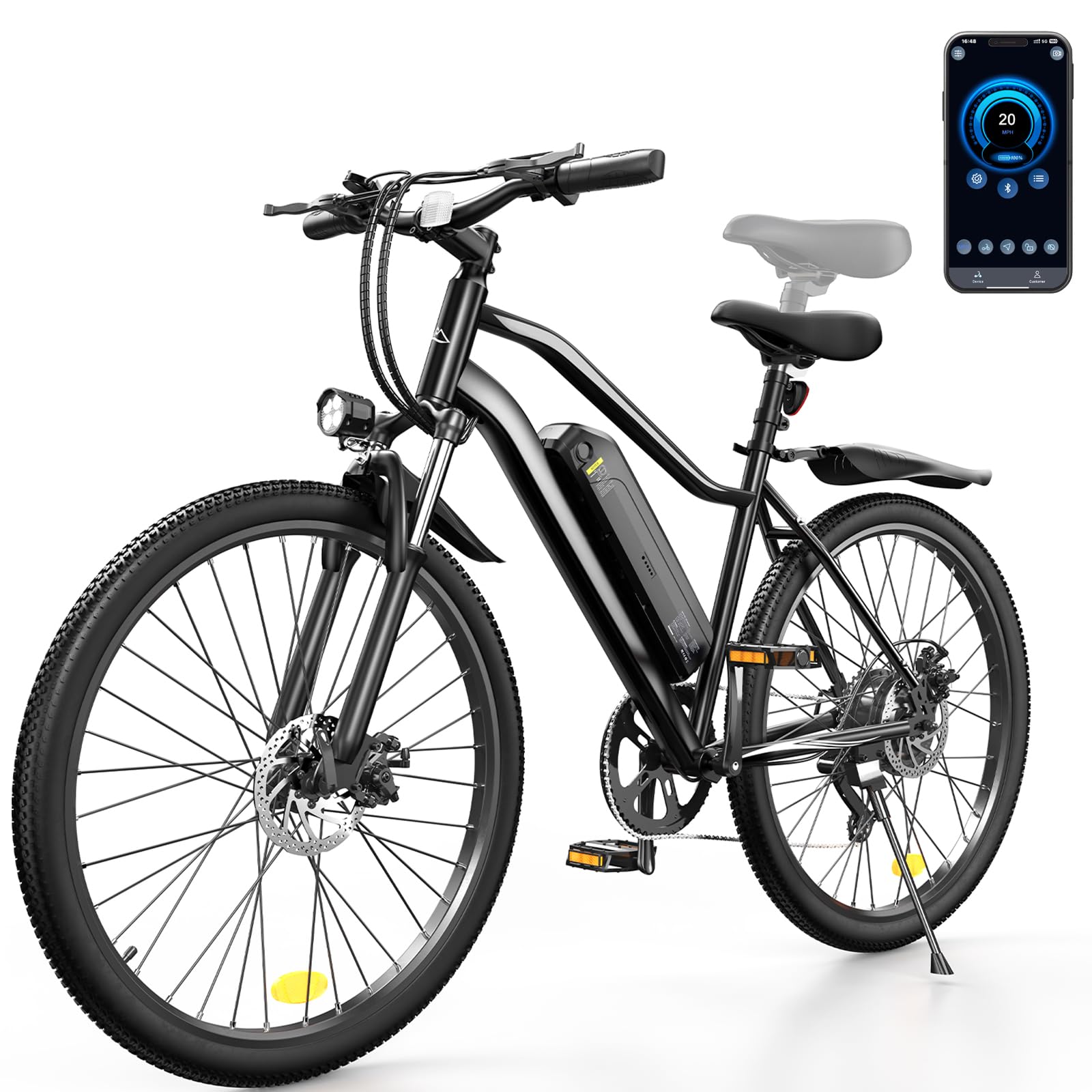
A 1500W peak motor and an 80-mile pedal-assist claim that actually holds up.
The HopCycle EB3S has the longest advertised pedal-assist range in this list at 80 miles, and buyers confirm it stretches past 50 miles under real use. One user highlighted achieving 50+ miles on full electric with smooth shifting and pedal assist working great for hills. The 1500W peak motor with 95 Nm of torque gives it a 1.5x power advantage over the Jasion EB5’s 1000W peak motor, making it the strongest climber outside the RPINT. The aluminum frame keeps the weight at a manageable 54.7 lbs despite the large motor.
This is the only bike here with smart app control — you can monitor riding data and settings from your phone. The 36V 10.4Ah battery charges in 3-4 hours, which is a 67% faster charge time than the 5-6 hours you’ll wait with the Jasion EB5. The IPX4 waterproof rating means it can handle splashes and light rain.
One detail that frustrates owners: the manual doesn’t explain the control menu well, and the motor disconnect location (next to the right pedal) is awkward. The bike runs small — not ideal for riders over 6 feet tall.
Real rider insight: “Good utility bike, impressive battery range, motor has slight lag but makes pedaling easy.” The 4.4 out of 5 rating across 81 reviews backs up the positive experience.
Grab this if: Maximum range per charge is your top priority and you want app-based ride tracking.
pass on it if: You’re tall, dislike vague manuals, or prefer a step-thru frame.
9. URLIFE 20″ Fat Tire Electric Bike
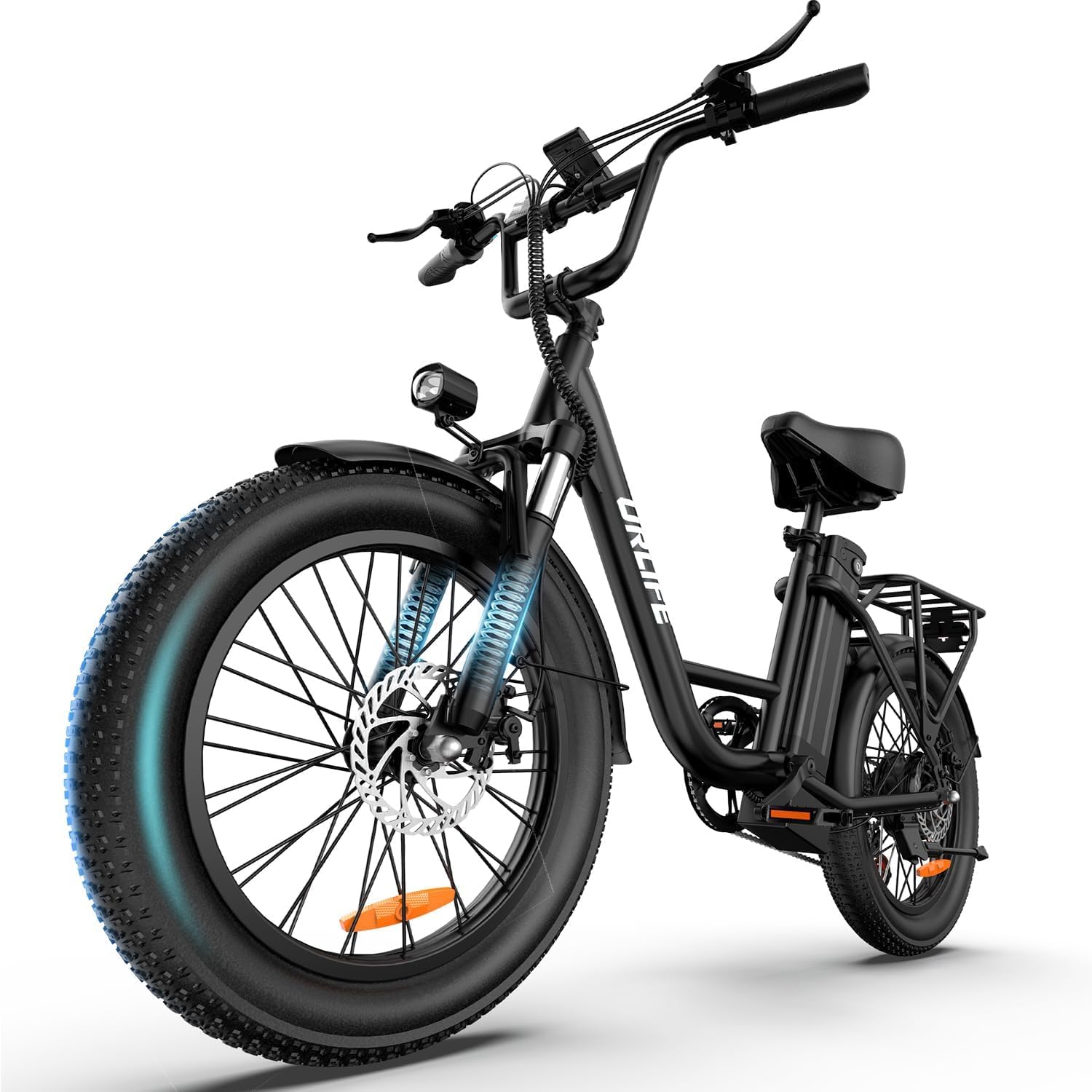
A 28-mph fat tire bike with 20″ wheels that climbs 30-degree hills.
The URLIFE stands out for its 28-mph top speed — that’s 8 mph faster than the 20-mph Class 2 limit seen on most picks here, so check local laws before opening the throttle. The 20″ fat tires with front fork suspension are designed for traction on snow and sand, giving you rock-solid stability on loose surfaces. The 48V 13Ah battery (roughly 624 Wh, though not explicitly stated) drives that speed and an advertised 80-mile range, which buyers dispute — one owner said you’ll get about 5 miles total if you’re lucky, calling the range claim misleading.
Other owners are much happier: one 62-year-old rider who is 4’11” says the bike fits perfectly and rides great. A husband reported going over 25 miles without the battery dying, and the bike easily climbs hills. The adjustable seat and ergonomic design make it comfortable for a range of heights.
Assembly is a common pain point. The instructions are vague, and one shopper added it was “extremely awkward” to put together. The bike weighs about 79 lbs (36 kg), so it’s not a bike you’ll carry anywhere. The headlight could also be brighter for night riding.
Mixed reviews: The URLIFE gets both “perfect bike” and “pretty won’t get you across town” — the range experience varies hugely depending on rider weight, terrain, and speed.
Best for: Shorter riders who want a compact, fast fat-tire bike for mixed terrain and don’t need max range.
Risky for: Anyone relying on the claimed 80-mile range — expect real-world throttle range closer to 15-25 miles.
10. Hoverfly 26″ Electric Bike

A 750W motor and 40-mile PAS range squeezed into a trail-capable package.
The Hoverfly is a middle-of-the-road option that does a bit of everything. Its 750W motor hits a top speed of 20 mph, and the 374.4Wh battery claims 40 miles in pedal-assist mode and 20 miles on pure electric. The charge time is a standard 5 hours. The bike is UL2849 certified, which is important for safety and insurance compliance. It comes with a frame bag for keys and small items, plus double mudguards to keep you dry on wet roads.
The 7-speed drivetrain with twist-grip shifting is straightforward, and the front suspension smooths out potholes and gravel paths. The LED headlight and taillight with a bell are included, making it ready for night riding from the start. The 365-day warranty provides a year of coverage.
There are no customer reviews in the source data to confirm real-world performance, so the range and reliability claims are based solely on the manufacturer’s specs. The iron frame is on the heavier side, which may affect handling on tight trails.
The honest take: Without verified buyer feedback, treat the advertised range and motor performance as optimistic starting points. This is a decent spec sheet, but the real-world experience is unknown.
Consider this if: You want UL certification and a high spec-sheet for trail riding, and you’re willing to take a chance on a less-vetted brand.
Be cautious if: You prefer a bike with a long track record of buyer reviews to confirm the specs.
11. Qlife Racer Fat Tire Series
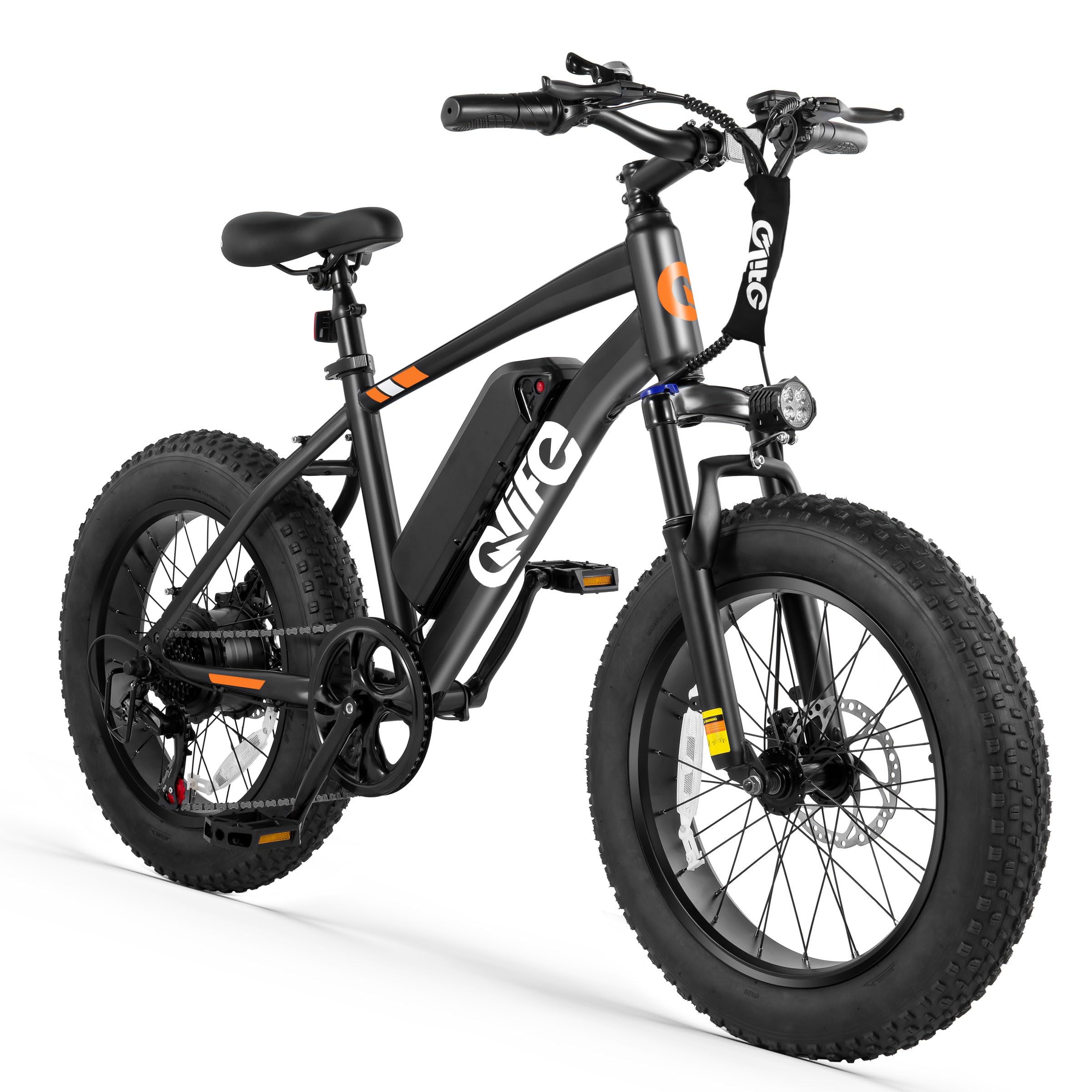
Fat tires on a shoestring budget, with a 1200W peak motor to back up the look.
The Qlife Racer brings aggressive MTB styling and 20″ x 4.0 fat tires to the budget e-bike segment. The 1200W peak brushless motor pushes you past 20 mph, and the 48V 10.4Ah (499Wh) battery offers 40 miles in throttle mode and 50 miles in pedal-assist mode. The 4-hour fast charge is competitive for the price. The dual front suspension and 7-speed twist-grip shifting give it the feel of a proper mountain bike.
Buyers call it a great starter e-bike for the price. One reviewer who loved the bike said it hits 28 mph on flats, but noted a steep 30-degree hill cut speed to 10 mph even with pedaling — the motor is geared for speed, not torque. The carbon steel frame is durable but heavy. Another buyer had the bike for only five days before an error code shut it down, and customer support was slow to respond with a fix.
A 12-month warranty is included, but the after-sales support reviews are mixed. One buyer who needed help said it took multiple calls and emails before anyone responded. The bike comes 90% pre-assembled.
What one owner said: “Great fast bike, but lacks power to climb steep hills.” The frame has upgrade potential — one buyer plans to swap the controller for 60V/2000W parts.
Best for: Beginners who want the fat-tire MTB look and feel at the lowest possible price, with plans to upgrade later.
Look elsewhere if: You live at the top of a steep hill or want reliable customer support out of the gate.
Understanding the Specs
Watt-Hours (Wh) vs. Range
The watt-hour rating tells you the battery’s total energy storage — it’s the most honest number to compare across bikes. A 374Wh pack is a baseline for short commutes (expect 15-20 miles of throttle use), while a 499Wh pack doubles that potential. The 720Wh battery on the RPINT is the biggest here and gives it the longest real-world range. Never trust the “up to X miles” claim; divide it by 1.5 to 2 for throttle-only riding on flat ground.
Peak vs. Continuous Motor Wattage
The “1500W” you see on the sales page is the peak burst — what the motor can handle for a few seconds during acceleration or a climb. The continuous rating (usually 500W or 750W) is what the motor can maintain for miles. For example, the HopCycle EB3S has a 1500W peak motor, but its continuous rating determines how fast it’ll go up a long hill without overheating. If you live in a flat city, a 500W continuous motor is fine. For hills, stick with 750W+.
FAQ
What is the real-world range of a $500 electric bike?
How fast can a $500 electric bike go?
Is UL 2849 certification important?
Can I ride a budget e-bike in the rain?
How long does the battery last before it needs replacement?
Are these bikes suitable for tall riders?
Which bike has the best hill-climbing ability?
Can I buy replacement parts easily?
How difficult is assembly?
Are these bikes heavy?
Final Thoughts: The Verdict
For most people, the $500 electric bike winner is the Heybike Cityscape 2.0 because it balances the highest peak motor power, a UL-certified removable battery, and consistent real-world range that matches its claims. If you want the absolute longest range per charge, the HopCycle EB3S delivers 80-mile claims that owners confirm stretch past 50. And for full-suspension off-road capability with the largest battery in the class, the RPINT 20″ Mountain Bike gives you 720Wh of capacity and 1500W of peak power that no other sub- bike matches.
How We Picked
We do not accept paid placement. Every pick is matched to a real buyer and a real use-case; we do not hands-on test units.
Sources & Methodology
Specifications: manufacturer listings and product documentation. Review insights: verified customer reviews, as of July 2026. Pricing: not shown on this page (it changes often); check the current price via the retailer link.
As an Amazon Associate, Trending Car earns from qualifying purchases. This does not affect which products we feature.