
Our readers keep the lights on and my garage snacks stocked. As an Amazon Associate, I earn from qualifying purchases.
Specs are compiled from manufacturer listings and verified buyer reviews and can change over time — please confirm the key details on the product page before buying.
Is your engine ticking, pinging, or burning oil? The problem might not be mechanical failure — it could be a thick coating of old sludge and baked-on carbon blocking oil flow. The right cleaner dissolves that gunk, frees stuck rings and hydraulic lifters (components that adjust valve clearance), and restores the oil circulation your engine needs to run smoothly. You are not looking for a magic potion; you need a specific chemical approach that matches how dirty your engine actually is.
I’m Min Islam — the founder and writer behind Trending Car. This guide is built by comparing the manufacturers’ published specifications and the patterns across verified customer reviews, so you get each pick’s real strengths and trade-offs instead of marketing spin.
Below you will find seven targeted formulas, from a fast 10-minute oil-flush additive to a slow 1,000-mile dissolve treatment for severe sludge. This is your breakdown of the best engine sludge remover for your specific driving situation.
Our Picks at a Glance

How To Choose The Best Engine Sludge Remover
Engine sludge is cooked oil that has turned into a hard, sticky varnish inside your engine. Picking the right remover depends on how much sludge you have and how gently you need to treat old seals and gaskets.
Fast Flush vs. Slow Dissolve
A flush additive you pour in and idle for 10-15 minutes before an oil change is good for moderate deposits and regular upkeep. For heavy sludge that has built up over years, a slow-dissolve treatment meant to stay in the oil for hundreds or thousands of miles is safer. It breaks the gunk down gradually without dislodging large chunks that could clog oil passages.
Oil-Based vs. Solvent Formulas
Oil-based cleaners, such as those using polar esters (molecules that bond to both oil and metal) or synthetic carriers, clean while keeping a lubrication film — safer for old seals and turbo bearings. Solvent-based cleaners work fast but can be harsh on aged rubber seals and should be drained quickly. If your engine has high mileage, an oil-based formula is usually the safer choice.
Match to Your Symptoms
If you have a ticking lifter or a persistent check-engine light related to VVT (variable valve timing — a system that adjusts when your valves open), look for a cleaner that specifically frees stuck hydraulic components. If you are burning oil past stuck rings, you need a formula that targets piston ring deposits. Some products do both; check the product’s specific use case.
Quick Comparison
| Model | Best For | Volume | Type | Add-to-Oil Time | Amazon |
|---|---|---|---|---|---|
| XADO Engine Oil System Cleaner★ Best Overall | Fuel economy restoration | 250 ml | Liquid with revitalizant | 50+ miles drive | Amazon |
| TRIAX Pro Engine FlushAlso Great | Power & compression recovery | 16 oz | Oil-based synthetic | 10–15 min idle | Amazon |
| ATS Chemical 505 CRO | Stuck rings & lifters | 12 oz | Oil additive | 15 min at 2,000 RPM | Amazon |
| Liquimoly 2037 Pro-Line | Universal gentle clean (6-pack) | 500 ml (6-pack) | Flush additive | 10 min idle | Amazon |
| Motul Engine Clean | Modern cars with DPFs | 300 ml | Detergent-based flush | 15 min idle | Amazon |
| BG RF7 Engine Oil Treatment | Spark plug fouling | 11 oz | Oil treatment | Multiple oil changes | Amazon |
| Dura Lube Sludge Away | Severe, heavy sludge | 32 oz | Slow-dissolve oil substitute | 1,000–3,000 miles | Amazon |
In‑Depth Reviews
1. XADO Engine Oil System Cleaner with Anti-Carbon Effect
Our pick — over 4.5★ from 600+ verified ratings; the strongest balance of quality and price.
The cleaner that one owner says restored 13 MPG after a long-overdue oil change.
Unlike a quick idle flush, the XADO formula is designed to be driven for 50 miles or more before you drain the oil. This longer contact time lets its Revitalizant compound (a chemical the maker says renews metal surfaces) work into baked-on deposits while you drive. One reviewer noted using it in a 2018 Jeep Wrangler Rubicon with 50,000 miles — after a 50-mile drive, the drained oil came out “very black” and the engine ran smooth with no valve tick afterward.
The standout story here is fuel economy recovery. A reviewer whose car had gone 25,000 miles on an oil change (rated for 20,000 miles) drove 100 miles with XADO, changed the oil, and watched their fuel economy jump from 38 MPG to 46-51 MPG, according to their report. The improvement held for about 1.5 months, suggesting the cleaner loosened deposits that were dragging on the rings. This cleaner also includes an anti-carbon effect designed to help keep new deposits from forming.
Best for
- Designed for a drive cycle, not just an idle — more thorough cleaning
- Anti-carbon formula creates a protective barrier after cleaning, per the maker
- Works on turbo and supercharged engines
Catch it on
- 250ml size is small — one bottle treats one engine, and larger engines may need more
- Requires a dedicated drive, not a quick in-and-out at the shop
Go for this if: you suspect your engine has lost fuel economy due to varnish and you want a cleaner you can drive for miles before the oil change.
Pass if: you only have 15 minutes for a pre-oil-change flush — the Liqui Moly or TRIAX are faster processes.
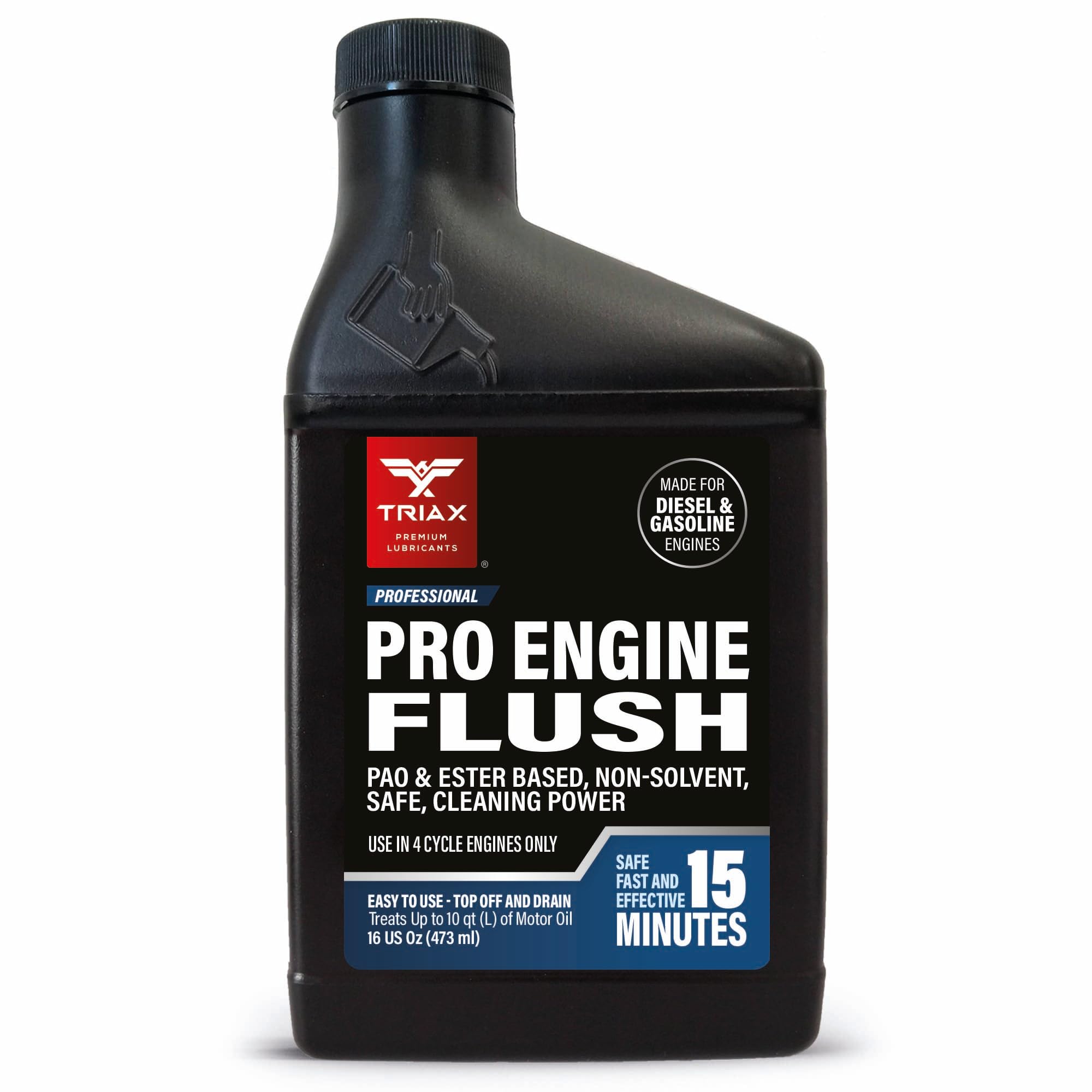
2. TRIAX Pro Engine Flush Oil-Based Deep Clean Motor Oil Flush
The 16-ounce flush that cleans deep without ever draining your oil film.
The TRIAX is a 100% synthetic, oil-based formula that uses polar esters to penetrate deposits while keeping a lubrication film on every bearing. It includes ZDDP (zinc dialkyl dithiophosphate — an anti-wear additive that prevents metal-to-metal contact), which protects the valvetrain and turbo during the 10- to 15-minute idle cycle. Buyers report most solvent flushes do not offer this protection.
This cleaner really shines at restoring power and compression. Owners mention it freed stuck piston rings in a 176k-mile Honda CR-V, making the engine “smoother, quieter,” and bringing fuel economy back to 25-28 mpg. One owner of a 2003 Honda Pilot used it and said the engine “sounds a lot better” and “runs smoother” after just a 10-minute treatment. Unlike the faster Liqui Moly 2037 flush, the TRIAX keeps an oil film on every part during the whole cycle.
Why it wins
- Oil-based so it cleans without damaging aged seals
- Pre-loaded with ZDDP for anti-wear during the flush
- One 16-oz bottle treats up to 10 quarts of oil
The limits
- 16-oz bottle may be insufficient for larger diesel engines needing two doses
- Requires a 10–15 minute idle, not a longer drive cycle
Reach for this if: you want a one-and-done flush that cleans rings and lifters without removing the oil film, especially on a turbo or high-mileage engine.
Look elsewhere if: you need a slow multi-thousand-mile treatment for an engine that is completely sludge-caked — this is a fast flush, not a marathon dissolver.
3. ATS Chemical 505 CRO Oil System Treatment
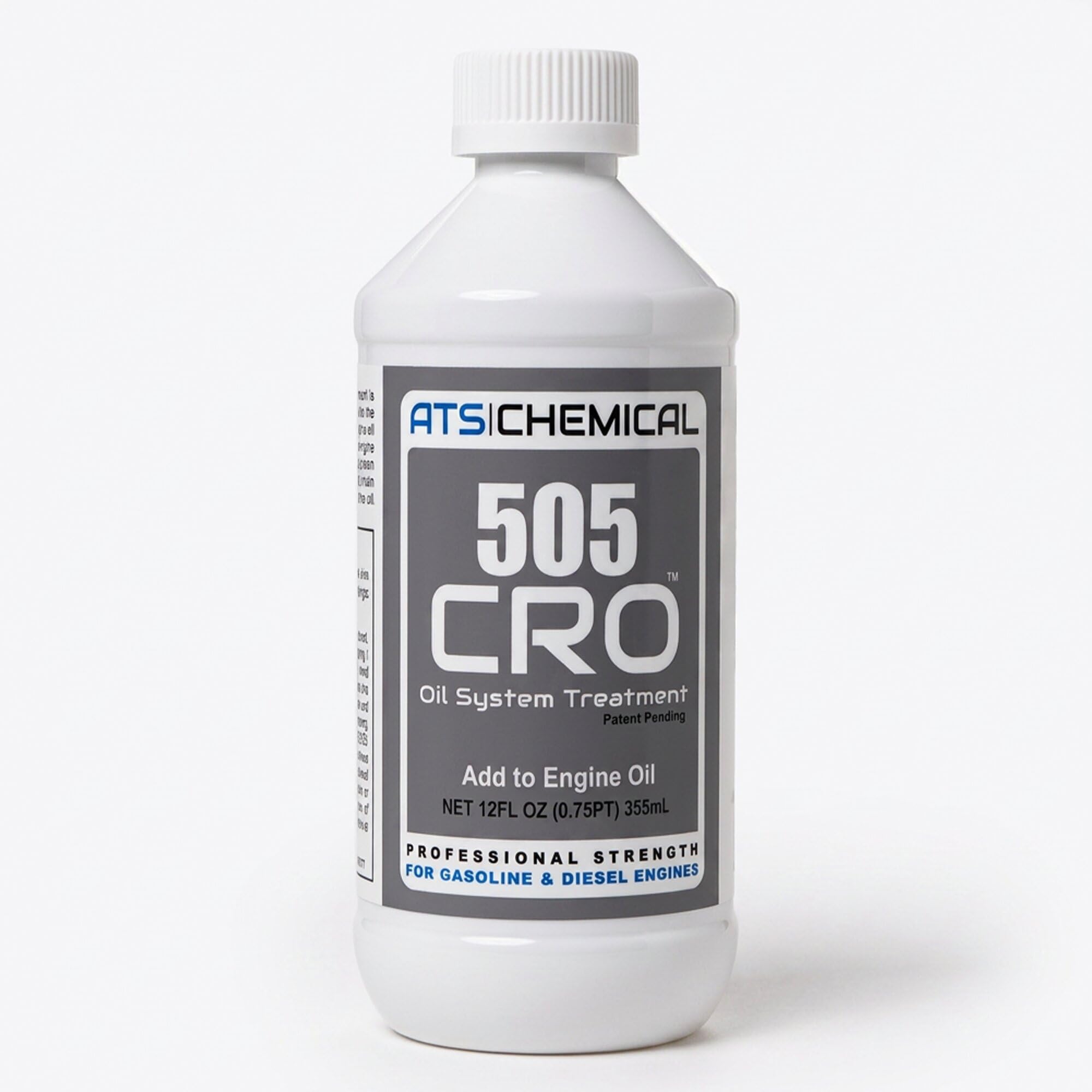
The 12-ounce treatment that resurrected a 330k-mile engine by dissolving carbon in one session, say buyers.
ATS Chemical positions the 505 CRO as a targeted solution for sticking components — specifically piston rings, lifters, camshaft phasers (devices that change valve timing on the fly), oil control valves, and timing chain tensioners. This is a premium additive you add to clean oil, then run the engine at 2,000 RPM for 15 minutes. A reviewer with a 2016 Jeep Cherokee at 330,000 miles added the 505 CRO, idled and drove it, then drained oil that came out “pitch black” — a sign the carbon deposits were dissolving.
The most dramatic result came from a 1995 Mazda Miata with 197,000 miles that was burning a quart of oil every 2,000 miles. The owner said the 505 CRO “un-stuck carboned oil rings,” stopped the oil burning entirely, and saved the engine after other methods failed. This is the heavy artillery to use before you consider a rebuild if your car smokes on startup, has a persistent valvetrain tick, or has lost power.
What stands out
- Specifically formulated to free stuck rings, lifters, and timing components
- Proven to stop oil burning from carbon-ring deposits, per owner reports
- One 12-oz bottle treats a standard engine
What to know
- Premium pricing vs. standard flushes
- Works best when added to clean oil first, not old sludge-laden oil
Buy this if: your high-mileage engine burns oil, has a persistent lifter tick, or you suspect stuck rings are robbing compression.
skip it if: your engine runs fine and you just want a preventive maintenance flush — the TRIAX or Motul are better for routine care.
4. Liquimoly 2037 Pro-Line Engine Flush, 500 ml, 6 Pack

Six 500 ml cans of gentle German chemistry — enough for half a dozen vehicles or one big truck.
Liqui Moly’s Pro-Line Engine Flush is a benchmark many other flushes are compared to, and the 2037 comes as a six-pack of 500-milliliter cans (101 fluid ounces total). It is a universal formula that works in gasoline and diesel engines and is explicitly compatible with catalytic converters — so you will not damage emissions equipment. The spec sheet describes the cleaning as “gentle and rapid,” and it is neutral to seals, gaskets, and other materials installed in the engine.
Buyers consistently report it works immediately: one buyer mentioned “I felt the difference instantly,” and another noted it “helped get rid of stuck lifters and get a ton of sludge out.” The six-pack format is great value if you have multiple vehicles, or if you own a larger engine that needs more than one can per flush. One 500 ml can treats a standard passenger car, so the pack covers six oil changes.
Why stock up
- Six-flush pack keeps you covered for multiple vehicles or future services
- Neutral to seals and catalytic converters — no emissions worries
- “Gentle and rapid” cleaning that works in both gas and diesel, per maker
One thought
- If you only need one flush, the six-pack is overkill — look for single 500 ml cans
- It is a flush, not a long-term treatment — no slow-dissolve option for severe sludge
Grab this if: you maintain a fleet of vehicles, or you want a trusted German flush that is safe for cats and seals and comes at a per-unit savings.
pass on it if: you need a targeted ring-freer like the ATS 505 CRO for a smoking oil-burner.
5. Motul Engine Clean | Oil Additive & Flush

The detergent flush that is safe for DPFs and turbo oil lines in modern gasoline and diesel engines.
Motul’s Engine Clean is a detergent-based, solvent-free formula that you pour in before an oil change, idle for 15 minutes, and drain. what separates it is its explicit compatibility with modern emissions hardware — catalytic converters, diesel particulate filters (DPFs — components that trap soot in diesel exhaust), and both older and newer engine designs. This makes it a go-to for anyone driving a newer vehicle where you cannot risk damaging a DPF with a harsh solvent.
The formula targets “stubborn residues, oil sludge, and combustion by-products” and is designed to clean piston rings, lifters, and turbo oil lines. One reviewer used it in a Fiat 500 Abarth and reported it “effectively cleaned oil passageways” and recommended it for modern direct injection engines to prevent sludge. A bottle is 300 ml (10.1 fluid ounces), and the maker suggests using it every other oil change as proactive maintenance rather than waiting for a problem.
Strengths
- Compatible with DPFs, catalytic converters, and hybrid engines
- Detergent-based with no harsh solvents — safer for seals
- Designed for regular use (every other oil change) as preventive care, per maker
Weaknesses
- 300ml is a smaller volume — larger engines may need two bottles
- Not marketed for severe sludge-caked engines like Dura Lube Sludge Away
Choose this if: you drive a modern car with a DPF or catalytic converter and want a preventive flush that is safe for the emissions system.
Pass if: you need a massive 32-ounce slow-dissolve treatment for a badly sludged engine.
6. BG RF7 #107 Engine Oil Treatment – 11oz can
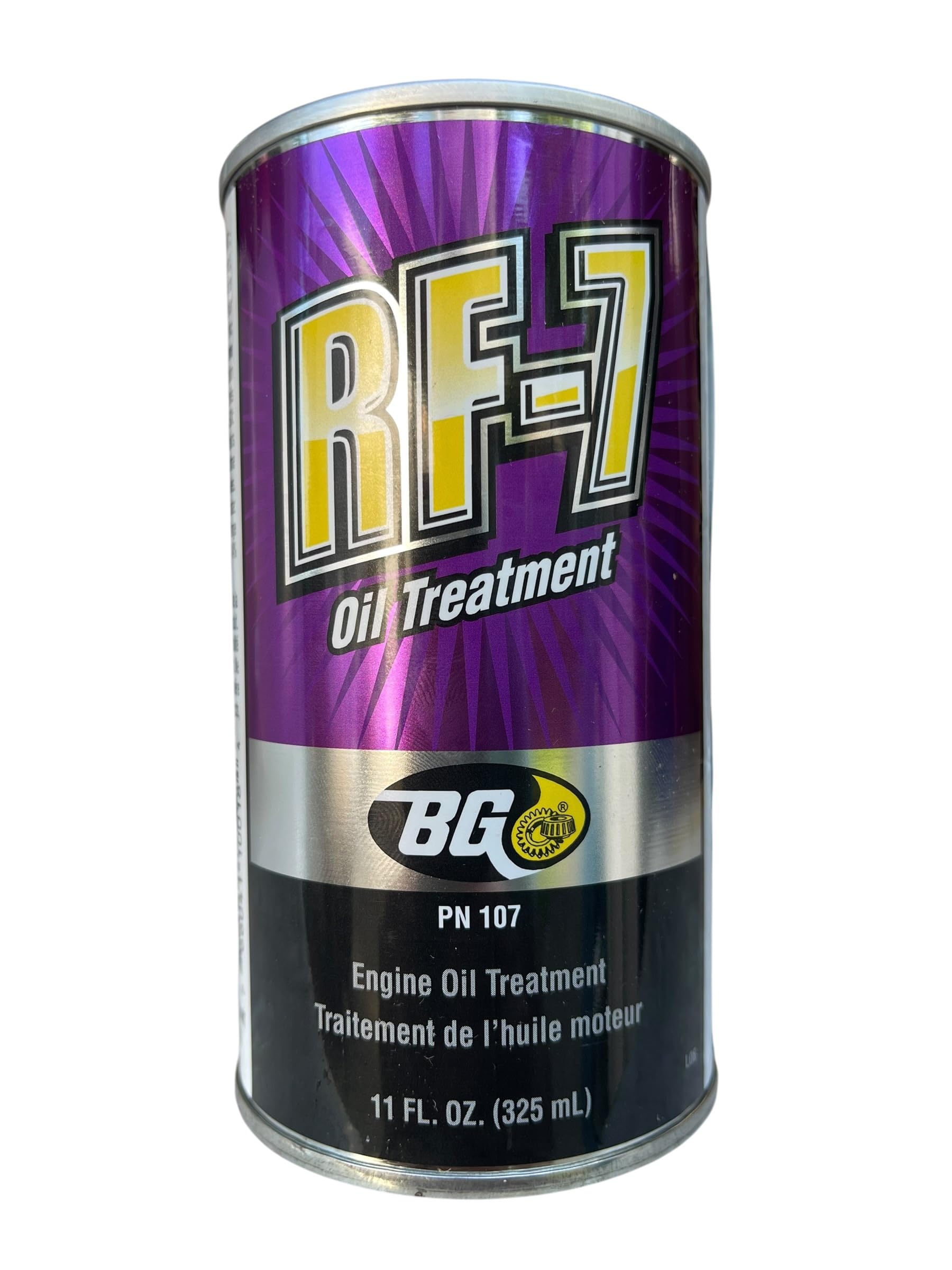
The 11-ounce additive that kept a 350k-mile Chevy 350’s spark plugs clean for 30,000 miles, per a buyer.
BG RF7 is an oil treatment — not a flush you drain after 15 minutes, but an additive meant to stay in the oil and work over multiple oil changes. This is the right approach when an engine fouls spark plugs because oil is leaking past worn rings or valve seals. One reviewer used it in a 1995 Chevy 350 with 350,000 miles that had a specific #3 cylinder oil fouling issue. After three oil changes with BG RF7, the spark plugs went 30,000 miles with “minimal fouling.” The same user called it “effective, unlike gimmicks.”
Another owner of a 2001 Audi A4 with 280,000 miles reported that RF7 resolved a low oil pressure light for six months when used with Liqui Moly oil. The 11-ounce can treats a standard engine, and the formula is compatible with cars, trucks, ATVs, and motorcycles. Multiple reviews note that professional mechanics recommend BG products, with one buyer citing a “40 yr. Hertz mechanic” as the source of the tip.
Best for
- Designed to stay in the oil and work over months, not minutes
- Proven to reduce spark plug fouling in high-mileage engines, per buyers
- Trusted by professional mechanics for years, according to reviews
Be aware
- 11 oz is a small volume — big engines may need a second can per oil change
- Not a one-time flush; it takes multiple oil changes for full effect
Reach for this if: your high-mileage engine fouls plugs or has a persistent low oil pressure issue that a quick flush did not fix.
Look elsewhere if: you want the instant cleaning of a one-time flush for a fast oil change.
7. Dura Lube HL-40831-06 Sludge Away Engine Cleaner
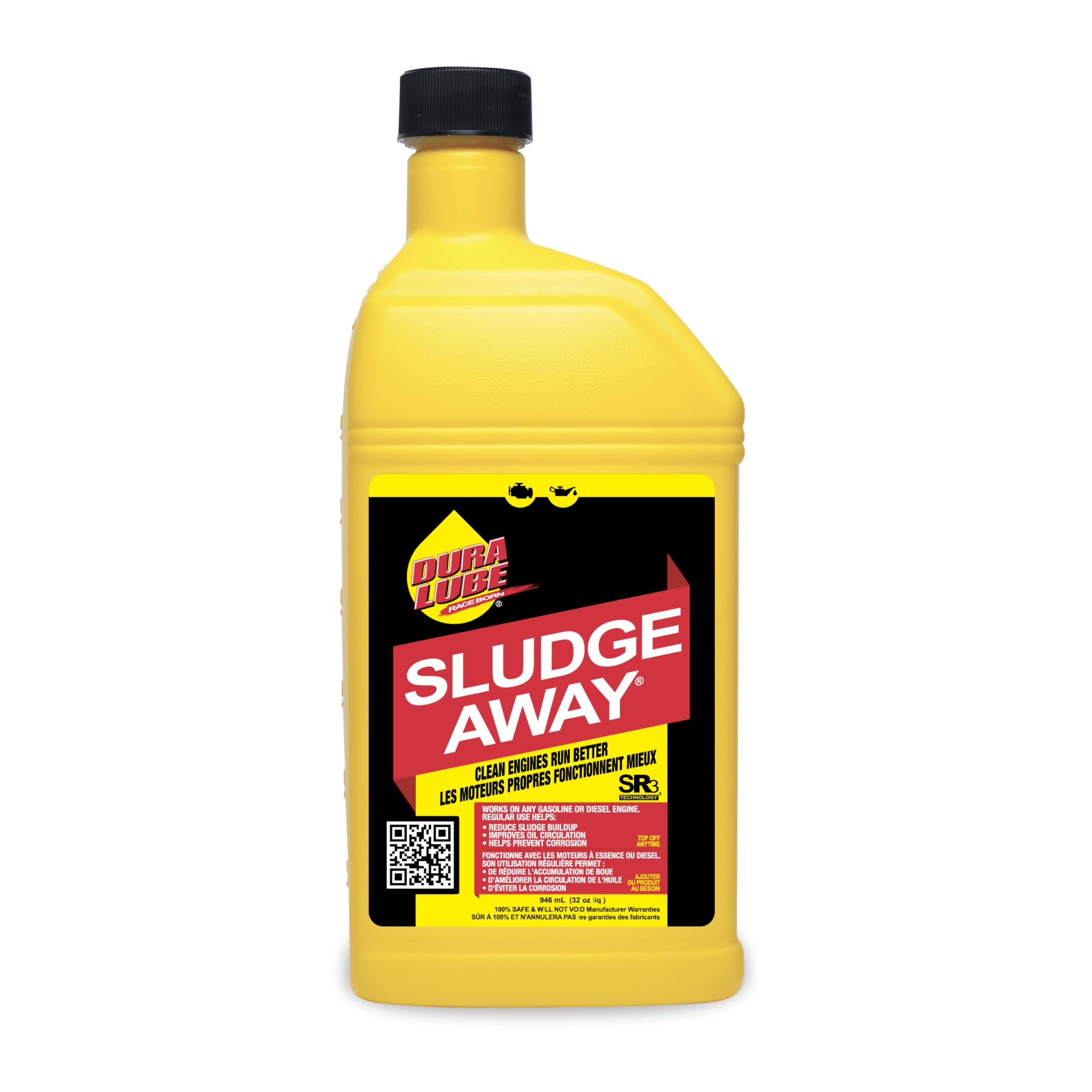
The 32-ounce slow-dissolve treatment that replaces a quart of oil for 3,000 miles of cleaning.
Dura Lube Sludge Away takes a different approach than a quick flush. You do not just pour it in and drain it — you substitute one quart of your engine oil with 32 ounces of Sludge Away and drive for 1,000 to 3,000 miles, checking the oil color as you go. For mild sludge, you change oil every 3,000 miles and replace a quart with Sludge Away until the buildup reduces. For severe sludge, you do it every 1,000 miles until the oil returns to an amber or dark brown color instead of black.
One reviewer called it “The Invisible Engine Magician,” saying it “removed significant gunk from high-mileage engine after 3,000 miles” and eliminated pinging sounds and sluggish performance. Another owner put it in a Toyota Sequoia before an oil change and reported it “quit the lifters, and brought new life to the old girl.” At 32 ounces, this is the largest single-dose product in this guide and the only one designed for a multi-thousand-mile treatment cycle.
Why it is unique
- Huge 32-ounce bottle replaces a full quart of oil for extended cleaning
- Designed for a 1,000–3,000 mile treatment cycle, not a quick flush
- Specifically targets severe sludge buildup that other flushes cannot touch
The trade-off
- Requires patience and multiple oil changes for heavy sludge
- Not a same-day fix — you will drive hundreds of miles before seeing results
Grab this if: your engine has heavy, visible sludge from years of neglected oil changes and you are willing to drive 1,000–3,000 miles to dissolve it safely.
Pass if: you want a quick 15-minute flush before your next oil change.
Understanding the Specs
Oil-Based vs. Solvent Formulas
An oil-based cleaner suspends its cleaning agents in synthetic oil so the engine never loses lubrication during the process. This is safer for high-mileage engines with aged seals and for turbochargers that need oil pressure at all times. A solvent-based formula works faster and is cheaper, but it strips away all oil briefly — meaning you must drain it quickly and refill to avoid running the engine without protection.
Fast Flush vs. Slow Dissolve
A fast flush additive is designed to be poured in, idled for 10-15 minutes, and drained with the old oil. It works well for moderate varnish and routine maintenance. A slow-dissolve treatment like Dura Lube Sludge Away replaces a quart of oil and stays in the crankcase for hundreds or thousands of miles. This gradual approach is safer for heavy sludge because it breaks deposits down slowly rather than dislodging large chunks that could block an oil pickup screen.
Volume: How Much You Need
Most passenger car engines hold between 4 and 6 quarts of oil, so a standard 300-500 ml bottle or 12-16 oz can treats one engine. Larger engines — V8s, diesels, or trucks with 8+ quart sumps — may require two bottles of the smaller flushes. The Dura Lube Sludge Away at 32 ounces replaces a full quart, so one bottle treats one engine. Always check the product’s listed compatibility because some formulas specify the oil capacity they are designed for.
Compatibility with Emissions Equipment
Modern cars have catalytic converters, diesel particulate filters (DPFs), and oxygen sensors that can be damaged by aggressive solvents. Products like the Motul Engine Clean and Liqui Moly 2037 explicitly state they are safe for these components. If you drive a newer vehicle with a DPF, you should choose a cleaner that confirms that compatibility rather than risking damage from an unknown chemical cocktail.
FAQ
How often should I use an engine sludge remover?
Can an engine sludge remover damage my engine?
Will sludge remover fix a stuck lifter tick?
Should I use an engine flush or an oil treatment?
Is it safe to use engine sludge remover in a turbocharged engine?
What is the difference between oil-based and detergent-based engine cleaners?
Can I use a sludge remover if I have high mileage (over 150,000 miles)?
How do I know if my engine needs a sludge remover?
Will engine sludge remover help with oil consumption?
What is the best oil to use after a sludge flush?
Final Thoughts: The Verdict
For most buyers, the engine sludge remover winner is the TRIAX Pro Engine Flush because it combines oil-based safety, ZDDP anti-wear protection, and proven results for restoring power and quieting engines — all in a 15-minute flush. If you want to restore fuel economy with a longer drive-cycle cleaner, grab the XADO Engine Oil System Cleaner. And for a high-mileage engine that burns oil from stuck rings, the ATS Chemical 505 CRO Oil System Treatment is the one that reviewers point out can save an engine from a rebuild.
How We Picked
We do not accept paid placement. Every pick is matched to a real buyer and a real use-case; we do not hands-on test units.
Sources & Methodology
Specifications: manufacturer listings and product documentation. Review insights: verified customer reviews, as of July 2026. Pricing: not shown on this page (it changes often); check the current price via the retailer link.
As an Amazon Associate, Trending Car earns from qualifying purchases. This does not affect which products we feature.