
Our readers keep the lights on and my garage snacks stocked. As an Amazon Associate, I earn from qualifying purchases.
Specs are compiled from manufacturer listings and verified buyer reviews and can change over time — please confirm the key details on the product page before buying.
A helmet that sits on a shelf is useless. A pinch at the temples after a few miles, a goofy high profile, or a sweaty interior will stop you from wearing it. The real challenge is finding a lightweight bike helmet that you barely feel on your head while it still keeps you safe with modern protection. That balance — an airy feel without losing real impact defense — is exactly what this guide sorts out.
I’m Min Islam — the founder and writer behind Trending Car. This guide is built by comparing the manufacturers’ published specifications and the patterns across verified customer reviews, so you get each pick’s real strengths and trade-offs instead of marketing spin.
Reading through these picks is the fastest way to find the lightweight bike helmet that actually fits your riding and your budget without jargon.
Our Picks at a Glance

How To Choose The Best Lightweight Bike Helmet
A light helmet is great, but a light helmet that is also safe, fits well, and keeps you cool is the real prize. Here are the three specs that matter most for this category.
Safety Systems: MIPS and Koroyd
MIPS (Multi-directional Impact Protection System) is a thin inner liner that rotates slightly on impact. It helps reduce rotational forces to your brain during an angled crash. Koroyd is a honeycomb-like material that crushes on impact to absorb energy. A helmet with both offers layered protection. Look for “MIPS-equipped” or “Koroyd coverage” in the specs.
Ventilation and Weight
More vents mean more airflow, but also slightly more potential for weight. The best lightweight helmets balance the two — typically around 19 to 21 vents. A helmet under 11 ounces (like many road helmets) reduces neck strain on long rides and makes you less likely to take it off halfway through a climb.
Fit System and Adjustability
A dial at the back (often called a ring-fit system) lets you tighten or loosen the helmet with one hand while riding. The best systems also adjust the vertical height at the back of your head for a custom depth. A helmet that sits too high feels like a mushroom; one that sits deeper and closer looks better and offers more rear-head coverage.
Quick Comparison
| Model | Best For | Safety System | Vents | Weight | Amazon |
|---|---|---|---|---|---|
| Smith Engage MIPS★ Best Overall | Trail & mountain confidence | MIPS + Koroyd | 20 | Amazon | |
| Smith Persist MIPSPremium Road | Road & all-day comfort | MIPS + Koroyd | 21 | 11 oz | Amazon |
| OutdoorMaster Gem II MIPS | Integrated light & value | MIPS | 21 | 0.44 kg | Amazon |
| Bell Formula MIPS | Budget commuter protection | MIPS | 19 | Amazon | |
| Retrospec Rowan MTB | Budget-friendly trail rides | EPS foam + in-mold shell | 14 | 1 lb | Amazon |
In‑Depth Reviews
1. Smith Engage MIPS Cycling Helmet
Our pick — over 4.5★ from 950+ verified ratings; the strongest balance of quality and price.
The Smith Engage gives you two safety layers in one low-profile shell — a combination that skips the bulk found in many multi-tech helmets.
You get zonal Koroyd coverage (a honeycomb material that crushes on impact to absorb energy) plus the MIPS safety system. Together, they reduce rotational forces in a crash in a way that single-technology helmets cannot. Buyers report it is the most comfortable helmet they have owned, praising the fit, ventilation, and a visor that pushes up and down into two positions to block sun or trail debris. The 20 fixed vents keep airflow steady enough to stop your glasses from fogging, helped by the maker’s Ionic+ lining (a sweat-activated fabric the brand says controls odor).
Unlike the Smith Persist below, the Engage uses lightweight single-layer webbing on the straps that feels less scratchy. But a few owners mention it slips forward slightly on rough descents if you are not wearing glasses. The Engage sits deeper on the back of your head than many helmets — owners say it avoids the “mushroom head” look entirely, so you get better rear coverage without a goofy silhouette.
Standout Safety
- Zonal Koroyd coverage for lightweight energy absorption on top of MIPS
- 20 vents with AirEvac system keep glasses fog-free
- Adjustable visor with two positions for sun or trail debris
- Sits low on the back of the head for a sleek look
Minor Annoyances
- Can slip forward slightly on rough descents without eyewear
- Some users find the buckle hard to fasten quickly
Your pick if: you want the best safety technology available (Koroyd + MIPS) in a helmet that actually looks and feels good for all-day trail riding.
Look elsewhere if: you are on a tight budget or you ride only on smooth pavement and do not need the extra rotational protection from Koroyd.
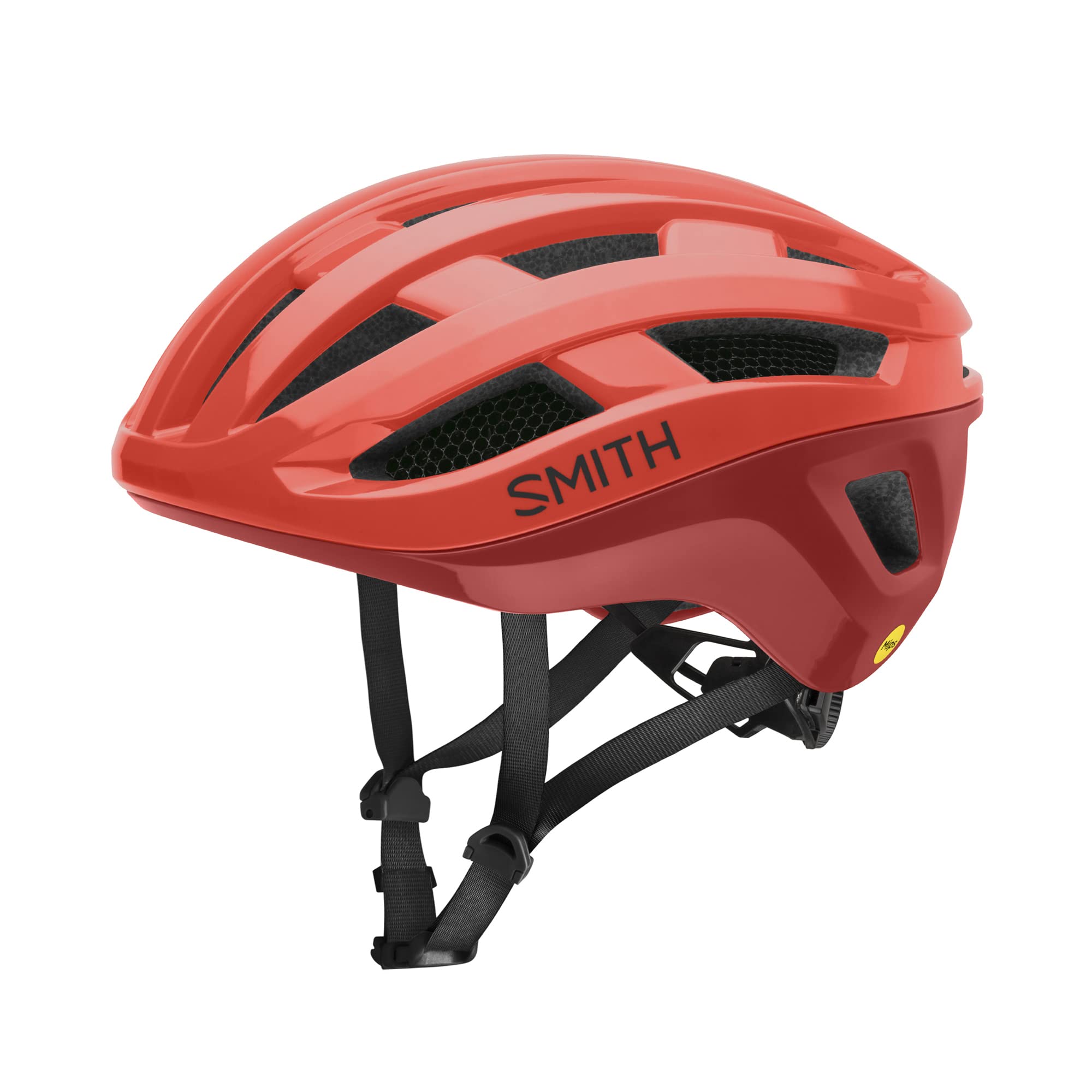
2. Smith Persist Cycling Helmet
At just 11 ounces (about 312 grams), the Persist is lighter than the Engage and still packs the same dual safety layers — so you feel almost nothing on pavement.
Smith packed MIPS and zonal Koroyd coverage here too, making it among the most protection-heavy road helmets for its weight. Reviewers consistently call it lightweight and comfortable to the point of being forgettable while worn. One reviewer noted that a white version helped reflect the sun and kept their head cooler on hot days.
Compared to the Engage, the Persist is built more for road cycling than aggressive trail work. It lacks an adjustable visor and uses a simpler rear dial for fine-tuning the fit. A couple of users did mention a slight “mushroom look” but found it a fair trade-off for the weight and ventilation. The Poppy / Terra colorway also got a shout-out for matching orange bikes nicely, if color coordination matters to you.
Weight Winner
- 11 ounces means you barely notice it on long rides
- 21 vents for excellent airflow and anti-fog performance
- MIPS plus Koroyd for dual-layer rotational impact protection
- Easy-to-use rear dial fit system
Road-Only Design
- No adjustable visor for sun or debris protection
- Minor mushroom look noted by some riders
Reach for this if: you spend most of your time on pavement, want the absolute lowest weight, and still want MIPS plus Koroyd protection.
skip it if: you ride mountain trails and need a visor or a deeper rear coverage for impacts.
3. OutdoorMaster Gem II MIPS Bike Helmet

This helmet gives you 21 vents (same as the Smith Persist) plus a rechargeable rear light — at a price closer to basic models.
The OutdoorMaster Gem II is the only helmet here with an integrated USB-rechargeable LED light that offers three modes: steady, fast flashing, and slow flashing. Customers note the light takes only 60 minutes to charge and can be used for 13 hours straight — so you can leave it on for weeks of commuting before needing a top-up. With 21 vents and internal air-channels, ventilation keeps you comfortable on long days. The removable padding can be washed, which is a nice touch for sweaty summer riders.
Compared to the Bell Formula below, the Gem II has 21 vents versus the Bell Formula’s 19 vents, which you will feel on a steep climb. It is also available in three sizes (S, M, L) with an easy-to-adjust dial. One minor complaint: the helmet ships in a plastic bag inside an Amazon box with little padding, so inspect it for damage when it arrives. Overall, it offers MIPS protection plus a built-in light for less than many helmets with just MIPS alone.
Commuter Bonus
- Built-in USB rechargeable rear light with 13-hour battery life
- 21 vents with internal air-channels for top-tier cooling
- MIPS protection at a mid-range price
- Removable, washable padding for long-term freshness
Packaging Risk
- Ships with minimal padding inside the box — some units may arrive with cosmetic damage
- Charging the light requires remembering a USB cable
Grab it if: you commute or ride after dusk and want an integrated light plus MIPS protection without spending over eighty dollars.
Pass if: you prioritize the absolute lightest weight or need zonal Koroyd protection for aggressive trails.
4. Bell Formula MIPS
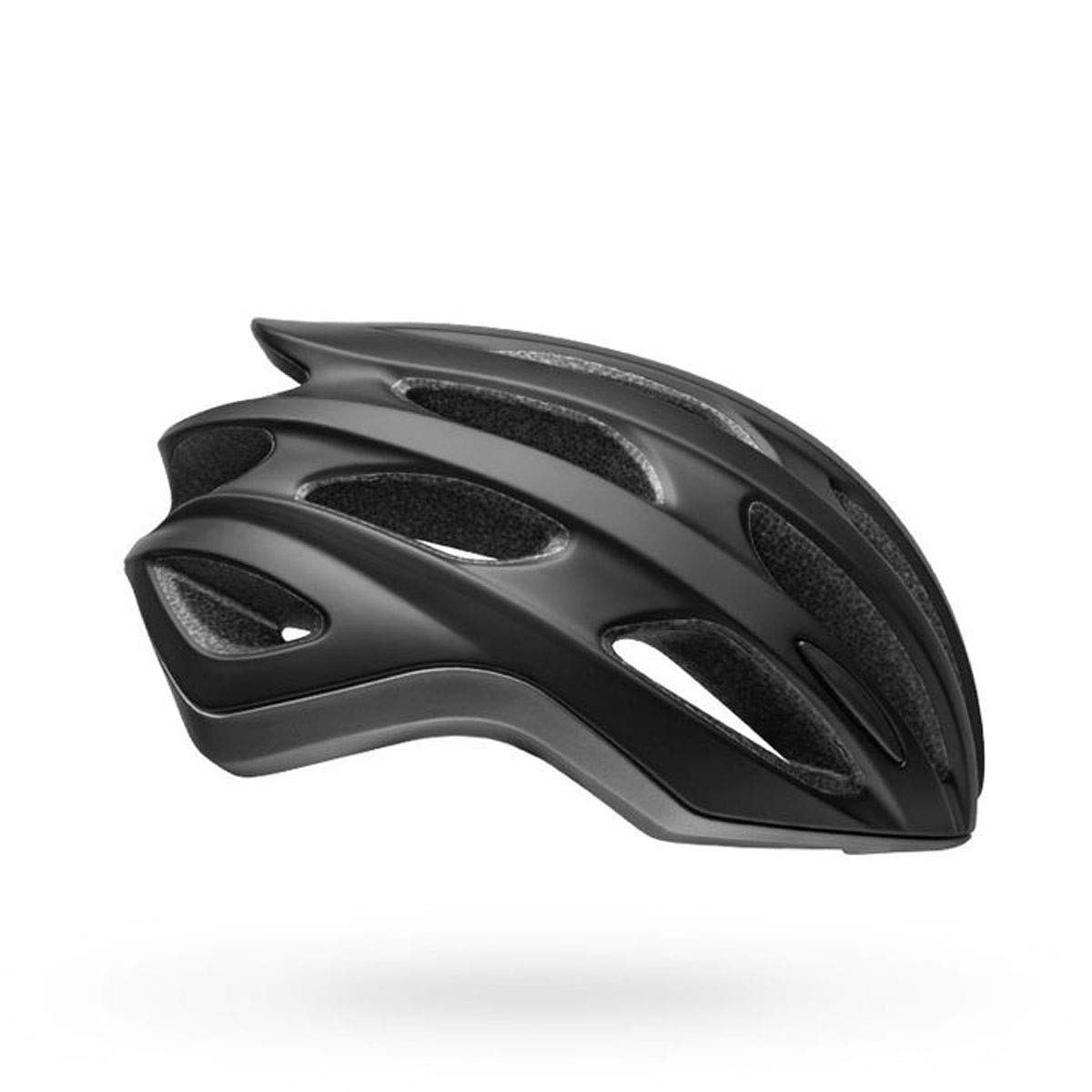
Bell proves you do not need triple digits for MIPS safety — the Formula delivers it with a proven brand name at an entry-level price.
Bell uses the Fusion In-Molding process that bonds the outer polycarbonate shell directly to the EPS foam liner, making a sturdier helmet that does not add weight. The Float Fit system uses a minimalist, easy-to-turn rubber dial that integrates with MIPS — so adjusting the fit does not mess with the safety liner. Reviewers point out it is cooler and more comfortable than a Giro Monza after 350 miles in 80-90°F heat, specifically praising the Sweat Guide pad design that pulls moisture away from the brow and off your eyewear.
A couple of long-term users note the plastic bottom edge protects the foam during storage, which helps it last a few seasons. It does lack a built-in light or any Koroyd-style foam, but you are getting the core MIPS safety layer that matters most for road riding.
Bargain Safety
- MIPS-equipped at an entry-level price point
- Fusion In-Mold shell for a sturdier build without extra weight
- Sweat Guide design keeps glasses clear on hot rides
- Float Fit dial is simple and glove-friendly to adjust
No-Frills Build
- No integrated light or built-in visor
- Fewer vents (19) than several alternatives with 21
Your move: if you want MIPS protection on a budget and ride mostly on roads or paved paths, the Bell Formula is a proven choice backed by 286 ratings and VT safety evaluations.
Not for you if: you need a trail-ready visor or extra cooling from more than 19 vents on hot climbs.
5. Retrospec Rowan Mountain Bike Helmet

At one pound, the Rowan keeps things light and inexpensive for casual trail riders who still want a removable visor — but it skips MIPS.
This helmet uses dense EPS foam inside an in-mold polycarbonate shell to absorb impact energy, though it does not include MIPS. The 14 ventilation ports are fewer than any other pick here, but they are placed for airflow on moderate-intensity rides. Shoppers say it is “comfortable and functional” on rides, with a visor that actually protects your brow and nose from the sun — unlike many budget visors that point awkwardly at the sky. The ErgoKnob dial system lets you fine-tune the fit precisely to your head shape, and the padding is removable for washing.
Compared to the Bell Formula above, the Rowan lacks MIPS but adds a dedicated trail visor and weighs in at 1 lb. One buyer warned to buy a size up from what you think you need, and another noted that the fit above and behind the temples can feel tight on longer rides (over an hour or two). For the price, it is a solid entry-level lid for someone getting into mountain biking without committing to premium safety features.
Trail Value
- Removable, adjustable visor protects from sun and debris
- ErgoKnob dial provides a custom fit at a low price
- Removable, washable padding for sweat management
- Good looks and lightweight for the price
Budget Compromise
- No MIPS or Koroyd protection — standard EPS foam only
- Fewer vents (14) means less cooling on hot, long climbs
- Some users find it tight above and behind the temples
Right for: casual trail riders who want a lightweight, low-cost helmet with a functional visor and do not need MIPS for their riding style.
Better options exist if: you ride aggressively, do long summer climbs, or prioritize rotational-impact safety — the extra money for the Bell Formula or OutdoorMaster Gem II buys real protection upgrades.
Understanding the Specs
MIPS vs Koroyd
MIPS (Multi-directional Impact Protection System) is a low-friction liner inside the helmet that rotates slightly on angled impact. It reduces rotational forces that can cause brain injuries. Koroyd is a honeycomb-like thermoplastic that crushes on impact to absorb energy before it reaches your head. A helmet with both gives you two layers of protection. A helmet with just MIPS still offers meaningful safety improvement over a basic EPS foam helmet.
Vent Count and Airflow
A vent count usually refers to the number of openings in the shell. More vents generally mean more airflow, which keeps your head cooler on hot climbs and reduces sweat buildup. However, vent design matters just as much — some helmets use internal channels to route air across your scalp even with a mid-range vent count (19 to 21). For most riders, anything above 19 vents is good for general riding; below 14 vents is better for cooler weather or casual short trips.
FAQ
How do I measure my head for a bike helmet?
What is the difference between MIPS and a standard helmet?
How long does a lightweight bike helmet last before I need to replace it?
Can I use a mountain bike helmet on the road?
What does the weight of a helmet actually affect while riding?
Is a helmet with fewer vents still safe?
Will a bike helmet fog up my sunglasses?
Do I need a bike helmet with a built-in light?
Final Thoughts: The Verdict
For most riders, the best lightweight bike helmet is the Smith Engage MIPS because it pairs the best safety technology (Koroyd + MIPS) with a low-profile design that actually feels comfortable all day. If you want the absolute lightest weight for road riding, grab the Smith Persist MIPS at just 11 ounces. And for the best value with an integrated rear light, the standout is the OutdoorMaster Gem II MIPS.
How We Picked
We do not accept paid placement. Every pick is matched to a real buyer and a real use-case; we do not hands-on test units.
Sources & Methodology
Specifications: manufacturer listings and product documentation. Review insights: verified customer reviews, as of July 2026. Pricing: not shown on this page (it changes often); check the current price via the retailer link.
As an Amazon Associate, Trending Car earns from qualifying purchases. This does not affect which products we feature.