
Our readers keep the lights on and my garage snacks stocked. As an Amazon Associate, I earn from qualifying purchases.
Specs are compiled from manufacturer listings and verified buyer reviews and can change over time — please confirm the key details on the product page before buying.
Choosing the wrong oil for your 2008 Mazda 3 is one of the quickest ways to invite engine knock, sludge buildup, and expensive repairs. Your MZR engine was designed around a specific viscosity (the oil’s thickness at different temperatures) — 5W-30 — and picking a full synthetic that actually meets modern API SP or ILSAC GF-7 standards makes the difference between a daily driver that hits 200,000 miles quietly and one that starts burning oil before 150,000.
I’m Min Islam — the founder and writer behind Trending Car. This guide is built by comparing the manufacturers’ published specifications and the patterns across verified customer reviews, so you get each pick’s real strengths and trade-offs instead of marketing spin.
Here are the three 08 mazda 3 oil type options that protect your engine best, ranked by real-world performance and value.
Our Picks at a Glance
How To Choose The Best 08 Mazda 3 Oil Type
Your 2008 Mazda 3’s MZR engine is a solid, reliable unit — but it’s picky about lubrication. The right oil type keeps the variable valve timing (VVT) mechanism happy, prevents sludge in the oil pan, and makes cold winter starts easy on the bearings. Here are the key decisions you’ll make.
Viscosity Grade: 5W-30 Is Non-Negotiable
The “5W” part means the oil flows like a thin 5-weight when cold (the “W” stands for winter), so it reaches every cam and journal within seconds of a frigid start. The “30” means it thickens to a 30-weight at full operating temperature, keeping a sturdy oil film between metal parts. Mazda engineered the MZR around 5W-30 — straying to a 10W-30 or 5W-40 can cause sluggish VVT response or reduced fuel economy.
Full Synthetic vs. Conventional: Go Full Synthetic
Conventional oil breaks down faster under the heat of a modern engine, forming sludge that clogs the tiny oil passages in the cylinder head. A full synthetic resists thermal breakdown, flows better at low temperatures, and lasts longer between changes. For a 2008 Mazda 3 with any mileage over 75,000, full synthetic is the better bet to keep internal deposits low and compression strong.
High-Mileage Additives: When To Switch
If your 3 has passed 75,000 miles, a high-mileage oil adds seal conditioners that soften and swell dried-out gaskets, reducing oil leaks past the valve cover and oil pan. It also contains extra detergents to clean out old sludge. For engines well past 100,000 miles, a dedicated high-mileage formula can visibly lower oil consumption.
API and ILSAC Ratings: The Specs That Matter
Look for the donut-shaped API Starburst symbol on the bottle. The current standard is API SP, with ILSAC GF-7 being the latest gasoline-engine specification. These ratings guarantee the oil passed tests for timing-chain wear protection, low-speed pre-ignition (LSPI) prevention in turbo engines, and fuel-economy improvement. An oil that only meets API SN (an older standard) still works but misses newer protective additives.
Quick Comparison
| Model | Best For | Viscosity | Liquid Volume | Mileage Focus | Amazon |
|---|---|---|---|---|---|
| Valvoline Advanced 5W-30 5 QT★ Best Overall | Best Overall Protection | 5W-30 | 5 Quarts | Standard | Amazon |
| Pennzoil Platinum High Mileage 5W-30 | Best for 75K+ Mile Engines | 5W-30 | 1 Quart (6-pack) | High Mileage | Amazon |
| Castrol EDGE 5W-30 5 QT (3-pack) | Extreme Heat / Extended OCI | 5W-30 | 160 Fluid Ounces | Standard | Amazon |
In‑Depth Reviews
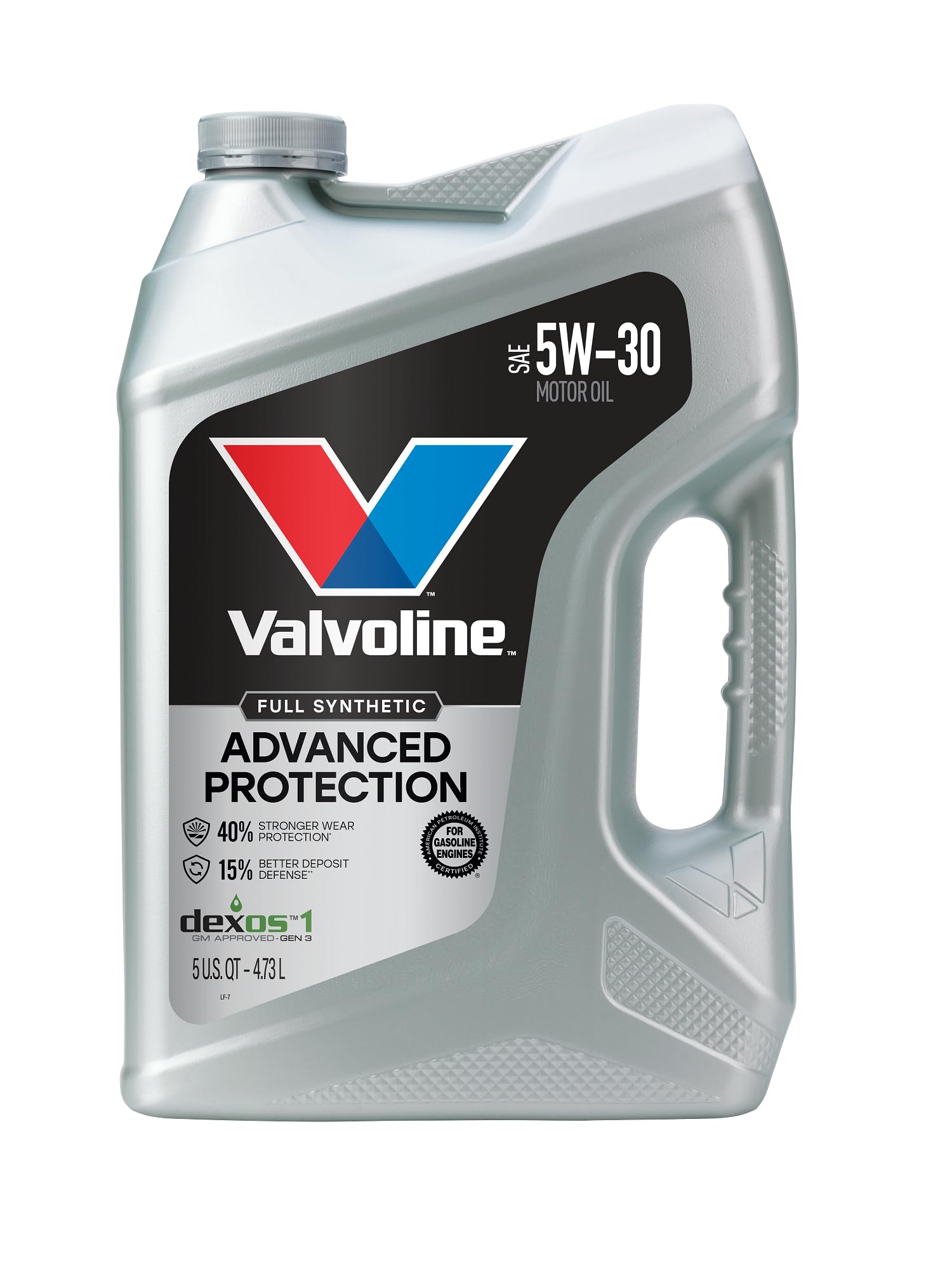
1. Valvoline Advanced Full Synthetic SAE 5W-30 Motor Oil 5 QT
Our pick — over 4.5★ from 13,000+ verified ratings; the strongest balance of quality and price.
The one that fights heat and friction harder than the industry baseline, for a price you can afford.
This Valvoline bottle is the simplest recommendation for your 2008 Mazda 3 because it directly tackles the four things that wear an engine down: wear, friction, heat, and deposits. According to the manufacturer, it delivers 40% stronger wear protection than industry standards — a spec that directly reduces friction and improves fuel economy in your daily commute. It also provides 15% better deposit defense versus industry standards, which translates to fewer carbon deposits on your pistons and valves over time.
The real-world payoff shows up during cold starts. This oil is engineered for excellent low-temperature flow, reducing metal-to-metal contact when you fire up the Mazda on a cold morning — that’s when most engine wear actually happens. Unlike the Pennzoil below, Valvoline focuses on standard mileage engines first, though buyers report it works great as a consistent performer even on higher-mileage cars. One reviewer noted it was “exactly what I needed and less expensive than the stores around here,” which sums up the value proposition.
It meets the latest API SP and ILSAC GF-7A standards, plus Ford WSS-M2C961-A1 and GM dexos1 Gen 3 — which covers the 2008 Mazda 3’s requirements easily. At 9 pounds per 5-quart jug, it is the heaviest single container here, but one jug gives you exactly the right amount for a complete oil change with a little leftover for top-offs.
Why it earns the top spot
- 40% stronger wear protection vs. industry standards — proven friction reduction
- 15% better deposit defense keeps the MZR engine’s small oil passages clean
- Up to 2.5X better heat protection fights sludge formation in hot driving conditions
- Meets the newest API SP / ILSAC GF-7A specs for modern engine protection
The trade-offs
- Not a high-mileage formula — lacks seal conditioners specifically for engines over 75K miles
- One 5-quart jug covers a single oil change with minimal leftover (for a 4.4-quart sump)
Reach for this if: You want the strongest all-around protection for a healthy engine, backed by the latest API and ILSAC certifications, without paying a premium for extended-drain additives you may not need.
Look elsewhere if: Your 2008 Mazda 3 already has over 100,000 miles and you suspect small oil leaks or burning oil — the Pennzoil High Mileage option below directly addresses those issues.
2. Pennzoil Platinum High Mileage Full Synthetic 5W-30 Motor Oil

The dedicated high-mileage formula that a buyer with 200,000 miles calls the only oil they trust.
If your 2008 Mazda 3 has crossed 75,000 miles, this Pennzoil is engineered specifically for you. It is a full synthetic 5W-30 formulated to help stop leaks in engines with more than 75,000 miles — using seal conditioners that soften aged gaskets and reduce the oil drips you might find on your driveway. It also promises less oil burn-off than high-mileage motor oils made from crude oil, so you add less between changes.
The most compelling data point here is the real-world testimony. One buyer reports: “Almost 200,000 miles and still runs great” — referring to their older high-mileage vehicle running exclusively on this oil. That single story aligns with the product’s 15,000-mile protection guarantee, though that guarantee depends on using a quality filter. Unlike the Castrol which focuses on extreme longevity, Pennzoil’s strength is keeping older engines stable. It also provides faster low-temperature oil flow and protects in extreme heat, both critical for Mazda’s MZR engine that sees temperature swings from winter commutes to summer highway miles.
One catch: this comes as a 6-pack of 1-quart bottles, which means you handle smaller pour spouts instead of one big jug. The total liquid volume is 32 fluid ounces per bottle, so six bottles gives you 192 fluid ounces — enough for about three changes with leftovers. It also costs more upfront than the single jug options, but if your engine is already past 100K miles, the seal-conditioning chemistry makes this the smarter choice.
The high-mileage advantage
- Proven to help stop leaks for engines over 75,000 miles via seal conditioners
- Formulated to deliver less oil burn-off than crude-based high-mileage oils
- Backed by a 15,000-mile protection guarantee for extended drain intervals
- Keeps pistons cleaner than required by the toughest industry standard (Sequence IIIH)
Things to consider
- Higher upfront price than single 5-quart jug options — the six-pack increases initial spend
- 1-quart bottles mean more pouring steps and more waste bottles to recycle
Best for older Mazda 3s: Grab this if your 2008 has over 75,000 miles, especially if you have started noticing small oil drips or minor oil consumption between changes — the seal conditioners likely reduce both.
Not the best fit if: Your engine is still under 60,000 miles and has zero oil leaks — the Valvoline above gives you better anti-wear specs at a lower cost per quart, without paying for high-mileage additives you do not yet need.
3. Castrol EDGE 5W-30 Advanced Full Synthetic Motor Oil, 5 Quarts (Pack of 3)

The heavy lifter that promises a 20,000-mile drain interval for the driver who hates changing oil.
Castrol EDGE is the premium pick here, and its main claim is audacious: it supports up to 20,000 miles between oil changes (or one year, whichever comes first). That is a huge number, backed by a claim that it is 3X stronger than the leading full synthetic in viscosity breakdown resistance, as measured by the Kurt Orbahn test. For a 2008 Mazda 3 that sees a lot of highway miles, this means you could go a full year or more without lifting the drain plug — but check your warranty and your comfort level with that interval.
Buyers who have used Castrol for decades report positive results: one owner says their car with 210K miles “burns no oil” after 30+ years of use. That is a strong data point for long-term engine health. The oil also claims 10X better high-stress performance in the Sequence IX test under high load conditions compared with API SQ test limits. This matters if you live in a hot climate or regularly push the engine hard on mountain passes. Unlike the Pennzoil above, Castrol EDGE is not a high-mileage formula, but the extra cleaning agents apparently prevent sludge even in older engines.
One practical note: this 3-pack of 5-quart jugs gives you 160 fluid ounces across three containers — enough for about three full oil changes with leftovers. But reviewers warn the “eco pack” cardboard packaging is a hassle; one buyer states “this eco pack sounds like a neat idea, but it’s a huge hassle. Stick to the plastic bottles, easier to handle.” If you buy this, be ready to store three bulky jugs. It also costs more upfront than buying a single jug of Valvoline or a six-pack of Pennzoil, but if you do the math per mile, the extended-drain capability can save time and money over the long haul.
The extended-drain edge
- Claims 20,000 miles between oil changes — drastically reduces maintenance frequency
- 3X stronger viscosity resistance vs. leading full synthetic (Kurt Orbahn test on 5W-30)
- 10X better high-stress performance under high load conditions vs. API SQ test limits
- Approved to meet GM dexos1 Gen 3, Ford WSS-M2C961-A1, and Chrysler MS 6395
The practical downsides
- 3-pack packaging in cardboard box is awkward — one buyer mentioned it is a “huge hassle” vs. plastic bottles
- Higher upfront cost than a single 5-quart jug, even though per-change cost is lower
Buy this for the convenience: If you do a lot of highway miles and want to reduce oil changes to once a year (or every 20,000 miles), the higher upfront price pays off in saved time and fewer trips to the garage.
Skip this for simplicity: If you prefer standard 5,000-mile oil changes and a simple single-jug purchase, the Valvoline or Pennzoil give you excellent protection without the bulky 3-pack storage problem.
Understanding the Specs
API SP / ILSAC GF-7A Ratings
These two acronyms tell you the oil has been tested against the latest engine-killing threats. API SP (the “donut” symbol on the bottle) covers protection against low-speed pre-ignition (LSPI) in turbo engines and timing-chain wear — relevant even for naturally aspirated Mazda MZR engines because the standards raise the bar for everyone. ILSAC GF-7A is the gasoline engine equivalent that adds fuel-economy improvement and better sludge control. An oil meeting both standards (like the Valvoline and Castrol here) gives you the newest additive chemistry available.
Flash Point
This is the temperature at which the oil’s vapors ignite — a measure of how well the oil resists burning off inside the combustion chamber. Valvoline’s flash point is 394°F (about 201°C), while Pennzoil’s is 224°C (about 435°F). A higher flash point means less oil is lost to evaporation at high engine temperatures, so you add less between changes. For the 2008 Mazda 3, both numbers are well above normal operating temps (around 200°F oil temp), so either works fine, but the Pennzoil’s higher flash point partly explains why it is formulated for less oil burn-off.
FAQ
Can I use 5W-30 in my 2008 Mazda 3 if it is hot outside?
What is the difference between 5W-30 and 5W-20 for a Mazda 3?
How many quarts of oil does a 2008 Mazda 3 need?
Should I use high-mileage oil even if my Mazda 3 only has 60,000 miles?
Is it okay to switch between different brands of 5W-30 full synthetic?
Does the Castrol EDGE really last 20,000 miles in a Mazda 3?
Will a different oil viscosity fix a lifter tick in my 2008 Mazda 3?
Can I use diesel oil like Rotella T6 5W-40 in my Mazda 3?
Final Thoughts: The Verdict
For most 2008 Mazda 3 owners, the 08 mazda 3 oil type winner is the Valvoline Advanced Full Synthetic 5W-30 because it delivers the highest anti-wear and anti-deposit specs at the best per-quart value, meeting the latest API SP standards your engine needs. If your Mazda has passed 75,000 miles and you have started seeing minor oil leaks or burn-off, grab the Pennzoil Platinum High Mileage 5W-30 — the seal conditioners and lower volatility directly address those aging-engine issues. And for the dedicated highway driver who hates changing oil, the standout is the Castrol EDGE 5W-30 with its 20,000-mile drain interval that cuts maintenance to roughly once a year.
How We Picked
We do not accept paid placement. Every pick is matched to a real buyer and a real use-case; we do not hands-on test units.
Sources & Methodology
Specifications: manufacturer listings and product documentation. Review insights: verified customer reviews, as of July 2026. Pricing: not shown on this page (it changes often); check the current price via the retailer link.
As an Amazon Associate, Trending Car earns from qualifying purchases. This does not affect which products we feature.