
Our readers keep the lights on and my garage snacks stocked. As an Amazon Associate, I earn from qualifying purchases.
Specs are compiled from manufacturer listings and verified buyer reviews and can change over time — please confirm the key details on the product page before buying.
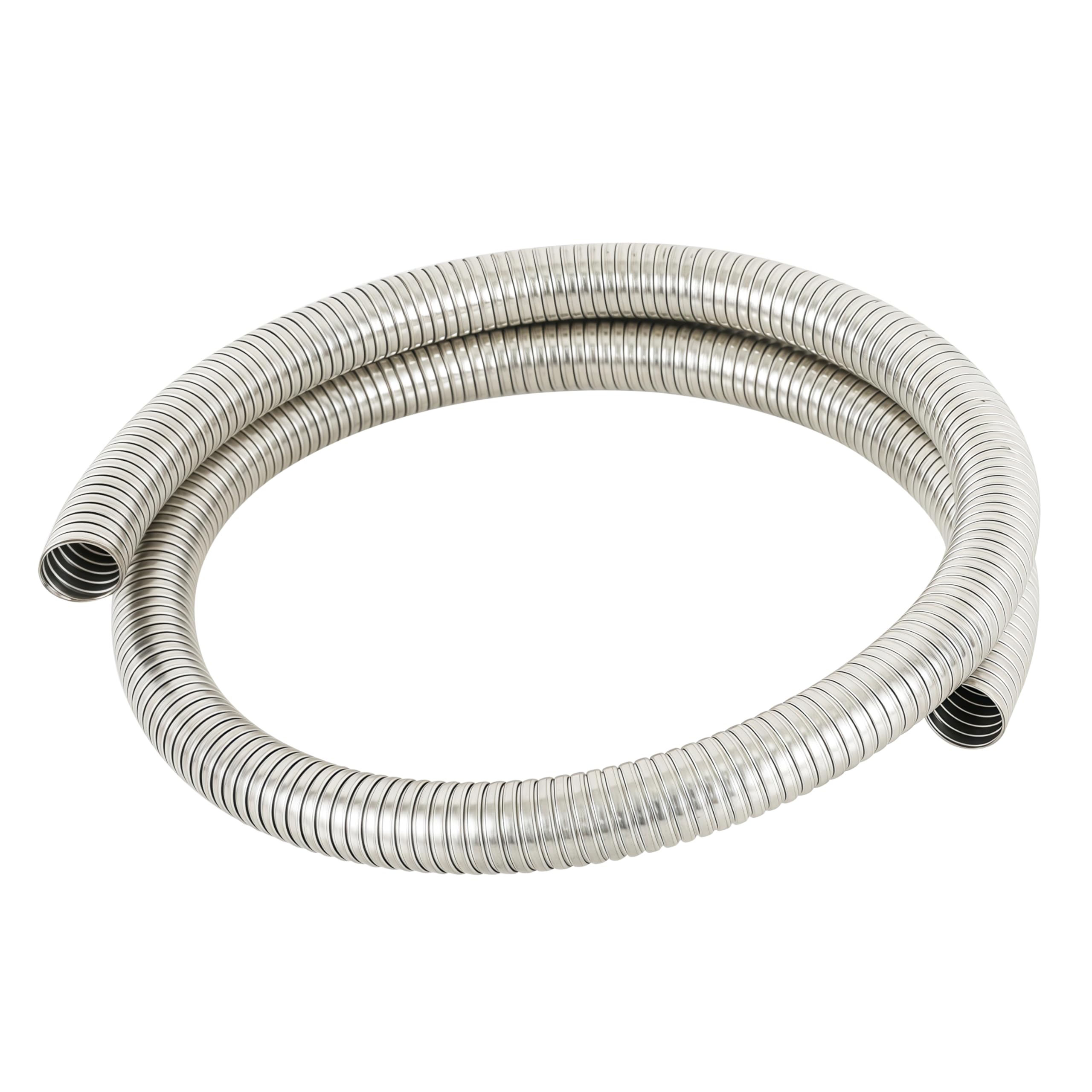
Nothing kills a good drive like a loud, rhythmic tapping sound under the car that gets worse the harder you press the gas. A flex pipe muffler stops that by connecting your exhaust manifold (the part that bolts to the engine) to the rest of the exhaust pipe with a flexible metal section that soaks up engine vibration. That small braided-steel tube between two rigid pipes is often the only thing standing between you and a full exhaust replacement.
I’m Min Islam — the founder and writer behind Trending Car. This guide is built by comparing the manufacturers’ published specifications and the patterns across verified customer reviews, so you get each pick’s real strengths and trade-offs instead of marketing spin.
Unlike a standard rigid pipe, the flex pipe muffler absorbs the natural twist and shake of the engine block. That prevents rigid joints and welds from snapping over time, so your whole exhaust system lasts longer with fewer roadside repairs.
Our Picks at a Glance

How To Choose The Best Flex Pipe Muffler
Buying a flex pipe sounds simple until you realize there are a dozen inner diameters, three lengths, and two completely different build styles all labeled “universal.” You need the right combination of size, material, and braid type to match your vehicle’s exhaust without fighting a fit that is too tight or too loose.
Inner Diameter Is Everything
The single most common mistake is guessing the pipe ID (inner diameter) instead of measuring the OD (outside diameter) of your existing exhaust tube with a caliper (a precision measuring tool). A pipe that is even 1/4 inch off will not clamp properly and will leak exhaust gas right out of the joint — and once that hot gas escapes, it eats through nearby hoses and wiring fast.
Braid Type: Single Roll vs Double Braid
A single-roll band pipe like the TORDXICS or SKYMIRO models uses one continuous stainless steel ribbon wrapped into a tube. It is more flexible and better for gentle curves, but it can collapse under extreme engine torque (twisting force). Double-braid pipes, like the ZEONHAK packs, use two woven layers for higher burst resistance and vibration isolation, but they are noticeably stiffer and harder to bend around an offset joint.
Material Choice
T304 stainless steel resists corrosion far better than galvanized or aluminized steel, especially in climates with road salt or high humidity. The Walker 43381 uses galvanized steel, which is heavy-duty and affordable but will eventually show surface rust, while the SKYMIRO and TORDXICS pipes use T304 stainless for longer undercar life.
Length and Application
Short 6-inch to 10-inch sections are meant for vibration isolation between two close rigid joints — they bridge a small gap in the exhaust line. Long 72-inch sections let you route exhaust from a stationary engine (like a generator) completely out of a room or shed. Measure the straight-line distance between the two connection points before picking a length.
Quick Comparison
| Model | Best For | Inner Diameter | Length | Material | Amazon |
|---|---|---|---|---|---|
| TORDXICS 1″ x 72″★ Best Overall | Small engine generator venting | 1 in | 72 in | T304 stainless steel | Amazon |
| Walker Heavy Duty 43381Top Performer | Heavy truck exhaust | 4 in | 36 in | Galvanized alloy steel | Amazon |
| SKYMIRO 1.5″ x 72″ | Generator exhaust routing | 1.5 in | 72 in | T304 stainless steel | Amazon |
| TORDXICS 4″ x 16.5″ | Water heater & catback systems | 4 in | 16.5 in | T304 stainless steel | Amazon |
| ZEONHAK 4-Pack 2″ x 10″ | Multiple small repairs | 2 in | 10 in | Stainless steel | Amazon |
| ZEONHAK 2-Pack 2.5″ x 10″ | Light-duty vibration dampening | 2.5 in | 10 in | Stainless steel | Amazon |
In‑Depth Reviews
1. TORDXICS 1″ x 72″ Universal T304 Stainless Steel Exhaust Flex Pipe
Our pick — over 4.5★ from 100+ verified ratings; the strongest balance of quality and price.
A 6-foot T304 roll with a 1-inch ID — the narrowest pipe here, built for small engines and generator venting.
The TORDXICS 1-inch pipe is a slim, 72-inch-long section in T304 stainless steel that is purpose-built for small engines — think portable generators, lawn mower exhausts, and tiny diesel motors. At 1 inch ID, it is the narrowest pipe in this lineup, which makes it a direct competitor to the 1.5-inch SKYMIRO. Owners mention it works great for venting generator exhaust outside: one owner said it was a “perfect fit on our muffler for our Odin diesel generator” and praised the fact that it “routes exhaust away from our area.” Another reviewer used it to keep the CO safety system on a Generac generator from shutting down by running the pipe out of the shed.
The single-roll band construction is the same design as the larger TORDXICS pipes, which gives this more flexibility than a double-braid section. But because the ID is only 1 inch, there is a tightness issue: one customer observed “this flex pipe would not slide over a 1.5″ OD exhaust flange pipe” and had to use an exhaust pipe expander to make it fit. That is the critical measuring step — if your exhaust port OD is 1.5 inches, the 1-inch ID will not slide over it without modification.
With a 4.6-star average from 132 reviews, this is among the most consistently well-reviewed pipes here. The T304 stainless steel provides better rust resistance than the ZEONHAK models, and the 30-day manufacturer warranty gives you a small safety net that the ZEONHAK packs lack. Just be sure to measure your exhaust port OD with a caliper before ordering — a 1-inch ID fits a port that is roughly 1 inch OD or slightly smaller.
Bottom line on size: At 72 inches, it matches the SKYMIRO for length but has a 1-inch ID that is 33% narrower than SKYMIRO’s 1.5-inch — so triple-check your generator’s exhaust port before ordering.
Ideal for: anyone who needs a narrow, long T304 stainless flex pipe for a small generator, weed-whacker, or portable engine exhaust vent.
Not for: car repairs (the 1-inch ID is too small for any standard vehicle exhaust) or anyone whose exhaust port measures over 1 inch OD.
2. Walker Heavy Duty 43381 Universal Exhaust Flex Pipe 4″ Inlet 4″ Outlet
The work truck pick — a 4-inch ID and 36-inch length that bends by hand and clamps tight on big diesel exhausts.
If you are patching an exhaust on a work truck, the Walker 43381 is the pipe professionals reach for. It has a 4-inch inner diameter that matches large commercial exhaust ports, and its 36-inch length gives you enough material to cut a custom section without buying multiple pipes. Its galvanized alloy steel construction resists surface rust while staying flexible enough to bend by hand; buyers report it “bends really easy which makes it easy to place where needed.”
Walker uses flex-lock construction — interlocking braided metal layers that dampen engine vibration. One owner replaced a rusted-through section on an FL70 truck and said “all I had to do was cut to fit and secure in place” and it sealed the leak completely. The galvanized coating does mean it will eventually develop some corrosion over years of salt-road exposure, but for the weight and durability, it is the best option for medium and heavy-duty vehicles.
Before you buy, check the Amazon fitment bar by entering your exact year, make, and model — Walker lists compatibility back to 1990-1997 Chevrolet C60 Kodiak, so you want to be sure the 4-inch ID lines up with your existing exhaust.
Why the Walker wins
- 4-inch diameter fits large truck exhausts that smaller pipes cannot reach
- 36-inch length lets you cut multiple sections from one piece
- Flex-lock design soaks up engine vibration better than basic braided hose
One trade-off
- Galvanized steel will show surface rust over time unlike T304 stainless
- No warranty from the manufacturer if it fails
Reach for this if: you are working on a pickup, dump truck, or bus that needs a rugged 4-inch flex section that can be cut to any length.
Consider something else if: you need deep corrosion resistance (choose a T304 stainless pipe instead) or a smaller diameter for a car exhaust.
3. SKYMIRO 1.5″ x 72″ 304 Stainless Steel Exhaust Flex Pipe
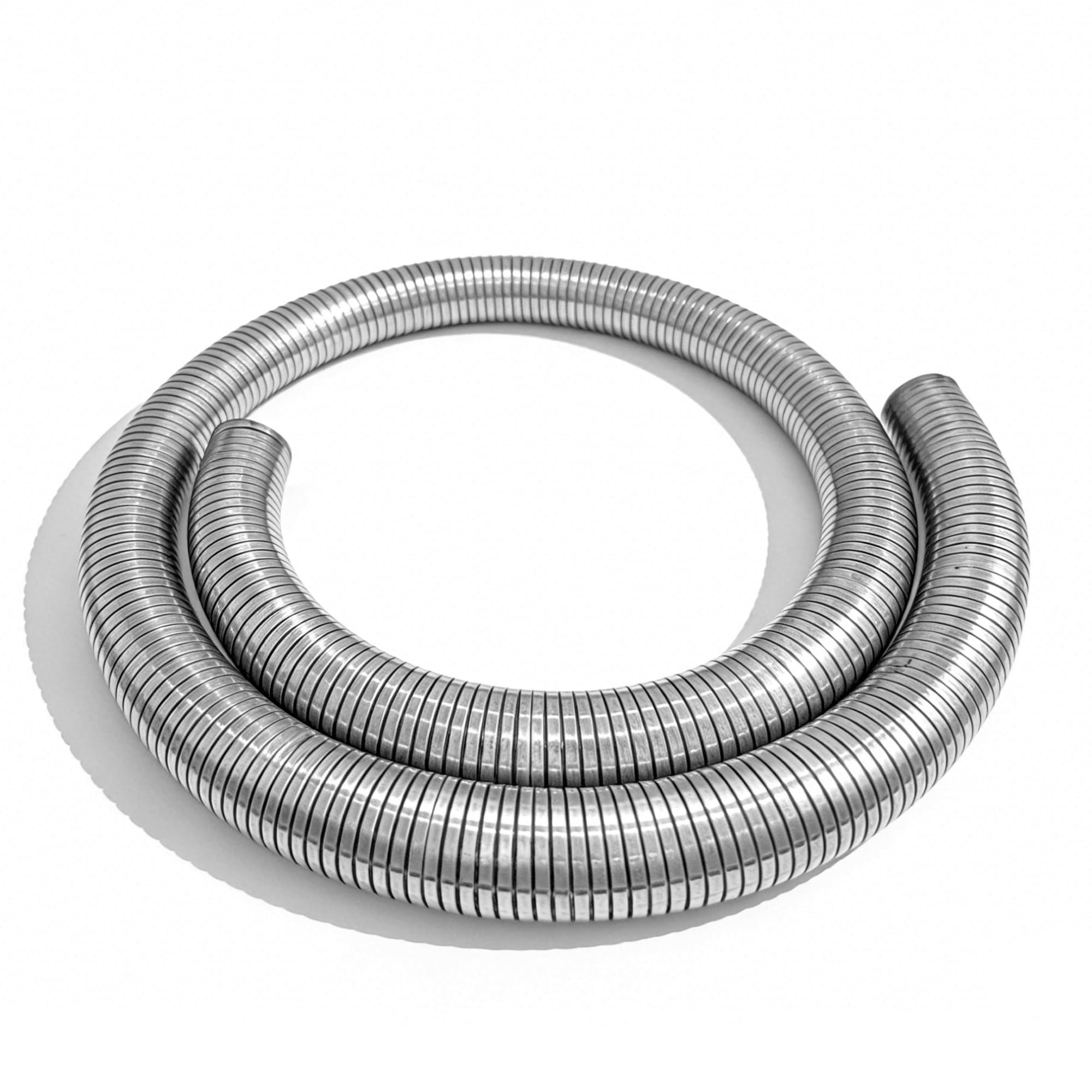
Six feet of T304 stainless that routes diesel exhaust safely out of a shed so carbon monoxide stays out of the building.
The SKYMIRO is not your typical under-car flex pipe — at 72 inches long with a 1.5-inch inner diameter and pre-cut burr-free ends, it is designed to vent exhaust gas from a generator or small engine to the outdoors. One owner reports it was a “perfect fit on our muffler for our Odin diesel generator” and noted the diesel exhaust routing was exactly what they needed to stay safe. The T304 stainless construction resists corrosion far longer than the galvanized steel of the Walker pipe — a meaningful difference when the pipe lives in a damp garage or sits exposed to rain.
SKYMIRO includes flex-lock technology, which uses interlocking rolled seams so the pipe dampens vibration instead of transferring it to the connection clamps. At 72 inches, it is roughly 4.4 times longer than the TORDXICS 4-inch x 16.5-inch pipe, giving you a massive range for routing exhaust around corners and through walls. One buyer wished it was “3 times as long” for an even longer run, but for most generator sheds and repair shops, 6 feet is plenty to get fumes out of breathing space.
Do note that this pipe has a 1.5-inch ID, which is small compared to the 4-inch Walker pipe — so if you are connecting to a large diesel generator muffler, double-check that your exhaust port is 1.5 inches or smaller. The pipe is also less flexible than a double-braid design, so it handles gentle curves but not tight 90-degree bends.
The single best use case: If you park a generator in a shed or garage and want to run the exhaust outside without spending big money on a permanent venting kit, the SKYMIRO is the most cost-effective stainless-steel option at 72 inches.
Who this fits: Anyone with a portable generator, water heater, or small diesel engine who needs a long, corrosion-resistant flex pipe to route exhaust away from occupied areas.
Who should skip: If you are repairing a car exhaust with an existing 3-inch or 4-inch pipe, the 1.5-inch ID is way too small — step up to the 4-inch TORDXICS or Walker pipe.
4. TORDXICS 4″ ID x 16.5″ Length T304 Stainless Exhaust Flex Pipe with U-Bolt Clamps
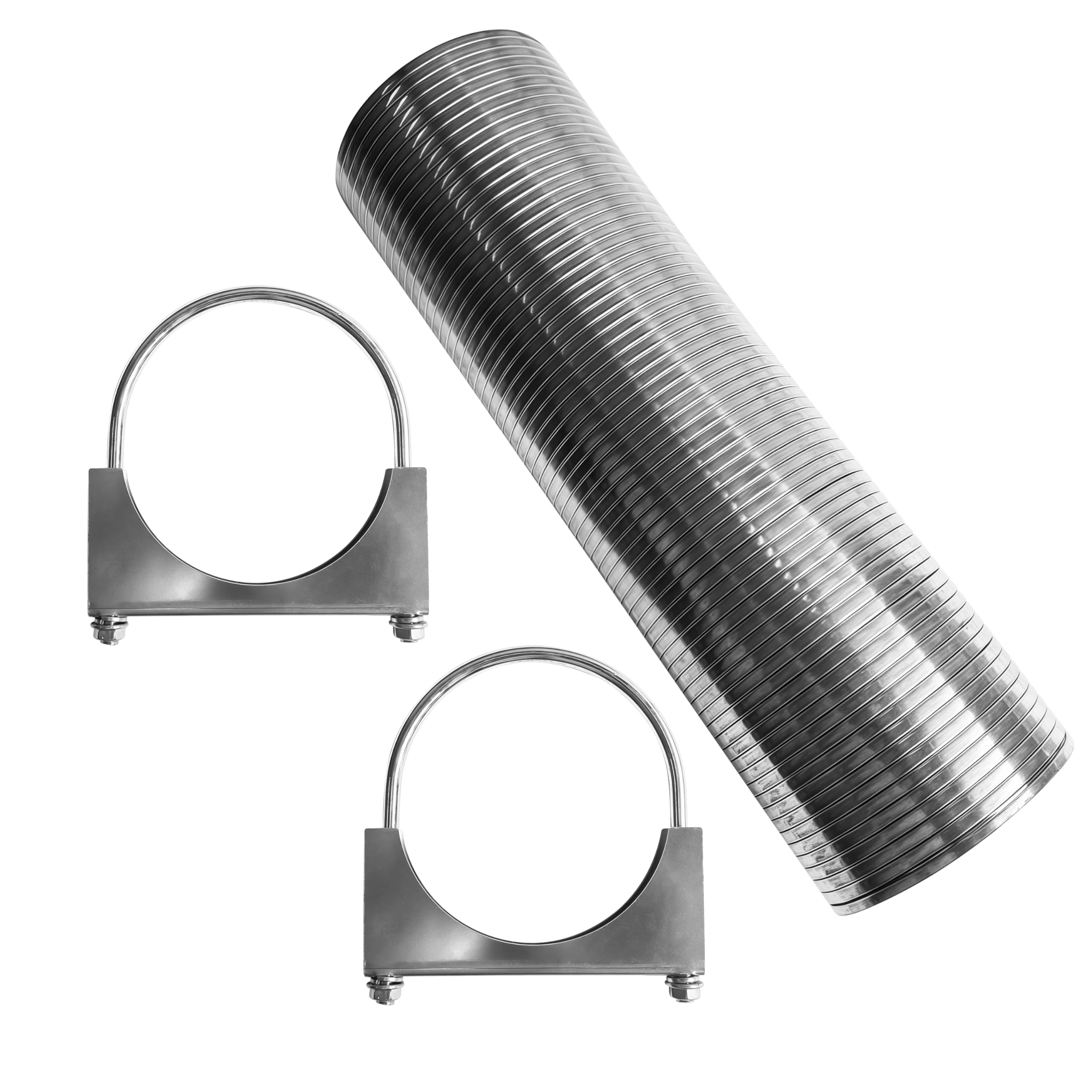
T304 stainless and two U-bolt clamps included — a corrosion-resistant 4-inch fix for catback and water-heater exhausts.
The TORDXICS 4-inch pipe delivers the same 4-inch inner diameter as the Walker but in T304 stainless steel for better corrosion resistance, and it comes with two metal steel U-bolt clamps so you do not need a separate trip to the hardware store. At 16.5 inches long, it is a medium-length section best for bridging a damaged section of exhaust on a car, truck, or even a home instant water heater. One reviewer noted it “worked very well, and fit perfectly to extend the exhaust of my instant water heater” and added that it was “hard to saw through but it can be done,” which tells you the T304 steel is genuinely thick and durable.
Because this uses single-roll band construction, it is more flexible than a double-braid pipe — so you can gently curve it to follow an existing exhaust line without fighting the material. However, a few buyers noted it is “a little less flexible than I expected” and that it “slowly bent the support trying to go back to straight,” meaning you should secure it with hangers if you bend it much more than 15 degrees. The 4-inch ID matches the Walker, so if you are deciding between the two, this one wins on rust resistance, while the Walker wins on length at 36 inches.
The included U-bolt clamps are a nice bonus, but one buyer mentioned the clamps cause some leakage unless you pair the pipe with high-temp epoxy or weld it permanently — so consider this a clamp-and-seal or weld-only piece depending on how permanent you want the job.
What makes it a value
- T304 stainless lasts far longer against rust than galvanized Walker pipe
- Two U-bolt clamps included — no extra parts needed
- 4-inch ID fits most large exhaust outlets for cars and water heaters
What to watch for
- Shorter 16.5-inch length means you cannot cut multiple sections
- Not flexible enough for tight 90-degree turns in the exhaust path
Pick this if: you are replacing a small rusted section on a 4-inch exhaust and want stainless steel that includes the mounting hardware.
skip it if: you need a long 36-inch run (go with the Walker) or a smaller diameter for a car engine.
5. ZEONHAK 4-Pack 2″ x 10″ Stainless Steel Heavy Duty Exhaust Flex Pipe

Four pre-cut 2-inch double-braid pipes — one box covers multiple exhaust repairs without extra trips.
When you have more than one vehicle or machine that needs a flex-section replacement, buying a four-pack of ZEONHAK pipes saves both money and a second trip to the parts store. Each pipe has a 2-inch inner diameter and a 10-inch overall length, and they use a double-braid construction that gives them extra burst resistance compared to the single-roll TORDXICS or SKYMIRO pipes. The double braid makes these stiffer, which means they are designed for vibration isolation between two rigid pipes that are already aligned — not for bending around an offset joint.
Buyers give the product a 4.4-star rating from 70 reviews, with many calling it a “great price” and saying it pays to have extra pipes on the shelf. However, one owner reported a customer-service issue: “I ordered it lot flex pipe from this company and two of them were not good and I write into the company for replacement and never received it.” That experience is not universal — most reviews are positive — but it is worth knowing that the manufacturer’s warranty is not listed, so you are relying on Amazon’s return window if a pipe arrives damaged.
ZEONHAK says these pipes are “suitable for the exhaust system of automobiles, trucks, buses,” and at 2 inches ID, they work for smaller engine exhausts. If you compare them to the 2.5-inch ZEONHAK two-pack, these have a 2-inch ID (25% smaller than the 2.5-inch version), so measure your existing exhaust pipe before ordering.
The value play: Four 2-inch double-braid pipes for roughly the same price as a single premium pipe — ideal if you are a hobbyist with multiple small engines or want spares on hand.
Buy this when: you need several 2-inch flex sections at once and do not mind the stiff double-braid construction that stays straight.
Look elsewhere if: you need a longer single 72-inch run (get the SKYMIRO) or a 2.5-inch diameter (grab the ZEONHAK two-pack).
6. ZEONHAK 2-Pack 2.5″ x 10″ Stainless Steel Heavy Duty Exhaust Flex Pipe
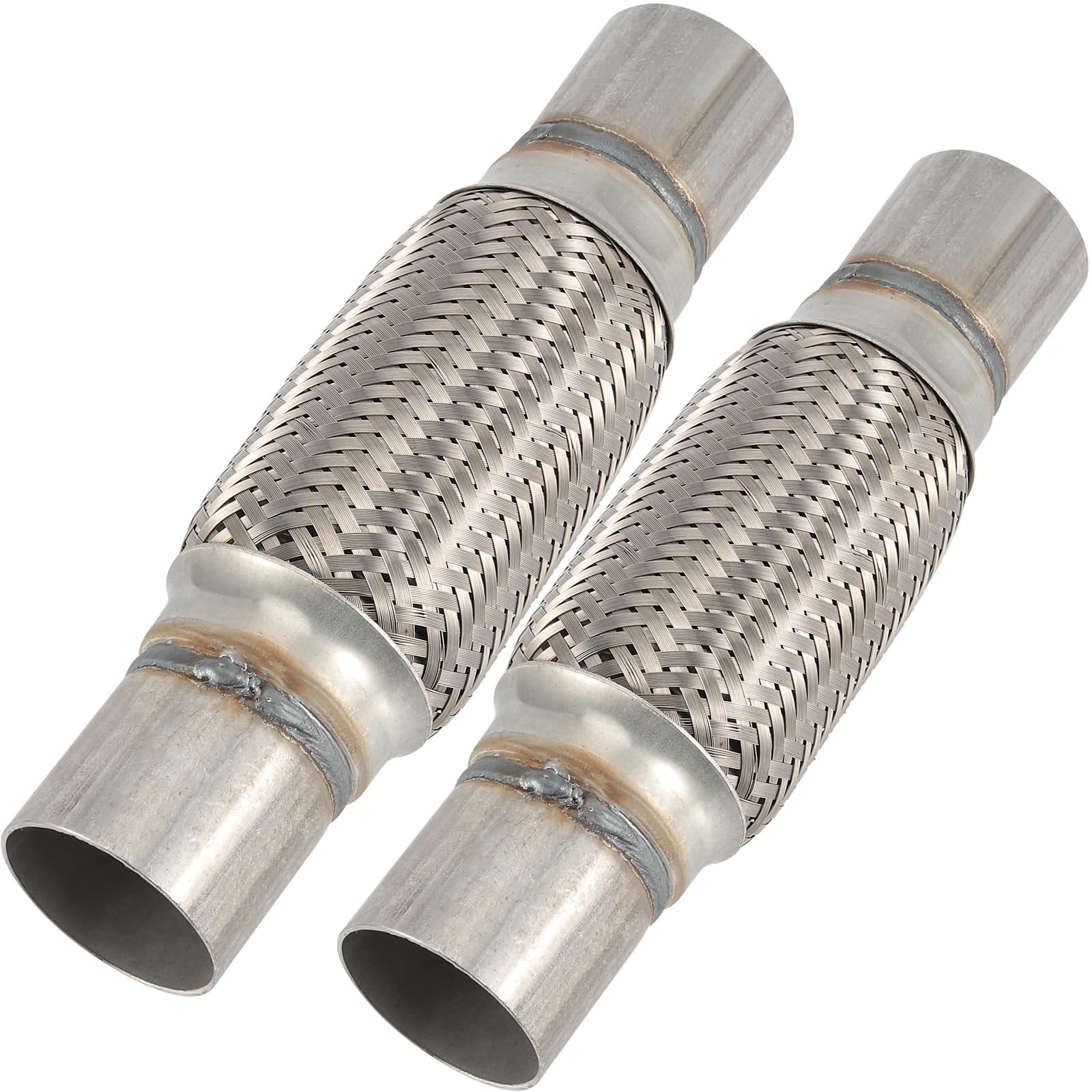
Two 2.5-inch double-braid pipes that isolate vibration in straight lines but cannot bend for offset joints.
If your exhaust system needs a 2.5-inch inner diameter section, the ZEONHAK two-pack gives you two double-braid stainless steel pipes for a single-repair price. The double-braid weave wraps the tube in two layers of steel, making it more resistant to bursting under high engine backpressure than a single-roll pipe. However, that same extra weave makes these pipes noticeably stiff — one reviewer who bought them noted they were “too stiff to bend for offset pipes; designed for vibration isolation, not directional change.” So these are the right choice when your exhaust pipes already line up straight and you just need a vibration-dampening gap filler.
At 10 inches overall length and 2.5 inches ID, they are about 25% wider than the 2-inch ZEONHAK four-pack, so measure your existing pipe OD carefully. The 2.5-inch size is common on many mid-size car and truck exhausts, which makes these a decent universal backup. Buyers gave them a 4.0-star average from 26 reviews, with one five-star review calling them an “affordable solution” they would order again. The product page says the pipes are for “automobiles, trucks, buses,” but given the limited flexibility, expect to use straight clamps or welds without trying to bend the pipe significantly.
ZEONHAK lists no manufacturer warranty, so like the four-pack, your safety net is Amazon’s return policy. If the fit is slightly off, you cannot force a curve — you will have to expand the connecting pipe or buy a different size.
Strong points
- Double-braid construction resists bursting better than single-roll
- Two pipes in one pack let you keep a spare on the shelf
- 2.5-inch ID matches many standard car and truck exhaust sizes
The stiff reality
- Nearly impossible to bend for offset or misaligned exhaust pipes
- No manufacturer warranty if a pipe fails early
Grab these for: a direct straight-line repair where the two rigid pipe ends already align and you just need a vibration-dampening section.
Pass on these if: your exhaust pipes are offset by even a few degrees (go with the SKYMIRO single-roll pipe instead).
Understanding the Specs
Inner Diameter (ID)
The inner diameter is the hole measurement through which exhaust gas flows — it is the single most important spec because it determines whether the pipe fits over your existing exhaust tube. If you have a 2-inch exhaust pipe, a 2.5-inch ID flex pipe will be too loose and leak gas. Measure the outer diameter of your existing pipe with a caliper, then pick an ID that matches or is slightly larger (no more than 1/8 inch oversize).
Single-Roll vs Double-Braid Construction
A single-roll band pipe is a single continuous strip of stainless steel rolled into a tube shape — it is more flexible and easier to bend around gentle curves. A double-braid pipe has two separate woven layers, which makes it stiffer but more resistant to bursting under high engine pressure. For straight vibration isolation, double-braid wins. For offset routing, single-roll wins.
Material: T304 Stainless vs Galvanized vs Aluminized
T304 stainless steel is the most corrosion-resistant option for a flex pipe — it does not flake or rust even in wet or salty conditions. Galvanized steel has a zinc coating that resists corrosion for a few years but eventually develops surface rust. Aluminized steel is the cheapest and lightest, but it burns off faster at high exhaust temperatures. If your car sees rain or road salt, pay extra for T304.
Length and Application Fit
Short flex pipes (6 to 16 inches) are designed to bridge a gap between two rigid sections of exhaust — they sit between the catalytic converter and muffler, for example. Long flex pipes (72 inches) are used to route exhaust from a stationary engine to the outdoors. If you are using a short pipe, the length must be exact to prevent stress on the welds. If you are using a long pipe, the extra length gives you slack to route around obstacles.
FAQ
What is a flex pipe muffler and what does it actually do?
How do I measure the correct inner diameter for my flex pipe?
Can a flex pipe be bent for an offset exhaust pipe?
Will a 4-pack of 2-inch flex pipes fit my car?
How long does a stainless steel flex pipe last under a car?
Can I use a flex pipe on a generator or water heater?
Do I need to weld a flex pipe or can I use clamps?
Why does my flex pipe need to be flexible if the rest of the exhaust is rigid?
What size flex pipe do I need for a 1996 Chevy C60 Kodiak?
Final Thoughts: The Verdict
If you want one dependable pick, the flex pipe muffler winner is the SKYMIRO 1.5″ x 72″ because it pairs T304 stainless steel corrosion resistance with the longest 72-inch run and flex-lock vibration dampening — covering generator venting, small engine repairs, and light car exhaust jobs in one package. If you want the heavy-duty 4-inch diameter for a truck, grab the Walker 43381. And for multiple small-diameter repairs on a budget, the ZEONHAK 4-pack gives you four double-braid pipes for the price of one premium pipe.
How We Picked
We do not accept paid placement. Every pick is matched to a real buyer and a real use-case; we do not hands-on test units.
Sources & Methodology
Specifications: manufacturer listings and product documentation. Review insights: verified customer reviews, as of July 2026. Pricing: not shown on this page (it changes often); check the current price via the retailer link.
As an Amazon Associate, Trending Car earns from qualifying purchases. This does not affect which products we feature.