
Our readers keep the lights on and my garage snacks stocked. As an Amazon Associate, I earn from qualifying purchases.
Specs are compiled from manufacturer listings and verified buyer reviews and can change over time — please confirm the key details on the product page before buying.
That first rock chip on a fresh paint job feels like a gut punch. A clear bra is the answer — a nearly invisible layer of tough plastic that takes the beating so your paint does not have to. This guide walks through the real specs (thickness, material, and size) that decide whether a film actually protects or just peels off in a few months, so you can pick the right roll for your car and your skill level.
I’m Min Islam — the founder and writer behind Trending Car. This guide is built by comparing the manufacturers’ published specifications and the patterns across verified customer reviews, so you get each pick’s real strengths and trade-offs instead of marketing spin.
Whether you are wrapping a daily driver or a weekend project car, these are the top-rated rolls of clear wrap for car paint that balance real protection with a finish that stays clear and glossy.
Our Picks at a Glance

How To Choose The Best Clear Wrap For Car Paint
Picking the right roll of clear paint protection film depends on three decisions: the material it is made from (TPU is the gold standard), the thickness (measured in mils — one thousandth of an inch), and the size that matches your project. Here’s what to look for.
The Material: TPU vs. Vinyl
The material is the biggest factor in how long the film lasts and how well it protects. Thermoplastic Polyurethane (TPU) films have a stretchy, self-healing quality — light scratches disappear when warmed by the sun or hot water. Vinyl-based films are cheaper but harder, less flexible, and many do not self-heal at all. TPU is the choice for a permanent or long-term wrap; vinyl is for short-term or budget projects.
Thickness and Protection
Thicker films stop bigger impacts, but they are harder to install on complex curves. A 6-mil to 8-mil film (a mil is one-thousandth of an inch) is standard for full hood and bumper protection. Films around 7.5 mils, like the Rockrose TPU option below, offer a good spot between solid defense and workability. Very thin films may stop swirl marks but fail against a real stone chip.
Size and Coverage
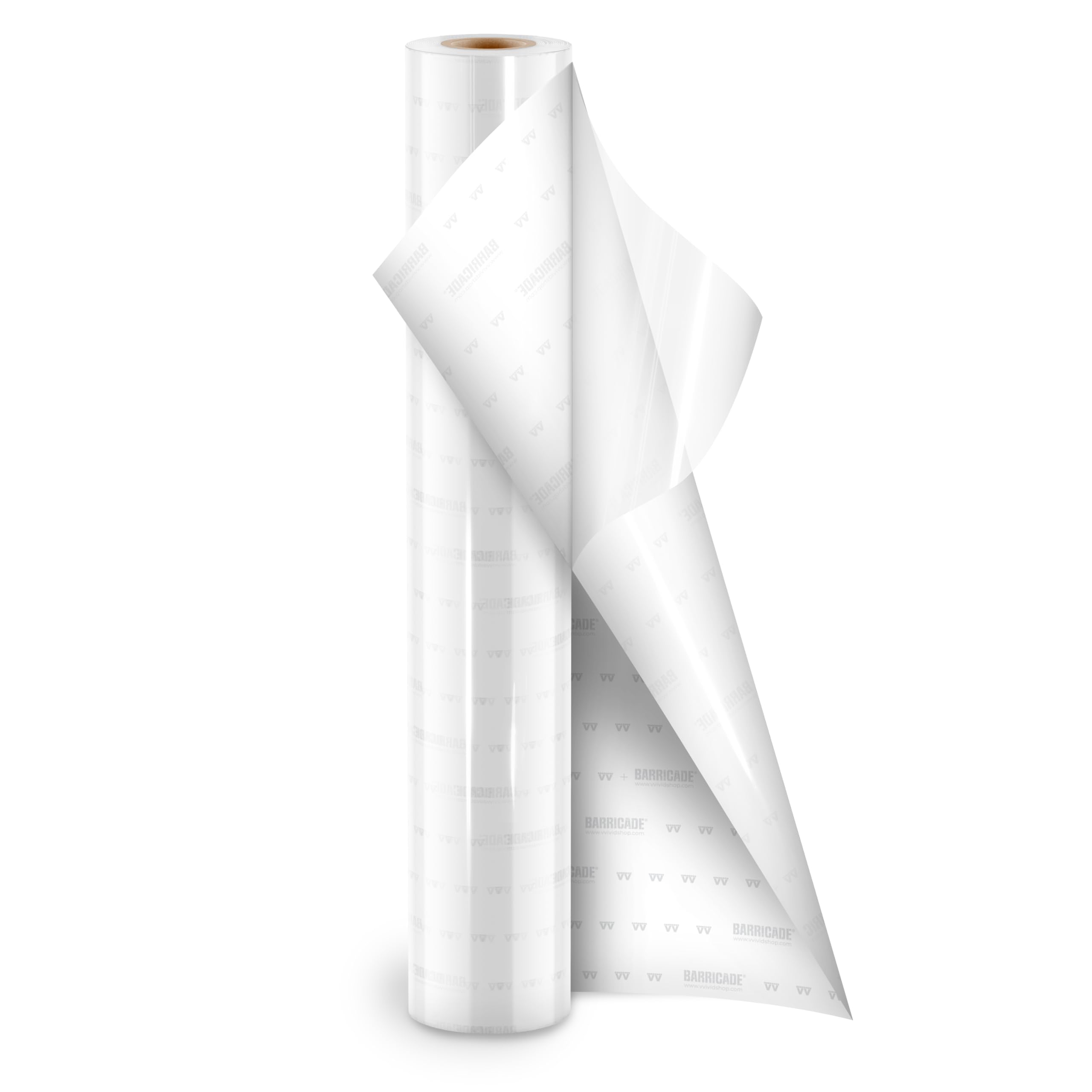
Rolls come in different widths and lengths. A 12-inch wide roll is good for small areas like mirrors and door edges. A 24-inch wide roll covers a hood or bumper with fewer seams. The VViViD Barricade, at a huge 720 inches by 59 inches, is designed to cover an entire vehicle. Measure your panels before buying to avoid running short.
Quick Comparison
| Model | Best For | Material | Thickness | Roll Size | Amazon |
|---|---|---|---|---|---|
| VViViD Barricade TPU★ Best Overall | Full-Vehicle Protection | TPU | — | 720″ x 59″ | Amazon |
| Rockrose Ultra Gloss TPUPremium Clarity | Premium Gloss Finish | TPU | 7.5 Mils | 24 IN x 50FT | Amazon |
| HOHOFILM PPF | Budget Full-Roll Wrap | TPH | 0.01 Inches | 60″ x 16ft | Amazon |
| 3M Clear Protection Film | Trusted Brand, Small Areas | Polyurethane | 6 mil | 12-by-96-inches | Amazon |
| ClearMask 24″ x 96″ | Wide Roll, Simple Install | Urethane (3M/Llumar) | 8 Mil | 24″ x 96″ | Amazon |
| VViViD Paint Protection Film | Entry-Level DIY Project | Vinyl | 7 mil | 120″ x 54″ | Amazon |
In‑Depth Reviews
1. VViViD Barricade Premium 8 Year Clear Gloss Paint Protection Film TPU (720″ x 59″)
Our pick — over 4★ from 600+ verified ratings; the strongest balance of quality and price.
A massive one-roll solution that covers your whole car in TPU armor.
This is the biggest roll on the list at a staggering 720 inches long by 59 inches wide — enough material to wrap an entire vehicle from bumper to bumper with fewer seams than using multiple smaller rolls. It uses Thermoplastic Polyurethane (TPU), which means the film self-heals: light scratches and swirl marks disappear when exposed to heat from the sun or warm water. The film also includes UV resistance to prevent paint fading, and it is virtually invisible once applied so your car’s factory color and finish show through unchanged.
Buyers report it is a thick product they guess to be about 8mm thick that will definitely protect against stone damage — one owner installed it on a 1984 Camaro Z28 pearl paint and said you can hardly see any lines or detect where the film is located. Another buyer mentioned patience is key for a first-time install, especially around tight bends, and a heat gun helps the material stretch around corners. The included UV resistance means it will not yellow over its 5 to 10-year expected lifespan.
One trade-off: this is a premium-tier investment that only makes sense if you plan to wrap a full car or a large SUV. For smaller projects like a hood or mirrors, a narrower roll like the 3M option below is simpler and cheaper. Also, the massive size requires a large clean workspace for installation.
Why It Earns the Top Spot
- TPU material with self-healing properties — light scratches vanish with heat
- Massive 720″ x 59″ roll covers an entire vehicle
- UV and chemical resistance protects against fading and road grit
- High transparency leaves your paint looking original
The Real Downsides
- Large roll is overkill for small jobs — you pay for coverage you won’t use
- Install requires patience, a clean space, and a heat gun for curves
Pick this if: you want maximum protection for your entire car with a single roll and are comfortable with a DIY install or hiring a pro.
skip it if: you only need to cover a hood, bumper, or mirrors — a smaller roll will save you money and hassle.
2. Rockrose Ultra Gloss TPU Clear PPF Film (24 in x 50FT)
A high-gloss TPU film that fights scratches and sheds water on its own.
At 7.5 mils thick (a mil is one-thousandth of an inch), this TPU film hits a solid middle ground between a thin, easy-to-apply sheet and the heavy-duty armor needed to block rock chips. It includes a hydrophobic coating — a surface treatment that makes water bead up and roll off — which helps keep dirt and grime from sticking, so your car stays cleaner longer between washes. The self-healing technology works the same way as premium films: heat from the sun or a heat gun makes light scratches and swirl marks vanish.
Owners mention that installation on a curved surface can be difficult because the adhesive is reported as weak and the amount of stretch (even with heat) is limited compared to some other brands — one reviewer switched to XPEL after struggling with this film on mirrors. Another owner who used it on a rearview mirror said “slip and tack is your best friend” and that the product is best handled by professionals. On the positive side, users say the gloss finish is excellent and the film is just as effective as the well-known PPF brands once applied to a flat surface.
The trade-off is that the weaker adhesive and limited stretch on complex curves make this a better choice for relatively flat panels, not deep compound curves.
What Stands Out
- Premium 7.5 mil TPU with anti-yellowing formulation for long-term clarity
- Hydrophobic coating repels water and dirt, making washing easier
- Self-healing scratches with heat
Watch Out For
- Weak adhesive compared to XPEL — difficult on curved surfaces
- Limited stretch makes compound curves a real challenge
- Best left to experienced installers for anything beyond flat panels
Reach for this if: you want professional-grade gloss and self-healing TPU on flatter panels and are comfortable with a tricky installation.
Look elsewhere if: you are a beginner or need to wrap deep curves like mirrors or bumpers — the adhesive may not hold.
3. HOHOFILM PPF Car Paint Protection Film (60″ x 16ft Roll)

A budget-friendly roll that covers big areas for a fraction of the premium price.
HOHOFILM uses TPH (Thermoplastic material, a blend that aims for a middle ground between TPU and vinyl) and comes in a generous 60-inch wide by 16-foot roll — wide enough to cover a hood or bumper in a single piece. It markets self-healing properties for micro-scratches and claims to protect against UV fading and yellowing. The manufacturer offers a 5-year warranty, which is longer than you might expect at this price tier.
Customers note mixed real-world results. Another reviewer installed it on a BMW hood and bumper and reported no yellowing or peeling after 1.5 years. However, one reviewer noted a total failure: the film cracked and decayed in six months, and they said it destroyed the paint underneath. Another reviewer noted that while the film is soft and easy to manipulate, it statically attracts dust during installation and has an orange peel finish, which means the surface texture is slightly bumpy rather than perfectly smooth.
This film is notably thinner than the TPU options above (0.01 inches). It stopped swirl marks and scratches for most users, but one buyer mentioned it failed to stop a stone chip. If you want defense against large road debris, the thicker 7.5-mil or 8-mil films are a better bet.
The Strong Points
- Large 60″ x 16ft roll offers excellent coverage for the price
- Self-healing works on light scratches with heat
- 5-year manufacturer warranty adds confidence
The Weak Points
- Mixed durability — some reviewers point out cracking within six months
- Orange peel surface texture (not a smooth gloss finish)
- Thinner film may not stop stone chips, only light scratches
Go for this if: you are on a budget and want a large roll for a DIY full-wrap project where you accept a shorter lifespan.
Think twice if: you need maximum rock-chip protection or a high-gloss, orange-peel-free finish — step up to a TPU film.
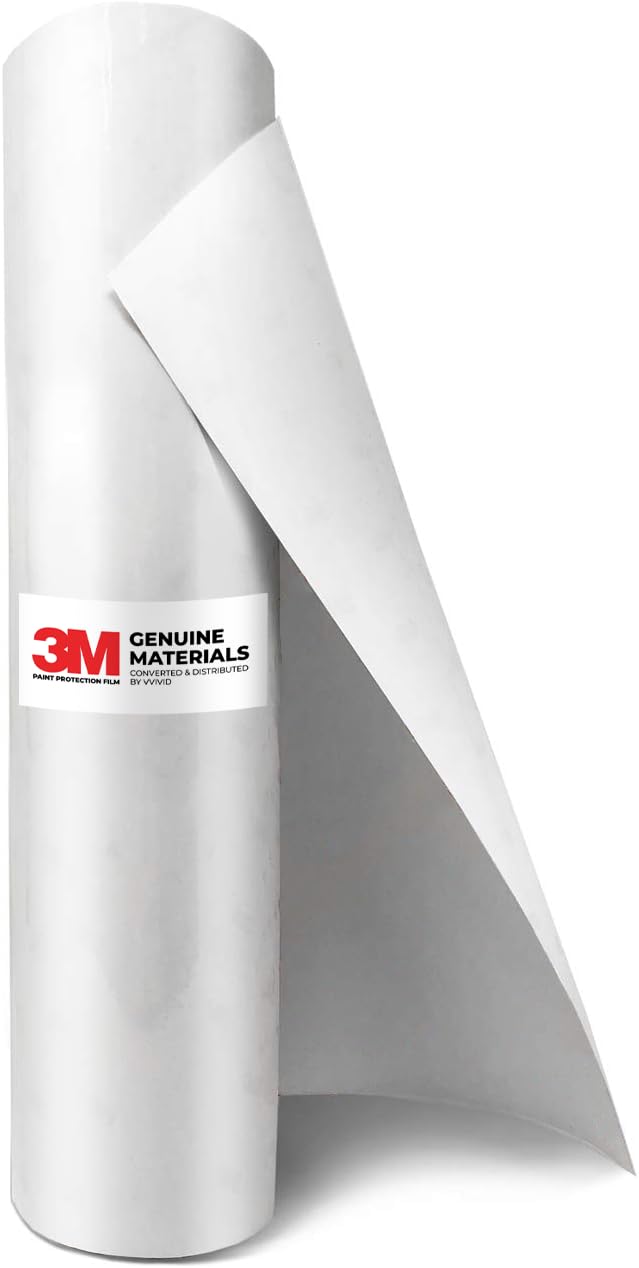
4. 3M Clear Paint Protection Bulk Film Roll (12-by-96-inches)
The 3M name you know in a simple 12-inch wide roll for small-area protection.
This 6-mil thick polyurethane film (a mil is one-thousandth of an inch) from 3M is made to reduce paint chips and road damage on high-impact areas. The 12-inch by 96-inch size is perfect for side mirrors, door edges, hood strips, or a motorcycle fuel tank. This is not a full-car wrap — it is a precision tool for covering the spots that take the worst abuse. Because it is 3M, you get a known formula that resists yellowing and peels cleanly if you ever need to remove it.
Shoppers say that the film stays invisible from a foot away and that one-year-old installations on a Lexus showed no yellowing at all. One owner reported it is an inexpensive alternative to precut film and that it protects a painted bumper from rock chips. Another owner noted that installation is doable for a novice with patience — the 12-inch width does cause seams on larger panels like a hood, and getting the film around mirrors is the hardest part. One customer observed using it on a standup paddleboard as a rail guard, showing the film’s versatility beyond cars.
Compared to the ClearMask roll below, the 3M roll is narrower (12 inches vs. 24 inches), meaning you will need more strips and create more seams on a large panel. But the 4.3-star rating from over 300 reviews gives it a strong reliability signal that the smaller ClearMask brand does not yet match.
Why It Works
- Trusted 3M brand with proven long-term clarity (no yellowing after 1 year)
- Good 6-mil thickness for stopping light stone chips
- Versatile — works on cars, boats, bikes, electronics, and paddleboards
Its Limits
- 12-inch width means seams on larger panels like a full hood
- Small 96-inch length covers only limited areas — buy multiple rolls for bigger jobs
Best for: covering small vulnerable areas like mirrors, door edges, or a motorcycle tank where 3M’s reputation for durability and clarity matters most.
Not for: wrapping a full hood or bumper — the narrow width creates too many seams.
5. ClearMask 24″ X 96″ Fabricated Paint Protection Film Roll (8 Mil)

An 8-mil urethane roll that brings professional width without the pro price.
This ClearMask roll is 24 inches wide and 96 inches long, made from 8-mil clear urethane film (a mil is one-thousandth of an inch) sourced from one of 3M, Eastman Llumar, or Suntek — the same factories that supply the big-name brands. The extra width (double that of the 3M roll above) lets you cover a hood or a bumper panel in a single strip, meaning fewer seams and a cleaner final look.
Buyers report it holds up like new after nearly a year. One reviewer used it on a 2024 Subaru Legacy covering edges, hood, trunk, mirrors, and handles, and reported the film is thicker than the 3M 1080 vinyl wrap (which is 3.5 mils). Another owner praised the product for custom installations on a refrigerator to prevent scratching and noted that using Johnson & Johnson baby soap in the slip solution makes the installation 100% bubble-free. However, one buyer gave it 1 star, saying the product is hard to work with and does not feel like an 8-mil thick film.
One downside is the overall length — at 96 inches (8 feet), this roll is relatively short. You might need two rolls to cover an entire sedan’s hood, whereas the Rockrose roll at 50 feet gives you a lot more film to work with. For small to mid-size jobs where width matters more than length, this is a solid option.
What You Get
- Wide 24-inch roll means fewer seams on hoods and bumpers
- 8-mil urethane film offers strong rock-chip protection
- Made in the same factories as 3M, Eastman, and Suntek
What Holds It Back
- Short 96-inch length may not cover a full hood in one go
- Some buyers question the 8-mil thickness claim — reports of difficult installation
Reach for this if: you need to cover a wide panel with fewer seams on a budget and trust the urethane factory source.
Think twice if: you need a very long continuous roll for a large car — you may run out of length before you finish.
6. VViViD Paint Protection Film Clear Vinyl Gloss Self Healing Wrap Guard (120 Inch x 54 Inch + Tools)

A budget vinyl roll that includes basic tools and covers a car’s side skirts.
This is VViViD’s entry-level clear film, made from a 7-mil thick vinyl (a mil is one-thousandth of an inch; vinyl is not TPU). It comes in a 120-inch by 54-inch roll and includes tools for installation. It is designed to be almost invisible over factory paint and protects against paint chips, scratches, and other physical damage. The manufacturer claims it is self-healing, though some owners mention mixed results on that feature.
Buyers have very different experiences. One owner installed it on the side skirt of an SRT8 Jeep to prevent paint chips and said the adhesion is very sticky and stretches well with heat. Another reviewer used it on resurfaced headlights and reported that after 5 days in a cool garage, scratches and crinkles self-healed with only minor bubbles remaining. However, another buyer gave it a 1-star review and said that after one year, the PPF cracked across the hood and removal took over 10 hours with a heat gun, leaving paint underneath stained and shadowed. A separate reviewer said the film is not actually self-healing and that scratches remain permanent.
Compared to the VViViD Barricade TPU film (which is its premium sibling), this vinyl version is cheaper and easier to cut but lacks the durability and true self-healing of TPU. The size is good for covering side panels, hoods, or headlights, but not a full vehicle. The mixed reviews (3.7 stars from 409 ratings) make this a gamble — it works well for some while failing badly for others.
Budget Highlights
- Low entry price and includes basic installation tools
- 7-mil vinyl works well for simple, flat areas like side skirts
- VViViD brand offers video tutorials and support
Budget Trade-offs
- Vinyl base is less durable than TPU — some customers note cracking after one year
- Self-healing claim is unreliable; one buyer says scratches remain permanent
- Removal can be a nightmare — 10+ hours and stained paint reported
Go for it if: you need a very cheap film for a temporary project or a low-abrasion area like a hood or headlight, and you are willing to accept the risk of difficult removal.
Definitely avoid if: you want long-term protection or need true self-healing — the TPU films above are a safer investment.
Understanding the Specs
TPU vs. Vinyl vs. TPH
The material of the film defines nearly everything about how it performs. TPU (Thermoplastic Polyurethane) is flexible, stretches under heat, and has self-healing properties — light scratches disappear when warmed. Vinyl is harder, cheaper, and most vinyl films do not self-heal. TPH (used in the HOHOFILM) sits somewhere in between, offering some self-healing at a lower cost than pure TPU, but with mixed durability. For a permanent wrap that stands up to road debris, TPU is the clear winner.
Thickness (Mil) and Protection
Film thickness is measured in mils (one thousandth of an inch, written as “mil”). A 6-mil film stops light scratches and small debris. An 8-mil film stops heavier rock chips. Thicker films (7.5 mil to 8 mil) provide better protection but are harder to install on curved surfaces. Very thick films (like the ~8mm guessed by a VViViD Barricade buyer, which is about 315 mils — a massive outlier) offer extreme protection but are nearly impossible to apply without professional tools. For most buyers, 6 to 8 mil is the useful range.
FAQ
Will a clear wrap protect my paint from rock chips?
Can I install clear paint protection film myself?
How long does a clear wrap last on a car?
What is “self-healing” in a paint protection film?
What is the difference between TPU and TPH film?
Will clear wrap turn yellow over time?
How do I clean and maintain a clear wrapped car?
Can I apply clear film over existing paint that is not perfect?
Does a clear wrap affect the car’s color or gloss?
Is 8 mil thickness better than 6 mil for paint protection?
Final Thoughts: The Verdict
For the majority of shoppers, the clear wrap for car winner is the VViViD Barricade TPU because its massive size covers an entire car in one go with a proven self-healing material and UV resistance — it is the closest you get to a complete armor kit. If you want the glossiest finish and a manageable 50-foot roll, grab the Rockrose Ultra Gloss TPU. And for a reliable small-area fix that guarantees no yellowing, the 3M Clear Film remains the safest bet for daily drivers and weekend projects alike.
How We Picked
We do not accept paid placement. Every pick is matched to a real buyer and a real use-case; we do not hands-on test units.
Sources & Methodology
Specifications: manufacturer listings and product documentation. Review insights: verified customer reviews, as of July 2026. Pricing: not shown on this page (it changes often); check the current price via the retailer link.
As an Amazon Associate, Trending Car earns from qualifying purchases. This does not affect which products we feature.