
Our readers keep the lights on and my garage snacks stocked. As an Amazon Associate, I earn from qualifying purchases.
Specs are compiled from manufacturer listings and verified buyer reviews and can change over time — please confirm the key details on the product page before buying.
You smell gas every time you drive, or you spot a drip under the hood. A leaking or rusted fuel line leaves you stranded or facing a costly tow. The right 5/16 fuel line repair kit delivers a permanent fix; the wrong one causes mismatched fittings, split tubing, and a wasted trip to the parts store. This guide cuts through part-number confusion to help you grab a kit that seals the system on the first try.
I’m Min Islam — the founder and writer behind Trending Car. This guide is built by comparing the manufacturers’ published specifications and the patterns across verified customer reviews, so you get each pick’s real strengths and trade-offs instead of marketing spin.
Whether you are patching a rusted section on a 2000 GMC Sierra or replacing the full run from tank to engine, these picks cover nylon tubing, steel compression fittings, and quick-disconnect connectors you need for a reliable seal — the 5/16 fuel line repair kit that actually fits your vehicle.
Our Picks at a Glance

How To Choose The Best 5/16 Fuel Line Repair Kit
A 5/16 fuel line repair kit is not one-size-fits-all. The tubing size (5/16-inch outside diameter) is standard, but the inside diameter of the nylon hose, the type of fittings, and the included connectors vary widely between kits. Picking the wrong kit means leaks or parts that do not mate with your vehicle’s factory line.
Check the Tube’s Inside Diameter (ID) Before You Cut
The outside diameter of the nylon tubing in these kits is 5/16-inch (roughly 8 mm), but the inside diameter can vary. One reviewer found a tube with a 6.6 mm ID that did not fit the 8 mm ID required for the supplied quick-connect fittings. Always verify the ID matches your connectors — a tube that is too narrow will not seal and restricts fuel flow.
Look for the Nylon-to-Steel Compression Union
Many kits include compression unions, but some provide a steel-to-steel union only, which does not grip nylon tubing properly. A nylon-to-steel compression union has a special insert or sleeve that seals against the nylon without crushing it. If the kit description does not explicitly say “nylon to steel,” you may need to buy that part separately, leaving you with a cut line you cannot finish.
Count the Connectors and Know Your Vehicle’s Fittings
A kit that comes with 23 pieces versus a kit with just 1 piece can mean the difference between a complete repair and a parts run. Look for straight and 90-degree quick disconnects, GM-style fittings with O-ring flare, and hose ends that match your fuel filter threads (common M16x1.5). Buyers on a 2002 Dodge Ram 1500 and a 2000 GMC Sierra 1500 both reported success when the kit included the right combination of connectors.
Quick Comparison
| Model | Best For | Tube Length | Outside Diameter | Unit Count | Amazon |
|---|---|---|---|---|---|
| The Stop Shop★ Best Overall | Full Restoration | 25 Feet | 8 mm | 1.0 Count | Amazon |
| MuHizeValue Pick | Value & High Part Count | 25 Feet | 0.31 in | 23.0 Count | Amazon |
| MuRealy | Budget-Friendly | 25 Feet | 0.31 in | 1.0 Count | Amazon |
| Mupera | Quality Build | 25 Feet | 7.94 mm | 1.0 Count | Amazon |
| RJSPHH | Reliable All-in-One | 25 Feet | 0.31 in | 1.0 Count | Amazon |
In-Depth Reviews
1. The Stop Shop Nylon or Steel Fuel Line Replacement Kit
Our pick — over 4★ from 350+ verified ratings; the strongest balance of quality and price.
This kit is built for a full tank-to-engine run, not just a quick splice.
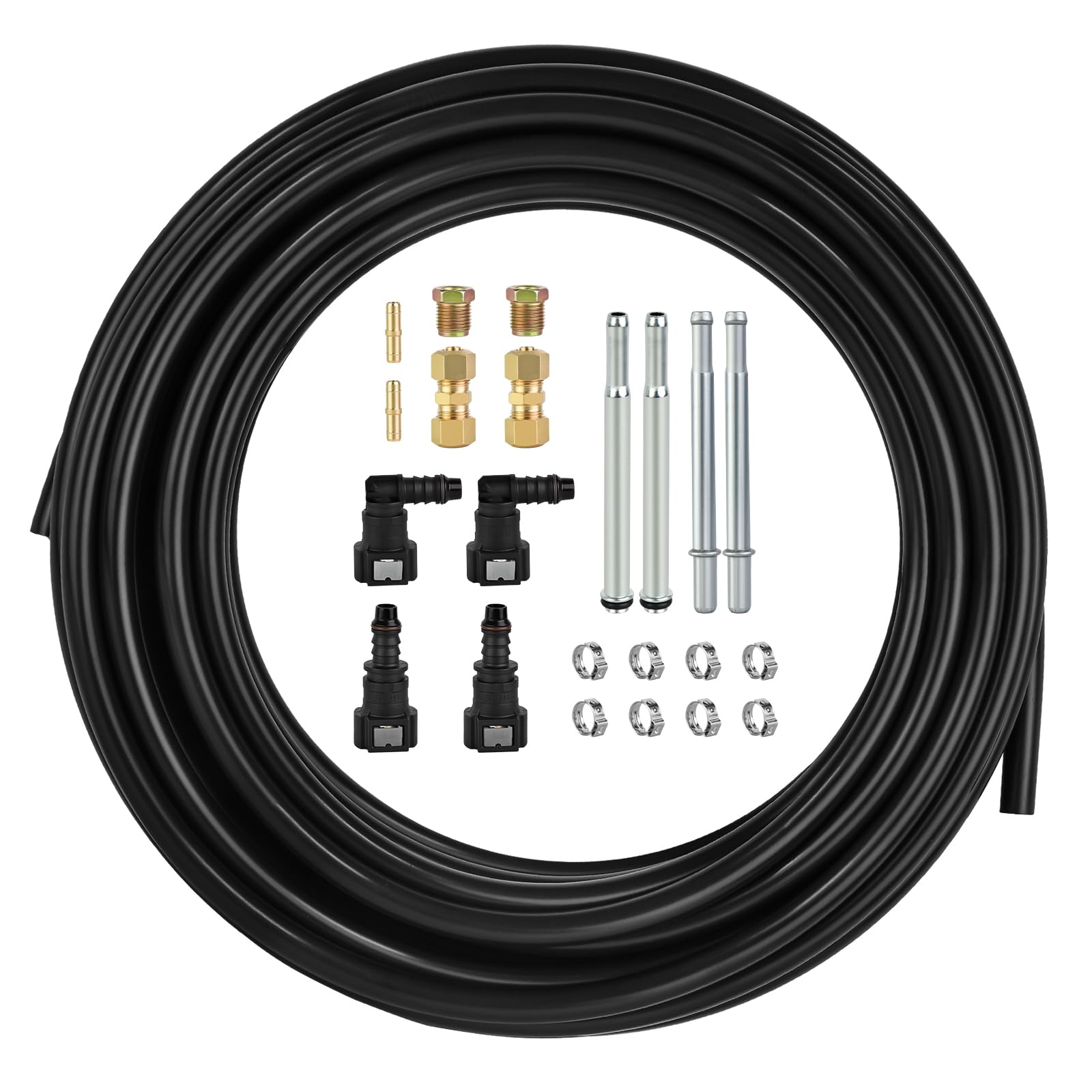
The Stop Shop kit is the most complete package for a full fuel line restoration. It includes 25 feet of 8 mm O.D. nylon tubing, two straight and two 90-degree female quick-disconnect fittings that mate to 5/16-inch steel line, plus compression unions and adapters for GM male fuel applications — so you get a leak-free seal at the fuel filter without extra trips. Unlike kits that are just tubing and a few clamps, this one comes with the O-ring flare fittings you need for a proper seal. One buyer reports it “replaced steel main fuel line on 2000 GMC Sierra 1500” with all the components needed for the engine-to-tank run. The tube has a nominal wall thickness of 1 millimeter, so it is stiffer and holds its shape better than thinner-wall alternatives like the RJSPHH kit’s 0.05-inch wall.
The catch is that the kit expects you to own a pipe-clamp crimper (a specialized tool that cinches the fuel-line clamps tight). The listing does not mention this tool, and without it, you cannot get a leak-free crimp on the hose ends. Buyers also note that the nylon resists bending when cold — you will need to soften it with a hair dryer to form it around tight curves, particularly over a gas tank.
Compared to the 23-piece MuHize kit, the Stop Shop kit has a higher unit count of fittings (including unions for 8 mm nylon line that the MuHize kit lacks), but it costs more. The real trade-off is if you need the full set of GM-specific adapters and the 8 mm union pieces — if you are patching a small section, a simpler kit will save money, but for a complete restoration, this is the most assured fit.
What sits in the box
- Includes 25 feet of 8 mm O.D. (5/16 in) nylon line — enough for a full run
- Comes with compression unions that connect 8 mm nylon to 5/16-inch steel line (not just steel-to-steel)
- Adapters fit GM male fuel applications, making it a direct match for many trucks
The trade-offs
- Requires a pipe-clamp crimper tool for the clamps — not included and not mentioned in the listing
- Nylon tube is stiff when cold and needs heat to bend without kinking
Who this fits: Anyone replacing a steel main fuel line from tank to engine on a GM truck or SUV — the M16x1.5 threads and O-ring flare adapters cover that job.
Watch for: The 8 mm O.D. tube is slightly smaller than 5/16-inch (0.315 in vs 0.3125 in), so check that your existing line clamps can handle 8 mm before cutting. This is the kit to pick if you want a single-box solution for a full restoration.
2. MuHize 5/16″ Fuel Line Kit (25 Feet) – Upgraded Nylon Tubing + Steel Fittings
You get 23 pieces in one box — a parts assortment that covers nearly every connector a DIY repair throws at you.
The MuHize kit stands apart with 23 pieces in one box versus just 1 count in most competitors. You get two 90-degree and two straight 5/16-inch quick-disconnect fittings, two nylon-to-steel compression unions, two GM adapters, two quick-disconnect-to-steel-to-nylon adapters, and ten nylon fuel line clamps, plus 25 feet of 5/16-inch nylon tubing. That variety matters when you need a 90-degree bend at the tank versus a straight run to the filter — this kit includes both. Buyers report the kit “replaces rusty lines; correct 3/8″ size,” meaning the outside diameter matches standard 5/16-inch steel line. The tubing is 0.31 inches O.D., which is the standard 5/16-inch you expect.
The main shortcoming is that the inside diameter of the hose may not match the quick-connect fittings. One reviewer measured the ID at 6.6 mm, while the supplied quick connectors expect an 8 mm ID — that difference means the fitting may not seal or could pop off under fuel pressure. This is a design inconsistency in the kit itself: the connectors are correct for a proper 5/16-inch line, but the tubing is undersized. You can heat the hose tip with a hairdryer to stretch it, but that is a workaround, not a guarantee. Also, installing the fittings still requires a special pliers or clamp tool.
Compared to the Stop Shop kit (1.0 count), the MuHize offers 23.0 Count of individual pieces, which is a 23.0 Count versus 1.0 Count — you get many more spare connectors and clamps. However, the Stop Shop kit includes the specialized 8 mm nylon-to-steel compression union as a dedicated piece, while the MuHize nylon-to-steel compression union is what one reviewer noted was “just a steel to steel union” — not the same thing, and you might need to order a Dorman part separately.
Best for the budget-minded: If you need a large assortment of quick-disconnect fittings and clamps to have on hand for multiple vehicles, the 23-piece set gives you spares you will not get elsewhere.
Know before you buy: Verify the nylon tube ID fits your quick connectors before you cut the old line — if it is undersized, the kit becomes a connector bundle and you will need different tubing. Reach for this if you own a fleet of older cars and want a one-box fitting assortment. Look elsewhere if you need a guaranteed match for a single repair — the Stop Shop kit or the Mupera kit below offers more consistent sizing.
3. MuRealy Automotive Fuel Line Repair Kit – 25 Feet of 5/16″ Air Tubing Kit
This entry-level kit gets the job done if you already own the right installation tools.
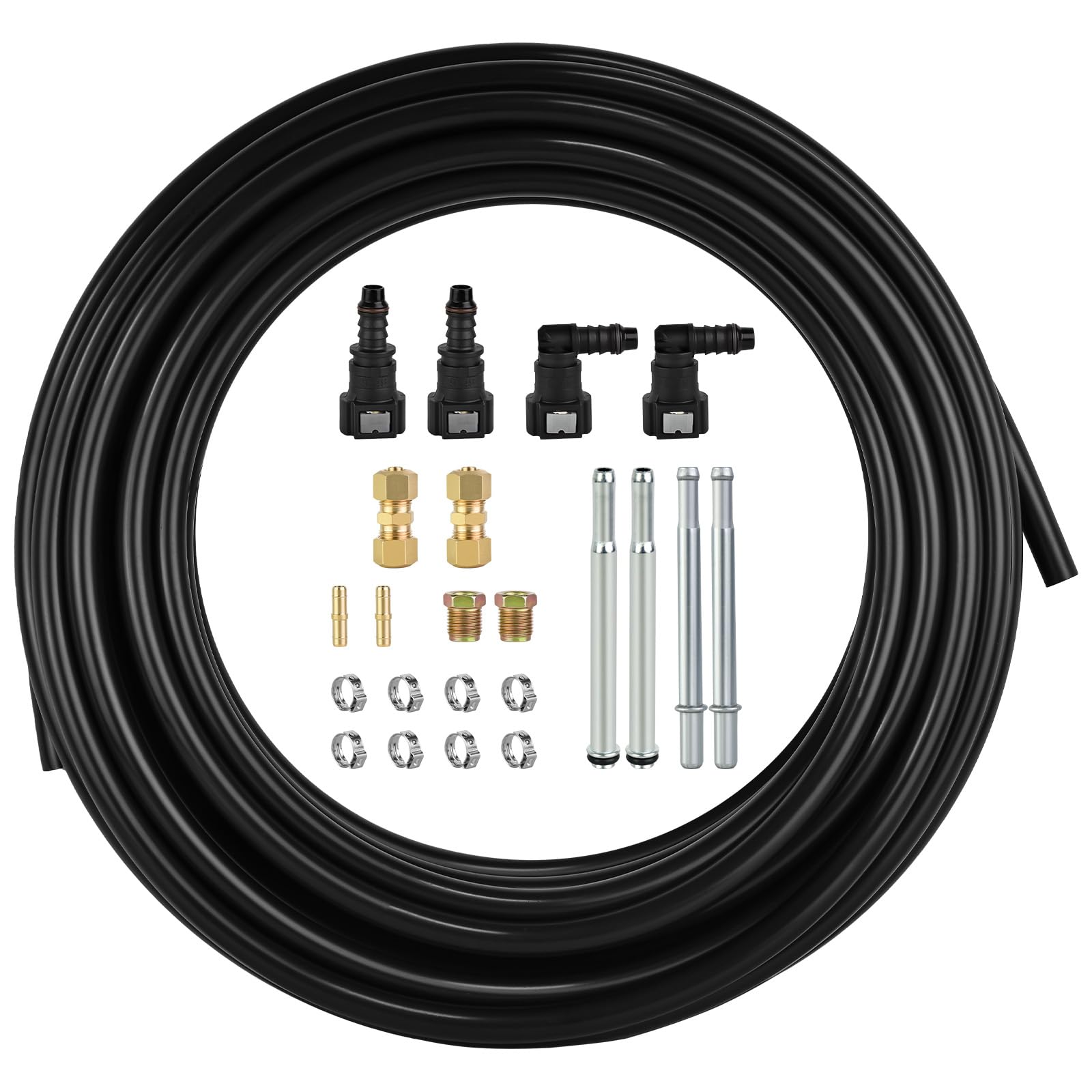
MuRealy’s kit is a straightforward bundle: 25 feet of 0.31-inch O.D. nylon tubing and a set of 5/16-inch compatible quick-disconnect and compression connectors. It is the most budget-friendly entry in this list, and the 4.1-star rating from 45 reviews suggests it works for many simple repairs. The material is nylon with a nominal wall thickness of 0.0625 inches (about 1.6 mm), which is thicker than the RJSPHH kit’s 0.05-inch wall, giving it a bit more resistance to collapse under clamp pressure. The listing emphasizes “excellent sealing” to prevent fuel leaks, which is the core job you need it to do.
The trade-off: the tubing is stiff, and the instructions warn that joints “can break during installation without the use of specialized tools.” Another buyer called it a “total scam” and claimed the hose is smaller than stock and the fittings do not fit — a reminder that this kit, like the MuHize, may have an ID mismatch issue on some vehicles. You definitely need a special pliers or a pipe-clamp crimper to get a good seal; hand-tightening will leak.
Where this kit falls short of the Mupera kit (7.94 mm O.D. vs 0.31 in O.D.) is in material: the Mupera uses alloy steel and nylon, while the MuRealy is all nylon. For a repair that sees high heat near an exhaust manifold, the all-nylon line is less forgiving than a steel-lined option. If you are patching a rusted section low on the frame away from heat sources, this kit works fine — just budget for the installation tool. Good for a budget-conscious patch on a non-critical section away from exhaust heat. skip it if you are doing a first-time repair and do not own specialty crimp tools — the Mupera kit below includes more durable materials.
What works
- Lowest entry price among the five kits reviewed here
- Wall thickness of 0.0625 inches provides good crush resistance
- Compatible with standard 5/16-inch fuel line connectors
What to watch
- Tubing stiffness requires special pliers or a crimper — cannot install with hand tools alone
- Multiple owners mention the hose diameter is undersized for some 5/16-inch fittings
4. Mupera 25 Feet 5/16″ Fuel Line Repair Kit – Upgraded Automotive 5/16 Fuel Line Kit
This kit uses alloy steel fittings with nylon tubing — a material combo that handles heat and vibration better than all-plastic kits.
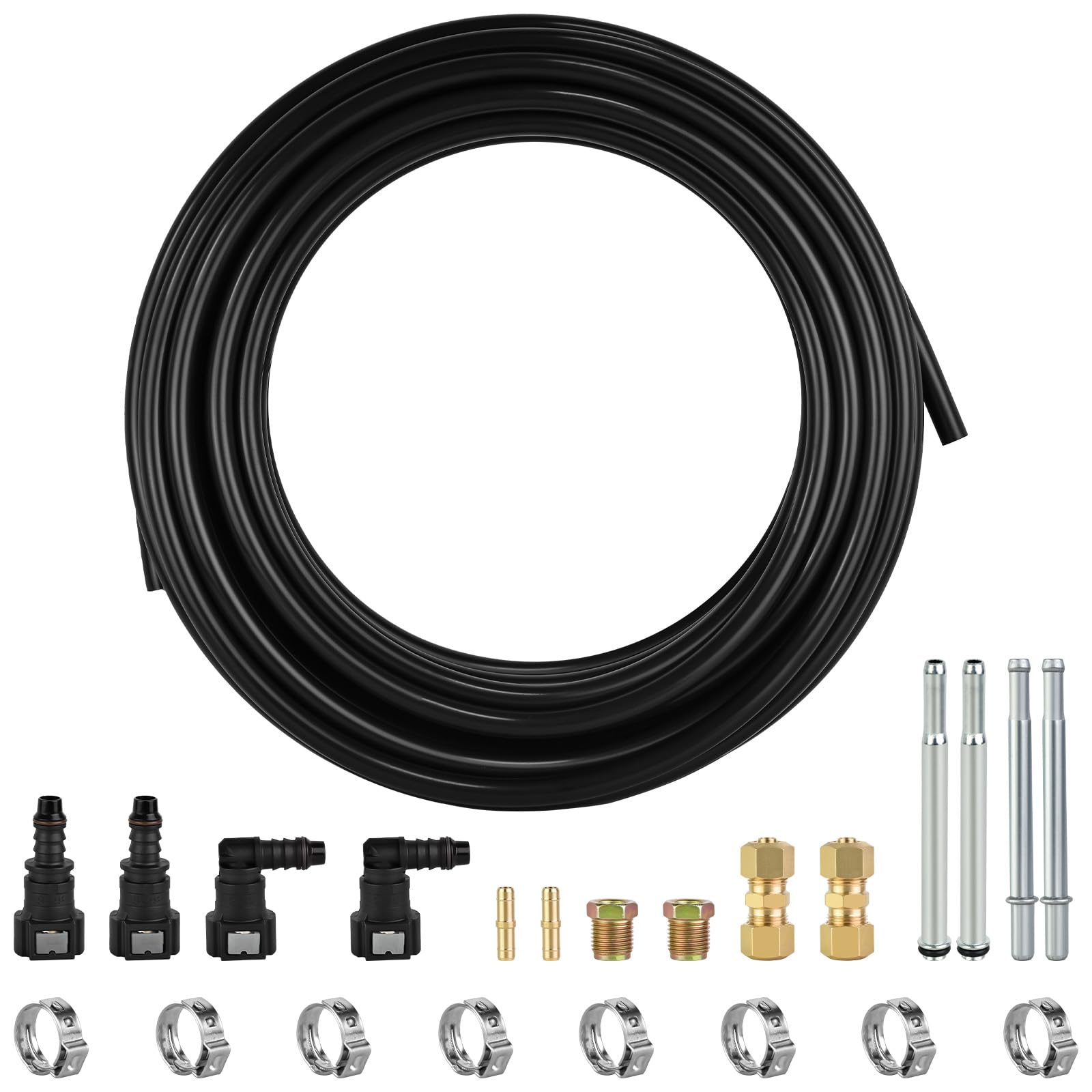
Mupera takes a different approach by using alloy steel for the connectors and Nylon for the tubing — a material combo that handles the heat and vibration under a vehicle better than all-plastic kits. The outside diameter is 7.94 millimeters, which is a hair over the standard 0.3125 inches of a true 5/16-inch line, but as one buyer mentioned, the “nylon hose did not allow for the placement I wanted” — meaning the tubing is stiff enough that you cannot force it into tight spots without heat. The 4.3-star rating across 62 reviews is the second-highest in this list, and buyers consistently say the lines work great once installed. The kit includes 25 feet of line, quick-disconnect connectors, and compression fittings.
The big caveat is the brass fittings. One reviewer returned the kit because the brass compression fittings would not fit a steel 5/16-inch line even after sanding the line clean. This is a fitting-tolerance issue: the brass ferrule (the small ring that compresses to seal the joint) is slightly undersized or does not compress enough to grip the steel line. If your vehicle has a standard 5/16-inch steel line, you may need to reuse your original fittings or buy a separate steel compression union. Also, the supplied hose clamps are not sized for 5/16-inch hose — you will need to supply your own.
This kit leads on material quality over the MuHize and MuRealy kits, both of which use all-nylon. The alloy steel connectors resist rust far better than the zinc-plated steel in cheaper kits, which matters if you live in a salt-belt region. If you can work around the brass fitting issue by substituting your own compression union, this is a durable choice for a long-term repair. Reach for this if you want the longest-lasting repair and are comfortable sourcing a steel compression union if the brass one does not fit. Look elsewhere if you want a single-box solution with no additional parts — the Stop Shop kit or the RJSPHH kit below includes more field-tested components.
Material advantage: Alloy steel fittings resist corrosion better than the plated steel in other kits — a real plus for trucks exposed to road salt.
The brass fitting problem: The supplied brass compression fittings may not grip a steel 5/16-inch line properly; test-fit before cutting your old line.
5. RJSPHH 5/16 Fuel Line Repair Kit FLK-56 (23 Pack)
This is the only kit here backed by a one-year warranty — a real comfort if a fitting fails months down the road.
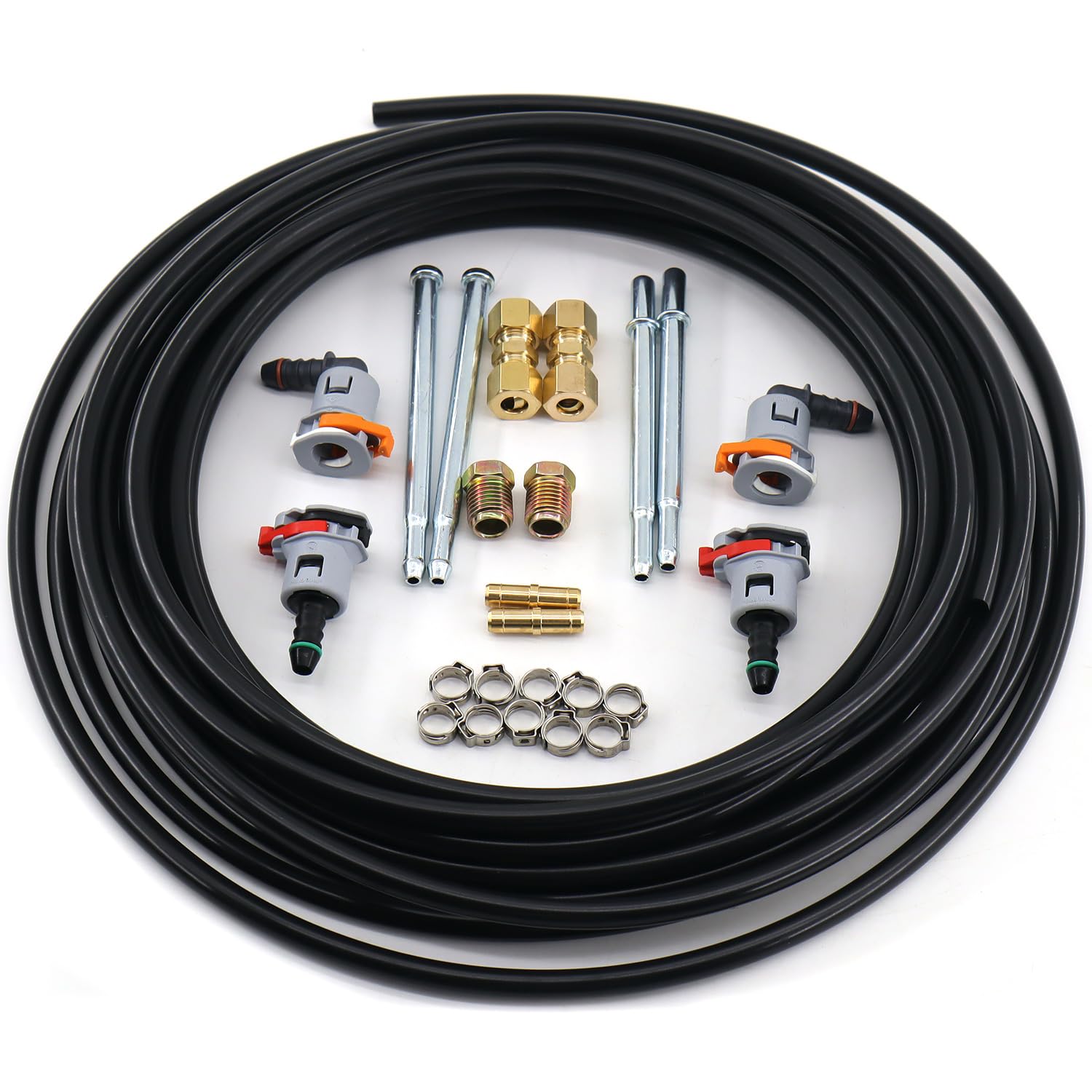
RJSPHH’s FLK-56 kit is the only one here backed by a one-year warranty — a real comfort if a fitting fails months down the road. The package includes 25 feet of 0.31-inch O.D. nylon fuel line, two 90-degree and two straight 5/16-inch quick disconnects, two nylon-to-steel compression unions, two GM adapters, and two quick-disconnect-to-steel adapters. The nominal wall thickness is 0.05 inches (about 1.27 mm) — thinner than the MuRealy’s 0.0625-inch wall, which means the tubing is more flexible but slightly less resistant to crushing if a clamp is overtightened. The kit has a 4.1-star rating from 56 reviews, with one buyer successfully installing it on a 2002 Dodge Ram 1500 using a vice, socket, and flaring kit — no leaks.
The single biggest complaint is that the nylon line’s inside diameter is at most 1/4-inch, even when heated, so it will not accept a 5/16-inch fitting. That is a showstopper if you rely on the quick-connect fittings in the box. The hardware (connectors and unions) are decent, but the tubing itself may be undersized. You may end up using only the fittings and sourcing separate tubing. The kit “includes a variety of matching connectors and accessories to make installation quick and easy” per the listing, but the reality is that you need a special pliers to crimp the supplied clamps — a beginner may not have that tool.
Where this kit shines over the MuHize kit (also 23 pieces) is the explicit one-year warranty — if the tubing or a fitting fails, you have a path to replacement. The MuHize kit has no such warranty. However, the MuHize kit’s 23.0 Count is the same number, but the RJSPHH kit does not include the ten nylon fuel line clamps that the MuHize does, so you may need to buy those separately.
Why it stands out
- Comes with a one-year warranty — no other kit in this list offers that
- Includes both straight and 90-degree quick-disconnect fittings for tight spaces
- Positive real-world results from a 2002 Dodge Ram 1500 owner with no leaks
The weak point
- Nylon line ID is too small for 5/16-inch fittings, per multiple buyers
- Thinner wall (0.05 in) compared to the MuRealy kit (0.0625 in)
Best for: DIYers who want a warranty safety net and already have a separate source for properly-sized 5/16-inch nylon tube.
Not for: Someone who wants a single-box, guaranteed-fit solution — the Stop Shop kit is a safer choice for a drop-in repair. The one-year warranty is the differentiator here, but only if you are prepared to buy separate tubing.
Understanding the Specs
Outside Diameter (OD) vs. Inside Diameter (ID)
Every 5/16-inch fuel line repair kit lists the tube’s outside diameter (0.31 inches or roughly 8 mm). But the inside diameter — the hole the fuel flows through — varies between kits and is often not stated. If the ID is too small (like 6.6 mm instead of 8 mm), the quick-connect fitting cannot insert properly, causing a leak or a popped-off line. Always look for the ID spec or measure the tube with a drill bit before cutting your old line.
Nylon-to-Steel Compression Union
This is the fitting that bridges the new nylon tubing to your vehicle’s existing steel line. A regular steel-to-steel compression union has a brass ferrule (a small ring) that crushes onto steel tube, but it does not grip nylon the same way. A true nylon-to-steel union includes a stiffener insert that prevents the nylon from collapsing. Without it, the fitting will not seal and fuel will drip. Check the product description for the words “nylon to steel” — if it just says “compression union,” assume it is steel-to-steel only.
FAQ
Will a 5/16 fuel line repair kit fit my 2005 Silverado?
Can I install a fuel line repair kit without special tools?
What is the difference between nylon and steel fuel line?
How do I know which quick-disconnect fitting I need: straight or 90-degree?
Why do some kits come with 23 pieces and others with just 1 piece?
Can I use a 5/16 fuel line repair kit for diesel fuel?
How do I soften nylon fuel line so I can bend it?
Can I splice a 5/16 fuel line repair kit into a rusted section without replacing the whole line?
Final Thoughts: The Verdict
For the majority of shoppers, the 5/16 fuel line repair kit winner is the The Stop Shop kit because it includes the critical nylon-to-steel compression union and GM-specific adapters that make a tank-to-engine replacement predictable — backed by a buyer who confirmed it worked on a 2000 GMC Sierra 1500 with all components. If you want a high part count for having spares on hand, grab the MuHize 23-piece kit. And for material quality with alloy steel fittings, the Mupera kit is the choice — just plan for the brass fitting issue and keep a spare compression union in your toolbox.
How We Picked
We do not accept paid placement. Every pick is matched to a real buyer and a real use-case; we do not hands-on test units.
Sources & Methodology
Specifications: manufacturer listings and product documentation. Review insights: verified customer reviews, as of July 2026. Pricing: not shown on this page (it changes often); check the current price via the retailer link.
As an Amazon Associate, Trending Car earns from qualifying purchases. This does not affect which products we feature.