
Our readers keep the lights on and my garage snacks stocked. As an Amazon Associate, I earn from qualifying purchases.
Specs are compiled from manufacturer listings and verified buyer reviews and can change over time — please confirm the key details on the product page before buying.
A black and red motorbike helmet looks fast and aggressive before you even start riding. But the real test is whether it will protect your head in a crash, fit your head shape without sore spots, and let you hear traffic without a constant wind roar.
I’m Min Islam — the founder and writer behind Trending Car. This guide is built by comparing the manufacturers’ published specifications and the patterns across verified customer reviews, so you get each pick’s real strengths and trade-offs instead of marketing spin.
Every helmet reviewed here pairs that bold red-and-black look with a specific safety certification like DOT (U.S. Department of Transportation minimum safety standard) or ECE (European safety standard), so you can confidently choose the best black and red motorbike helmet for your riding style and budget.
Our Picks at a Glance
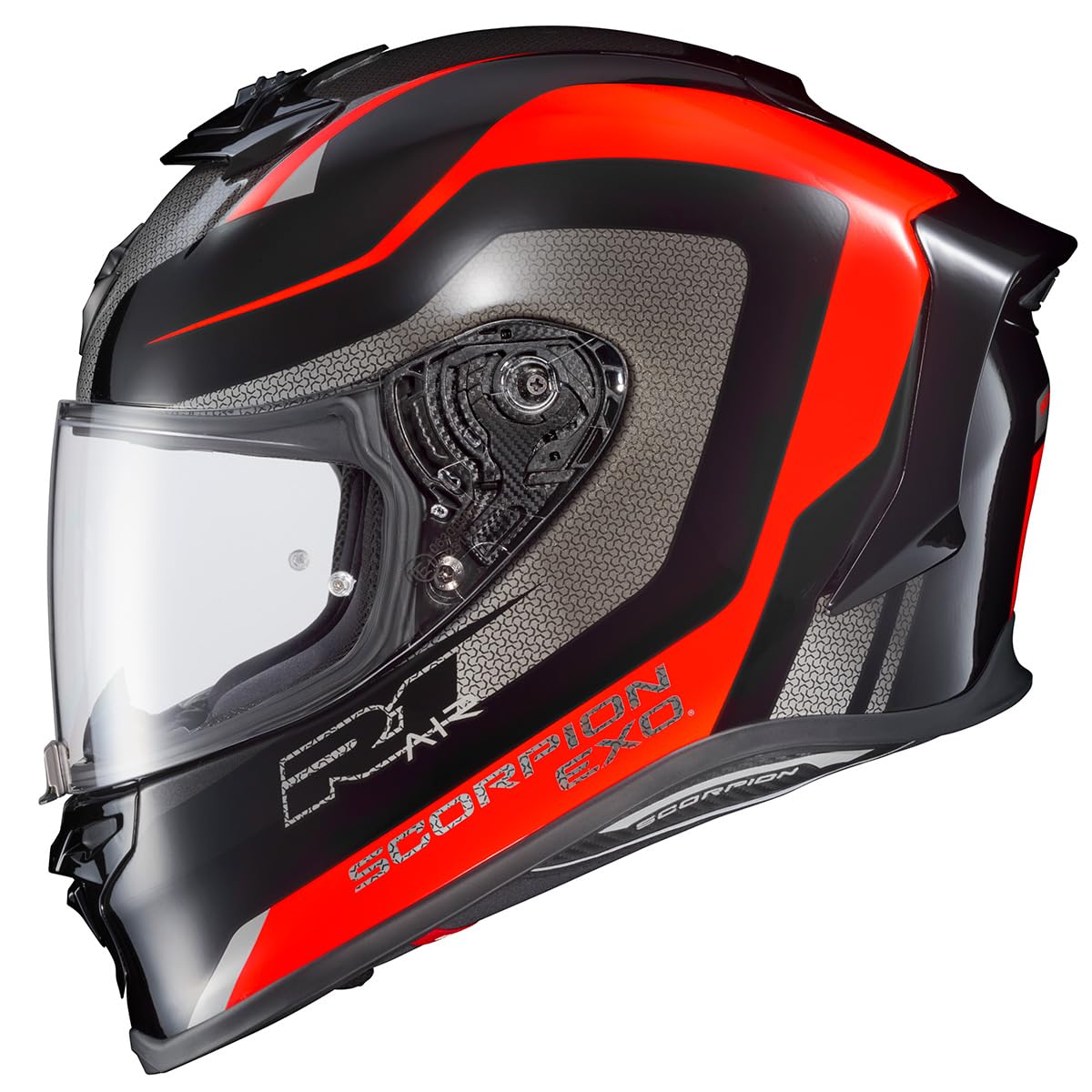
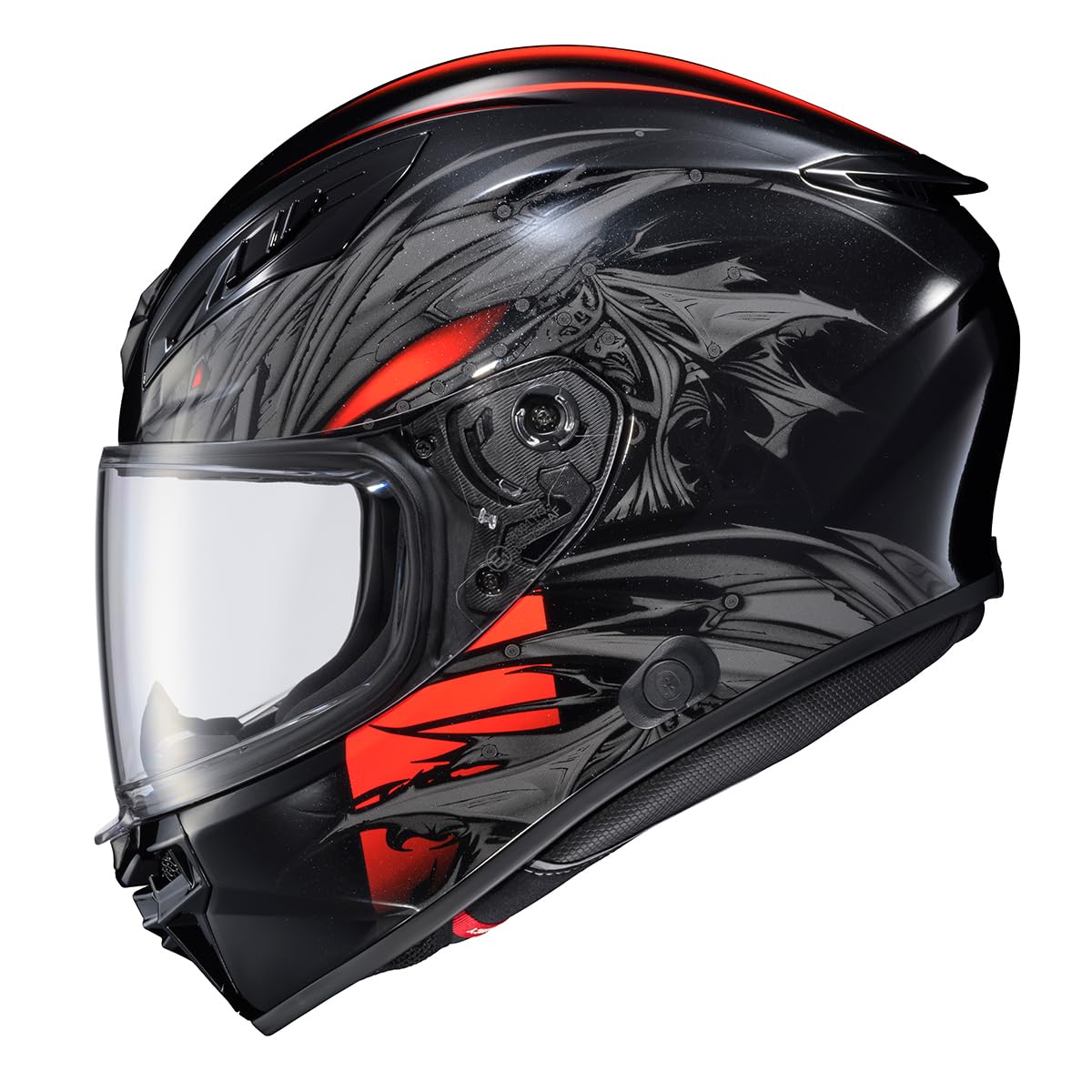
How To Choose The Best Black And Red Motorbike Helmet
Picking the right helmet is not just about the color matching your bike. You need to weigh safety certifications (the standards that prove a helmet absorbs impact), shell weight (how heavy the helmet feels on your neck), visor options (how you see), and how the helmet fits your specific head shape. Here are the three most important factors to lock in before you buy.
Safety certifications — DOT is the floor, ECE adds a higher bar
Every helmet on this list meets the DOT standard (FMVSS 218), which is the legal minimum in the U.S. But a few also carry ECE 22.06 certification, a European standard that tests impact absorption at higher speeds and on a wider range of anvil shapes. If you ride at highway speeds or on a track, an ECE-rated shell gives you an extra layer of verified protection — for instance, it helps your helmet absorb a harder impact if you hit a curb at 70 mph.
Shell material and weight
Cheaper helmets use an ABS plastic shell, which is rigid but heavy — those push the scale past 3.5 pounds. Mid-range models blend ABS with polycarbonate (PC) to shave weight without sacrificing strength. Premium helmets like the ScorpionEXO R1 Air use a multi-layered Ultra-TCT shell of fiberglass, aramid, and poly-resin fibers that drops the weight to around 3 pounds. A lighter helmet reduces neck fatigue on long rides — less strain means you can ride for hours without a sore neck.
Visor system — dual visor or standard?
A dual-visor setup gives you a retractable inner sunshade (a tinted flip-down lens inside the helmet) so you are not fumbling with a tinted outer shield as the sun dips. Some helmets ship with two outer visors (clear and dark) that you swap manually. If you ride through changing light — early morning to dusk — the drop-down inner visor is far more convenient. Pinlock-ready shields (visors that accept an anti-fog silicone insert) also prevent fogging in cool or damp weather.
Quick Comparison
| Model | Best For | Weight | Safety Rating | Visor Type | Amazon |
|---|---|---|---|---|---|
| ScorpionEXO R1 Air | Track & long-distance speed | 3.05 lbs | DOT + ECE | Pinlock dual-panel | Amazon |
| ScorpionEXO R430 | Daily commuter safety | — | DOT + SNELL | Clear + No-Fog shield | Amazon |
| HAX Force | Dual-certified value | 4.6 lbs | DOT + ECE 22.06 | Dual retractable | Amazon |
| ILM Model 317 | Budget full-face | 2.2 kg (~4.85 lbs) | DOT | Clear + tinted spare | Amazon |
| MXJ Gear JR-815 | Modular flip-up convenience | — | DOT | Dual retractable | Amazon |
| Woljay 991 | Entry-level modular | 1.7 kg (~3.75 lbs) | DOT | Dual visor | Amazon |
In‑Depth Reviews
1. ScorpionEXO R1 Air Full Face Adult Motorcycle Helmet
Our pick — over 4.5★ from 650+ verified ratings; the strongest balance of quality and price.
The 3.05-lb Ultra-TCT shell and dual DOT+ECE certification make this a track-ready helmet that survived a face-first crash with no memory loss.
The ScorpionEXO R1 Air is the lightest helmet in this roundup at 3.05 pounds (about 1,383 grams) for a medium, thanks to its multi-layered Ultra-TCT shell combining fiberglass, aramid fibers, and poly-resin fibers. That weight difference matters when you are tucked into a sportbike at triple-digit speeds — your neck muscles work less, and you feel the road, not the helmet. It carries dual certification (DOT FMVSS No. 218 and ECE Approved), so you get impact testing from both sides of the Atlantic.
Buyers report the included Pinlock anti-fog insert (a silicone sheet that creates an air gap to stop fog) is a “standout for fog,” with one reviewer noting visibility stayed clear even after 15 minutes in 35-degree weather at slow speeds. The Airfit inflation system (cheek pads with air bladders) lets you pump extra air into the cheek pads for a custom snug feel. Be aware of the trade-off: compared to a Shoei RF1400, the R1 Air lets in more wind noise, as one owner who switched noted, so earplugs are a strong recommendation on longer highway stints. It comes with both a clear MaxVision Pinlock-ready shield (visor that accepts the anti-fog insert) and a free dark smoke shield plus the Pinlock insert.
The Lightweight Edge
- Ultra-TCT shell keeps it impressively light at 3.05 lbs — noticeably less neck strain all day
- Dual DOT + ECE certification for high-speed crash protection
- Pinlock inserts eliminate fogging even in cold damp air
- Airfit inflation lets you dial in the cheek-pad tightness
The Noise Trade-off
- Wind noise is higher than premium quiet helmets like the Shoei RF1400; earplugs are recommended
- Premium pricing reflects the composite shell
Top performer verdict: Ideal for sport riders, track-day enthusiasts, and anyone who values low weight and dual safety certs above all else.
The real catch: You will want earplugs for highway cruising — wind noise is the biggest comfort gap against pricier touring helmets.
2. ScorpionEXO R430 Full Face Street Motorcycle Helmet
This DOT+SNELL helmet gives commuters a safer ride without the race-only price tag.
The R430 brings both DOT and SNELL approval to a mid-range price point — owners mention the SNELL rating alone made the choice easy. The advanced polycarbonate shell is CAD-refined for reduced lift and turbulence, and the aero-tuned ventilation system uses closable top intakes to push cool air in while rear exhausts pull hot air out. The KwikWick C Comfort liner (a moisture-wicking interior fabric) is fully machine-washable, a real bonus for daily riders who sweat through summer traffic.
A reviewer noted the fit is “snug, comfortable for longer/oval head” and that fogging was noticeably reduced compared to their old helmet. The Ellip-Tec III ratchet system is a highlight — it lets you swap shields with a quick-release motion and gives you a firm sealed closure. The biggest downsides: wind noise is present, and the helmet is slightly heavier than composite-shell rivals like the R1 Air. It works with most third-party Bluetooth communication systems, with an integrated port for the EXO-COM system available separately.
Why Safety Shoppers Pick It
- DOT + SNELL dual certification at a price that undercuts race-only helmets
- KwikWick liner wicks moisture and can be tossed in the washing machine
- Ellip-Tec III makes visor swaps tool-free and fast
What You Give Up
- Wind noise is higher than average; owners recommend earplugs for highway use
- Heavier than the R1 Air or fiberglass-shell models
Reach for this if: SNELL certification is your non-negotiable minimum and you want a comfortable daily street helmet with good ventilation.
Look elsewhere if: Absolute light weight or highway quiet matter more — the composite-shell Scorpions above or below serve those needs better.
3. HAX Force Aerodynamic Full Face Helmet for Street & E-Bikes DOT & ECE Certified

This DOT+ECE 22.06 helmet keeps your head cool at 92°F with effective ventilation, all at a budget-friendly price.
The HAX Force is the most affordable helmet here to carry both DOT and ECE 22.06 certifications — the European standard tests impacts at higher speeds and on a wider variety of anvil shapes than DOT alone. The shell is an ABS+PC composite that adds durability, though it comes at a cost: at 4.6 pounds, it is the heaviest pick in this lineup — the lightest is the ScorpionEXO R1 Air at 3.05 pounds. The dual-visor system includes a UV-protective outer lens and a retractable inner sunshade that works with prescription glasses, so you can drop the tint without swapping shields at dusk.
Customers note “good air circulation at 92°F,” a sign the multiple vents actually move air in serious heat. One owner noted the drop-down shade visor works smoothly with their eyeglasses, a detail many mid-range helmets miss. The helmet is Pinlock-ready (insert sold separately) and has speaker pockets for Bluetooth comms. The main drawbacks are weight — you will feel it on all-day rides — and some wind noise, though owners overall rate it “great value and fit.” A carrying case is included.
Dual-Cert Highlights
- DOT + ECE 22.06 certification for — a strong safety value
- Retractable inner sunshade works with prescription glasses
- Ventilation keeps airflow solid even on 92°F days
Weight Penalty
- At 4.6 lbs it is the heaviest helmet in the comparison
- Wind noise is present at highway speeds
Best for: Riders on a budget who still want the added safety margin of ECE 22.06 and a dual-visor system that fits glasses.
Skip if: Neck fatigue is a concern on long trips — this helmet is heavier than everything else here.
4. ILM Full Face Motorcycle Helmet for Motocross Street Bike DOT Certified 2 Visors Model-317
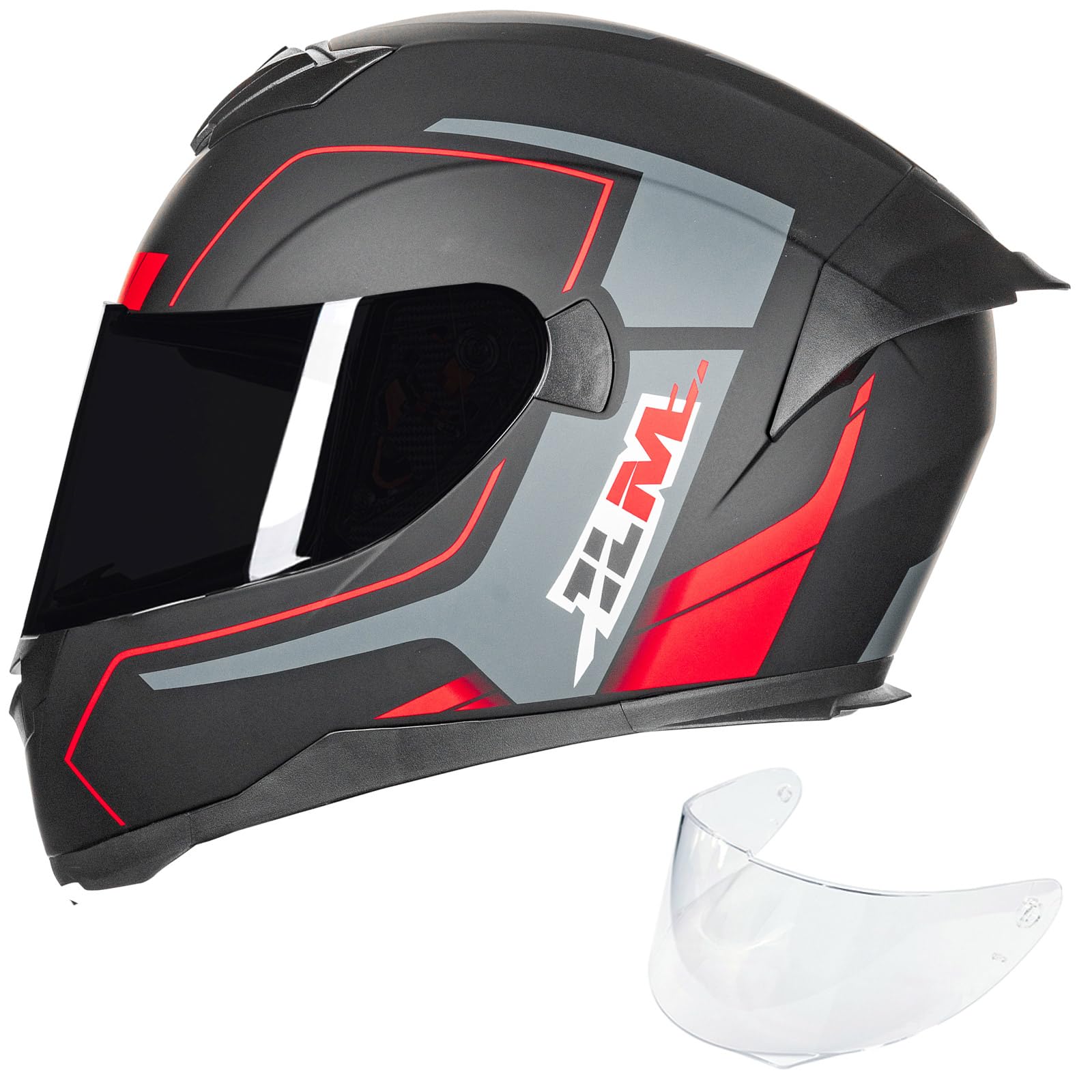
Reviewers point out this DOT-certified ABS helmet saved them in a real crash, proving its value where it counts.
The ILM Model 317 is the entry-level full-face option in this list, carrying DOT certification and a quality ABS shell with high-density EPS foam. At 2.2 kilograms (about 4.85 pounds), it is not the lightest, but buyers consistently praise the comfort — the Comtex liners are “ultra soft and elastic” with a velvety feel, and the padding stays comfortable even during long rides. It ships with both a clear visor and a spare tinted visor, so you get day-and-night visibility from the start.
One reviewer who crashed wearing it wrote, “Perfect helmet, saved me from a crash.” Another noted the vents are great, it does not fog up, and the quick-release visor is a handy touch. The noise level is average — “not terrible but not quiet either” at highway speeds. The biggest caveat: the dark tinted visor is a bit hard to see through in low light, so you will want to swap to the clear visor at dusk. Several buyers also mention it runs slightly large, so if you are between sizes, consider sizing down.
What You Get for the Price
- DOT-certified at a very accessible price point
- Includes both clear and tinted visors — no extra purchase needed
- Soft velvety padding that buyers call comfortable for extended wear
Where It Cuts Corners
- Tinted visor is hard to see through in dim conditions
- Wind noise is average — you will hear the rush at highway speeds
Reach for this if: You need a DOT-cert full-face on a tight budget and want the confidence that comes from a helmet that has been crash-tested by real buyers.
Not for you if: You do a lot of night riding — the tinted visor is not usable after dusk and swapping takes a minute.
5. MXJ Gear Motorcycle Helmet JR-815, DOT Approved Full Face Flip Up Modular Helmet
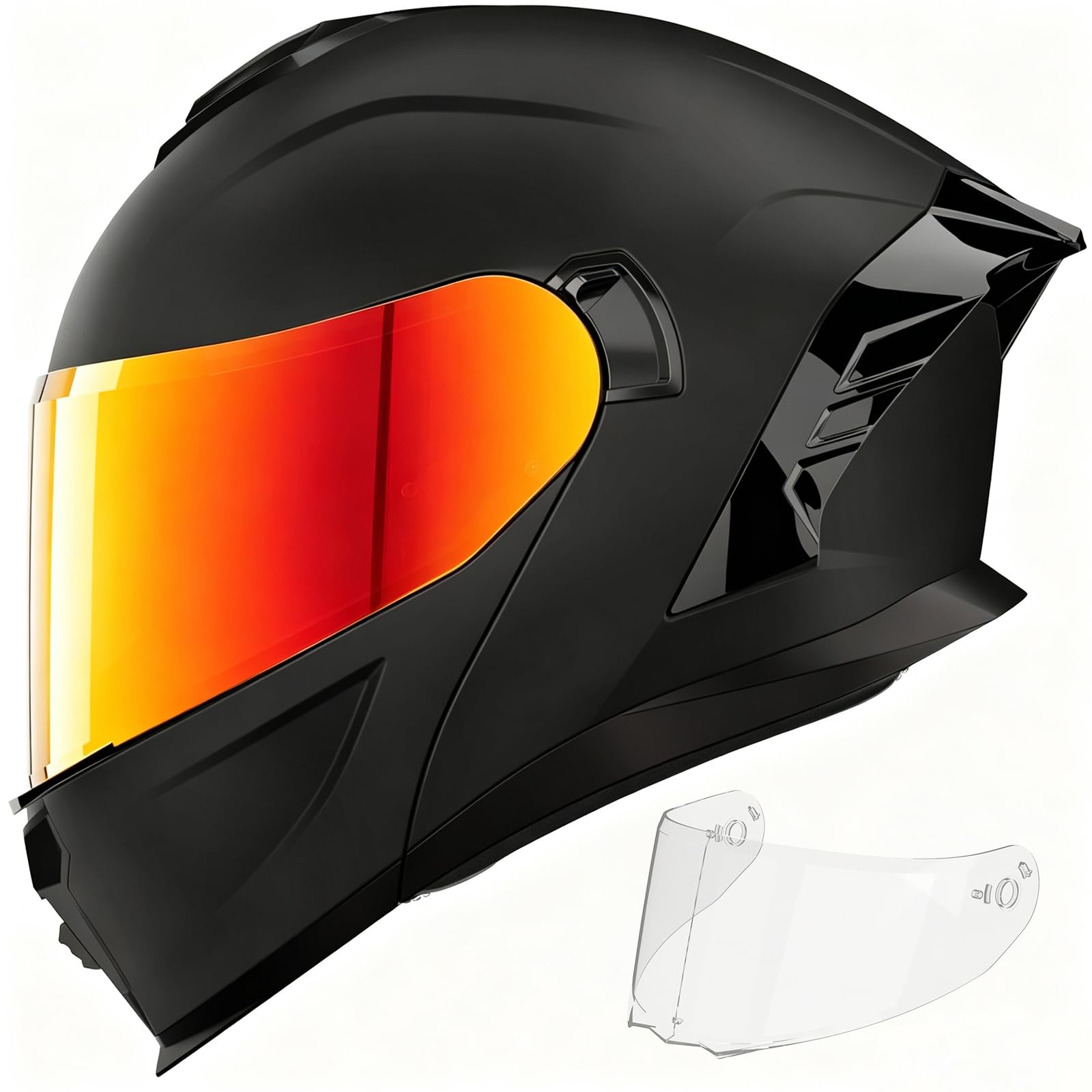
This DOT modular helmet flips up for gas-station chats and keeps an aggressive matte black-red look.
The MXJ Gear JR-815 is a flip-up (modular) helmet that lets you pivot the entire front section upward so you can talk, drink water, or take a quick break without pulling the helmet off your head. It carries DOT certification, a lightweight ABS shell, and a dual-lens system: a clear outer visor, a black outer visor, and a retractable inner sunshade that blocks UV rays. The brand recommends sizing up if you have slightly chubby cheeks, as the fit runs a touch snug.
Buyers are enthusiastic: one called it “badass, functional, DOT approved, comfortable” with nothing to complain about. Another who compared it to Alpinestars and AGV found the savings worthwhile, calling the fit “amazing” and “very sexy.” The multiple vents — top, front, and rear — are designed to circulate air for both summer and winter riding. The catch: as a modular helmet, the chin-bar mechanism adds weight and complexity compared to a fixed full-face, and a few owners noted the flip-up latch takes some getting used to. The included two visors (clear + black) plus the inner sunshade cover all lighting conditions from the start.
Flip-Up Convenience
- Modular design lets you flip the chin bar up for quick stops without removing the helmet
- Dual outer visors (clear + black) plus a retractable inner sunshade
- Multiple vents keep air moving through hot and cold conditions
Modular Trade-Offs
- Adds weight and mechanical complexity compared to a fixed full-face shell
- Flip-up latch can feel stiff at first
Ideal for: Touring riders and commuters who value the ability to flip the face up at toll booths, rest stops, or quick errands.
The practical limit: If pure track safety and minimal weight are your priorities, a fixed full-face like the Scorpion R1 Air is a better fit.
6. Woljay Full Face Flip Up Motorcycle Modular Helmet Integrated Motorbike Dual Visor DOT Approved
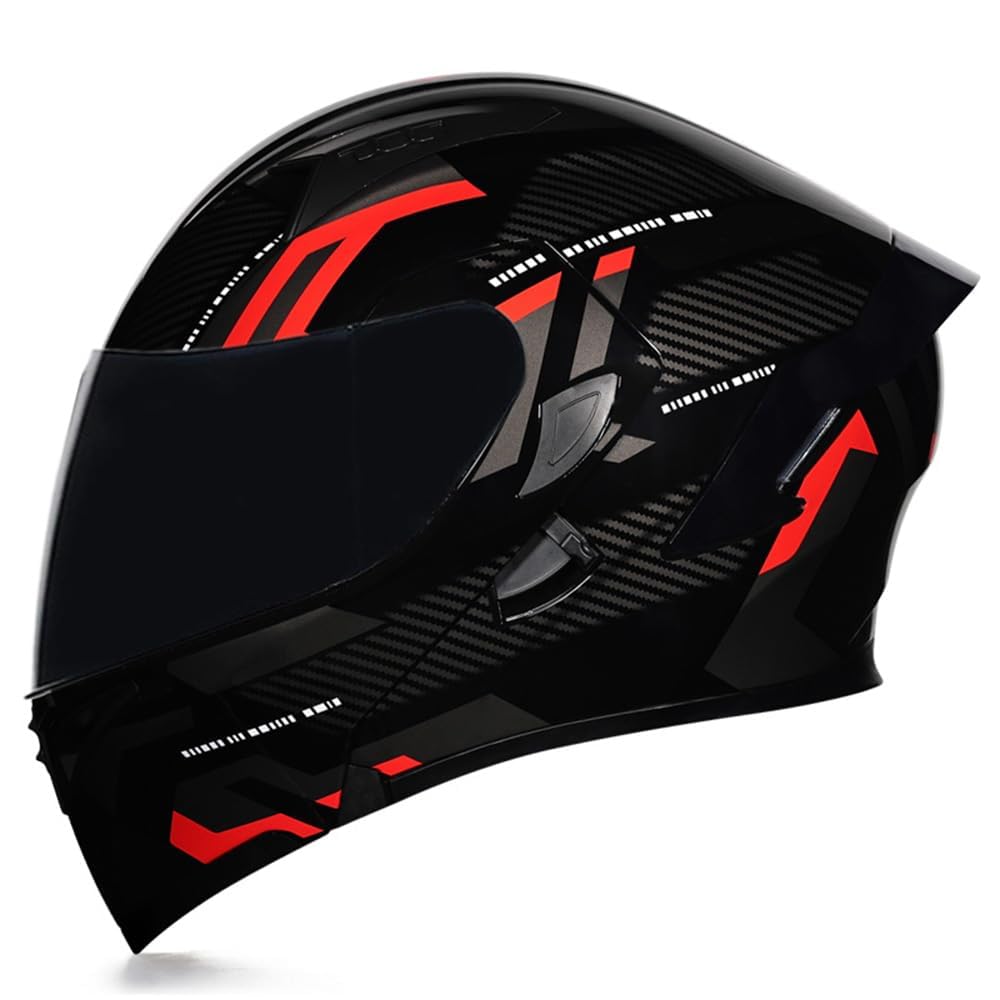
At 1.7 kg, this is the lightest modular here, but a buyer’s crash report shows brittle plastic and weak visor hardware.
The Woljay 991 is a modular flip-up helmet that weighs just 1.7 kilograms — that is notably lighter than the ILM Model 317 (2.2 kg) and even beats the heavier modular picks. The aerodynamic ABS shell is DOT-certified (FMVSS 218), with a glossy multicolor finish that pops in red and black. It includes a dual-visor system, and the interior liner is fully removable and washable. The quick-release buckle makes on-and-off easy, and the brand markets it for multiple riding styles: street, motocross, ATV, dirt bike, and off-road.
Shoppers say a mixed experience. One satisfied owner said “fit perfect, comfortable” and called it a good buy. But a more detailed review tells a harder story: the helmet arrived with minimal packaging, the plastic components are weak (breaking “almost immediately”), and after a 25-30 mph faceplant while worn properly, the rider suffered a severe cut and bruised lip — they gave it 4 stars since it “ultimately saved me from a trip to the emergency room or ICU.” The same reviewer noted a screw holding the visor side needed replacement before even a full day of riding. This is the only helmet in the lineup with reported build-quality issues on the retention and visor hardware.
What Works
- At 1.7 kg it is the lightest modular helmet in this roundup
- DOT-certified shell for legal street use
- Removable washable liner keeps hygiene easy
Known Weaknesses
- Buyers report brittle plastic that breaks on first use
- Visor hardware (screws) can loosen or fail quickly
- Shipped from China with minimal protective packaging
Only consider if: You need the absolute cheapest modular helmet and accept that build quality is inconsistent — you are trading upfront cost for potential durability issues.
The honest caution: The buyer crash report and multiple broken-plastic complaints make this a riskier pick than the other helmets here; the MXJ Gear modular costs a few dollars more and has stronger reviews.
Understanding the Specs
Shell Material — ABS vs Composite
The shell is the outer armor that takes the first hit in a crash. ABS (Acrylonitrile Butadiene Styrene) is a hard plastic used on budget helmets — it is impact-resistant but heavy. Mid-range helmets blend ABS with polycarbonate (PC) to reduce weight while keeping the shell stiff. Premium helmets use multi-layer composites of fiberglass, aramid fibers, and poly-resin fibers, which are both lighter and stronger, absorbing more impact energy before it reaches your head.
Safety Certifications — DOT vs ECE vs SNELL
DOT (FMVSS 218) is the legal U.S. standard — it tests impact absorption, penetration resistance, and retention system strength. ECE 22.06 is a stricter European standard that tests impacts at higher speeds and on angled anvils, plus it checks for rotational forces. SNELL is a private non-profit standard that adds even more severe impact tests, including a larger drop height and multiple impacts to the same spot. A helmet with ECE or SNELL certification on top of DOT gives you a verified higher safety margin.
Dual Visor vs Single Visor
A dual-visor helmet has a retractable inner sunshade you flip down with a slider — no need to swap the outer shield when the sun dips. Single-visor helmets come with one outer shield; some ship a second tinted shield you swap manually. The dual-visor system is far more convenient for riders who face changing light conditions (early morning, dusk, tunnels). Pinlock-ready shields have a small stud system that accepts a silicone Pinlock insert, which creates a double-pane barrier that prevents fogging in cold or humid weather.
Weight — Why It Matters
Every extra pound on your head multiplies the strain on your neck muscles, especially at higher speeds where wind lift adds load. A helmet that weighs 3 pounds lets you ride all day with less fatigue; a 4.6-pound helmet will tire you faster on long trips or track days. Weight is a direct trade-off against cost — lighter composite shells cost more to manufacture than heavier ABS shells. Look for a helmet in the 3–3.5 pound range if you ride more than an hour at a time.
FAQ
What does DOT certification mean for a motorbike helmet?
Is ECE certification better than DOT?
What is the difference between a modular helmet and a full-face helmet?
Will a black and red helmet get hotter in the sun than a white one?
How do I measure my head for the right helmet size?
Can I wear glasses with a motorbike helmet?
How often should I replace a motorbike helmet?
What is a Pinlock insert and do I need one?
Are heavier helmets less safe than lighter ones?
Can I install a Bluetooth intercom system in any of these helmets?
Final Thoughts: The Verdict
For most riders, the black and red motorbike helmet winner is the ScorpionEXO R1 Air because its 3.05-pound Ultra-TCT shell and dual DOT+ECE certification deliver track-level protection without neck strain. If you want SNELL certification at a commuting-friendly price, grab the ScorpionEXO R430. And if you need a dual-cert helmet with a drop-down sunshade and a tight budget, the HAX Force brings strong value for its price.
How We Picked
We do not accept paid placement. Every pick is matched to a real buyer and a real use-case; we do not hands-on test units.
Sources & Methodology
Specifications: manufacturer listings and product documentation. Review insights: verified customer reviews, as of July 2026. Pricing: not shown on this page (it changes often); check the current price via the retailer link.
As an Amazon Associate, Trending Car earns from qualifying purchases. This does not affect which products we feature.