
Our readers keep the lights on and my garage snacks stocked. As an Amazon Associate, I earn from qualifying purchases.
Specs are compiled from manufacturer listings and verified buyer reviews and can change over time — please confirm the key details on the product page before buying.
A check engine light staring at you from the dash, a rough idle when you stop at a light, or gas mileage that has quietly dropped off — that is usually a car emissions sensor (specifically an oxygen sensor, which is a probe that measures leftover oxygen in the exhaust) telling you something is off. The right O2 sensor gets your engine back to running clean, passes the smog test, and stops you from guessing which part to swap next.
I’m Min Islam — the founder and writer behind Trending Car. This guide is built by comparing the manufacturers’ published specifications and the patterns across verified customer reviews, so you get each pick’s real strengths and trade-offs instead of marketing spin.
Whether you are chasing a persistent P0420 code (a check-engine-light code for a catalytic converter efficiency problem) or doing a full pre-smog refresh, this breakdown of the best car emissions sensor options will help you pick the exact match the first time.
Our Picks at a Glance

Best Overall. Our top pick — the best all-round balance of quality and price.

Wide-Band Pick. Our best value — the best quality for the money.
How To Choose The Best Car Emissions Sensor
Oxygen sensors look similar, but picking the wrong one means a lingering check engine light and another day under the car. Focus on these three things first.
Number of Wires and Connector Shape
Your car’s wiring harness expects a specific plug. A direct-fit sensor comes with the exact connector already attached, so you do not have to splice wires. Count the wires on your old sensor (typically three, four, or five) and match the connector shape — a round or square grey plug varies by the model year and manufacturer.
Sensor Type: Narrow-Band vs Wide-Band
Most cars through the early 2000s use a narrow-band O2 sensor (sometimes called a standard oxygen sensor). Newer vehicles often use a wide-band air/fuel ratio sensor that reads a broader range of mixture — from roughly 12:1 to 19:1. Installing a narrow-band sensor where a wide-band belongs will not fix the code; you have to match your vehicle’s original spec exactly.
Maximum Supply Voltage
The voltage the sensor can handle from the car’s electrical system matters for stable readings. A 12-volt sensor draws power differently than a 4.9-volt unit. If your vehicle expects a specific supply voltage, using the wrong one can cause slow switching (the signal lags) or a false lean reading (the computer thinks the mixture is too lean) that keeps the check engine light on.
Quick Comparison
| Model | Best For | Supply Voltage | Weight | Mounting Type | Amazon |
|---|---|---|---|---|---|
| Denso 234-4012 | GM / Honda / Isuzu compat | 4.9 Volts | 0.25 lbs | Threaded Mount | Amazon |
| BOSCH 15284 | GM truck/SUV 2003-06 | — | 0.15 lbs | Direct fit | Amazon |
| BOSCH 12014 | Older GM/Jeep (80-99) | — | 0.15 lbs | Direct fit | Amazon |
| GM Genuine 213-4768 | 2010s GM Equinox/Captiva | 12 Volts | 0.19 lbs | Screw-in | Amazon |
| NTK 23162 | Jeep JK downstream | — | 0.09 lbs | Direct fit | Amazon |
| Denso 234-9064 | Honda/Acura 2003-09 | — | 4 oz | Threaded Mount | Amazon |
In‑Depth Reviews
1. Denso 234-4012 Oxygen Sensor, Original Version
Our pick — over 4.5★ from 900+ verified ratings; the strongest balance of quality and price.
The corrosion-fighting stainless steel O2 sensor that buyers use to fix a rough idle across GM and Honda family vehicles.
This narrow-band sensor (the standard type for most pre-2005 cars) uses a refined zirconia element (a ceramic component that measures oxygen in the exhaust) to improve response time, and a PTFE filter (a plastic-based membrane) that keeps oil and dirt from fouling the reading. The 4.9 Volt maximum supply voltage is lower than the GM Genuine sensor’s 12 Volts, which makes it a direct electrical match for older ECMs (engine-control modules) that cannot handle a higher draw. It gets your engine’s fuel trim back in line so the check engine light goes off and the idle smooths out.
Buyers report that replacing all three identical Denso sensors at once — as one owner did on a 1998-2005 Chevy Blazer with the 4.3L — fixed a rough idle and daily CEL, and the pre-applied graphite anti-seize compound on the threads made the whole job a 30-minute affair. Parts interchange numbers like 19178930 and 96335927 mean you can cross-reference this with almost every parts store catalog if you want additional verification.
One note: a verified buyer found that this sensor is not correct for a 2001 Chevy Silverado 4.8L despite Amazon’s parts checker saying it fits — that truck needs Denso part 234-4650. This sensor covers GM, Honda, Isuzu, and Acura models from the 90s and early 2000s; skip it if your truck is a 2001 Silverado 4.8L. Always match your vehicle’s model year and engine code, not just the brand name.
What Owners Appreciate
- Stainless steel body with PTFE filter resists exhaust contaminants.
- ±1% measurement accuracy for precise fuel trim feedback.
- Fits an enormous cross-section of GM, Honda, Isuzu, and Acura models from the 90s and early 2000s.
Watch Out For
- Not the correct part for 2001 Silverado 4.8L despite universal fitment claims.
- Maximum supply voltage of 4.9 Volts means some newer 12-volt systems may not power it optimally.
Who it fits best: you drive a 1994-2004 Chevy truck, S10, Corvette, or a Honda Passport and want a sensor that buyers call “manufacturer-suggested” over cheaper alternatives.
The catch: verify your exact engine family — Amazon’s fitment checker has false positives for this particular Denso part number.
2. BOSCH 15284 Premium OE Fitment Oxygen Sensor

The direct-fit sensor for 2003-2006 GM trucks with a fast-acting heater that hits operating temperature in seconds.
This sensor cuts cold-start rich-mode (when the engine pumps extra unburned fuel) almost immediately, so you save gas on short drives like a 5-mile commute. The fast-acting heater inside Bosch’s Planar and thimble-type sensors brings it up to working temperature within seconds of a cold start — that is its main edge over the Denso 234-4012, which heats up more slowly. The double laser-welded stainless steel body is fully submersible and sealed, protecting the internals from water splash and road salt that older sensors eventually leak through. At 2.2 x 1.97 x 5.83 inches, it is noticeably more compact than the bulkier GM Genuine 213-4768 which measures 8.1 x 3 x 3 inches, making it easier to reach into tight exhaust tunnel spaces.
One owner on a 2004 Chevy Silverado 5.3L fit this perfectly for the bank 2 (passenger side) upstream position and noted the threads come pre-coated with anti-seize compound right from the start. Another buyer reports “working great for 5 months!” on an 2004 Escalade after replacing a mangled downstream sensor, calling the construction solid without a cheap feel.
One potential headache: a verified owner of a 2004 Yukon 5.3 non-flex fuel reported that while the sensor switches correctly and has the right harness length, the PCM (powertrain-control module) still throws a check engine light for that sensor regardless of performance. If your 2004-2005 Yukon or Suburban has a PCM that seems to prefer a specific brand and you do not want to gamble, you might want the GM Genuine sensor instead. Buyers should be aware that on some GM trucks, the Bosch switching rate does not perfectly match the original Delphi or AC Delco calibration.
What Shines
- Fast-acting heater gets the sensor reading accurately within seconds of a cold start.
- Exclusive double laser-welded stainless steel body resists water and exhaust damage.
- True direct-fit connectors and pre-applied anti-seize mean no wire splicing or extra grease.
Be Aware
- Some GM PCMs may not like the switching rate and keep the check engine light on.
- Weighs 0.15 pounds — lighter build may feel less substantial during install compared to the Denso or GM Genuine sensors.
Reach for this if: your GM SUV or truck is a 2003-2006 model and you want a heater that cuts cold-start rich-mode quickly, saving you gas on short trips.
Better to pick the GM Genuine sensor if: your 2004-2005 Yukon or Suburban has a finicky PCM that seems to prefer a specific brand — some owners had to swap to a different manufacturer after the Bosch triggered a recurring sensor code.
3. BOSCH 12014 Premium OE Fitment Oxygen Sensor
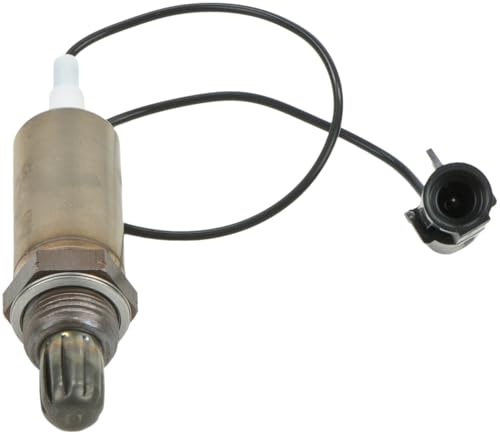
The same Bosch planar technology tuned for 1980-1999 cars and trucks, including AMC, Jeep, and Renault models.
Bosch invented the oxygen sensor in the late 1960s, and this sensor draws directly from that decades-long production experience. It is built for the older generation of vehicles where the original equipment was often a Bosch or a licensed equivalent — specifically 1980-99 AM General, AMC, Jeep, Renault, and the usual GM brands. The fast-acting heater and double laser-welded stainless steel body are identical in concept to the Bosch 15284, but the 12014 uses a slightly different connector and a measuring range of 0% to 15% O2, which is calibrated for the ECU (engine-control-unit) strategies of that era. The threads are 18 x 1.5mm, but one reviewer noted that not all 18mm sensors with the same pitch actually fit — the depth of the threaded boss on the exhaust manifold can differ between engine families, so test-fit before you torque it down.
A verified owner of a 1993 Chevy K1500 5.7L Z71 replaced what they called a “33-year-old factory O2 sensor” with this Bosch. They reported no check engine light before the swap, but the old sensor was “lazy” — after replacement and an ECU reset, throttle response improved slightly and warm idle smoothed out. Other buyers with later-model Jeeps and Buicks reported the sensor fixed running issues and cleared codes quickly. At 0.15 pounds, it shares the same weight as the Bosch 15284, establishing Bosch’s consistent lightweight build across the product family.
One catch: Bosch sensors sometimes cause confusion because the “seared appearance of protection tube” is actually a deliberate result of their 100% functional quality test — it is not a defect, but first-time buyers sometimes worry the tip looks burned. That burnt appearance simply means the sensor was electrically tested at the factory to confirm it switches correctly. This sensor is specifically calibrated for older ECUs and may not switch correctly on newer PCMs (post-1999 models).
Strengths
- Clear 0%–15% O2 measuring range ideal for older ECU calibrations.
- 100% factory tested — the seared tube appearance is a quality-control mark, not a flaw.
- Covers AM General, AMC, Jeep, and Renault alongside the typical GM coverage; rare for one sensor.
Potential Issues
- Thread depth compatibility with some exhaust manifolds may cause fit problems even on the correct 18mm thread pitch.
- Older ECU reset required (battery disconnect) for the sensor to take effect — it is not plug-and-play on every vehicle.
Reach for this if: you are bringing a 1980s or 1990s Chevy truck, Jeep, or Buick back to life and want a sensor that has proven itself on thirty-year-old exhaust systems.
Look elsewhere if: your vehicle is a 2000s model — this sensor is specifically calibrated for older ECUs and may not switch correctly on newer PCMs.
4. GM Genuine Parts 213-4768 (12639692) Heated Oxygen Sensor
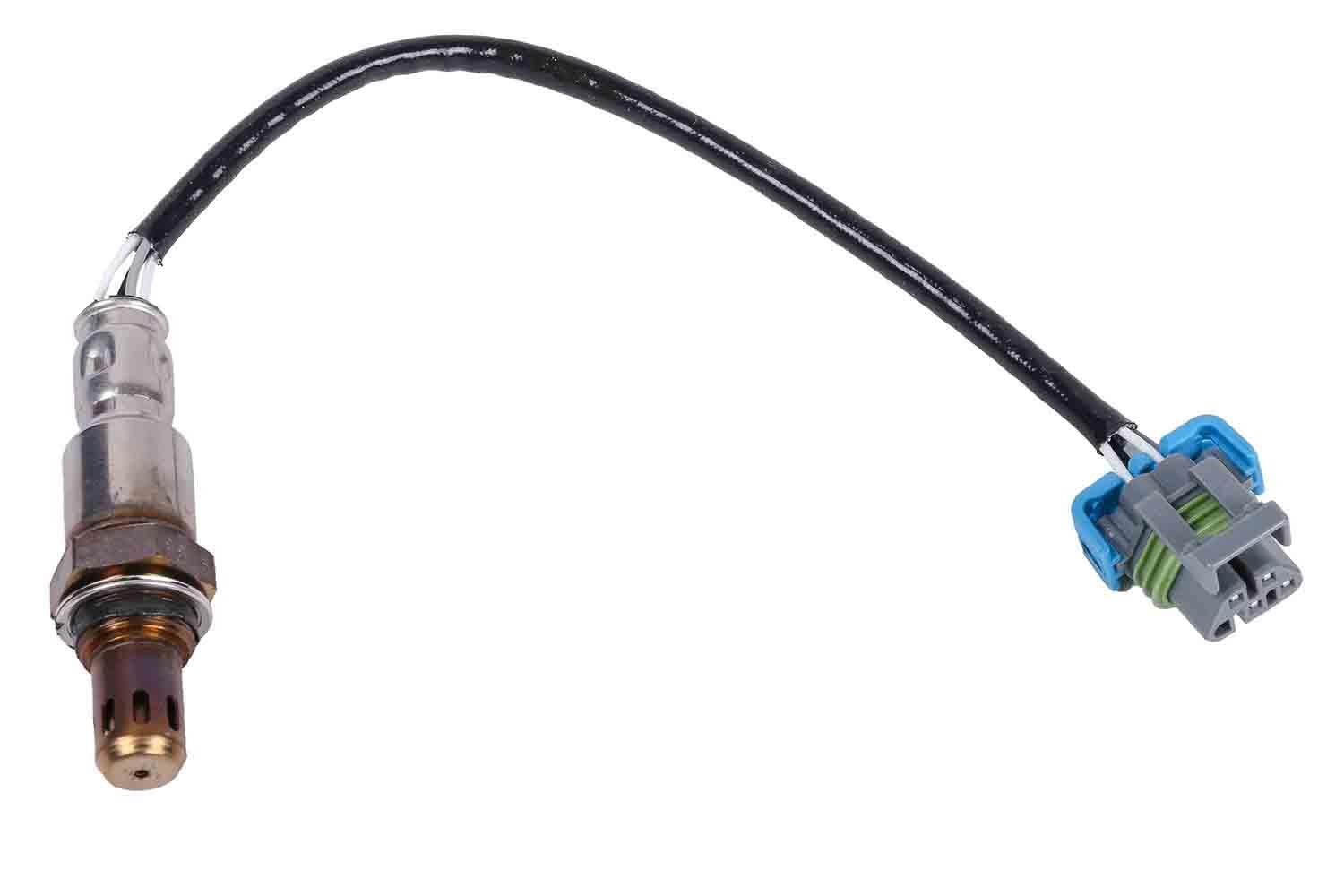
The 12-Volt GM factory-spec sensor that fixes P015A and P0137 codes on 2010s Equinox and Captiva models.
This is the exact part that GM installs at the factory — manufactured by ACDelco to GM OE specification for fit, form, and function. The standout number here is the 12-Volt maximum supply voltage, — at 12 Volts versus the Denso 234-4012’s 4.9 Volts. That extra voltage feeds a more aggressive internal heater that warms the sensor up fast on late-model GM powertrains, so the car detects the O2 signal earlier in the drive cycle and stops setting a heater circuit code. The body is constructed from alloy steel and ceramic rather than the stainless steel found on the Bosch and Denso sensors — this is a deliberate material choice to match the thermal expansion characteristics of the cast iron exhaust manifold it mates to on the 2.4L and 3.6L GM engines. At 8.1 x 3 x 3 inches, it is physically larger than the Bosch 15284 at 2.2 x 1.97 x 5.83 inches, meaning you need more clearance in the exhaust tunnel to swing it into position.
One buyer replaced both upstream and downstream sensors on a 2013 Chevy Captiva and put 900 miles on a trip from San Diego to Phoenix — the P0137 code (downstream heater circuit) went away immediately, and they saved over in labor doing it themselves in under an hour. Another owner with a 2015 Equinox and a P015A code reported the check engine light went away and stayed off without even lifting the hood. However, a verified buyer noted that one of two identical units failed within a month on the same vehicle — the second replacement worked fine, but the first failure was a PITA (pain in the ass) to redo.
This sensor ships in a plain cardboard box without any plastic packaging. That is standard for GM Genuine service parts but can be surprising if you are used to aftermarket blister packs. It is best for owners of 2010-2015 GM crossovers (Equinox, Captiva, Terrain) who want the exact factory-spec part; pass on it if your vehicle is not a late-model GM, as the 12V heater circuit and alloy steel body are purpose-built for those specific engine families.
What You Get
- 12-Volt supply voltage matches modern GM heater circuits for faster sensor activation.
- Alloy steel and ceramic build expands at the same rate as the manifold, preventing leaks over thermal cycles.
- Direct OEM replacement for Equinox, Captiva, and similar 2010s GM crossovers.
What to Watch
- One confirmed early failure within a month — some unit variance exists even with AC Delco manufacturing.
- 8.1-inch length makes it harder to fit in tight exhaust tunnels compared to the compact Bosch sensors.
Best for: owners of 2010-2015 GM crossovers (Equinox, Captiva, Terrain) who want the exact factory-spec part and are comfortable wrenching on their own car.
it’s not for you if: your vehicle is not a late-model GM — the 12V heater circuit and alloy steel body are purpose-built for those specific engine families and may not suit older OBD-I (on-board-diagnostics generation one) cars.
5. NTK 23162 Oxygen Sensor

The featherweight 0.09-pound O2 sensor that Jeep JK owners reach for as a direct downstream replacement.
NTK, the aftermarket brand of NGK Spark Plugs, builds this sensor for the person who values a direct connector match above all else — and at 0.09 pounds (just 1.44 ounces), it is the lightest sensor in this lineup by a significant margin. Compared to the Denso 234-4012 at 0.25 pounds, the NTK weighs 0.09 pounds, which makes zero difference once bolted in but tells you the internal heating element and ceramic body are physically smaller. It is described as “corrosion and abrasion resistant” using a metal and ceramic construction, and it outputs a plain electrical signal (rather than a push-pull type) for the ECU to interpret. The ±1.5% measurement accuracy is slightly looser than the Denso’s ±1%, but on a downstream (post-cat) sensor, that margin is well within the range the ECU can trim around — precise downstream readings matter less for fuel mixture than they do for catalytic converter monitoring.
A verified buyer installed this on a 2013 Jeep Wrangler (JK) as a passenger-side downstream sensor and reported the check engine light cleared immediately with improved fuel efficiency. Another owner on a 2013 Wrangler called it a “perfect replacement for my Jeep JK passenger downstream o2,” noting the connector matched perfectly without modification. However, a different buyer on a Wrangler noted it was tough to install due to the tight working space under the vehicle, not because of the sensor itself. Buyers consistently call NTK a dependable long-term brand. If you own a Jeep JK (2007-2018) or a similar late-2000s Chrysler/Isuzu vehicle, this sensor delivers a reliable replacement part; look elsewhere if you need an upstream sensor for precise fuel tuning, as the ±1.5% accuracy margin is wider than the Denso and Bosch competitors.
One important distinction: this is a standard oxygen sensor (narrow-band), not a wide-band air/fuel ratio sensor. If your Jeep or other vehicle expects a wide-band unit (typically on 2005+ models), this sensor will not cure the code. Check whether your vehicle uses a 4-wire narrow-band or 5-wire wide-band system before buying.
High Points
- Lightest sensor at 0.09 lbs — easier to hold in position one-handed while threading.
- Vehicle-specific connector matches perfectly without any wire splicing.
- NGK/NTK brand carries strong reputation for original-equipment spark plug and sensor manufacturing.
Lower Points
- ±1.5% accuracy is wider than the Denso’s ±1% — less ideal for upstream precision trimming.
- Standard narrow-band sensor — will not work on vehicles requiring a wide-band air/fuel ratio sensor.
Reach for this if: you own a Jeep JK (2007-2018) or a similar late-2000s Chrysler/Isuzu vehicle and want an NTK sensor that buyers call a “reliable replacement part” with a perfect connector match.
Look elsewhere if: you need an upstream sensor for precise fuel tuning — the ±1.5% accuracy margin is wider than the Denso and Bosch competitors offer at similar price points.
6. Denso 234-9064 Air Fuel Ratio Sensor
The wide-band air/fuel sensor for mid-2000s Honda and Acura models that measures mixtures from 12:1 to 19:1.
This is not a standard oxygen sensor — it is a wide-band Air/Fuel Ratio (A/F) sensor that reads a much broader range of air-to-fuel mixtures than a narrow-band O2 sensor can. While a typical O2 sensor only tells the ECU “rich or lean,” this Denso measures the exact ratio between roughly 12:1 and 19:1 parts air to fuel, which allows the engine computer to make far more precise corrections. The quick-response planar zirconia element (a flat ceramic strip) detects oxygen concentration faster than the older cylindrical thimble-style sensors, which is why manufacturers like Honda and Acura moved to wide-band systems on 2005-2009 CR-V, Element, and RSX models. The tarnish-proof platinum electrodes are designed to resist the contamination that kills other sensors over 50,000-60,000 miles of normal driving. It weighs 4 ounces (0.25 pounds), matching the Denso 234-4012 exactly, suggesting an identical internal heater mass despite the different sensing technology.
One buyer on a 2005 Honda CR-V noted the connectors have opposite ends so you cannot plug the two sensors into the wrong sockets — a small but welcome design detail for a job that takes about 15 minutes in the driveway. They also mentioned the threads come pre-treated with anti-seize compound, plus a small tube of extra compound. Another owner on a 1997 Civic called it a “direct fit” that worked amazing, while a third with a 2005 Honda reported the engine light went off immediately after install and never returned. One buyer summed up a common sentiment: “Don’t cheap out on O2 sensors because you will be buying it twice.”
Installing a narrow-band sensor where the ECU expects a wide-band signal will not just fail to clear the code; it will keep the car in a default rich-protection mode that kills fuel economy and eventually fouls the spark plugs. If your Honda or Acura calls for a wide-band sensor, this Denso is the part to get. It is best for owners of 2005-2009 Honda Element, CR-V, or Acura RSX; steer clear if your vehicle uses a standard narrow-band oxygen sensor, as this unit is physically and electrically incompatible.
Wide-Band Benefits
- Measures air/fuel mixtures from 12:1 to 19:1 for precise ECU corrections unavailable from narrow-band sensors.
- Quick-response planar zirconia element detects oxygen changes faster than old thimble-style designs.
- Tarnish-proof platinum electrodes resist degradation over long service intervals.
Cost vs Standard O2
- Wide-band technology carries a premium over standard oxygen sensors — about the highest cost per unit in this lineup.
- Only covers a specific set of Honda/Acura models (2005-2006 CR-V, 2003-2009 Element, 2005-2006 RSX); will not fit most GM or Jeep vehicles.
Best for: owners of 2005-2009 Honda Element, CR-V, or Acura RSX who need the correct wide-band sensor and want to avoid the cheap-sensor-repeat-cycle that buyers describe in their reviews.
skip it if: your vehicle uses a standard narrow-band oxygen sensor — this unit is physically and electrically incompatible with those ECUs and will not fix your code.
Understanding the Specs
Maximum Supply Voltage
This number tells you the highest voltage the sensor’s internal heater can safely handle from your car’s electrical system. A 12-Volt sensor like the GM Genuine 213-4768 heats up faster because it draws more power, which helps the ECU switch into closed-loop (where it trusts the O2 readings) sooner after a cold start. A 4.9-Volt unit like the Denso 234-4012 is tuned for older engine computers that could be damaged by a higher voltage draw — putting a 12-Volt sensor into an older car with a 5-Volt heater circuit can blow a fuse or damage the ECU driver. Always match this specification to what your vehicle’s original sensor used.
Narrow-Band vs Wide-Band
Narrow-band O2 sensors (also called standard oxygen sensors) work like a simple switch: they tell the computer whether the exhaust is rich (fuel-heavy) or lean (air-heavy), but not exactly how much. Wide-band air/fuel ratio sensors, by contrast, measure the precise mixture across a span from about 12:1 to 19:1 air-to-fuel, which allows modern ECUs to adjust fuel injection in real-time with much finer control. If your car is a 2005 or newer Honda, Toyota, Nissan, or similar, check whether the original part is called a “Heated Oxygen Sensor” (narrow-band) or an “Air/Fuel Ratio Sensor” (wide-band) — installing the wrong type will keep the check engine light on regardless of brand quality.
FAQ
What does a car emissions sensor actually do inside the exhaust?
How do I know if I need a narrow-band or wide-band sensor?
Can a failing emissions sensor cause my car to fail a smog test?
What is the difference between upstream and downstream oxygen sensors?
How long does an O2 sensor typically last before needing replacement?
Do I need to disconnect the battery when replacing an oxygen sensor?
What happens if I use a sensor with a different supply voltage than my car original?
Is anti-seize compound always pre-applied, or do I need to add my own?
Will the Denso 234-4012 fit my 2001 Chevy Silverado 4.8L?
Why would a brand-new sensor still trigger a check engine light?
Final Thoughts: The Verdict
For most buyers, the car emissions sensor winner is the Denso 234-4012 because it covers the widest range of popular 1990s-2000s GM and Honda vehicles with a proven stainless steel build, 4.9-Volt safe voltage, and verified buyer support for fixing rough idle and daily CEL issues. If you need a fast-heating sensor for a 2003-2006 GM truck, grab the BOSCH