
Our readers keep the lights on and my garage snacks stocked. As an Amazon Associate, I earn from qualifying purchases.
Specs are compiled from manufacturer listings and verified buyer reviews and can change over time — please confirm the key details on the product page before buying.
If you are wrenching on a BMW motorcycle front axle or tightening a Harley fork damper bolt, you need a 14mm hex socket that reaches deep without rounding the fastener. A standard stubby socket simply won’t fit into those recessed bolt pockets — you need a bit-style driver with enough length to clear the surrounding components while delivering full torque.
I’m Min Islam — the founder and writer behind Trending Car. This guide is built by comparing the manufacturers’ published specifications and the patterns across verified customer reviews, so you get each pick’s real strengths and trade-offs instead of marketing spin.
Whether you are a weekend DIY mechanic or a professional mobile tech, finding the right 14mm hex key socket means matching drive size, reach length, and torque capacity to your specific job — and this guide lays out exactly which tool fits which scenario.
Quick Picks
- GEARWRENCH 1/2″ Drive Long Length Hex Bit Socket — Best Overall
- Williams JHW35297 1/2″ Drive Hex Long Bit Socket — Top Performer
- Bondhus 43784 14mm ProHold 1/2″ Drive Socket — Versatile Pick
- CTA Tools 8554 Long Hex Bit Socket — Durable Workhorse
- Capri Tools 14 mm Universal Impact Socket — Best Value
- Performance Tool W32984 1/2 Drive Hex Bit Socket — Budget Champion
- Wera Zyklop 8790 HMC 1/2″ Socket — Precision Pick
How To Choose The Best 14mm Hex Key Socket
A 14mm hex key socket may look like a simple chunk of steel, but picking the wrong drive size or length can turn a five-minute bolt removal into a frustrating hunt for adapters. Here are the three specs that separate a one-tool solution from a compromise.
Drive Size: 3/8-Inch vs 1/2-Inch
Your ratchet or impact gun determines this. A 3/8-inch drive socket (like the Capri Tools option) fits compact ratchets and is lighter for tight engine-bay work. A 1/2-inch drive (used by most picks here) gives you the beefier connection you need for higher torque — a mobile tech will grab 1/2-inch for under-car work. If you own 1/2-inch tools, stick with 1/2-inch sockets to avoid needing an adapter that adds bulk and reduces torque transfer.
Bit Length: Short, Long, or Extra-Long
The distance from the socket face to the hex tip decides which bolts you can reach. A short 1.5-inch bit (Williams) fits shallow bolts like motorcycle fork lowers. A 4-inch bit (CTA Tools) gets you into Harley fork damper bolts. A 6-inch or 7-inch bit (Bondhus or GEARWRENCH) reaches through splash shields and around exhaust components on cars and heavy trucks. Measure the depth of the bolt pocket before you buy — guessing wrong means the socket bottoms out before the bit engages.
Material and Finish
Chrome vanadium alloy steel (Performance Tool, Williams) offers excellent strength for hand-tool use and resists corrosion with a polished nickel-chrome plate. Chrome molybdenum steel (Capri Tools) is tougher for impact use because it absorbs shock without cracking. Manganese phosphate coating (Capri Tools) provides better corrosion resistance than black oxide. S2 steel insert bits (GEARWRENCH) are harder still, ideal for high-torque applications where the hex tip must not deform.
Quick Comparison
| Model | Best For | Drive Size | Bit Length | Weight | Amazon |
|---|---|---|---|---|---|
| GEARWRENCH 82583 | Deep-reach automotive | 1/2-inch | 7.01 inches | — | Amazon |
| Williams JHW35297 | Motorcycle fork service | 1/2-inch | 1.5 inches | — | Amazon |
| Bondhus 43784 | Angled-entry deep work | 1/2-inch | 6 inches | — | Amazon |
| CTA Tools 8554 | Harley fork damper bolts | 1/2-inch | 4 inches | 7.2 ounces | Amazon |
| Capri Tools 5-3314 | Impact work in tight spots | 3/8-inch | — | — | Amazon |
| Performance Tool W32984 | Budget occasional use | 1/2-inch | — | — | Amazon |
| Wera 8790 HMC | Precision manual work | 1/2-inch | 37mm (~1.5 inches) | 2.4 ounces | Amazon |
In‑Depth Reviews
1. GEARWRENCH 1/2″ Drive Long Length Hex Bit Socket, 14mm – 82583

The extra-long reach that dives past exhaust pipes and splash shields without a cheater pipe.
This GEARWRENCH socket uses an S2 steel insert bit — a harder steel blend than standard chrome vanadium — so the hex tip resists deformation when you lean on it. The overall 7.01-inch length (7.01 inches) compared to the Williams short bit at 1.5 inches, giving you the clearance to reach recessed bolts like the transmission drain plug on a BMW R1200CL or the bottom hex bolt on a Hendrickson Wabco disc brake system. Buyers report needing “a bit that was at least 6″ in length” and found this socket’s 5.5-inch actual bit reach did the job even though the 7-inch overall length includes the socket base.
The heat-treated socket base adds lasting durability, and the knurled metric ring on the socket body lets you identify it by touch in a dark toolbox. One owner tested it with “a six-foot cheater pipe and it still looks brand new” — a real sign of torque capacity. The catch is that the bit portion measures about 5.5 inches, not the full 7, so measure your bolt depth before you order.
Deep-Reach Powerhouse: Ideal for automotive and heavy-truck applications where a standard-length socket cannot reach the fastener — think Subaru condenser plugs, BMW transmission drains, and disc brake caliper bolts.
The Trade-Off: If your bolt is shallower than 5.5 inches deep, you might prefer a shorter, lighter socket that gives better feel in tight engine bays.
Reach for this if: you regularly work on bolts buried behind exhaust, splash shields, or frame rails — it saves you from dismounting adjacent components.
Look elsewhere if: you only need a simple fork bolt socket for a motorcycle — the extra length would be unnecessary bulk.
2. Williams JHW35297 1/2″ Drive Hex Long Bit Socket, 14mm
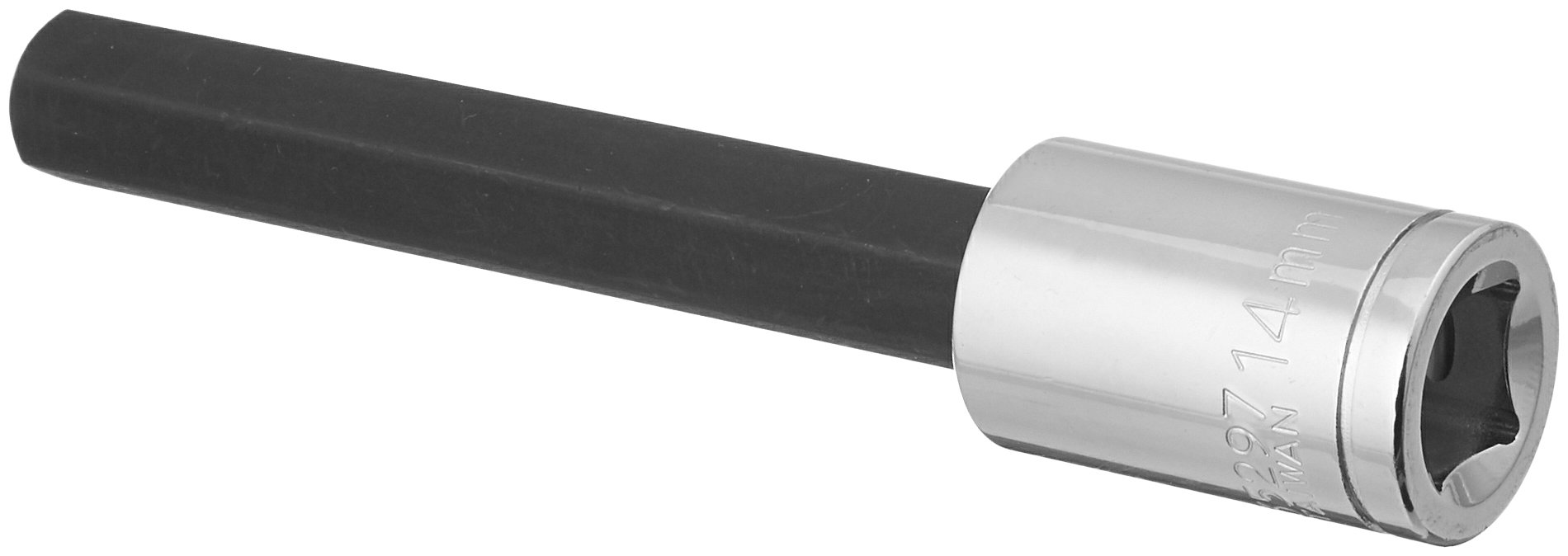
The short, stout socket that handles over 100 ft-lbs without budging — perfect for fork lowers.
This Williams socket is only 1.5 inches long, making it the stubbiest option here by a wide margin — it is 1.5 inches long compared to the GEARWRENCH at 7.01 inches. Owners mention they “have used to set over 100ftlbs of torque without issue,” which matches the high-polished chrome finish that cleans easily and resists corrosion. Its compact size fits perfectly into the lower fork mount area on a Honda Grom or Monkey, where a longer socket would hit the brake caliper or fender bracket.
The socket outside diameter is 1 inch, slim enough to fit into recessed bolt pockets on Harley Street Glide forks. One reviewer called it “the exact hex drive I needed for removing the bolts on the bottom of the front forks on my 2018 Street Glide.” Unlike the Capri Tools universal joint, this is a rigid straight bit — no wobble, no angle — which gives you direct torque transfer without any loss.
Why It Shines
- Proven torque capacity of 100+ ft-lbs per real-world use
- Short 1.5-inch length fits tight fork and caliper spaces
- Polished chrome finish wipes clean after greasy jobs
The Limitation
- Too short for deep-reach applications like transmission drain plugs
- No ball-end feature for angled entry
Motorcycle fork specialist: If you own a Harley, Honda Grom, or any bike with a recessed fork lower bolt, this is the socket that makes the job one-tool-easy.
skip it if: your work involves bolts buried deeper than 2 inches — you will bottom out before engaging the fastener.
3. Bondhus 43784 14mm ProHold 1/2″ Drive Socket Ball End Bit w/ProGuard Finish, 6″
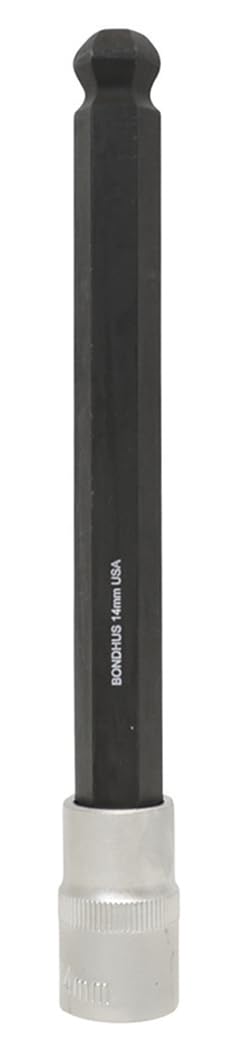
The ball-end bit that lets you enter at an angle when straight-on access is blocked.
Bondhus is one of the few brands making a ball-end 14mm hex socket — and that ProHold ball tip is the standout feature. It allows you to insert the bit into the fastener at up to a 25-degree angle, which matters when a frame rail or bracket blocks a straight shot. At 6 inches long and 0.15 pounds, it is significantly lighter than the 7.2-ounce CTA Tools socket, making it easier to handle overhead or in tight engine bays. Buyers love that “you can get into deep places,” and one reviewer on heavy equipment said it “works great on hitachi shovels and haul trucks.”
The ProGuard finish is a brushed satin that resists rust better than bare steel. Unlike the CTA Tools two-piece construction, this is a one-piece machined design from a US-based manufacturer — made in the USA, per the product specs. One catch: the ball-end tip reduces the contact surface area vs a straight hex tip, so it is not ideal for maximum torque applications where you need every bit of engagement to avoid stripping the bolt head.
Angled-Entry Expert: Perfect for jobs where the bolt is not perfectly aligned with your ratchet — think Hitachi shovel frame bolts or tight auto suspension work where a straight socket would not seat properly.
Torque Trade-Off: For high-torque fasteners (over 100 ft-lbs), a standard flat-tip hex socket gives you a more secure bite and less risk of cam-out.
Reach for this if: you frequently work on equipment where bolt access is partially blocked and you need that angled-entry capability.
Look elsewhere if: your primary need is maximum torque on a straight-shot bolt — a standard hex tip gives you a more secure grip.
4. CTA Tools 8554 Long Hex Bit Socket – 14-Millimeters
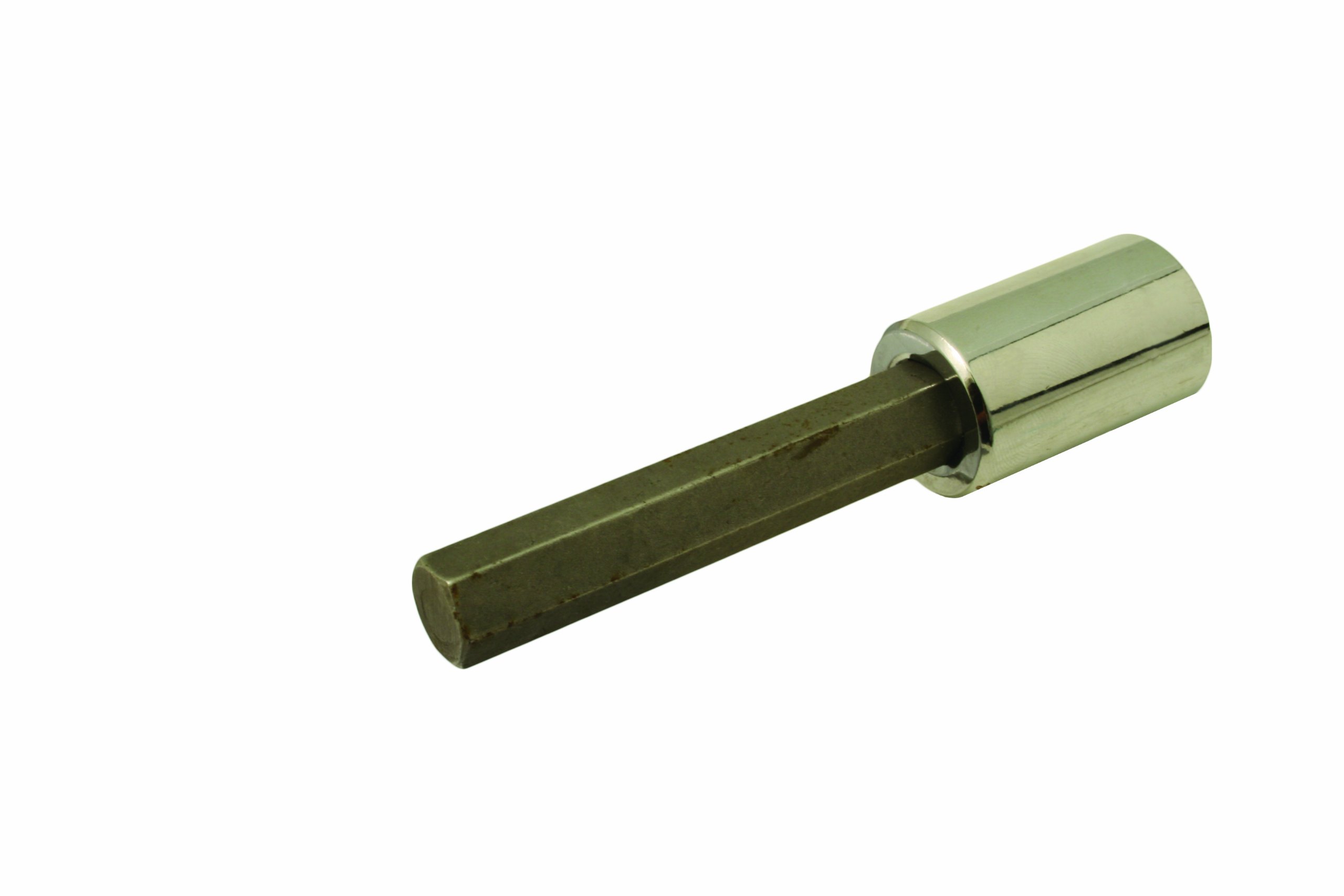
The 4-inch reach that Harley owners specifically designed — bolt-on torque without guessing length.
This CTA Tools socket is 4 inches long (102 millimeters) and uses a two-piece construction designed for high torque — a hardened hex bit pressed into a forged alloy steel base. It weighs 7.2 ounces, which is three times heavier than the 2.4-ounce Wera socket, giving you a solid feel that absorbs vibration. Customers note it “worked like a charm” for fork tube inserts on a Harley Dyna, and multiple owners confirm it is exactly the right length for 2014-and-up Harley Touring front fork bottom bolts. Unlike the Bondhus ball-end, this is a straight hex tip that gives you full surface contact on the fastener flats.
The heavy-duty construction ensures you can apply serious torque without the bit twisting. One reviewer noted conflicting dimension listings but praised the tool quality itself. At 4 inches, it splits the difference between the short Williams and the long GEARWRENCH — long enough to reach deep fork bolts but not so long that you lose leverage or feel awkward swinging a ratchet.
Why It Fits
- 4-inch length is the just-right reach for many motorcycle fork and caliper bolts
- Two-piece forged construction handles high torque without failure
- Weighs 7.2 ounces — substantial enough to feel solid in hand
The Catch
- Heavier than other options — at 7.2 oz compared to the Wera at 2.4 oz
- No anti-corrosion coating beyond standard steel finish
Harley-specific pick: If you own a 2014+ Touring or Dyna, this socket’s 4-inch length is the known correct tool for fork damper bolts — no measuring required.
pass on it if: you need a lightweight all-purpose socket for a mobile tool bag — the CTA is heavier than alternatives of similar reach.
5. Capri Tools 14 mm Universal Impact Socket, 3/8-Inch Drive, 6-Point, Metric
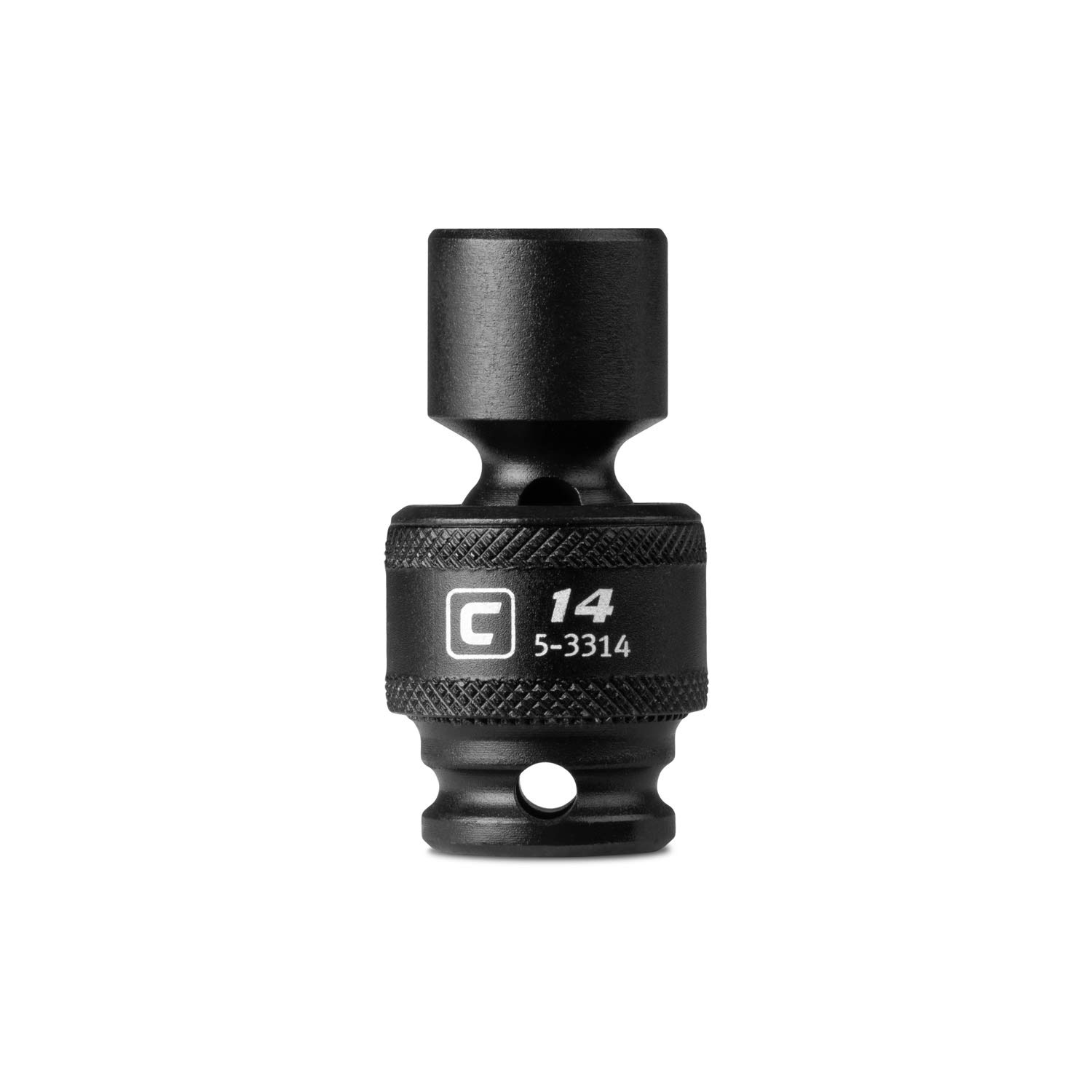
The universal-joint impact socket that bends 30 degrees — built for bolts that sit at awkward angles.
Most hex sockets are straight, but this Capri Tools socket is a universal swivel joint with a 30-degree working angle that rotates 360 degrees — meaning you can reach fasteners that are not perfectly aligned with your ratchet or impact gun. It uses a 3/8-inch drive, while most picks here use a 1/2-inch drive, so it is lighter and fits compact impact wrenches. The chrome molybdenum steel and manganese phosphate coating (the preferred coating in military and aerospace) resist corrosion better than black oxide. Reviewers point out it is “great socket I’m a mobile tech and loose tools so not wanting to spend a lot on something that probably loose.”
The WaveDrive 6-point design grips the fastener flats more tightly than a standard hex shape, reducing the chance of rounding the bolt head. One mechanic said this socket “outperforms the one it replaced” from a high-end tool truck brand. The trade-off is that the swivel joint introduces a small amount of play — acceptable for impact use but less precise than a rigid socket for final torque-by-hand.
Awkward-Angle Ace: When you need to reach a bolt that sits behind a bracket or at an odd angle, this 30-degree swivel socket saves you from breaking out a wobble extension or universal adapter.
The Compromise: If you need maximum torque transfer for high-torque fasteners, a straight hex socket gives you a stiffer, more direct connection.
Grab this if: you work in tight engine bays or on equipment where fasteners are not always perfectly aligned — the swivel joint eliminates the fight.
Pass if: you only need a socket for simple straight-shot bolts — the rigid sockets cost less and transmit torque more efficiently.
6. Performance Tool W32984 1/2 Drive Hex Bit Socket, 14mm
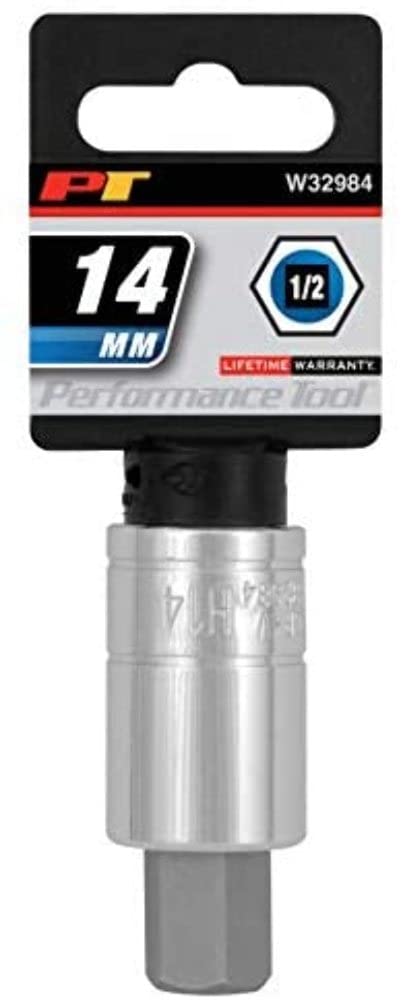
An entry-level hex socket that punches above its price for occasional automotive and motorcycle jobs.
Made from chrome vanadium alloy steel with a polished nickel-chrome plated finish, this Performance Tool socket resists corrosion even after sitting in a damp garage. It uses a 1/2-inch drive, matching the same standard as the Williams and GEARWRENCH picks above. Shoppers say it “works perfectly for BMW K1600 front wheel removal” at half the price of dedicated motorcycle tools — though one noted they wished it were 3/8-inch drive and needed an adapter. Despite the budget-friendly positioning, it comes with a lifetime warranty that backs its construction.
One reviewer received a 16mm socket due to a packaging error (Amazon refunded quickly) but noted the quality is “sufficient for occasional use.” Another used it to remove a 2016 Dodge Durango brake caliper bolt and called it “high-quality” and “much cheaper than auto parts chains.” The catch is that the bit length is not specified in the product data, so it is likely a standard reach — fine for exposed bolts but too short for deep recessed fasteners where the GEARWRENCH or CTA Tools would reach.
Why It Works
- Chrome vanadium steel with nickel-chrome plating resists rust well
- Lifetime warranty adds confidence for an entry-level buy
- Half the price of specialty alternatives — proven for BMW K1600 front wheel removal
The Limitation
- Bit length is unlisted — likely standard reach, not long enough for deep bolts
- Some buyers received the wrong size due to packaging errors
Weekend mechanic’s starter: If you need a 14mm hex socket for occasional car or motorcycle work and do not want to spend on a premium brand, this gets the job done.
it’s not for you if: you need a specific bit length (deep or extra-long) for recessed bolts — you will have to measure and guess with this one.
7. Wera Zyklop 8790 HMC 1/2″ Socket, Hex head 14mm x Length 37mm
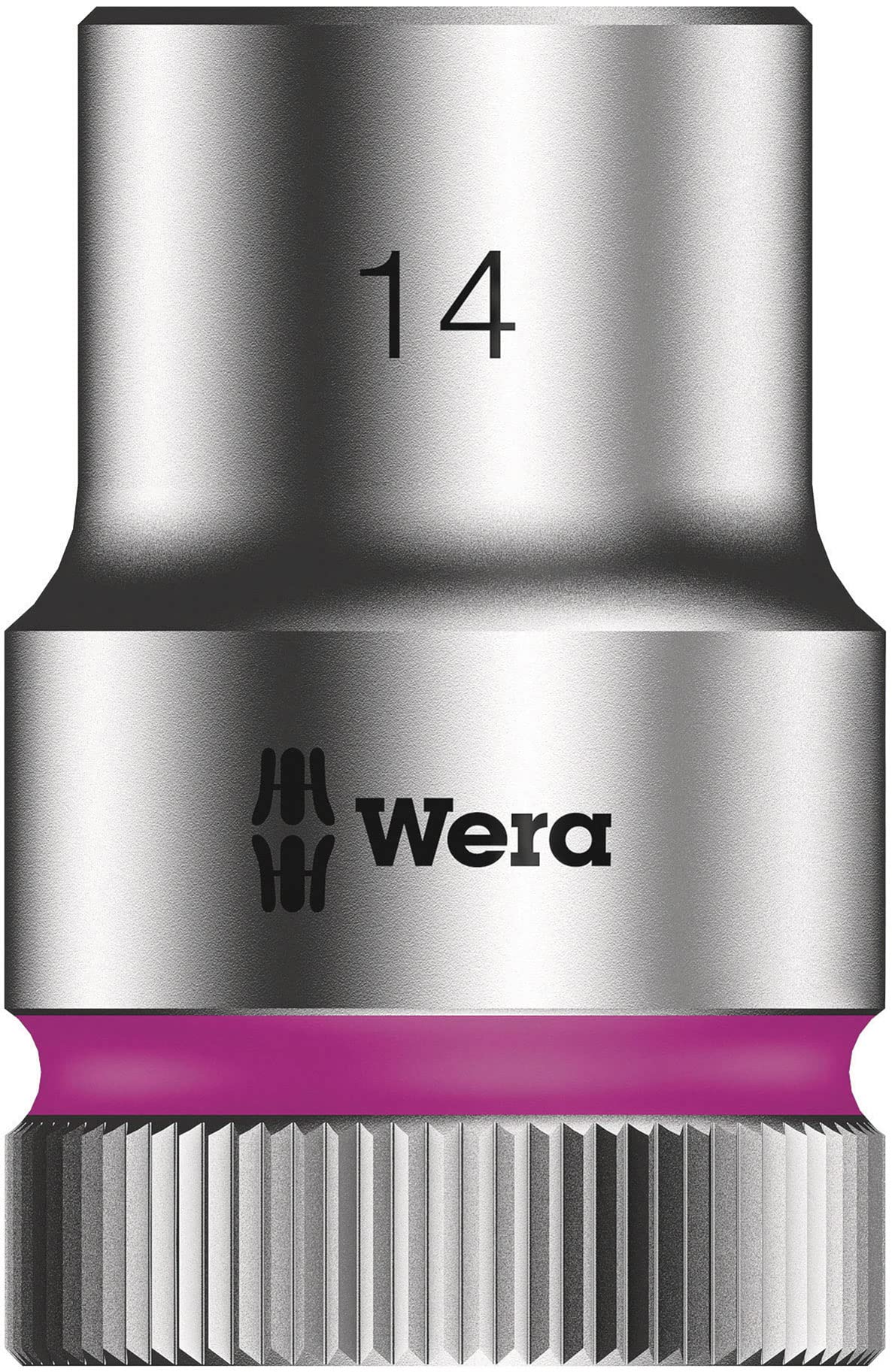
The German-engineered lightweight that weighs just 2.4 ounces — nimble feel without sacrificing fit.
This Wera Zyklop socket is a short 37mm (~1.5 inches) bit with a brushed chromium plated finish and a ball intercept ring that holds the socket on your ratchet. At 2.4 ounces, it is 3.0 times lighter than the 7.2-ounce CTA Tools socket, making it ideal for overhead work or long sessions where tool weight adds up. The rear end knurling gives you a precision grip surface for manual spinning before you reach for the ratchet. Buyers describe it as “stabil, passgenau und gut zum arbeiten” — stable, precise-fit, and good to work with.
The Zyklop design works for both manual and machine use, though it lacks impact-rated construction. Unlike the Capri Tools universal swivel, this is a rigid socket with zero wobble — you get direct, clean torque transfer. The catch is that the 37mm length makes it one of the shortest options here, so it will not reach deep bolts that the 4-inch or 7-inch sockets handle. If you know you know about Wera quality — as one reviewer put it — but the price is slightly higher than alternatives of similar length.
Feel-First Tool: For precision work where you want to feel the fastener engagement and spin the socket by hand before torquing, the knurled grip and lightweight design make this a joy to use.
Short-Reach Reality: At 37mm, this socket will not reach into deep fork lowers or transmission plug recesses — it is strictly for exposed or shallow bolts.
Reach for this if: you value tool feel and precision fit for assembly work where bolts are fully accessible — the knurling and light weight make a real difference.
Look elsewhere if: you need deep reach for recessed fasteners — this socket is too short for fork damper bolts or transmission drain plugs.
Understanding the Specs
Drive Size (3/8-inch vs 1/2-inch)
Drive size is the square hole on the back of the socket that connects to your ratchet or impact wrench. A 3/8-inch drive (used by the Capri Tools socket) fits compact ratchets and is lighter for tight spaces. A 1/2-inch drive (used by most picks here) connects to standard 1/2-inch ratchets and impact guns, handling higher torque without the adapter that adds bulk. If you already own a 1/2-inch tool set, stick with 1/2-inch sockets — they save you from needing a reducing adapter that can reduce torque transfer and adds one more component to lose.
Bit Length (Reach)
Bit length is the distance from the socket face (where it meets the fastener) to the tip of the hex bit. This determines whether you can actually engage the bolt — a socket that is too short bottoms out on surrounding components before it reaches the hex opening. Common lengths range from 1.5 inches (Williams, Wera) for shallow bolts to 7 inches (GEARWRENCH) for deep-reach automotive work. Measure the depth of the bolt pocket before you buy: if the bolt is recessed 4 inches deep, a 1.5-inch socket will not reach it. The CTA Tools 4-inch length is a good middle ground for most motorcycle fork work.
FAQ
Will any 14mm hex socket work with an impact wrench?
What is the difference between a hex bit socket and a regular hex key or Allen wrench?
How do I know if I need a 1/2-inch drive or 3/8-inch drive hex socket?
What does “ball-end” mean on a hex socket and when do I need it?
Can I use a 14mm hex socket on a 9/16-inch bolt?
What is the best length of hex socket for Harley Davidson front fork bolts?
How much torque can a 14mm hex socket handle before failing?
Is a 14mm hex socket the same as a 14mm Allen key?
Can I use a 14mm hex socket with a torque wrench?
How do I prevent a 14mm hex socket from rounding the bolt head?
Final Thoughts: The Verdict
If you want one dependable pick, the 14mm hex key socket winner is the GEARWRENCH 82583 because its 7-inch reach handles deep automotive bolts most sockets cannot touch, and the S2 steel insert bit resists deformation under high torque. If you want a short precision socket for motorcycle fork service, grab the Williams JHW35297 — it handles over 100 ft-lbs in a compact 1.5-inch package. And for angled-entry work where a straight socket will not seat, the standout is the Bondhus 43784 with its ProHold ball-end tip that lets you enter at an angle up to 25 degrees.
How We Picked
We do not accept paid placement. Every pick is matched to a real buyer and a real use-case; we do not hands-on test units.
Sources & Methodology
Specifications: manufacturer listings and product documentation. Review insights: verified customer reviews, as of July 2026. Pricing: not shown on this page (it changes often); check the current price via the retailer link.
As an Amazon Associate, Trending Car earns from qualifying purchases. This does not affect which products we feature.