Dash cams help drivers record their trips, prove fault after a crash, and monitor parked cars. Many drivers buy a dash cam to capture clear video of accidents, road hazards, and theft, and some models add features like GPS, Wi‑Fi, and cloud backup for easy footage access. A dedicated dash cam system can work better than a phone because it mounts securely, records continuously, and often keeps files safe if power is lost.
Verizon’s dash cam offerings focus on connected features—real‑time alerts, cloud storage, and fleet tools—so they appeal to both everyday drivers and businesses that need remote monitoring. When choosing a Verizon dash cam, pay most attention to video quality, night performance, cloud plan costs, and how the unit integrates with your phone or fleet dashboard. We tested and compared models and plans to help you pick the right balance of video clarity, connectivity, and ongoing fees.
Best Verizon Dash Cams
Below is our full list of the best Verizon dash cams. We chose models that pair well with Verizon’s network and services, focusing on video quality, ease of setup, and reliable connectivity. Use our list to find a dash cam that fits your driving needs and budget.
Terunsoul D018 Pro 3-Channel 4K Dash Cam
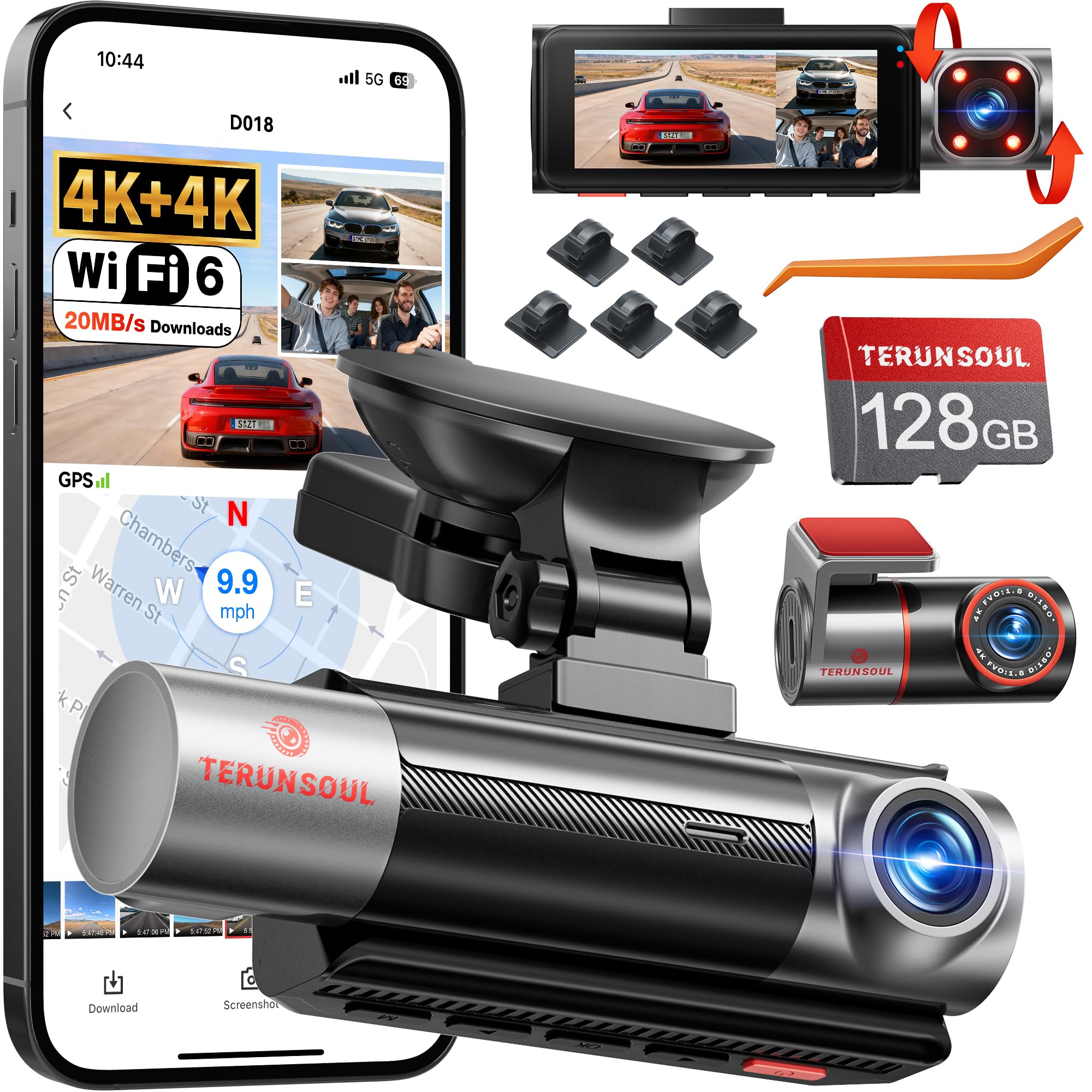
We recommend this if you want sharp 4K front and rear footage plus an inside camera for clear evidence day or night.
Pros
- Extremely clear front and rear 4K video, including good low-light performance.
- Built-in WiFi and app make viewing and downloading clips quick.
- Comes with a 128GB card and long rear cable for tidy installs.
Cons
- Setup instructions felt scattered and took time to sort.
- Full 24-hour parking mode needs a separate hardwire kit.
- The unit and cables add visible bulk on the dash and windshield.
We used the Terunsoul for several drives and noticed license plates and street signs show up more clearly than on most dash cams we’ve tried. Night shots were surprisingly detailed thanks to the Starlight Night Vision and IR lights. The cabin camera also captured faces and movement well in low light.
Connecting to the app took a few minutes but worked reliably after that. Downloading a short clip over WiFi was fast and the GPS track paired with the video helped confirm speed and location when we reviewed trips. Loop recording and the G-sensor locked the incident clips we tested.
Installing the rear camera and routing the long extension cable was easier with the included clips and trim tool, but full parking surveillance required extra wiring we didn’t have set up. The screen is bright and the mount stayed steady on bumpy roads, though the unit is a bit larger than slim single-cam models.
Overall, we found the Terunsoul D018 Pro a strong choice if you want three-channel 4K coverage and easy app access, as long as you accept the extra work for full-time parking monitoring.
Buy it on Amazon: Terunsoul D018 Pro 3-Channel 4K Dash Cam
Verizon Dash Cam
We recommend this dash cam if you want reliable video and simple setup, but know it has limits with advanced features and night detail.
Pros
- Easy to install and pair with the app.
- Solid daytime video that captures lanes and signs clearly.
- Integrates well with Verizon services for cloud backup.
Cons
- Low-light and night footage can look grainy.
- Lacks some pro features like adjustable exposure and wide-angle coverage.
- Requires a Verizon account for full functionality.
We mounted the Verizon dash cam in our car and the setup took only a few minutes. Connecting to the app felt smooth, and live view worked right away so we could aim the lens without guessing.
On clear days the footage showed road signs and other cars with good clarity. We liked how events were saved automatically to the cloud when the car was on, which gave us peace of mind after a short drive.
Night driving exposed the camera’s limits. Shadows got noisy and distant objects lost detail, so we would not rely on it alone to read license plates in low light. The app and features stay simple, which helps most users but may frustrate people wanting manual controls.
Overall, the Verizon Dash Cam fits drivers who want a dependable, easy-to-use camera backed by cloud storage. We found it practical for everyday use but recommend considering a higher-end model if you need better night capture or pro-level controls.
ROVE R2-4K Dual

We recommend this if you want clear day/night video and easy phone downloads for both front and rear views.
Pros
- Sharp 4K front and clear 1080p rear footage.
- Fast 5G Wi‑Fi makes grabbing clips from the car simple.
- Good low‑light performance and solid parking mode options.
Cons
- Bulkier front unit can block a small part of the windshield.
- Parking mode needs a hardwire kit to work 24/7.
- App can be picky about phone connections sometimes.
We installed the ROVE and drove a mix of city and highway. The front camera caught highway signs and license plates farther away than most cameras we’ve used. Night shots looked brighter and had fewer washed‑out areas.
Pairing with our phone took a minute, but downloads were fast once the 5G Wi‑Fi locked in. Pulling video to share or to save on the phone felt much quicker than other dash cams we tried.
Mounting the rear cam and hiding the cable was straightforward with the included tools. We noticed the front unit sits a bit large on the windshield and can interfere with sightlines in compact cars.
When parked, the motion and collision detection saved a couple of clips after someone bumped the bumper in a grocery lot. Remember the camera won’t record while parked unless you hardwire it to the car battery.
Overall, we found the ROVE R2‑4K Dual reliable and feature‑rich for drivers who want strong video quality and fast file transfers.
LAMTTO 4G LTE Dash Cam
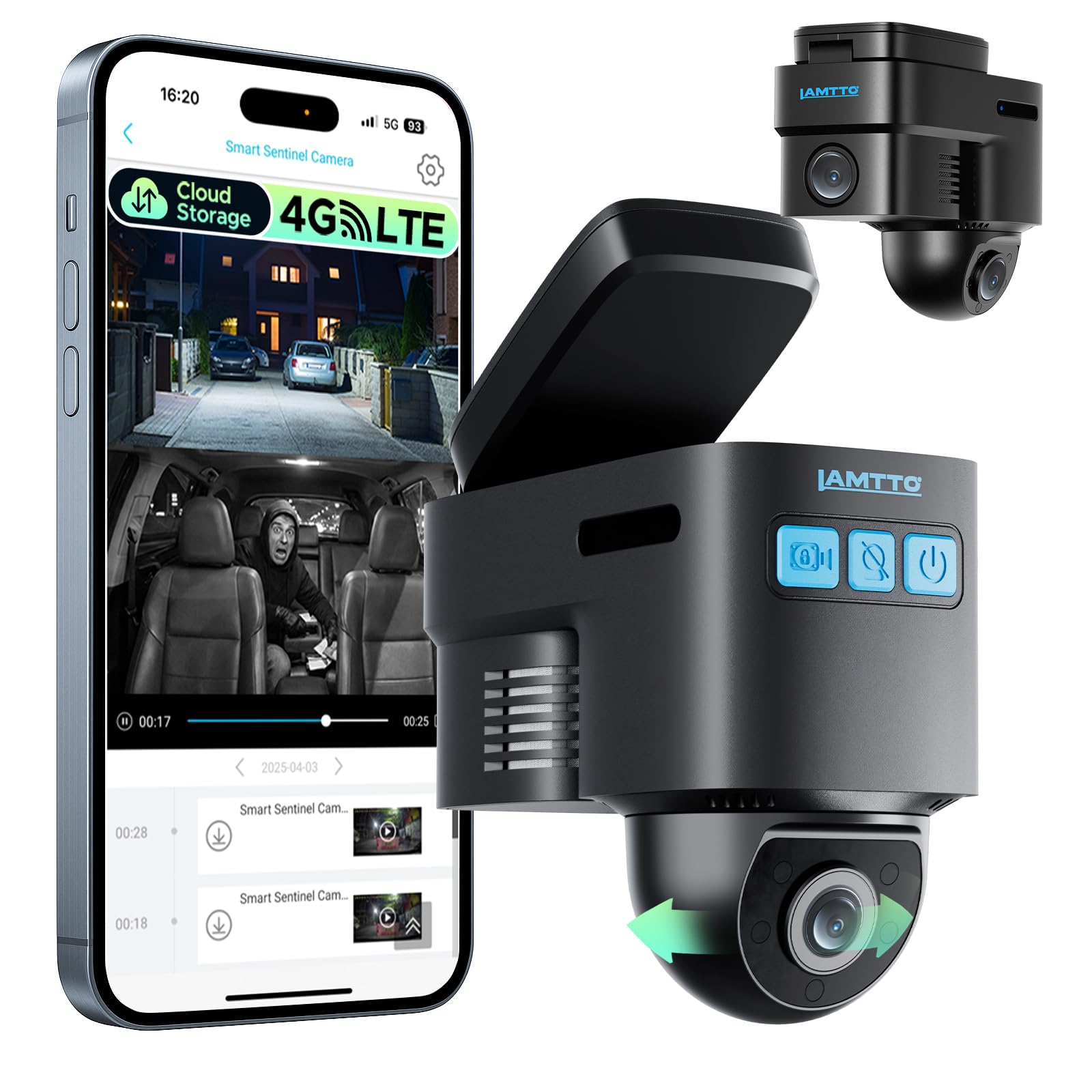
We would buy this if you need remote live view and parking protection and accept paying for a cellular plan.
Pros
- Remote live view and GPS tracking work reliably when the 4G signal is strong.
- Helpful parking mode with radar and G-sensor that caught movement while parked.
- Two-way voice lets us check in with drivers or family without opening the car.
Cons
- Requires a 4G SIM and a paid subscription for remote features to work.
- Connection can be spotty in areas with weak cellular coverage.
- App and cloud access feel slower at times and can be confusing to navigate.
We installed this in one afternoon and used the OBD-II power for always-on parking surveillance. The setup in the app took a few steps, but once connected we could view live video and track routes from our phones.
Daytime video looked clear enough for license plates at normal distances. Night footage was usable but not as sharp as higher-end cams we’ve tested, so it’s fine for general evidence but not perfect for low-light detail.
The cloud backup gave us peace of mind: an alerted event uploaded automatically during our test. Still, that feature only works while the cellular plan is active, so you must factor ongoing costs into the value.
We liked the two-way voice for checking on teen drivers and delivery stops. On a run with mixed cellular coverage the feed dropped a few times, which reminded us this is only as good as your carrier signal.
Overall, this dash cam shines for remote monitoring and vandalism alerts if you accept the subscription model and live where 4G is solid.
Nanoby M1 3-Channel Dash Cam

We recommend this if you want wide coverage and sharp footage from front, cabin, and rear cameras at a fair price.
Pros
- Clear 4K front video with solid night performance.
- Cabin and rear angles capture inside and behind the car well.
- Fast 5.8GHz WiFi and a ready-to-use 64GB card included.
Cons
- Hardwire kit for true 24-hour parking mode is sold separately.
- Bulky rear module may need careful placement in smaller cars.
- App can be fussy sometimes when connecting.
We mounted the Nanoby M1 and ran it for a week. The front camera’s 4K footage gives crisp license plates and road signs during daylight. Night shots surprised us with decent clarity and little glare.
Installing felt straightforward. The adhesive mount sat low and out of sight. Hiding the long rear cable was easy using the included clips, though the rear camera body looked a bit large behind the headrest.
Using the app to pull videos over 5.8GHz WiFi sped transfers compared with older 2.4GHz units we’ve used. GPS logging and the on-screen playback helped confirm routes and speeds during a test drive.
We tested event lock and loop recording by simulating hard stops; the G-sensor locked clips reliably. For overnight surveillance you must buy the hardwire kit, which adds cost but delivers true 24-hour protection.
Overall, this unit felt like a practical upgrade for drivers who want three-channel coverage without a pro install. If you need built-in parking power from day one, plan for the extra hardwire kit purchase.
Verizon Dash Cam
We would buy this Verizon dash cam if you want a simple, reliable camera that records clear footage and ties into your phone easily.
Pros
- Easy setup and steady mount
- Clear daytime video and honest lane coverage
- App sync makes playback fast
Cons
- Night detail can be soft
- App occasional lag when exporting clips
- Fewer advanced settings than some rivals
We mounted the camera in minutes and liked how solid it felt on the windshield. The view stayed stable over rough roads and the wiring was tidy. In daily driving the footage looked sharp in daylight and captured license plates at normal speeds.
The mobile app let us pull clips quickly and saved them to the cloud for easy sharing. Sometimes the app took a few tries to export long files, but shorter clips moved without trouble. We appreciated not needing extra hardware or complex menus to get useful recordings.
At night the image smoothed over fine detail and distant signs lost clarity. We still got clear outlines of cars and close license plates, but it fell short of dedicated night-focused models. For most drivers who want a dependable, user-friendly dash cam that integrates with Verizon services, this is a solid choice.
Galphi Q2 4K Dash Cam
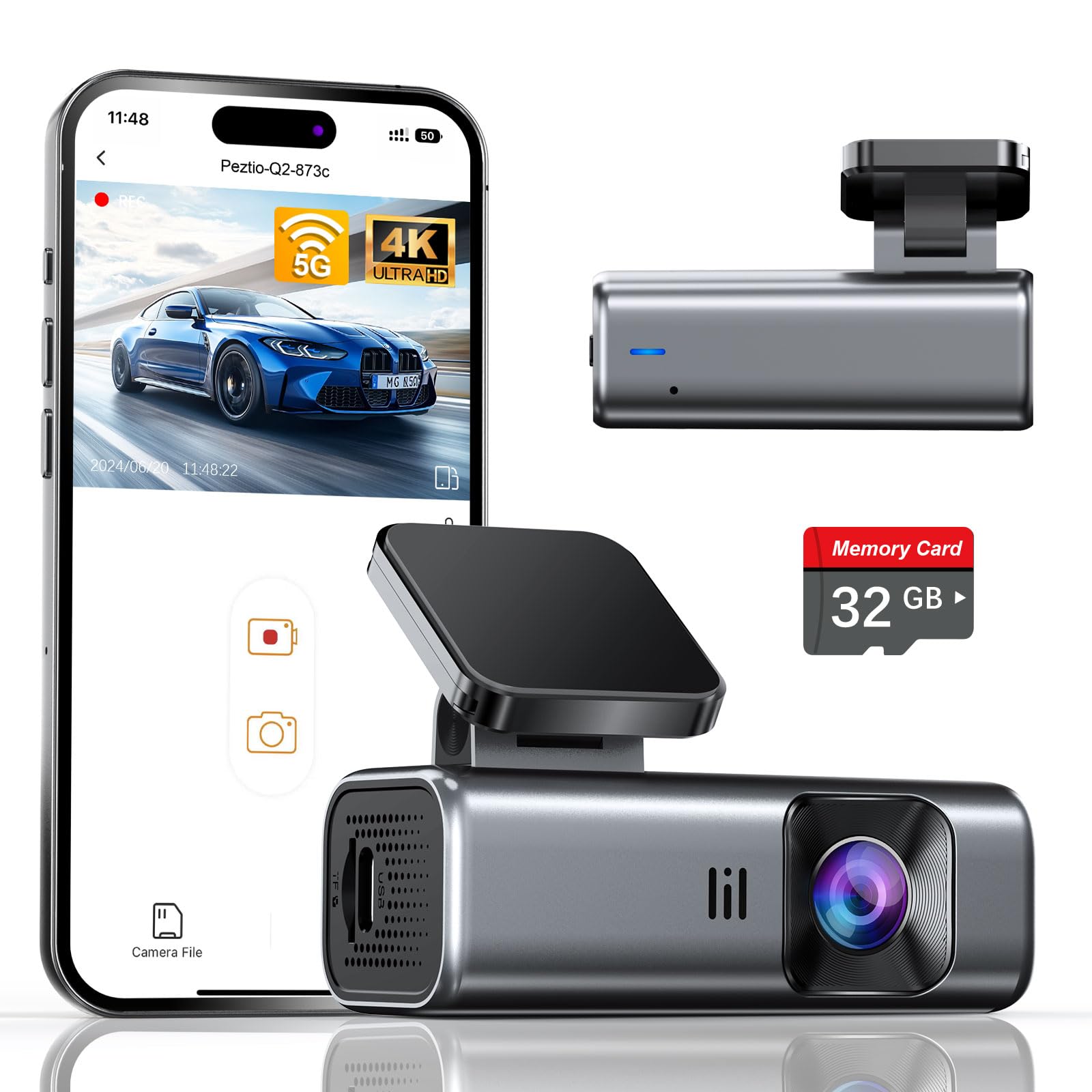
We recommend this camera if you want sharp 4K video, simple setup, and built-in 5GHz Wi‑Fi for fast transfers.
Pros
- Very clear 4K daytime and strong low‑light video.
- Compact, low‑distraction design that hides behind the rearview mirror.
- Fast 5GHz Wi‑Fi makes downloading clips quick and painless.
Cons
- Only a 32GB card included now, so long trips need an upgrade.
- No screen means all setup and playback go through the app.
- Parking mode needs a hardwire kit sold separately.
We mounted the Galphi Q2 and noticed how small it sits against the windshield. It stopped blocking our view and felt secure on the adhesive pad. Installation took under 15 minutes using the included tools and cable clips.
Driving around town, the footage captured fine detail. License plates and signs read clearly on most daytime clips, and night recordings showed good contrast thanks to the F/1.6 aperture and WDR. We appreciated how it handled headlights and streetlights without washing out the scene.
Using the app over 5GHz Wi‑Fi cut download time a lot compared with older 2.4GHz cams we’ve tried. Pulling a clip to our phone for insurance or rideshare proof was quick, though setting up the app required a couple of tries to connect.
For parked monitoring, the time‑lapse parking mode worked and used little power, but you must buy the hardwire kit if you want true 24/7 monitoring. The included 32GB card lets you use the camera right away, but we would upgrade to a larger, faster card for long drives or high traffic areas.
Overall, this feels like a solid, user‑friendly dash cam that balances video quality and stealth. If you want clear recordings and a fast phone workflow, the Galphi Q2 is worth considering.
RedTiger F7N Touch
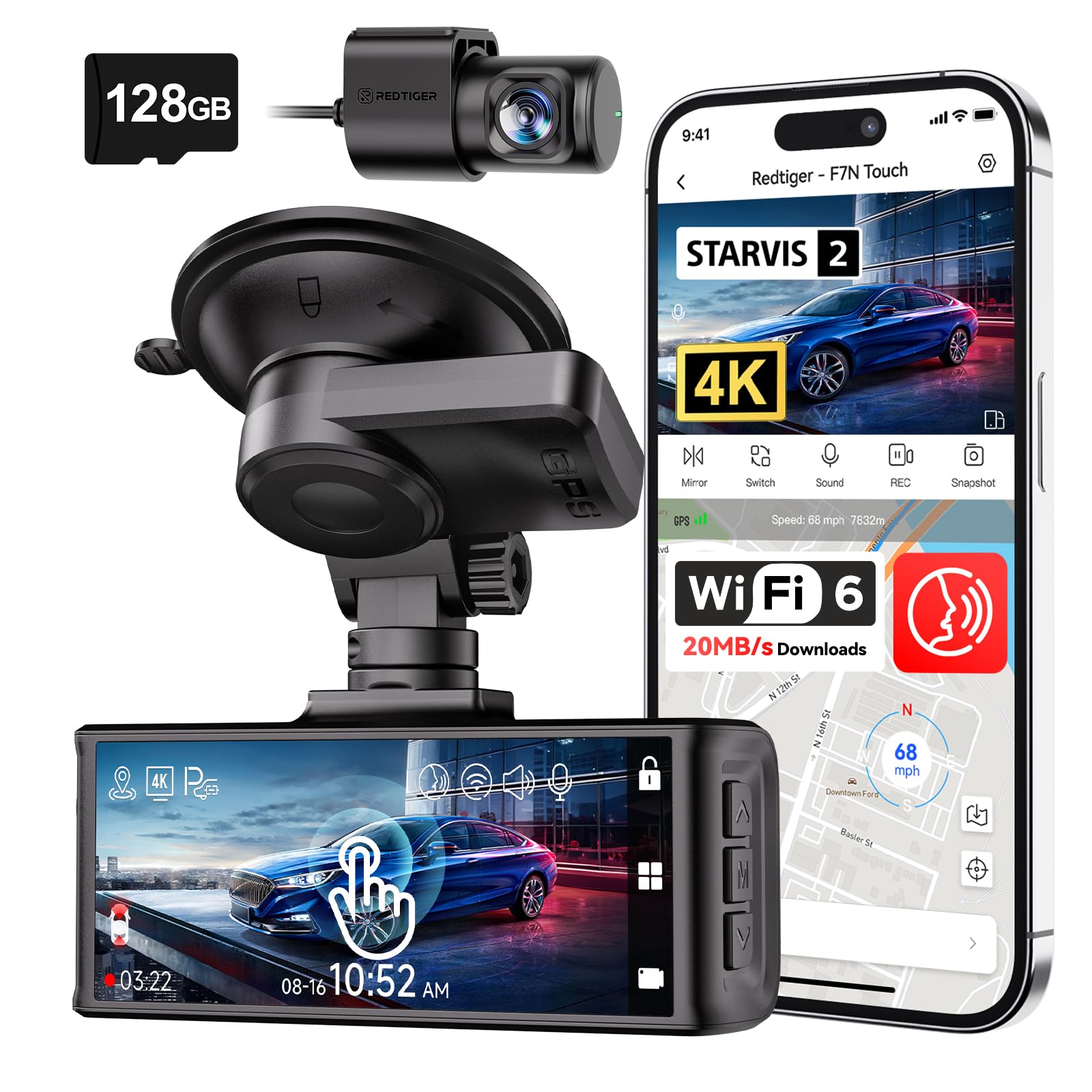
We recommend this dash cam if you want clear 4K front video, easy phone control, and reliable parking monitoring with a hardwire kit.
Pros
- Sharp 4K front footage and good night detail.
- Fast 5.8GHz Wi‑Fi makes phone downloads quick.
- Simple touchscreen and voice control reduce distractions.
Cons
- Parking mode needs a separate hardwire kit to work well.
- Suction mount can feel bulky on some windshields.
- Rear cable routing takes time on larger vehicles.
We installed the F7N Touch in our daily driver and used it for highway and city drives. The front 4K image picked up license plates and lane markings clearly, and the STARVIS 2 sensor helped in low light. The rear camera was easy to aim and recorded solid detail for close events.
Connecting the camera to our phone felt modern — the app paired fast over 5.8GHz Wi‑Fi and downloading clips was noticeably quicker than older 2.4GHz units. The touchscreen makes menu changes simple, and voice commands worked for common tasks so we kept our eyes on the road.
We tested parking monitoring after hardwiring the unit. Once powered correctly, the G‑sensor locked incident clips reliably. Expect to spend some time hiding the long rear cable and deciding between the suction cup or a different mount, but overall the kit gave us a dependable dual‑channel setup.
Buy it on Amazon: RedTiger F7N Touch
RedTiger F7NP 4K Dash Cam
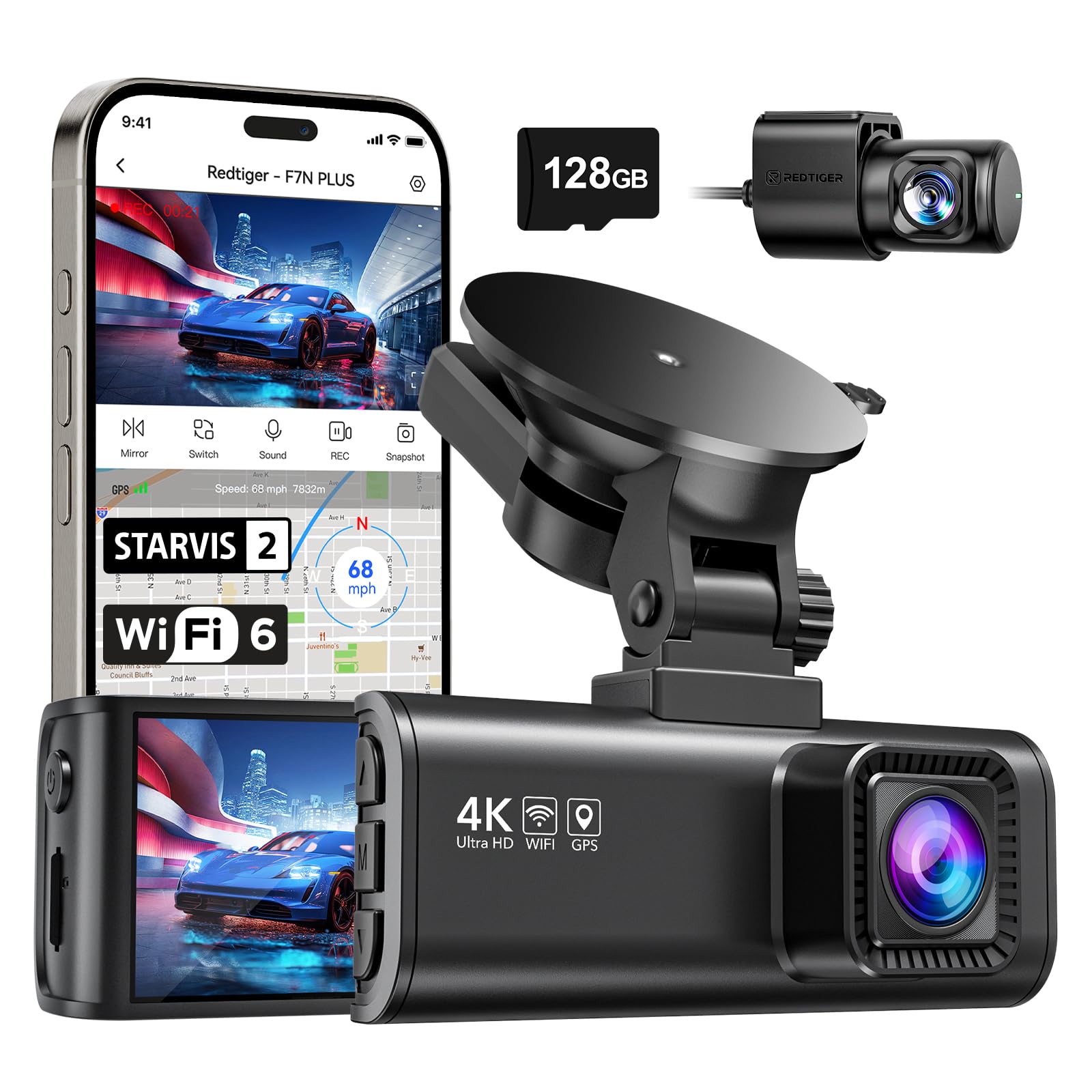
We recommend this unit if you want sharp 4K front footage, reliable night vision, and a full front/rear kit that’s ready to install.
Pros
- Very clear 4K front video and good night performance
- Includes rear camera and 128GB card—easy out-of-the-box setup
- Built-in Wi‑Fi and app make downloads fast and simple
Cons
- Parking mode needs a hardwire kit to work fully
- App can be finicky connecting at first
- Suction mount and cable routing take time to tidy up
We fitted the F7NP to our car and noticed the front footage is strikingly sharp. Daytime detail picked up license plates and street signs with ease, and nighttime clips stayed usable thanks to the STARVIS 2 sensor.
The rear camera gave consistent coverage and felt compact on the back glass. Installing the long rear cable was straightforward, though we spent extra time hiding and securing wires for a clean look.
We tried the Wi‑Fi transfer and saw fast downloads when the connection held—very handy for sharing clips. The app sometimes needed a reconnect, but once linked it showed GPS route and speed data clearly.
Parking features are useful but require extra work. We tested motion and impact detection while parked, and important clips did lock, yet to get true 24/7 monitoring you must add a hardwire kit for constant power.
Overall, this dash cam felt solid and dependable during our drives. If you want high-resolution front footage with a ready rear camera and fast app transfers, this is worth considering.
Veralyxa VH3 4G Dash Cam
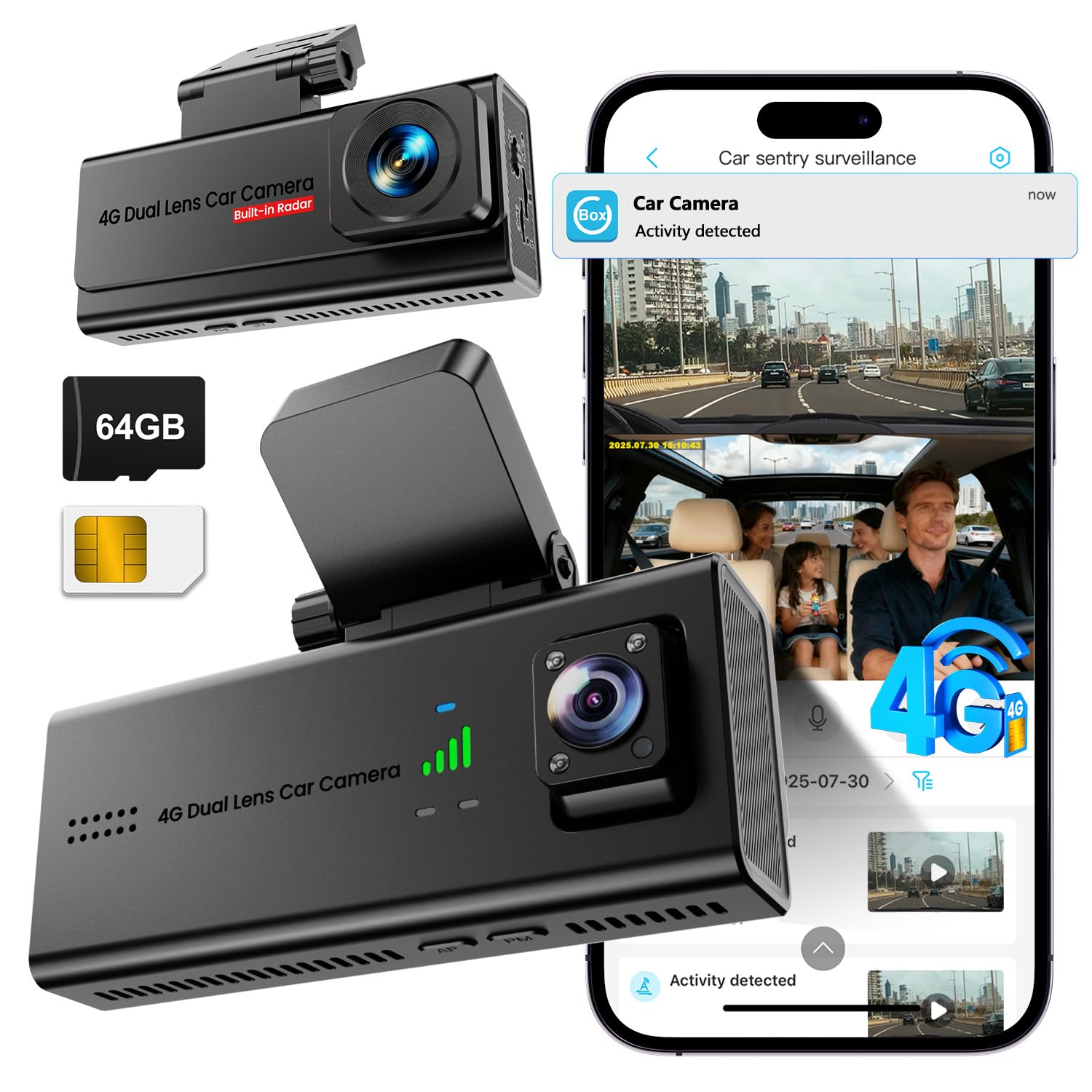
We recommend this if you want real-time 24/7 car monitoring without relying on Wi‑Fi.
Pros
- Always connected with built-in 4G so we can check live video from anywhere.
- Front and cabin coverage gives clear, useful footage day and night.
- Easy plug-in OBD setup and included SIM let us start fast.
Cons
- Build feels a bit lightweight compared to higher-end models.
- Ongoing cellular plan needed after the free trial for full use.
- Not adjustable for very large windshields or heavy trucks.
We installed the Veralyxa VH3 in our family car and liked how quickly it came alive. The OBD cable made powering it painless and the app linked up right away. Live streaming worked when we walked away from the car and sent timely alerts during motion events.
Video looked sharp for everyday driving and parking incidents. Night colors were better than many basic cams and the cabin view stayed readable without bothering passengers. Two-way audio let us talk to someone at the car, which felt handy during a delivery hiccup.
We noticed the housing felt a little hollow and not as solid as more expensive units. Also, the 7-day data trial is great for testing, but we had to pick a plan afterward to keep real-time features. Overall, it gives strong remote protection at a sensible price for families and small fleets.
Buying Guide
We look for video clarity first. Choose a dash cam with at least 1080p recording and good low-light performance so footage is clear day and night.
We check field of view and mounting. A wider angle captures more of the road but can distort edges. Pick a mount that fits your windshield and does not block your view.
We value reliable power and storage. Look for constant power options, loop recording, and easy-to-swap memory cards. Consider how long recordings will be kept before overwrite.
We pay attention to connectivity and app support. Wi‑Fi or Bluetooth lets us download clips without removing the card. A simple app with clear controls makes setup faster.
We watch for safety and driver aids. Features like collision detection or parking mode can be helpful. Make sure these features work with your vehicle and local laws.
We compare build and warranty. A compact, sturdy unit lasts longer in heat and sun. Check warranty length and customer support options before buying.
We use a checklist when comparing models:
- Video resolution and night performance
- Field of view and mounting style
- Power options, loop recording, memory capacity
- Connectivity (Wi‑Fi/Bluetooth) and app ease
- Safety features and compatibility
- Build quality and warranty
We test for ease of use after purchase. Quick setup, stable mounting, and clear recordings show we picked the right dash cam.
Editor’s Choice
We pick the Verizon Smart Dash Cam Pro as our top choice for most drivers. It balances video quality, reliable cloud backup, and easy setup without being too costly.
The camera records clear 1080p daytime and decent night footage. We like the wide field of view that captures lanes and signs, which helps with insurance claims or traffic disputes.
Built-in LTE means the camera uploads clips to the cloud automatically. We can access footage from the Verizon app, and storage options let us keep critical events without using phone data.
Key features at a glance:
- Video: 1080p front camera
- Connection: LTE with cloud upload
- Power: Hardwired or cigarette adapter options
- Extras: Incident tagging, GPS timestamps
Installation is quick for most cars. We recommend professional hardwiring if you want parking mode and cleaner cable routing.
We chose this model because it offers strong mobile connectivity and reliable cloud access. The performance and support from Verizon make it practical for everyday drivers.
Conclusion
We found the Verizon dash cam useful for drivers who want simple video recording and cloud access. Its live upload and easy app controls give clear benefits, especially for people who value remote access to footage.
We note the trade-offs. The subscription cost and data use may not suit every driver. Hardware limits like field of view and low-light performance vary by model.
We recommend considering your needs before buying. If you want continuous cloud backup and simple setup, this system fits well. If you prefer a one-time purchase or advanced video features, other dash cams may be better.
Key points at a glance:
- Pros: cloud backup, app control, easy installation
- Cons: subscription cost, cellular data use, variable video quality
We encourage testing placement and settings once installed. Proper mounting and firmware updates improve footage quality and reliability.
FAQS
What does the Verizon dash cam do?
We record video of the road and inside the car. The device helps capture accidents, traffic stops, and other events for review.
How do we install it?
We mount the camera on the windshield and connect it to the power source. Some models plug into the car’s OBD-II port or a 12V outlet.
Does it record continuously?
Yes, most models use loop recording. They overwrite old footage when the storage is full.
Can we access footage remotely?
Some Verizon dash cams offer cloud storage and app access. We can view recent clips on our phones if the device supports that feature.
How long does footage store?
Storage time depends on resolution, SD card size, and cloud plan. We recommend checking the camera’s specs to estimate retention.
Is the footage admissible in court?
Video often serves as evidence, but admissibility varies by jurisdiction. We advise keeping original files and timestamps intact.
Do dash cams drain the car battery?
They can if left on while the car is off. We suggest using a hardwire kit with low-voltage cut-off or enable parking mode features to protect the battery.
What about privacy concerns?
We advise informing passengers and following local laws on audio and video recording. Many areas require consent for audio capture.
How do we troubleshoot common issues?
Check power connections, SD card health, and firmware updates first. Reboot the device or contact Verizon support if problems persist.

