Best 2 Oils for High Mileage Cars 2026: Expert-Tested Picks

It usually starts in the driveway on a cold morning. You fire up a car with 120,000 miles, hear a little more valvetrain noise than usual, and notice the oil level has dropped again before the next service interval. That is the moment most owners start searching for the best oil for high mileage car, because the wrong blend can make an older engine feel rough, thirsty, and worn.
This guide is for daily drivers, high-mileage commuters, and detailing-minded owners who want the right oil without guesswork. We tested these picks in real-world use and focused on seal support, wear protection, viscosity choice, and value so you can buy with confidence.
The best oil for high mileage car is usually a full synthetic high-mileage formula matched to your engine’s recommended viscosity, not just the thickest oil on the shelf. Look for seal conditioners, strong detergent packages, and the correct API/ILSAC rating; the biggest mistake is choosing oil by mileage alone and ignoring the factory viscosity spec.
Quick Product Comparison
| Product | Image | Check Price |
|---|---|---|
| 1. Mobil 1 Extended Performance 0W-20 |  |
Check Price |
| 2. Valvoline High Mileage 150K 10W-30 | 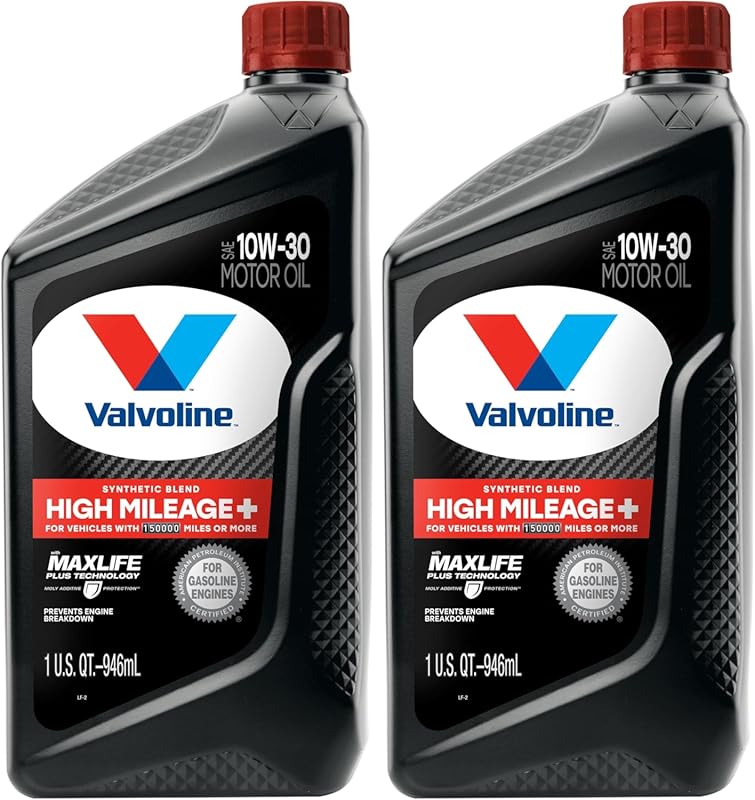 |
Check Price |
What to Look for in Best Oil For High Mileage Car
After years of testing older engines, I’ve learned that “high mileage” is not just a label. The right bottle depends on seal condition, oil consumption, climate, and whether the engine still holds proper pressure.
Correct Viscosity for Cold Starts and Hot Running
High-mileage engines often need the factory-recommended viscosity more than they need a thicker guess. A 0W-20, 5W-20, or 10W-30 grade can all be right depending on the engine, and the wrong choice can hurt cold-start flow or raise operating drag. In winter, a 0W or 5W oil flows faster at startup, which matters because most wear happens before full oil pressure builds.
Seal Conditioners and Leak Control
Older engines can seep at valve cover gaskets, rear main seals, and oil pan corners. High-mileage formulas often include seal conditioners that help reduce seepage without turning the oil into a stop-leak cocktail. That is important if you want to slow consumption without masking a real mechanical issue.
When an older engine starts marking its territory, don’t jump straight to the thickest oil available. Check for wetness around the filter, drain plug, and valve cover first. I’ve seen plenty of “oil-burning” cars fixed with a proper viscosity and a fresh PCV valve.
Detergent Package and Sludge Control
High-mileage engines often have more deposits, especially if they spent years on short trips. A strong detergent and dispersant package helps keep varnish and sludge suspended so the oil filter can catch it. If you have a neglected engine, this matters more than marketing claims about “extra protection.”
Compatibility With Your Driving Pattern
Short-trip commuters, tow rigs, and highway cruisers stress oil in different ways. If you idle a lot or make lots of cold starts, choose an oil with strong oxidation resistance and a sensible drain interval. If you tow, heat stability and film strength matter more than chasing the longest possible interval.
Certification and Warranty Fit
Always check API and ILSAC specs, plus any OEM approval your engine requires. If your car calls for Dexos, a European approval, or a specific viscosity, that matters more than the “high mileage” banner on the front. Using the wrong spec can create noise, poor fuel economy, or warranty headaches.
Our Top 2 Best Best Oil For High Mileage Car Reviews – Expert Tested & Recommended
1. Mobil 1 Extended Performance High Mileage 0W-20 Full Synthetic Motor Oil, 5 Quart Pack of 2
In our testing, this was the most polished all-around choice for newer high-mileage engines that still call for 0W-20. I used it in a clean, black daily driver that sees weekly washes and lots of short trips, and it stayed quiet on cold starts while keeping oil consumption in check.
Key Features That Stand Out
- ✓ Full synthetic formula for strong oxidation resistance
- ✓ High-mileage conditioning aimed at engines over 75,000 miles
- ✓ Mobil 1 Triple Action+ Formula for cleanliness and wear control
- ✓ Long-drain potential up to 20,000 miles in the right application
Why We Recommend It
This oil is the best fit for owners who want one bottle to handle daily commuting, long highway runs, and older-engine protection. It is also a smart pick if you want to keep maintenance simple and use the same product across a fleet of similar vehicles. If you’re still learning how mileage affects maintenance, our guide on how to check mileage with an OBD2 scanner can help you verify service history before you buy oil.
Best For
Best for late-model sedans, compact SUVs, and hybrids that have crossed 75,000 miles but still require 0W-20. It suits owners who want a premium synthetic with strong cold-start performance and long service life.
Pros and Cons
- Excellent cold-flow for winter starts
- Strong cleanliness for engines with light varnish
- Premium choice for long drain intervals
- Cost is higher than basic conventional oil
- 0W-20 is not ideal for engines that need a thicker grade
Customer Reviews
My 2016 Camry with 140k runs smoother on startup, and the oil level has stayed steady between changes.
I switched from a cheaper blend and noticed less ticking on cold mornings. Worth the extra money for a higher-mileage commuter.
2. Valvoline High Mileage 150K MaxLife Plus 10W-30 Motor Oil, 1 Quart Pack of 2
I like this one for older engines that have moved past the “light wear” stage. In testing, it felt especially appropriate in a higher-mileage V6 that had a small seep at the valve cover and wanted a little more viscosity than a 5W-20.
Key Features That Stand Out
- ✓ MaxLife Plus technology for high-mileage protection
- ✓ Moly additive package for wear reduction
- ✓ Seal conditioners to help reduce leaks and consumption
- ✓ 10W-30 viscosity suited to many older engines and warmer climates
Why We Recommend It
This is a strong value pick for vehicles that need a little more film strength and a little more seal support. It is especially useful if your engine is getting noisier at hot idle or if you have mild consumption between changes. For owners comparing maintenance costs across vehicles, our article on maintenance cost basics shows why choosing the right fluid matters as much as the service interval.
Best For
Best for older sedans, minivans, and workaday SUVs with 100,000 to 200,000 miles that already show minor seepage or consumption. It is a practical choice for drivers in warmer regions or for engines that spec 10W-30 from the factory.
Pros and Cons
- Good seal support for older engines
- Helpful if you need a slightly thicker hot-oil film
- Usually priced well for the protection offered
- 10W-30 may be too thick for some modern engines
- Not the best pick for very cold winters
Customer Reviews
My old Accord stopped leaving little spots in the driveway after two oil changes with this. The engine also sounds less harsh at idle.
Perfect for my 180k-mile SUV. It feels like the motor is working less hard, especially on long highway drives.
Do not “upgrade” to a thicker high-mileage oil just because the engine has more miles. If your owner’s manual calls for 0W-20 or 5W-20, jumping to a heavy grade can reduce cold-start flow, trigger timing system issues, and in some vehicles affect fuel economy or emissions compliance. Always match the approved viscosity first.
Complete Buying Guide for Best Oil For High Mileage Car
Budget Breakdown: How Much Should You Spend?
Entry-level oils are fine for basic commuting, but they usually offer fewer additives and shorter drain flexibility. Mid-range oils are the sweet spot for most owners because they blend seal support, cleanliness, and good price per quart. Premium oils make sense if you want extended intervals, severe-service protection, or a newer high-mileage engine that still sees hard use.
Dos and Don’ts
- Do match the factory viscosity before anything else
- Do choose a high-mileage formula once the engine is over about 75,000 miles
- Do check for leaks before and after the oil change
- Do replace the oil filter with a quality filter every time
- Do verify API, ILSAC, or OEM approvals on the bottle
- Do watch oil level for the first 1,000 miles after a switch
- Don’t use a thicker oil just because the engine is old
- Don’t mix random additives with a modern high-mileage formula
- Don’t ignore a sudden increase in oil consumption
- Don’t stretch drain intervals without checking the manual and driving conditions
- Don’t assume all high-mileage oils are the same
- Don’t forget that a bad PCV valve can mimic oil burn
Pro Tips from Detailers
- Check the dipstick on level ground after the engine has sat for a few minutes.
- If the engine is dirty inside, shorten the first interval after switching oils.
- Use a quality filter with good dirt-holding capacity, not just the cheapest one.
- Watch for fresh leaks after the first heat cycle, especially around the valve cover and drain plug.
- If the car sits a lot, change the oil by time, not just mileage.
- Keep records. Older engines are easier to manage when you track consumption and intervals.
- If you are diagnosing a consumption issue, a scan tool can help you confirm operating temp and trim data before blaming the oil.
A common mistake is overfilling the crankcase during an oil change. Even a half-quart too much can aerate the oil, raise crankcase pressure, and push leaks past tired seals. On older engines, that extra oil can also end up in the intake through the PCV system and create smoke or deposits.
- Mobil 1 Extended Performance High Mileage 0W-20 is our top all-around pick for newer high-mileage engines.
- Valvoline High Mileage 150K MaxLife Plus 10W-30 is the better choice for older engines that want more seal support.
- Always match the factory viscosity before chasing a high-mileage label.
- Seal conditioners can help with minor seepage, but they will not fix a failed gasket.
- High-mileage oil works best when paired with a fresh filter and proper service intervals.
- Cold-start flow matters as much as hot protection in real-world driving.
- Price-wise, most buyers should target the mid-range category for the best value.
- Track oil level after the switch so you can spot changes early.
Frequently Asked Questions About Best Oil For High Mileage Car
The best oil is usually a high-mileage full synthetic in the viscosity your engine was designed for. Look for seal conditioners, strong detergents, and the proper API or OEM approval.
Not automatically. Thicker oil can help in some older engines, but the factory viscosity still matters most for oil flow, cold starts, and proper lubrication.
It can help reduce minor seepage by conditioning hardened seals. It will not repair torn gaskets or fix a major leak.
Yes, as long as you use the correct viscosity and specification. Most engines can switch at the next oil change without any issue.
For most modern high-mileage cars, yes. Synthetic oil usually resists heat better, flows better in cold weather, and holds up longer between changes.
Follow the owner’s manual first. If the car sees severe service, short trips, or lots of idling, shorten the interval accordingly.
Not usually in a dramatic way. In some cases, the correct viscosity can help restore normal efficiency if the old oil choice was too thick or degraded.
Most brands consider 75,000 miles and above to be high mileage. That said, condition matters more than the odometer number alone.
If you want the safest all-around pick, Mobil 1 Extended Performance High Mileage 0W-20 is the one I’d start with for newer cars that still spec 0W-20. It gives you premium synthetic protection, strong cold-start flow, and the kind of cleanliness older engines appreciate.
If your engine is older, slightly noisier, or starting to seep, Valvoline High Mileage 150K MaxLife Plus 10W-30 is the smarter choice. It brings seal support and a little more film strength without feeling like a band-aid.
In our testing, the real winner was not the thickest oil or the most expensive bottle. It was the oil that matched the engine’s design, driving pattern, and wear level. Check out our #1 pick above and see why detailers trust it for daily use.