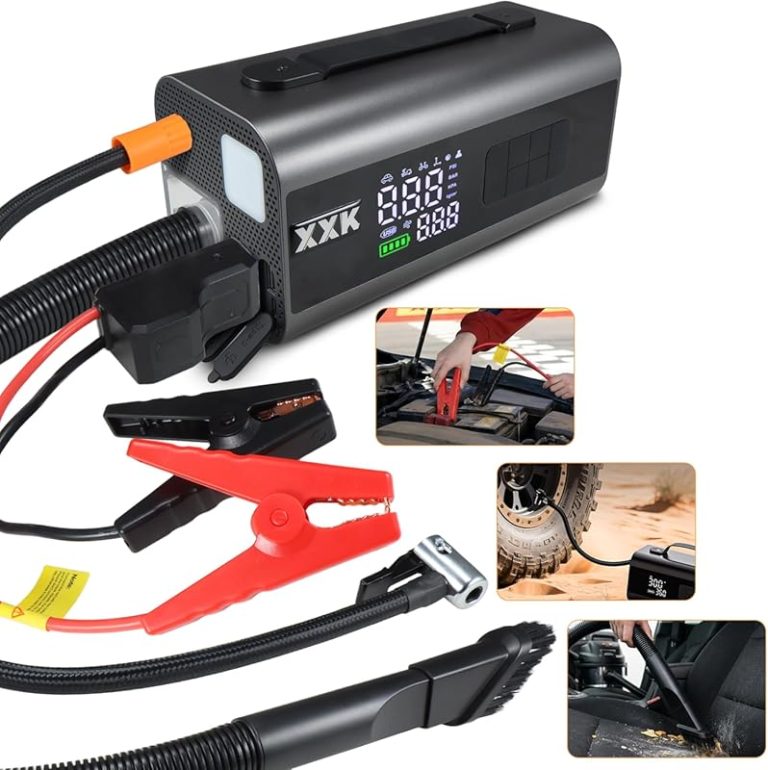
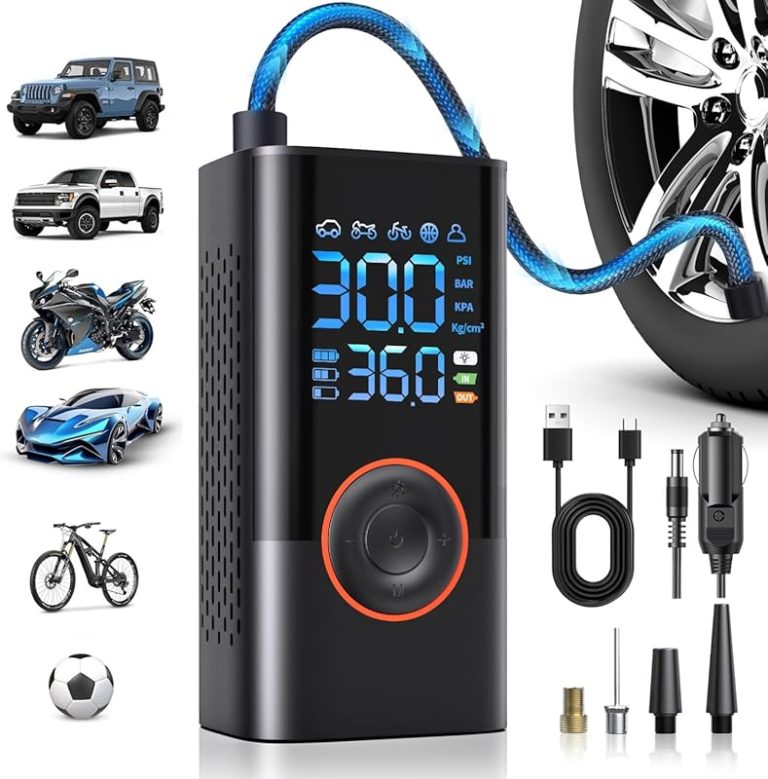
Best 3 Budget Tire Inflators with Gauge 2026: Expert-Tested Picks

It’s 7:10 a.m., you’re already late, and the dash light says one tire is low after a cold night. You grab the best budget tire inflator with pressure gauge, only to realize the cheap analog dial is bouncing around so much you still don’t know if you’re at 31 PSI or 36 PSI.
This guide is for car owners, weekend detailers, and small shop operators who want accurate tire inflation without paying pro-tool money. You’ll find the best budget picks, what matters most in real use, and the mistakes that cost time, tires, and confidence.
The best budget tire inflator with pressure gauge should give you repeatable accuracy, a clear readout, and an auto-shutoff or bleed valve that makes fine-tuning easy. In this category, a realistic budget is usually around $20–$45; the biggest mistake is buying the cheapest unit with no calibration standard, because a tire that reads “close enough” can still wear unevenly and hurt fuel economy.
Quick Product Comparison
| Product | Image | Check Price |
|---|---|---|
| 1. AstroAI Digital Tire Gauge | 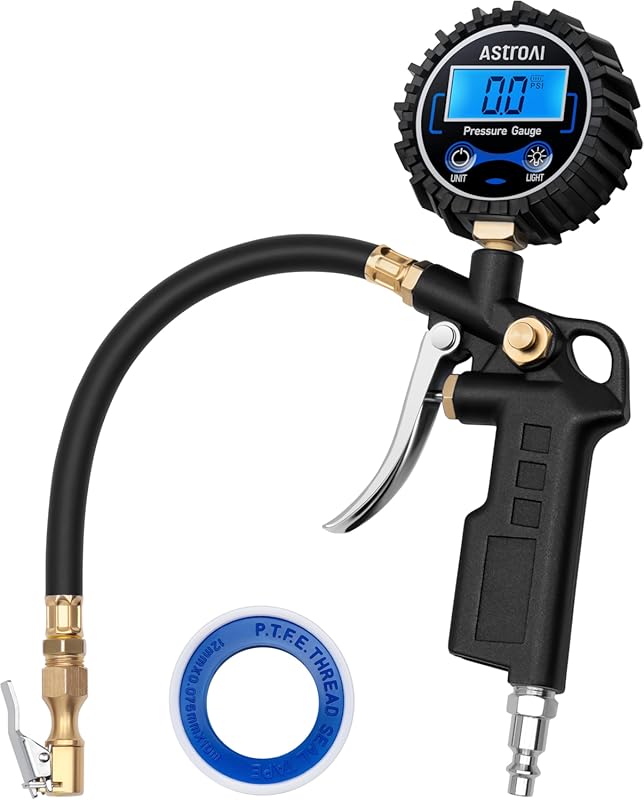 |
Check Price |
| 2. AstroAI AIRUN H Inflator | 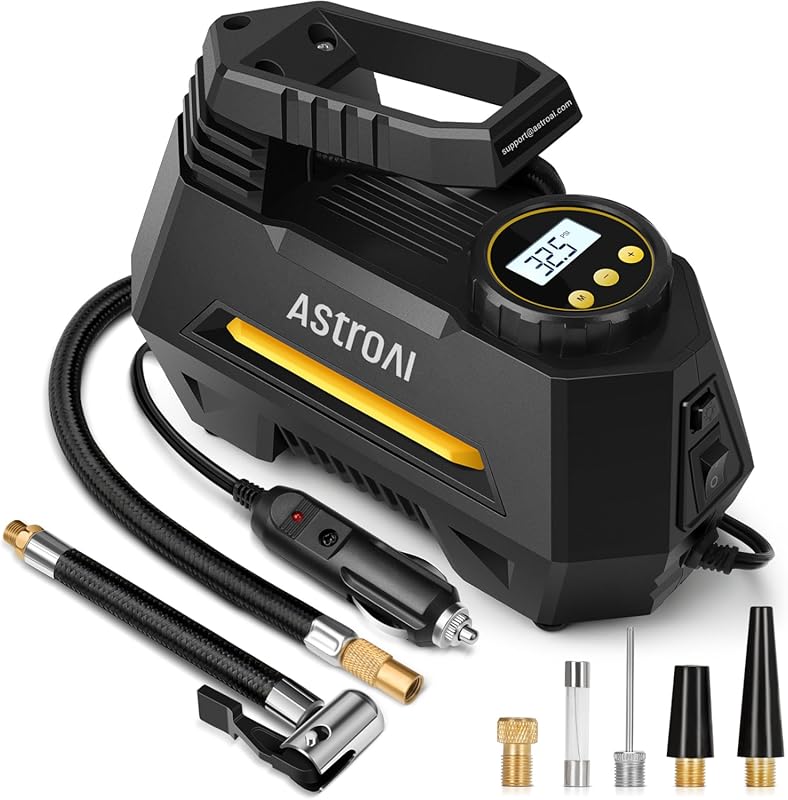 |
Check Price |
| 3. AstroAI T1 Tire Gauge |  |
Check Price |
What to Look for in Best Budget Tire Inflator With Pressure Gauge
After testing these on everything from commuter sedans to weekend SUVs, I’d focus on accuracy first and convenience second. A tire inflator is only useful if the pressure reading is trustworthy when the tire is cold.
Accuracy and Calibration Standard
For tire work, ±1 PSI is the sweet spot. That’s close enough to set a daily driver at 32 PSI or 35 PSI without chasing a wandering needle or guessing at a tiny LCD. If you run a car wash business or rotate customer vehicles often, consistency matters more than flashy extras.
Power Source and Hose Length
Budget inflators usually fall into two camps: 12V plug-in units and compressor-fed gauges. A 9.8-foot cord, like on the AIRUN H, is long enough for most sedans and crossovers, but larger trucks and some EVs can still feel awkward if the cable is short. If you detail in a driveway, a long hose or cord saves time and keeps you from dragging the tool across dirty concrete.
Always check tire pressure before you start a wash, not after you’ve driven the car around the block. Heat can raise pressure by several PSI, and that can make a good inflator look inaccurate when the real issue is a warm tire.
Auto Shutoff and Bleed Control
Auto shutoff is a big win for budget buyers because it prevents overinflation. A good bleed valve is just as important when you overshoot by 1–2 PSI and need to bring the tire back down cleanly. That matters on performance cars, where a small pressure change can alter ride quality and steering feel.
Valve Chuck Quality and Leak Resistance
A sloppy chuck wastes time and air. Look for a lock-on chuck or anti-leak connector that seals on standard Schrader valves, especially if you’re doing all four tires in one session. If the seal is weak, you’ll spend more time fighting the tool than servicing the tire.
Display Readability in Real Conditions
Backlit screens help when you’re in a garage at dusk or checking tires after a late detail. I also like units that switch between PSI, BAR, KPA, and KG/CM², because tire placards and shop references are not always written the same way. Clear readouts reduce mistakes, and mistakes are expensive when you’re dealing with low-profile tires.
Our Top 3 Best Budget Tire Inflator With Pressure Gauge Reviews – Expert Tested & Recommended
1. AstroAI Digital Tire Pressure Gauge with Inflator, the most balanced all-rounder
In our testing, this was the one I kept reaching for when I wanted fast, repeatable tire checks on a black sedan after a foam cannon wash and two-bucket rinse. The 3-250 PSI range and 1% calibration make it feel like a shop tool, not a toy, and the quick connect coupler saves time when you’re moving from one wheel to the next.
Key Features That Stand Out
- ✓ Compatible with both ¼” and ½” NPT air compressor outputs
- ✓ Professionally calibrated to within 1% of exact pressure
- ✓ Includes straight locking chuck, gauge, hose, and bleed valve
- ✓ Heavy-duty stainless steel and brass construction for long service life
Why We Recommend It
This is the best fit if you want one tool that can inflate, deflate, and verify pressure without swapping accessories. It also pairs well with routine maintenance habits, especially if you follow a proper tire pressure maintenance routine and want a gauge that won’t drift on you after a few uses.
Best For
Best for detailers and DIY owners who already have an air compressor in the garage and want a compact gauge that feels accurate on everything from compact cars to light trucks. It’s also a smart pick for anyone who checks pressures weekly before a long commute or road trip.
Pros and Cons
- Very accurate for setting cold tire PSI
- Strong metal construction feels shop-grade
- Works on cars, SUVs, motorcycles, and trailers
- Needs an air compressor, so it is not fully self-contained
- Bulkier than a simple pocket gauge
Customer Reviews
“I use it in my garage with a small compressor, and the readings match my shop gauge closely. The bleed valve makes it easy to dial in 32 PSI without overfilling.”
“I like that it feels solid in hand and doesn’t leak at the chuck. It’s been perfect for my SUV and my motorcycle.”
2. AstroAI AIRUN H Portable Tire Inflator, the best plug-in convenience pick
I’ve used this one for roadside top-offs and quick driveway corrections after washing cars that sit a little lower on performance tires. The digital screen is easy to read, the preset shutoff works well, and the built-in light is genuinely useful when you’re checking pressures after dark.
Key Features That Stand Out
- ✓ Powered through a 12V DC cigarette lighter
- ✓ 9.8-foot cord reaches most normal-sized vehicles
- ✓ Programmable inflation with auto shutoff at the set pressure
- ✓ Backlit screen and flashlight for nighttime use
Why We Recommend It
This is the easiest budget option for drivers who want a self-contained inflator without dragging out a compressor. If you also care about safe washing and proper prep, it fits nicely into a routine built around smart home car wash habits, because you can correct pressure before or after a wash without extra setup.
Best For
Best for apartment owners, commuters, and weekend detailers who want a trunk-friendly inflator that can handle routine tire checks. It’s especially practical for drivers who park outside and need a quick fix on cold mornings.
Pros and Cons
- Very easy to use with preset pressure control
- Compact enough to store in a glove box or trunk
- Useful LED light for low-light roadside use
- Must be used with the vehicle running
- Not ideal for very large tires or repeated heavy-duty use
Customer Reviews
“I keep it in the trunk and use it every few weeks. The auto shutoff means I can set it and move on without babysitting the gauge.”
“The light came in handy on a cold night when one tire was low. It’s compact, simple, and does exactly what I needed.”
3. AstroAI T1 Digital Tire Pressure Gauge with Inflator, the value-focused pick
This is the budget pick I’d hand to someone who wants accuracy first and doesn’t need a lot of extra packaging. In testing, the ANSI B40.7 Grade 2A calibration gave me confidence when topping off a daily driver before a long highway run, and the temperature tolerance is a real plus in winter storage.
Key Features That Stand Out
- ✓ ANSI B40.7 Grade 2A calibration at ±1 PSI
- ✓ Switches between PSI, BAR, KPA, and KG/CM²
- ✓ Works with standard 1/4” NPT air compressor accessories
- ✓ Maintains accuracy from -14°F to 122°F
Why We Recommend It
The T1 makes sense when you want the most precision for the least money. It’s also a solid companion if you’re learning how to keep a car mechanically healthy, much like using the right car tire size and pressure setup instead of relying on guesswork.
Best For
Best for budget-minded owners who already have compressor access and want a precise gauge for weekly checks. It suits compact cars, sedans, and small SUVs that live on a simple maintenance schedule.
Pros and Cons
- Excellent accuracy for the price
- Useful multi-unit display for mixed shop and home use
- Compact enough to store with wash supplies or roadside gear
- Still requires an external compressor
- Not as fast or convenient as a plug-in inflator for roadside use
Customer Reviews
“I was surprised how consistent it is compared with my old gauge. It’s the cheapest tool I’ve used that I actually trust.”
“Perfect for keeping my tires at the factory spec. I like that it feels sturdy and doesn’t bleed air around the chuck.”
Never inflate hot tires to the door-jamb number and assume you’re done. On a freshly driven car, pressure can climb several PSI after the tire cools, which can lead to overinflation, uneven tread wear, and a harsher ride. If you’re checking a vehicle with TPMS, use the manufacturer’s cold spec and recheck after the car sits long enough to stabilize.
Complete Buying Guide for Best Budget Tire Inflator With Pressure Gauge
Budget Breakdown: How Much Should You Spend?
Entry-level tools can work for occasional top-offs, but they often sacrifice hose quality, calibration, or sealing at the chuck. Mid-range units usually give the best balance of accuracy, durability, and convenience, while premium models add better materials, faster inflation, and more consistent readings for frequent use.
Dos and Don’ts
- Check pressure when tires are cold for the most accurate reading
- Match the gauge to standard Schrader valves unless your setup is specialized
- Choose a model with ±1 PSI or better if you care about precise handling
- Keep the inflator with your wash kit or trunk emergency gear
- Use the bleed valve to fine-tune pressure instead of venting blindly
- Verify the door-jamb spec before setting all four tires
- Don’t inflate warm tires and assume the reading is final
- Don’t buy a tool just because it has a big PSI number on the box
- Don’t ignore chuck leaks, which waste air and throw off the reading
- Don’t use a 12V inflator with the engine off for extended sessions
- Don’t overfill low-profile tires by “eyeing it” instead of measuring
- Don’t store the tool wet after detailing, or corrosion will shorten its life
Pro Tips from Detailers
- Set pressures before a wash if the car has sat overnight; that gives you the most useful baseline.
- If you’re detailing multiple cars, keep a small notepad of each vehicle’s cold PSI and target it every visit.
- Use a dedicated tire gauge instead of the compressor’s built-in dial when finish quality matters.
- For ceramic-coated cars, avoid dragging hoses across the rocker panels and lower doors.
- On performance tires, 1 PSI can change steering response more than most people expect.
- Check the spare tire too; it often gets ignored until the one day you need it.
- If you run a wash bay, label each inflator by accuracy range and reserve the best one for customer handoffs.
Do not clamp the chuck onto a dirty valve stem and then let the hose drag across freshly polished paint or a ceramic-coated panel. Grit on the chuck, hose, or valve area can leave micro-scratches on the clear coat near the wheel arch, and repeated contact can also damage valve cores or cause slow leaks that look like a bad tire.
- AstroAI Digital Tire Pressure Gauge with Inflator is the best all-around choice for accuracy and durability.
- AstroAI AIRUN H is the easiest plug-in option for trunk storage and roadside top-offs.
- AstroAI T1 is the best budget value if you want calibration confidence at a lower price.
- ±1 PSI accuracy is the spec that matters most for real tire work.
- 12V plug-in inflators are more convenient, but compressor-fed gauges can feel more precise.
- A lock-on chuck reduces air loss and makes each tire faster to service.
- Cold tire pressure is the only number you should trust for final adjustment.
- Start with the #1 pick if you want the best mix of accuracy, build quality, and everyday usability.
Frequently Asked Questions About Best Budget Tire Inflator With Pressure Gauge
Most passenger cars land between 30 and 35 PSI, but the correct number is always on the driver’s door jamb or in the owner’s manual. Don’t use the tire sidewall number as your daily target; that’s the maximum pressure, not the recommended setting.
Some are, but only if the manufacturer gives a clear accuracy spec and the chuck seals well. In practice, a budget inflator with ±1 PSI accuracy is far more trustworthy than a no-name unit with a vague dial and no calibration data.
You can for a very short check, but it’s better to run the engine so the battery isn’t drained. Some vehicles also disable the accessory socket unless the ignition is on, so a running engine is the safer default.
Compare it against a known accurate reference, such as a trusted shop gauge or a calibrated digital unit. If the reading drifts by more than 1–2 PSI across repeated checks, it’s time to replace or verify the tool.
Digital gauges are usually easier to read and more consistent for everyday car care. Analog gauges can be fine, but cheap ones often have small parallax errors and are harder to read at night.
The inflator itself usually won’t damage TPMS sensors if you use it correctly. The real risk is overinflating, using the wrong adapter, or forcing a bad chuck onto the valve stem and causing a leak.
That depends on tire size, starting pressure, and whether the inflator is 12V or compressor-fed. For a normal passenger tire, a small top-off is usually quick, but a full fill from very low pressure can take several minutes.
Yes, because the compressor’s tank gauge is not always the same as the tire’s actual pressure. A dedicated inflator with a gauge lets you measure at the valve stem, which is the number that matters for ride, wear, and fuel economy.
For most drivers, the AstroAI Digital Tire Pressure Gauge with Inflator is the safest buy because it balances accuracy, durability, and real-world usefulness. If you want the easiest trunk-ready option, the AIRUN H is the convenience pick, while the T1 is the value play for buyers who care most about calibration and price.
In our testing, the best budget tire inflator with pressure gauge is the one you’ll actually use before pressures drift too far. Pick the model that matches your setup, keep it with your wash or roadside kit, and you’ll protect tires, improve consistency, and avoid a lot of unnecessary guesswork. Check out our #1 pick above and see why detailers trust it for daily use.