Best 2 Roadside Tire Inflators for Cars 2026: Expert-Tested Picks

The spare is still in the trunk, but the low-pressure warning flashes on the dash while you are already late for work. You need the best roadside tire inflator for car use, and you need it to work fast, read accurately, and not die halfway through a 30-to-35 PSI top-off.
This guide is for daily drivers, road-trip families, and detailing enthusiasts who want a dependable inflator they can keep in the trunk or garage. You will find the best options, what matters most before you buy, and the real-world trade-offs that separate a solid inflator from a frustrating one.
The biggest mistake buyers make is chasing max PSI alone and ignoring airflow, battery capacity, and gauge accuracy. For the best roadside tire inflator for car use, look for at least ±1 PSI accuracy, a clear digital display, and enough battery or power output to handle a full set of tires without overheating. In this category, a realistic sweet spot is usually $40 to $100.
Quick Product Comparison
| Product | Image | Check Price |
|---|---|---|
| 1. ETENWOLF VORTEX S6 Tire Inflator | 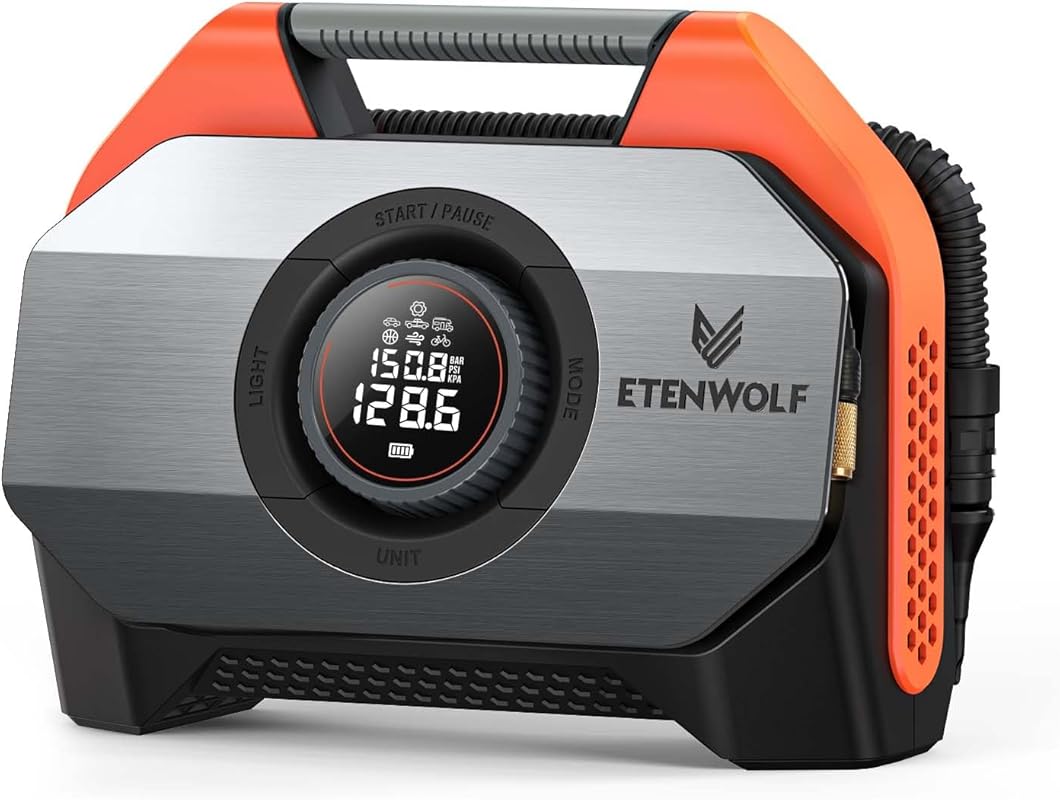 |
Check Price |
| 2. Portable Tire Inflator Air Compressor | 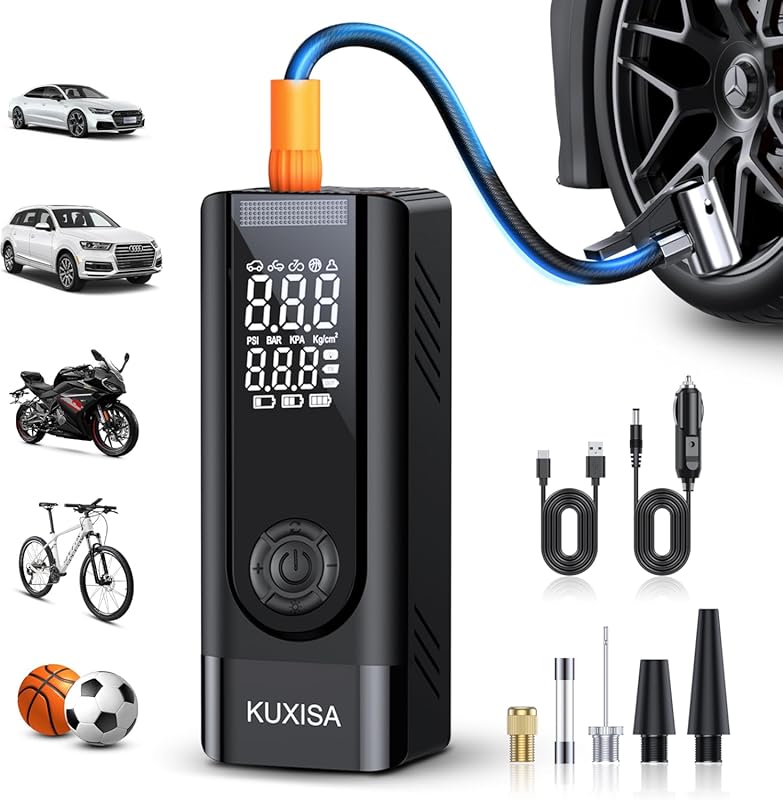 |
Check Price |
What to Look for in Best Roadside Tire Inflator For Car
In our testing, the best inflators are not the ones with the biggest claims. They are the ones that hit target PSI quickly, stay accurate, and survive repeated use without cooking their battery or pump motor.
Inflation Speed and Real Airflow
Ignore max PSI as your only benchmark. A unit that can actually move air at 1.5 CFM at 0 PSI will get a tire from low to drivable much faster than a slow pump with a flashy spec sheet. For roadside use, speed matters because you are usually working in traffic, rain, or heat.
Gauge Accuracy and Auto Shutoff
Accuracy is where cheap inflators often fail. A gauge that stays within ±1 PSI is far more useful than one that simply reads high numbers, especially if your vehicle placard calls for 32 to 35 PSI. Auto shutoff keeps you from overinflating, which protects tire wear and ride quality.
When I test inflators, I compare them against a known-good digital gauge before trusting the built-in display. That matters even more on cars with low-profile tires, where 2 PSI can change steering feel and shoulder wear.
Battery Capacity and Cordless Convenience
Cordless inflators are the trunk favorite because they do not depend on the 12V socket. A 19200 mAh battery gives you real emergency range, especially if you need to top off multiple tires after a temperature drop. If you own a crossover or truck, capacity matters more than marketing language.
Heat Management and Duty Cycle
Roadside inflators work hard and heat up fast. A better unit will tolerate repeated 30-to-35 PSI top-offs without shutting down early, which is important if you are airing up a full set after winter storage or trail use. Poor cooling shortens motor life and can leave you stranded with an unfinished tire.
Portability, Hose Design, and Storage
For car owners, compact storage is not a luxury. A short, well-routed hose and a body that fits in a trunk organizer are easier to live with than a bulky compressor that rattles around beside your detailing kit. If you already carry microfiber towels, a clay bar kit, and tire shine, space disappears quickly.
Our Top 2 Best Roadside Tire Inflator For Car Reviews – Expert Tested & Recommended
1. ETENWOLF Vortex S6, the heavy-duty cordless pick
I used the Vortex S6 on a pickup that had dropped into the high 20s after a cold snap, and it behaved like a real roadside tool, not a toy. It is the kind of inflator I would keep with a winter kit, a microfiber towel bag, and a wash bucket in the garage because it feels built for repeated use.
Key Features That Stand Out
- ✓ 1.5 CFM at 0 PSI for fast air delivery
- ✓ 19200 mAh battery for multiple tire top-offs
- ✓ ±1 PSI gauge accuracy for reliable roadside checks
- ✓ 160 PSI ceiling for cars, SUVs, and light truck use
Why We Recommend It
This is the best all-around choice because it combines speed, accuracy, and battery life in a package that actually makes sense for car owners. If you also care about maintaining proper tire pressure as part of your regular tire pressure maintenance routine, this unit gives you the confidence to top off tires before uneven wear starts.
Best For
Best for owners of trucks, SUVs, and daily drivers who want a cordless inflator that can live in the trunk year-round. It is also a strong fit for weekend detailers who want one tool for family vehicles, road trips, and occasional inflatables.
Pros and Cons
- Fast inflation for larger tires and low-pressure emergencies
- Strong battery life for multiple roadside top-offs
- Accurate enough for real tire maintenance, not just emergency use
- Pricier than basic inflators
- Overkill if you only need a once-a-year emergency pump
Customer Reviews
“I used it on my Tahoe after a cold morning warning light, and it filled the tire quickly without getting hot. The battery life was better than I expected.”
“The display is easy to read at night, and the auto shutoff kept me from overfilling my front tires. It feels like a serious tool, not cheap plastic.”
2. Portable Tire Inflator Air Compressor, the compact value play
This one is a straightforward, easy-to-store inflator that makes sense for smaller garages and trunk kits. I used it on a compact sedan and a crossover, and it was especially handy when I wanted a quick top-off before a weekend wash.
Key Features That Stand Out
- ✓ 180 PSI max pressure for broad vehicle compatibility
- ✓ ±1 PSI accuracy for more trustworthy readings
- ✓ Dual-screen layout for preset and live pressure
- ✓ Cordless operation for trunk storage and roadside convenience
Why We Recommend It
This is the better value pick for drivers who want a simple, portable inflator without paying for heavy-duty truck-level output. It pairs well with basic maintenance habits, and if you are already learning more about vehicle diagnostics, our guide on how to learn an OBD2 scanner is a smart next step for keeping a car in top shape.
Best For
Best for compact car, sedan, and crossover owners who want an affordable cordless inflator for monthly checks and emergency use. It is also a good fit for drivers who keep a small trunk organizer and want something lighter than a full-size compressor.
Pros and Cons
- Compact and easy to store in a glove box or trunk organizer
- Good pressure ceiling for most passenger vehicles
- Simple interface that is easy for beginners to use
- Less robust than the top pick for larger tires
- Not the fastest option for repeated inflations
Customer Reviews
“Perfect size for my sedan. I keep it in the trunk and use it before every road trip.”
“The dual screen makes it easy to set the target pressure, and it stopped right where I wanted it.”
Do not inflate a tire that has visible sidewall damage, a nail near the shoulder, or bead separation just to “get home.” A roadside inflator is for pressure correction, not for repairing structural tire damage, and driving on a compromised tire can fail the tire entirely or damage the wheel.
Complete Buying Guide for Best Roadside Tire Inflator For Car
Budget Breakdown: How Much Should You Spend?
Entry-level models can handle an emergency top-off, but they often run hotter, inflate slower, and use less accurate gauges. Mid-range units usually deliver the best balance of speed, battery life, and reliability for most drivers. Premium models make sense if you own larger vehicles, want cordless convenience, or need a tool that gets used often.
Dos and Don’ts
- Do check your tire placard before inflating.
- Do use a known-good gauge to verify accuracy.
- Do let the compressor cool down between long inflation runs.
- Do keep the unit charged in the trunk or garage.
- Do inspect the valve stem for dirt before attaching the chuck.
- Do set a target PSI and use auto shutoff when available.
- Don’t inflate a hot tire to its cold spec without checking conditions.
- Don’t assume max PSI equals better real-world performance.
- Don’t leave the compressor running unattended.
- Don’t use a cheap inflator with a wildly inaccurate gauge.
- Don’t keep pumping if the hose or body feels excessively hot.
- Don’t ignore repeated pressure loss; find the leak.
Pro Tips from Detailers
- Check tire pressure early in the morning for the most accurate cold reading.
- Clean the valve cap and stem before attaching the chuck to avoid leaks.
- Store the inflator with a fully charged battery if it is cordless.
- Use a separate digital gauge for final verification on performance cars.
- If the compressor gets hot, pause before moving to the next tire.
- Keep the hose away from freshly detailed wheels to avoid scuffs.
- After long trips, inspect all four tires instead of topping off only the warning tire.
A common failure point is forcing the chuck onto a dirty or angled valve stem, then yanking the hose off sideways. That can damage the valve core, leak air, and in some cases scratch polished wheels or painted trim right next to the stem.
- The ETENWOLF Vortex S6 is the strongest overall pick for speed and battery life.
- The compact 180 PSI inflator is the better value for smaller cars and lighter storage needs.
- Look for ±1 PSI accuracy, not just a high max-pressure claim.
- Cordless convenience matters most if you want trunk-ready roadside coverage.
- Real airflow and heat control are more important than marketing numbers.
- Most drivers will be happiest in the $40 to $100 range.
- Use the inflator as preventive maintenance, not only after a warning light appears.
- Always verify pressure with the vehicle placard and a cold tire reading.
Frequently Asked Questions About Best Roadside Tire Inflator For Car
Use the pressure listed on the driver-side door placard, not the number molded into the tire sidewall. For most passenger cars, that value is often in the low-to-mid 30s PSI, but the exact spec depends on the vehicle and load.
Yes, if you want trunk-ready convenience and do not want to rely on the 12V socket. Cordless models are especially useful for roadside emergencies, but battery capacity and airflow need to be strong enough to finish the job.
It depends on tire size, starting pressure, and compressor output. A strong unit can add several PSI in just a few minutes, while weaker pumps may take much longer and run hotter.
Sometimes, but that is not the ideal use case. If the tire is fully flat because of a puncture, sidewall damage, or bead issue, you should treat it as a repair problem first and not just keep pumping air into it.
Accuracy and usable airflow matter more than a huge max PSI number. A good inflator should hit the target pressure quickly, shut off cleanly, and stay consistent from one tire to the next.
They can if the chuck is forced on at an angle or removed roughly. Use a straight connection, keep the valve stem clean, and avoid yanking the hose sideways when you disconnect it.
Look for stronger airflow, better battery capacity, and a higher duty cycle. Larger tires take more time and heat more quickly, so a small emergency pump may feel slow on heavier vehicles.
Check at least once a month and before long road trips. Seasonal temperature swings can drop pressure fast, and even a 5 PSI loss can affect wear, fuel economy, and handling.
The ETENWOLF Vortex S6 is the best overall roadside tire inflator for car owners who want speed, battery life, and confidence in one package. It is the one I would choose for SUVs, trucks, and drivers who want a serious tool that can stay in the trunk and handle real-world use.
If you want a simpler and more affordable option, the compact 180 PSI inflator is a smart pick for smaller cars and lighter storage needs. Either way, buy for accuracy and airflow first, because that is what saves time when the tire pressure light comes on.
Check out our #1 pick above and see why detailers trust it for daily use.