2 Truck Jump Starters With Tire Inflators to Buy in 2026

The best car jump starter with tire inflator for truck should combine real 12V jump capability with enough compressor output to reach truck tire pressures without overheating. The biggest mistake buyers make is choosing a unit with a strong battery but a weak pump, then discovering it is too slow for larger tires.
Quick Product Comparison
| Product | Image | Check Price |
|---|---|---|
| 1. Tire Inflator Portable Air Compressor | 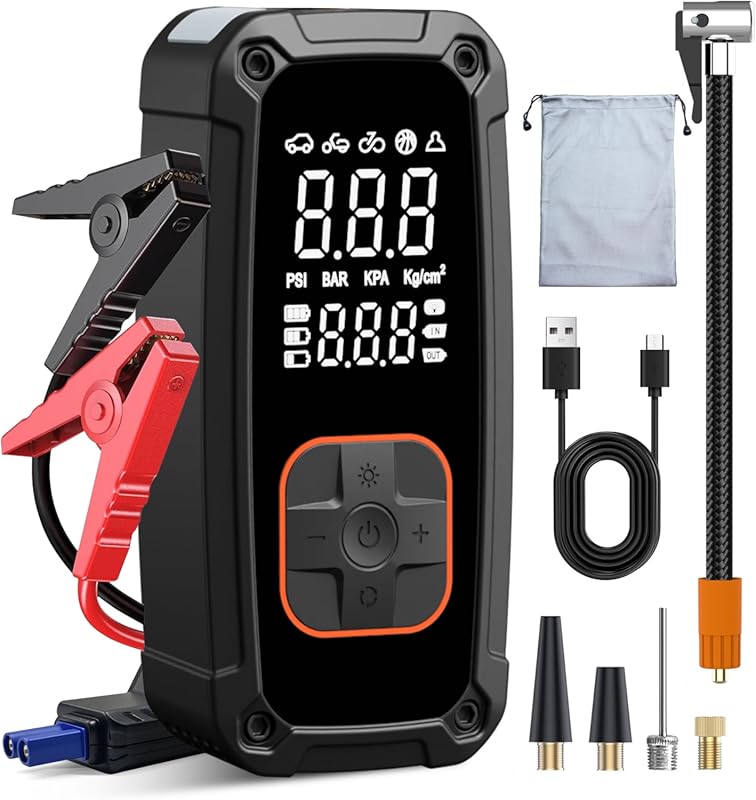 |
Check Price |
| 2. Roar Pedal Super Capacitor Jump Starter |  |
Check Price |
What to Look for in Car Jump Starter With Tire Inflator For Truck
Truck owners need more than a compact gadget. They need a roadside tool that can actually start a 12V engine and bring tire pressure back to spec without drama.
In shop-style use, the right unit saves time during dead-battery calls and low-pressure checks. It also reduces the chance of damage from underinflated tires, which can wear outer shoulders fast.
Jump-Starting Output That Matches Truck Loads
For trucks, peak amps matter, but sustained cranking support matters more. Look for a unit that clearly states 12V compatibility and enough current for gasoline or diesel applications, especially if the vehicle has a larger battery reserve or sits in cold weather.
Supercapacitor models can be a smart choice when you want instant readiness. They are especially useful if the device will live in a work truck, where a stored battery can slowly age or self-discharge.
Inflator Speed and Real PSI Capability
A truck tire is not the same as a compact-car tire. A useful inflator should reach at least 150 PSI on paper, but the more important number is airflow, such as 36 L/min or better, because that affects how long you wait at the shoulder or in the driveway.
Pay attention to duty cycle and heat management. Small pumps can overheat when filling larger tires from low pressure, especially if you are correcting all four tires instead of just topping off one.
When you keep a combo unit in a truck, store it in a clean microfiber bag or trunk organizer, not loose under tools. That keeps the screen, ports, and hose fittings from getting scratched by metal tie-downs, bottle caps, or wash brushes.
Battery Type and Long-Term Reliability
Traditional lithium jump packs are common, but they need periodic charging. Supercapacitor-based units avoid the same storage concerns, which can be a real advantage for fleet trucks, seasonal drivers, or detailers who only use the tool occasionally.
If you choose lithium, check the rated capacity and recharge time. A higher mAh number helps, but build quality and protection circuitry matter just as much for safety and service life.
Gauge Accuracy and Tire-Safe Inflation
For truck owners, the gauge should be readable and close to the placard pressure. Underinflation is not just a comfort issue; it changes steering feel, braking, and tire wear, especially on heavier vehicles.
Look for an easy-to-read digital display and preset shutoff if available. That makes it easier to stop at the right PSI without overfilling and bleeding air back out.
Portability, Hose Length, and Real-World Storage
A good combo unit should fit behind the seat or in a cargo bin. Hose length matters because truck valve stems are often less convenient than sedan stems, especially with large wheels or aggressive tread patterns.
We also like units with clear mode buttons and sturdy clamps. In cold weather, gloves make tiny controls frustrating, and weak clips can slow you down when you need a quick restart.
Top 2 Car Jump Starter With Tire Inflator For Truck Reviews
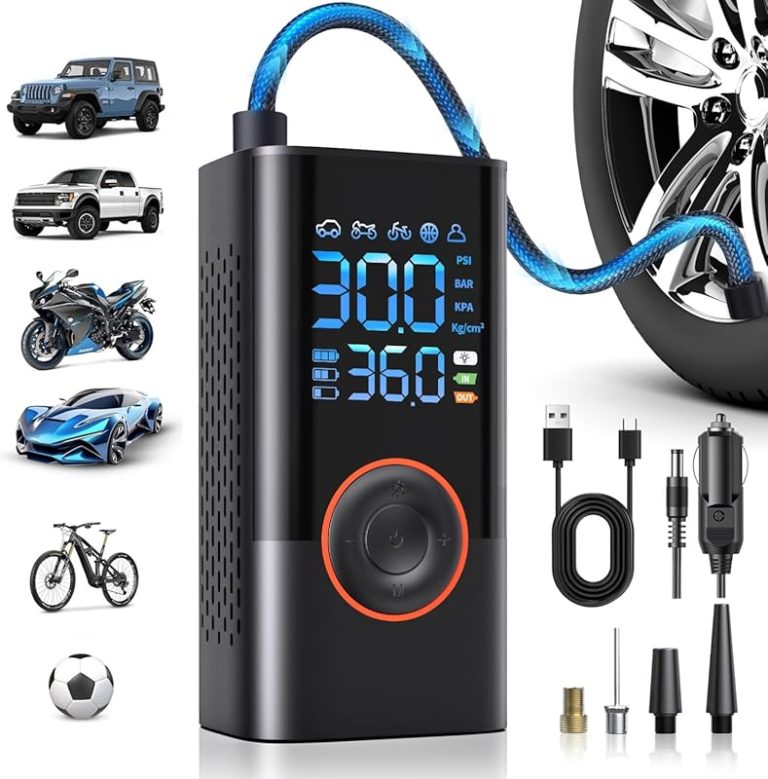
1. Portable Tire Inflator Air Compressor, 150 PSI Electric Pump with Gauge for Cars, Bikes, Balls
This model stands out more as a tire inflator than a jump starter, so it suits buyers who care about pressure management first. For truck owners, the 150 PSI ceiling and 36 L/min airflow are the key numbers, because they affect how quickly you can recover from a low tire before a commute or detailing appointment.
Key Features That Stand Out
- ✓ 150 PSI maximum output for truck, SUV, and passenger-car top-offs
- ✓ 36 L/min airflow for faster inflation than basic mini pumps
- ✓ 25,000 mAh battery for extended cordless use
- ✓ Five inflation modes for car, bike, motorcycle, ball, and custom settings
Why We Recommend It
For owners who want a portable compressor that can live in the cab, this is a practical pick. It also fits well into a tire pressure maintenance routine, especially when you want to keep truck tires close to placard spec between service visits.
We like it for drivers who check pressure often after hauling, cold snaps, or long highway runs. It is also useful for detailers who want a compact inflation tool for customer vehicles that may sit low after storage.
Best For
Best for truck and SUV owners who want a cordless inflator for regular top-offs, not just emergency use. It also fits weekend detailers who keep a clean, organized trunk kit and want one tool for tires, bikes, and small inflatables.
Pros and Cons
- Strong 150 PSI ceiling for light-truck use
- Fast enough airflow for routine tire maintenance
- Useful battery capacity for multiple inflation jobs
- Not a true jump-starter-focused product
- Best for topping off, not repeated full truck tire fills
Customer Reviews
Buyers commonly praise the strong pressure range and say it feels more substantial than tiny emergency pumps.
Owners like the convenience of keeping it in the vehicle for roadside top-offs and weekly checks.
2. Roar Pedal Super Capacitor Jump Starter, 12V Portable Jump Box with Display
This is the more serious jump-start tool in the roundup. Supercapacitor design is a strong fit for truck owners who want a roadside backup that does not depend on long-term battery storage, and the 1000A peak current claim gives it broader vehicle coverage.
Key Features That Stand Out
- ✓ Supercapacitor design with no need for home precharging
- ✓ Works in extreme temperatures from -40°C to 70°C
- ✓ Up to 1000A peak current for 12V gas and diesel engines
- ✓ Built-in display for clearer status checks during roadside use
Why We Recommend It
For truck owners, the biggest advantage is readiness. It is a better match than many battery packs if you want a device that can sit in the vehicle without the same storage concerns, and that makes it a sensible companion to a battery jump starter buying guide.
We also like the temperature range for winter and summer use. That matters for work trucks, fleet vehicles, and drivers who park outside in harsh conditions.
Best For
Best for truck owners who want a dedicated jump starter more than an inflator-first tool. It also suits contractors, fleet drivers, and off-road users who need a rugged backup in extreme weather.
Pros and Cons
- No precharge dependency like many lithium packs
- Strong cold-weather and heat tolerance
- Better fit for 12V truck jump-start needs
- Not an inflator-focused combo unit
- Less useful if you want one tool for both air and starts
Customer Reviews
Customers often like the no-precharge design because it feels ready when the battery is dead.
Many buyers mention the display and temperature tolerance as the main reasons they chose it for truck use.
Do not run a jump starter or inflator in a closed truck bed or against hot painted panels. Heat buildup can damage the unit, and a vibrating hose or clamp can rub clear coat or trim if it sits unsecured during use.
Complete Buying Guide for Car Jump Starter With Tire Inflator For Truck
Budget Breakdown: How Much Should You Spend?
Entry-level units usually cover basic inflation or basic jump support, but they may feel slow on truck tires. Mid-range models are where you usually find the best balance of PSI, airflow, and safety features, while premium units tend to improve battery quality, display clarity, and cold-weather performance.
If you detail vehicles for clients, the mid-range tier is usually the safest buy. You get enough capability for real roadside use without paying for features you may not need every day.
Dos and Don’ts
- Check your truck’s door placard before inflating
- Choose a unit with clear 12V jump compatibility
- Look for at least 150 PSI on the inflator side
- Keep the device charged if it uses lithium
- Store clamps and hose where they will not scuff interior trim
- Use a digital gauge for final pressure verification
- Do not guess tire pressure from sidewall numbers
- Do not use a weak pump for a full-size truck tire from near-flat
- Do not leave the unit bouncing loose in the cargo area
- Do not jump-start on a frozen or corroded clamp setup
- Do not overinflate and then bleed air blindly
- Do not store a lithium pack empty for long periods
Pro Tips from Detailers
- Keep the inflator hose and clamps clean so grit does not scratch painted surfaces.
- After wash day, check tires before the vehicle cools too much if you want a more stable reading.
- Use the unit on a clean driveway or mat, not on gravel that can trap dirt in connectors.
- If your truck has large wheels, confirm hose reach before buying.
- For ceramic-coated trucks, avoid dragging the compressor body across the rocker panel or fender.
- Test the jump starter and inflator monthly so you know the screen, hose, and battery still work.
- Match the tool to your use case: inflator-first for maintenance, capacitor-first for dead-start insurance.
A common mistake is setting the compressor on a dirty tailgate or painted bumper while filling tires. Road grit can act like sandpaper, so one careless move can leave fine scratches in the clear coat or on plastic trim.
- Truck buyers should prioritize both jump power and real inflator performance.
- 150 PSI is a useful ceiling, but airflow is what saves time.
- 36 L/min is a strong sign of practical inflation speed.
- Supercapacitor jump starters are attractive for storage and temperature stability.
- Lithium packs need regular charging and smart storage.
- Mid-range pricing usually gives the best mix of safety, speed, and durability.
- Gauge accuracy matters as much as max PSI for tire health.
- Secure the device in the cab to avoid scratches and damage.
Frequently Asked Questions About Car Jump Starter With Tire Inflator For Truck
Most trucks need a 12V jump starter with enough peak output to handle larger batteries and cold starts. If you drive a diesel or park outside in winter, prioritize stronger current delivery and clear compatibility claims.
Yes, but the pump must have enough airflow and a realistic duty cycle. Small inflators can top off truck tires, but they may struggle with a near-flat tire or repeated fills.
Yes, 150 PSI is more than enough for normal truck tire inflation because most passenger and light-truck tires run far below that. The more important factor is how quickly the pump can reach your target pressure.
Always follow the driver-door placard or owner’s manual. Many light trucks and SUVs sit in the 30–35 PSI range, but load, tire size, and trim can change the correct number.
They can be better for storage stability and extreme temperatures. Lithium packs often offer more all-around versatility, but they need periodic charging and careful long-term storage.
It depends on the tire size, starting pressure, and airflow rating. A stronger portable compressor can top off a light-truck tire in a few minutes, while a weaker one may take much longer and run hot.
Yes, if it is stored correctly and checked regularly. Lithium packs should stay charged, while supercapacitor units are attractive because they avoid some storage concerns.
People often buy for peak amps alone and ignore compressor output. For truck use, that usually leads to a tool that can jump-start once but cannot realistically manage tire maintenance.
For buyers who want the best tire-focused value, the Portable Tire Inflator Air Compressor is the more practical choice. It has the pressure ceiling and airflow that make routine truck maintenance easier, especially if you keep up with tire checks after hauling or long drives.
If your priority is emergency starting in harsh weather, the Roar Pedal Super Capacitor Jump Starter is the smarter pick. It is built more like a serious roadside backup than a convenience gadget, which makes it appealing for truck owners, fleet drivers, and anyone who parks outside.
Choose based on the problem you need to solve most often. If you want the strongest all-around truck prep, check out our #1 pick above and see why detailers trust it for daily use.