1 Budget Jump Starter Tire Inflator Combo for 2026 Value Picks

Dead batteries and low tires always seem to show up at the worst time. A budget jump starter tire inflator combo can solve both without taking up much trunk space.
This guide is for drivers, detailers, and small shop owners who want one compact tool for roadside fixes and tire maintenance. We break down what matters, where the value is, and which features actually help in real car-care use.
The best budget jump starter tire inflator combo should give you enough peak current for your vehicle, a real auto-stop inflator, and clear pressure readings you can trust. Most buyers should expect to spend about $70–$130, and the biggest mistake is buying for headline amps alone while ignoring tire inflation accuracy and clamp quality.
Quick Product Comparison
| Product | Image | Check Price |
|---|---|---|
| 1. 8000A Tire Inflator Jump Starter | 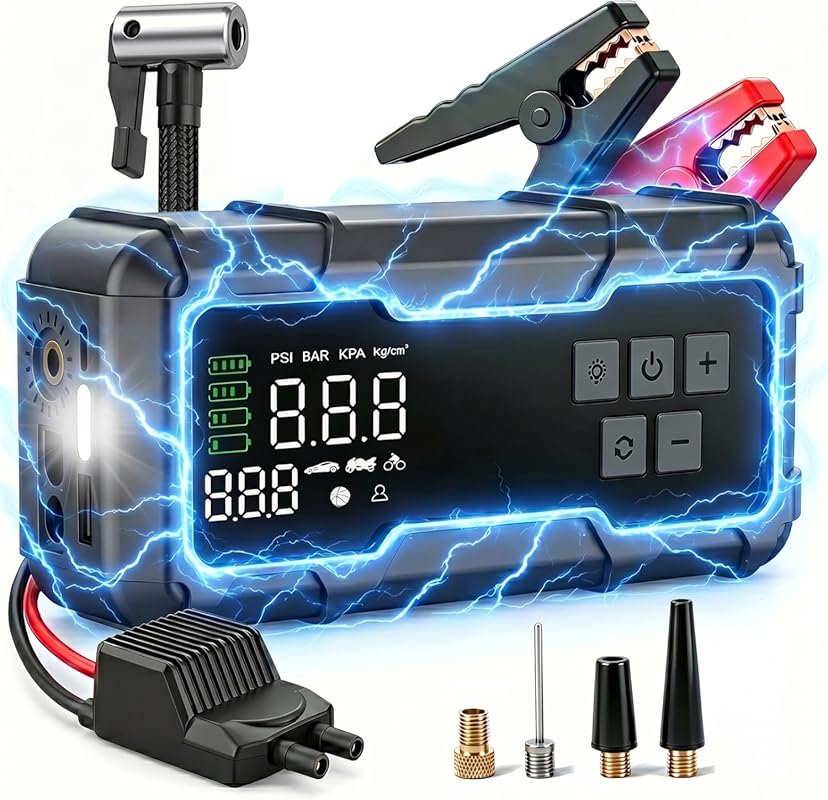 |
Check Price |
What to Look for in Budget Jump Starter Tire Inflator Combo
In this category, the spec sheet can look impressive while real-world usefulness stays mediocre. The goal is a unit that starts a dead 12V battery, inflates tires accurately, and stays simple enough to use in a driveway or parking lot.
Peak Amperage That Matches Your Vehicle
Peak amps matter, but only when they are paired with honest battery capacity and decent clamps. For most gas cars, a unit in the 1000A to 2000A range is often enough, while larger SUVs and trucks benefit from much higher output like the featured 8000A rating. The key is not the biggest number on the box, but whether the unit can deliver a clean start in cold weather.
Inflation Accuracy and Auto-Stop Control
A good inflator should let you set a target PSI and stop on its own. That matters because underinflation hurts fuel economy and tire wear, while overinflation can reduce grip and ride comfort. For many passenger vehicles, 32 PSI is a common cold target, so a clear gauge and reliable auto-shutoff are more useful than a flashy compressor claim.
When comparing combo units, check whether the pressure display reads in real time while inflating. That helps you stop at the exact target instead of chasing the final number after the hose is already hot and pressure has shifted.
Clamp Quality and Safety Protections
Cheap clamps can waste a good jump starter. Look for reverse-polarity protection, spark protection, and strong jaws that stay attached to battery posts without slipping. In shop-style use, poor clamp contact is one of the main reasons a jump attempt fails even when the unit itself is fine.
Battery Capacity and Charging Speed
Capacity affects how many jump attempts you get and how useful the power bank function is for phones or tablets. For a roadside tool, enough reserve to handle multiple starts matters more than a huge marketing number. Fast recharging is also important if you want the unit ready after a long road trip or winter storage period.
Portability and Trunk-Friendly Storage
A combo unit only helps if you keep it in the car. A compact shell, built-in light, and included case make it easier to store with your detailing towels, microfiber wash mitt, or emergency kit. If it takes too much space, it usually ends up forgotten at home when you need it most.
Top 1 Budget Jump Starter Tire Inflator Combo Reviews
1. 150 PSI Portable Air Compressor Jump Starter with Digital Gauge, LED Light, and Power Bank
This 4-in-1 style unit is built for drivers who want one tool for a dead battery, low tire pressure, phone charging, and nighttime roadside use. The 150 PSI inflator ceiling gives useful headroom for passenger cars, while the 8000A peak rating targets buyers with larger 12V engines or heavier-duty needs.
Key Features That Stand Out
- ✓ 8000A peak current for 12V jump-starting support
- ✓ 150 PSI cordless inflator with auto-stop function
- ✓ Digital gauge for easier PSI monitoring
- ✓ LED light and power bank function for roadside emergencies
Why We Recommend It
This is the most complete value pick in the group because it covers both emergency starting and tire maintenance in one package. If you want a compact backup for winter mornings, road trips, or weekly pressure checks, it fits the job well. For more guidance on sizing the starter side correctly, see our choose the right battery jump starter guide.
Best For
Best for SUV and sedan owners who keep a roadside kit in the trunk and want one cordless tool for both dead batteries and tire top-offs. It also suits detailers who visit client homes and need a compact backup between jobs.
Pros and Cons
- Very strong peak current for the price
- Auto-stop inflator reduces overfill risk
- Useful for both garage and roadside use
- Bulkier than a jump starter only unit
- High amp claims should still be checked against vehicle size
Customer Reviews
Buyers like the all-in-one format because it cuts down on trunk clutter and still handles basic roadside problems.
Many shoppers mention the inflator side is the feature they end up using most, especially for monthly PSI checks.
Do not use a jump starter on a battery that is physically swollen, leaking, or frozen. Also, never run the inflator on a hot tire right after driving and then set PSI by the sidewall number; always follow the door-jamb placard and check pressure cold.
Complete Buying Guide for Budget Jump Starter Tire Inflator Combo
Budget Breakdown: How Much Should You Spend?
Entry-level units usually work for small cars and occasional use, but they may have slower inflation and weaker clamps. Mid-range models are the sweet spot for most buyers because they balance jump performance, PSI accuracy, and better build quality. Premium units often add faster charging, stronger housings, and more dependable inflators for frequent use.
Dos and Don’ts
- Check your vehicle’s recommended cold PSI on the door jamb
- Store the unit fully charged in the trunk or garage kit
- Test the inflator before an emergency so you know the controls
- Use the correct clamp polarity before starting the engine
- Let the compressor cool during longer inflation sessions
- Keep the hose and clamps clean and dry after use
- Do not buy based on peak amps alone
- Do not inflate to the sidewall maximum for normal driving
- Do not leave the unit discharged for months
- Do not use damaged clamps or frayed cables
- Do not jump-start a frozen or visibly damaged battery
- Do not rely on a hot tire reading for final PSI
Pro Tips from Detailers
- Keep the combo unit next to your microfiber towel bag so it is easy to grab.
- Charge it after long road trips, not after the battery is already dead.
- Use the inflator to correct tire pressure before a wash; proper pressure helps steering feel on the test drive.
- Check all four tires, not just the visibly low one.
- For winter storage, top off the battery every few weeks so the pack does not sit empty.
- If you detail client cars, label the unit with the last charge date.
- Read the hose fitting carefully; some leaks come from loose connections, not the compressor itself.
A common mistake is using a jump starter while the car’s electrical load is still high, with lights, blower motor, and infotainment all on. That can strain the pack and the vehicle battery, and on some cars it can make the first start fail when the system needs the most current.
- The best budget combo should start a 12V vehicle and inflate tires accurately.
- Peak amps matter, but clamp quality and safety protections matter too.
- Auto-stop inflation is one of the most useful features in daily use.
- For most buyers, the best value sits in the $70–$130 range.
- 150 PSI gives enough room for passenger tire top-offs and small roadside jobs.
- Check your car’s cold PSI on the door jamb, not the tire sidewall.
- Compact storage makes the tool more likely to stay in the car when needed.
- The featured 8000A, 150 PSI unit is the strongest all-around pick in this roundup.
Frequently Asked Questions About Budget Jump Starter Tire Inflator Combo
The best one combines enough peak current for your engine with a reliable auto-stop inflator. Look for clear PSI readings, strong clamps, and a price that usually lands in the mid-range value zone.
Most compact cars and many sedans do fine with lower output, but SUVs and trucks need more reserve. A higher peak rating helps, but real clamp quality and battery health still matter just as much.
Yes, but inflation speed depends on the compressor design and tire size. A 150 PSI-rated unit is usually enough for normal passenger and light SUV tire top-offs.
Yes for most passenger vehicles, bicycles, and light-duty roadside use. You do not need extreme pressure for normal car tires, but you do need a unit that can reach your target PSI without struggling.
Focus on safety protections, honest capacity, and an inflator with auto-stop. Cheap units often fail because the compressor is slow or the clamps are weak, not because the idea is bad.
You can, but temperature extremes affect battery health. If the car sits in very hot or very cold conditions, check and recharge the unit more often.
Monthly is a good baseline, and more often during big temperature swings. Tire pressure can drop when the weather changes, so regular checks help maintain wear, handling, and fuel economy.
That number is the peak current rating, which suggests the unit can supply a strong burst for starting. It does not guarantee every vehicle will start, so battery condition, cable quality, and the car’s starting load still matter.
The best budget jump starter tire inflator combo is the one you will actually keep charged, stored, and ready to use. For most buyers, that means a model with real auto-stop inflation, reliable clamps, and enough starting power for the vehicle you drive most.
If you want the strongest all-around value, the featured 8000A, 150 PSI unit is the most complete pick here. Check out our #1 pick above and see why detailers trust it for daily use.