Jump Starter Tire Inflator Combo vs Separate Which Wins

The combo wins for convenience and compact emergency readiness. Separate tools win for stronger performance, better inflation, and larger vehicles.
When a dead battery and a low tire show up at the same time, the right roadside tool can save a lot of stress. The choice between a jump starter tire inflator combo vs separate jump starter and inflator comes down to convenience, performance, and how you actually drive.
- Combo advantage: One compact device covers two common emergencies.
- Separate advantage: Better power, faster inflation, and fewer compromises.
- Best combo fit: Smaller cars, commuters, and occasional use.
- Best separate fit: Trucks, SUVs, RVs, and frequent travelers.
- Smart buying tip: Match the tool to your vehicle, not just the price.
Combo vs Separate: What Drivers Actually Need in 2025
Why this comparison matters for everyday drivers, road trips, and emergencies
Most drivers do not need a tool that does everything perfectly. They need something that starts the car reliably, inflates a tire when needed, and is easy to keep charged and ready.
That is why this comparison matters. A combo unit can be appealing for simple emergency coverage, while separate tools may be better if you want stronger performance or use them more often.
How the right setup depends on vehicle type, climate, and storage space
Your vehicle size changes the answer quickly. A compact sedan in a mild climate may be a good match for a combo, while a truck, SUV, or RV often benefits from dedicated tools.
Storage space matters too. If you have limited trunk room, one compact unit may be easier to keep organized. If you already carry gear for travel or work, separate tools may be worth the extra space.
What a Jump Starter Tire Inflator Combo Does Well
Emergency versatility in one compact unit
The biggest advantage of a combo is simple: one device can help with two common roadside problems. That makes it appealing for drivers who want fewer items to charge, store, and remember.
For many people, that convenience is the main selling point. A combo can reduce clutter and make emergency prep feel less complicated.
If you choose a combo, check both functions separately before you need them. A unit that can jump-start well may still have a slow or basic inflator.
Best use cases: commuters, small cars, weekend travelers, and first-time buyers
Combo units tend to make the most sense for drivers with modest needs. They are often a practical fit for commuters, first-time buyers, and people who mainly want a backup for occasional emergencies.
They can also work well for weekend travelers who want a simple all-in-one safety item without building a full roadside kit.
Practical example: dead battery plus low tire pressure on the same morning
Picture a cold morning where the car will not start and one tire also looks soft. A combo unit lets you handle both problems with one device instead of searching the garage for separate equipment.
That kind of convenience is where a combo earns its place. It is not about being the strongest tool in either category; it is about being ready for common surprises.
For tire pressure basics, it helps to know your vehicle’s recommended PSI and how temperature changes can affect readings. If you are unsure, check the owner’s manual or the door placard.
Where Separate Jump Starters and Inflators Still Win
Stronger performance and faster inflation from dedicated tools
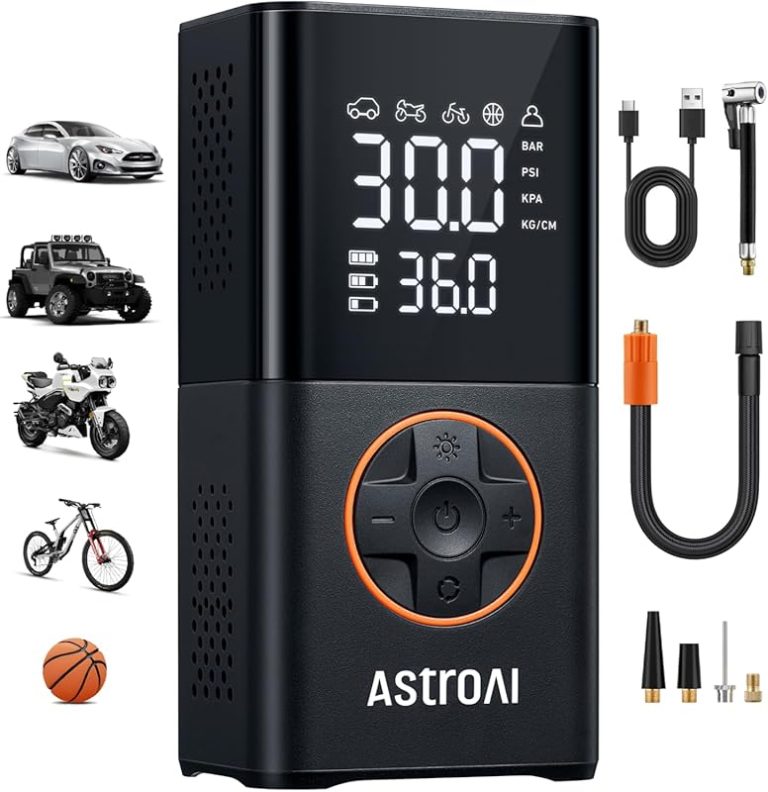
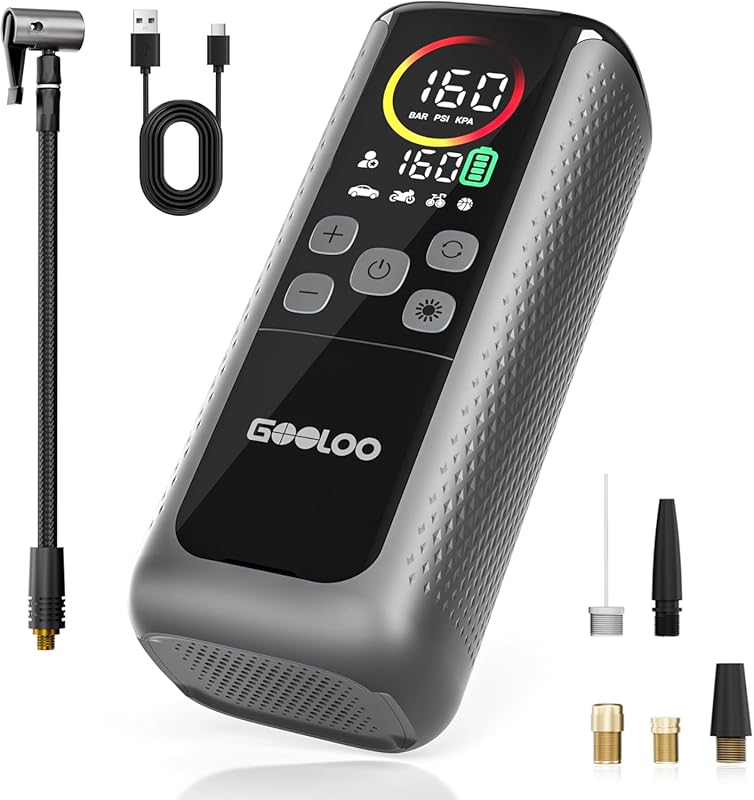
Separate tools usually win on performance. A dedicated jump starter is often built to deliver stronger starting power, and a standalone inflator is usually designed to move air faster and more efficiently.
If you deal with larger tires or need to inflate more than one tire regularly, a dedicated inflator is often the more practical tool.
Better battery capacity, hose length, and gauge accuracy in standalone units
Dedicated tools often have fewer compromises. A standalone jump starter may offer a larger battery reserve, while a standalone inflator may come with a longer hose, better cooling, and a more usable gauge.
That matters when you need repeat use or more confidence in the reading. Built-in gauges on combo units can be convenient, but they are not always the most precise option.
- Check the jump starter’s peak and cranking ratings
- Confirm the inflator can handle your tire size
- Look for an easy-to-read pressure display
- Make sure hoses and clamps feel sturdy
- Verify recharge time and battery storage life
Best use cases: trucks, SUVs, RVs, frequent travelers, and harsher conditions
Separate tools are usually the safer bet for heavier vehicles and more demanding use. Trucks, SUVs, and RVs may need more starting power and more inflation capacity than a compact combo can comfortably provide.
They are also a better fit for frequent travelers or drivers in harsher weather, where equipment needs to be dependable after sitting in heat, cold, or vibration for long periods.
Key Comparison Factors That Decide the Winner
Power output, peak amps, and real-world starting reliability
Jump-starting is about more than a marketing label. Peak amps, battery condition, cable quality, and the vehicle’s engine size all affect whether the tool works when it counts.
Dedicated jump starters usually have an edge because they are designed around one job. Combo units can still work well, but some sacrifice starting power to make room for the inflator hardware.
Inflation speed, pressure limits, and tire size compatibility
Inflation performance is just as important. A combo may inflate a tire fine in an emergency, but it may take longer, especially if the tire is larger or very low.
Standalone inflators are usually better for drivers who check pressure often, top off tires regularly, or need a tool that can handle multiple tires without slowing down too much.
Portability, storage, and trunk organization
One reason combos sell well is storage simplicity. Instead of carrying two separate cases, you keep one device in the trunk or cargo area.
Still, separate tools can be easier to organize if you already keep a roadside kit, gloves, and a tire gauge in the vehicle. The best setup is the one you can find quickly in an emergency.
Battery life, recharge frequency, and long-term readiness
Any emergency tool is only useful if it is charged. Combo units can be convenient, but the shared battery may drain faster if you use the inflator often.
Separate tools split the workload. That can make readiness easier to manage, especially if you use the inflator more often than the jump starter.
Durability, heat management, and build quality in 2025 models
Heat management matters more than many buyers realize. Inflators can run hot, and jump-starting creates its own stress on the battery and cables.
In 2025, build quality still varies widely by model. Look for clear controls, solid clamps, decent hose materials, and a design that does not feel overloaded by trying to do too much at once.
| Option | Best For | Limit |
|---|---|---|
| Jump starter tire inflator combo | Compact emergency coverage and simple storage | May trade away power, speed, or gauge quality |
| Separate jump starter and inflator | Drivers who want stronger performance and more control | Costs more and takes more storage space |
Cost Breakdown: Combo Value vs Buying Two Separate Tools
Upfront price comparison and what you usually get at each budget level
Combos often look like the cheaper path because you are buying one package instead of two items. At lower budgets, that can be a real advantage if your needs are basic.
But the lowest price is not always the best value. A cheaper combo may be fine for occasional use, while a better standalone setup may last longer and perform more consistently.
Prices vary a lot by battery size, output, accessories, and brand quality. Compare the actual features you need rather than assuming the combo is always the cheaper option.
When a combo saves money and when separate tools are the smarter investment
A combo saves money when you only need occasional emergency coverage and do not want to buy, charge, and store two tools. It is also useful if you are building a basic roadside kit on a budget.
Separate tools are smarter when you rely on them more often, need better performance, or drive a larger vehicle. In that case, paying more can reduce frustration later.
Replacement costs, warranty considerations, and hidden value factors
If one function fails in a combo, you may have to replace the whole unit. With separate tools, you can often replace only the part that wears out or underperforms.
Warranty coverage also varies by brand and model, so it is worth reading the details before buying. Hidden value can include better clamps, clearer displays, and easier charging, not just the sticker price.
Common Mistakes Drivers Make When Choosing Either Option
Assuming one combo can handle heavy-duty tires and repeated jump starts
A common mistake is assuming a combo will work for every vehicle and every situation. Heavy-duty tires and repeated jump starts can expose weak points fast.
If your vehicle is larger, older, or harder to start, that is a sign to look more carefully at dedicated equipment.
Ignoring tire pressure accuracy and relying on weak built-in gauges
Some drivers trust the inflator’s built-in gauge without checking whether it is accurate enough for their needs. That can lead to underinflated or overinflated tires.
If tire care matters to you, consider a separate digital gauge or a standalone inflator known for better readings.
Buying based only on price instead of output, battery size, and ease of use
Cheap can be expensive if the tool does not work well when needed. Output, battery size, hose quality, and how easy the device is to use in the dark all matter.
It is usually smarter to choose by real-world usefulness than by the lowest number on the box.
Forgetting to test and recharge the device before an emergency
This is one of the biggest mistakes with any portable roadside tool. A dead battery inside the tool is just as useless as a dead car battery.
Test it occasionally, recharge it on schedule, and store it where you can reach it quickly. If you are unsure whether your vehicle has an electrical issue, battery overnight drain causes may help you narrow down the problem.
Expert Warning: When to Avoid a Combo and Go Separate
Situations where a dedicated jump starter is the safer choice
If your vehicle has a larger engine, sits unused for long periods, or tends to be difficult to start, a dedicated jump starter is usually the safer choice. It gives you more confidence that the unit is focused on one important job.
This is also a better option if you expect repeated jump starts, such as for work vehicles or frequent travel.
Situations where a standalone inflator is the better tire-care tool
If you check tire pressure often, drive long distances, or want more control over inflation, a standalone inflator is usually better. It is designed for one task and often handles it more efficiently.
Drivers who want to keep tire pressure more consistent may also prefer pairing a standalone inflator with a quality pressure gauge.
Safety notes for battery health, overheating, and roadside use
Never keep running an inflator for longer than the manufacturer recommends. Heat buildup can shorten tool life and, in some cases, create a safety issue.
Also be careful with jump-starting in wet, dark, or busy roadside conditions. If you are unsure about corrosion, terminal damage, or repeated no-start issues, that is a good time to ask a professional.
Do not assume a jump starter or inflator can solve every no-start or tire problem. If the battery is swollen, cables are damaged, or a tire is visibly unsafe, get professional help instead of forcing the tool to do more than it should.
Final Verdict: Which Option Wins for Most Drivers?
Best overall choice for value, convenience, and emergency preparedness
For most everyday drivers, the combo wins on convenience and simple emergency readiness. It is the better all-in-one option if you want a compact solution and your vehicle is not especially demanding.
That makes it a strong pick for commuters, smaller cars, and drivers who value easy storage more than maximum output.
Best choice for performance-focused drivers and larger vehicles
Separate tools win when performance matters most. If you drive a truck, SUV, RV, or a vehicle that needs stronger starting power and faster inflation, dedicated tools are usually the smarter investment.
They also tend to age better as your needs grow, because you can replace or upgrade one tool without changing the other.
Quick recap to help readers choose based on their real-world needs
If you want the simplest emergency setup, choose the combo. If you want the strongest, most reliable performance for tougher jobs, go separate.
The best answer depends on your vehicle, your storage space, and how often you expect to use the tools—not just which option sounds more convenient on paper.
Frequently Asked Questions
Yes, if you want one compact tool for basic emergency use. It is especially useful for smaller vehicles and drivers who value convenience over maximum performance.
Often yes, because dedicated tools usually offer stronger performance and better reliability. They are a better fit for larger vehicles and more frequent use.
Some are accurate enough for emergency use, but quality varies by model. If tire pressure matters to you, a separate digital gauge is often a safer choice.
Separate tools are usually better for trucks and SUVs. They tend to provide more starting power and faster inflation for larger tires.
Recharge it according to the manufacturer’s instructions and check it regularly. A portable tool is only useful if it is ready when you need it.
Ask a professional if the battery is damaged, the vehicle keeps failing to start, or the tire looks unsafe to inflate. Safety issues and repeated failures can point to a larger problem.