
Most cars only need a clay bar treatment once or twice a year. The right timing depends on how often you drive, where you park, and how contaminated the paint gets. If the paint feels rough after washing, it may be time.
If you want smoother paint and better results from wax or sealant, clay barring can help. But it should not be treated like a weekly wash step.
The right frequency depends on how much contamination your car picks up, how you store it, and how sensitive the paint is. For most drivers, the answer is simple: clay bar the car only when the paint actually needs it.
In this guide, you’ll learn how often to clay bar a car, what signs to look for, and how to avoid overdoing it. The goal is clean paint without unnecessary wear.
- Point 1: Clay barring is usually needed every 6 to 12 months, not after every wash.
- Point 2: Rough paint, visible fallout, and stubborn bonded contaminants are the main signs it’s time.
- Point 3: Frequent clay bar use can remove protection and may increase the risk of marring if done carelessly.
- Point 4: Cars parked outdoors, driven in industrial areas, or exposed to rail dust may need it more often.
- Point 5: Always wash first and use plenty of clay lubricant to reduce paint damage.
- Point 6: After claying, wax, seal, or coat the paint to restore protection and improve results.
- Point 7: If the paint has heavy contamination, oxidation, or defects, a professional detailer may be the safer choice.
This AAutomotives guide is written to help readers understand How Often Should You Clay Bar a Car with clear, practical advice. Before publishing, review model-specific facts, dates, prices, safety points, and source links so the final article stays accurate and trustworthy.
- What a Clay Bar Actually Does
- How Often Should You Clay Bar a Car?
- Signs Your Car Needs Clay Bar Treatment
- What Changes the Clay Bar Interval?
- Can You Clay Bar Too Often?
- How to Clay Bar a Car Safely
- Clay Bar vs. Clay Mitt vs. Synthetic Clay
- When to Ask a Professional Detailer
- What to Do After Claying
- Final Recommendation
What a Clay Bar Actually Does
A clay bar removes bonded contaminants that washing alone leaves behind. These can include brake dust, industrial fallout, tree sap residue, overspray, and tiny particles that stick to the clear coat.
After a proper wash, the paint may still feel rough or gritty. That roughness is what clay is designed to remove. It glides across the surface with lubricant and pulls embedded debris free.
This matters because smooth paint looks better and allows waxes, sealants, and coatings to bond more evenly. A well-prepped surface often gives a more uniform finish.
Clay bar treatment does not fix scratches, swirl marks, or oxidation. It cleans the surface, but it is not a paint correction method.
How Often Should You Clay Bar a Car?
For most vehicles, clay barring once or twice a year is enough. Many owners do it before seasonal waxing, before applying a sealant, or when the paint starts to feel rough after washing.
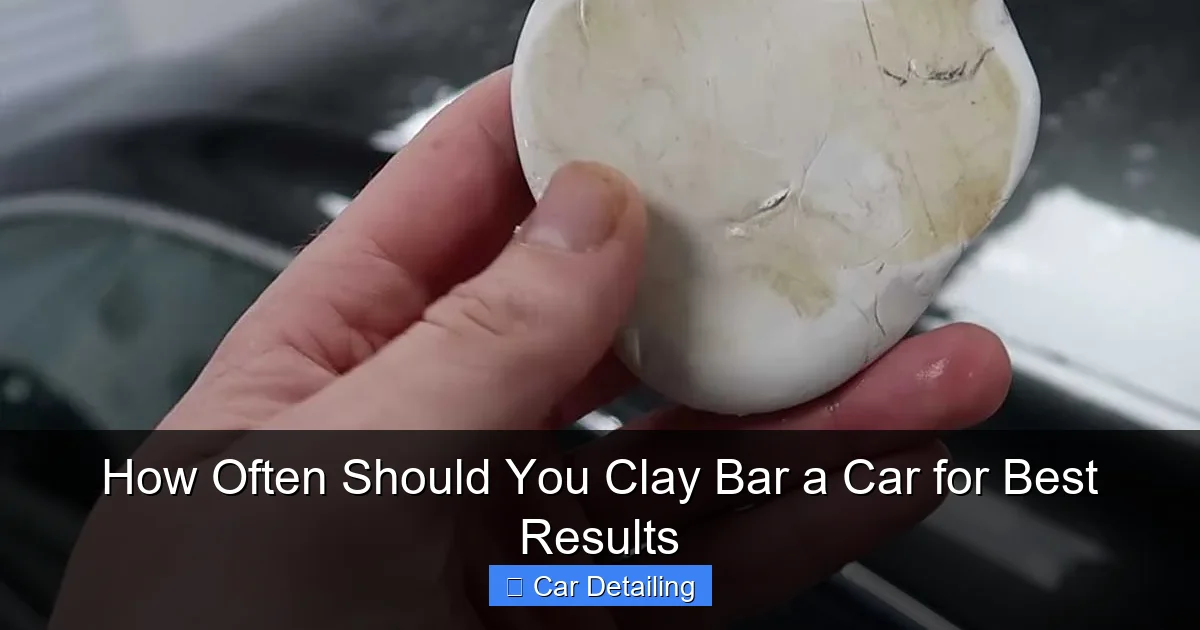
Visual guide about How Often Should You Clay Bar a Car for Best Results
Image source: cdn.shopify.com
If your car is garage-kept, driven mostly on clean roads, and washed regularly, you may only need clay once a year. If it sits outside or sees more contamination, every 6 months may make sense.
There is no fixed mileage rule that works for every car. The need is based more on exposure than on odometer readings. A car driven 5,000 miles in a dusty industrial area can need claying sooner than a car driven 15,000 miles in a cleaner environment.
- Wash the car first
- Check for rough paint with a clean plastic bag or your hand in a thin glove
- Look for visible fallout or specks on horizontal panels
- Use clay only where contamination is bonded
- Protect the paint after claying
Signs Your Car Needs Clay Bar Treatment
The easiest sign is texture. After washing, run your hand lightly over the paint in a clean plastic bag or detailing glove. If it feels gritty or bumpy, contamination is likely bonded to the surface.
Another sign is that wax or sealant does not seem to last as long as expected. Contaminated paint can make protection harder to apply evenly.
You may also notice tiny dark dots, orange specks, or a dull look on areas like the hood, roof, lower doors, or rear bumper. These spots often collect more fallout than other panels.
Common places to check first
Start with horizontal surfaces such as the hood, roof, trunk lid, and upper door panels. These areas take the most direct exposure to airborne contamination, rain residue, and environmental fallout.
Lower panels can also collect road grime and tar. If you park near rail lines, construction zones, or industrial areas, the contamination may build up faster than expected.
If the paint feels smooth after washing, you may not need a full clay bar session. Spot-treat only the contaminated panels instead of claying the whole car.
What Changes the Clay Bar Interval?
Several factors affect how often you should clay bar a car. The biggest ones are parking conditions, driving environment, and how often the vehicle is washed.
Outdoor parking usually increases contamination. Tree sap, dust, pollen, bird droppings, and industrial fallout can all land on the paint and bond over time.
Climate matters too. Dry, windy areas may create more dust buildup, while coastal regions can add salt exposure. In some locations, rail dust and construction debris are major issues.
| Condition | Typical Clay Bar Frequency |
|---|---|
| Garage-kept, lightly driven | Once a year |
| Daily driver, mixed conditions | Every 6 to 12 months |
| Outdoor parking, urban or industrial exposure | Every 3 to 6 months if needed |
| Heavy contamination or frequent fallout | As needed, panel by panel |
Wash habits also matter. Regular washing helps prevent buildup, which can reduce how often you need to clay. For related maintenance timing, see how often to wash a car and how often you should vacuum your car interior for a more complete routine.
Can You Clay Bar Too Often?
Yes. Clay bar treatment is safe when used correctly, but doing it too often is not ideal. Clay can remove some surface protection and, if used with too little lubricant or too much pressure, may leave fine marring on softer paint.
That does not mean clay is dangerous. It means the process should be used only when needed and done carefully. Overuse adds unnecessary wear without giving extra benefits.
Some owners mistake clay barring for routine maintenance like washing. It is not. Washing removes loose dirt. Claying removes bonded contamination that washing cannot handle.
Never clay a dirty car. If grit remains on the surface, the clay can drag it across the paint and create scratches or haze.
How to Clay Bar a Car Safely
Start with a thorough wash and rinse. Dry the vehicle completely so you can inspect the paint and find contaminated areas. Work in the shade if possible, because hot panels can make lubricant dry too fast.
Use a dedicated clay lubricant or a product approved for clay use. Break off a small piece of clay and flatten it into a workable pad. Move it gently in straight lines, not hard circles.
When the clay picks up debris, fold it to expose a clean surface. If the clay is dropped on the ground, discard it. That piece can trap grit and scratch the paint.
Simple safety habits
Keep the panel wet with lubricant. Use light pressure. Stop when the surface feels smooth. These small habits reduce the chance of marring and make the job easier.
If you are claying a large vehicle, work one panel at a time. That helps you stay organized and lowers the chance of missing residue or letting lubricant dry out.
- Paint that feels rough after washing
- Prepping before wax, sealant, or coating
- Removing bonded contamination from daily driving
- Spot-treating specific dirty panels
- Dirty, unwashed paint
- Heavy scratches or oxidation
- Very soft paint if you are inexperienced
- Panels with unknown surface damage
Clay Bar vs. Clay Mitt vs. Synthetic Clay
Traditional clay bars are effective, but they are not the only option. Clay mitts and synthetic clay products can be faster and easier for some users, especially on larger vehicles.
A clay mitt is often simpler to rinse and reuse during the session. Synthetic clay tools may also be less likely to fall apart than a traditional bar, though they still require lubricant and careful technique.
Traditional clay bars can be more precise on stubborn contamination, but they are also more likely to be wasted if dropped. The best option depends on your comfort level, budget, and how often you plan to detail.
If you are trying to build a safe, efficient maintenance routine, it can help to compare claying with other steps like washing and vacuuming. For example, a clean exterior often starts with regular washing, while the interior benefits from scheduled care such as how often you should vacuum your car interior and basic upkeep like how often you should wash car seat covers.
When to Ask a Professional Detailer
Professional help makes sense when the paint is heavily contaminated, the finish is delicate, or you want correction and protection done together. A detailer can inspect whether claying is enough or whether polishing is also needed.
This is especially useful if the car has older paint, soft Japanese clear coat, repainted panels, or visible defects. In those cases, the wrong technique can create more work later.
Professional service also helps if you are preparing a vehicle for sale, returning a lease, or correcting neglected paint. The cost varies by region and vehicle size, so it is worth getting a quote if you are unsure.
If you clay the car yourself, follow it with wax, sealant, or a coating-friendly prep step. Bare, freshly clayed paint is more exposed to contamination.
What to Do After Claying
After claying, wipe the panels with a clean microfiber towel to remove lubricant residue. Then apply your chosen protection as soon as practical. This helps preserve the smooth finish you just created.
Many owners choose wax for short-term gloss and easy upkeep. Sealants usually last longer. Ceramic coatings last even longer, but they often need very careful prep and may not be appropriate for every DIY user.
The right follow-up depends on your maintenance goals. A weekend driver may prefer wax. A daily driver may benefit more from a sealant or a professional coating package.
Final Recommendation
So, how often should you clay bar a car? For most vehicles, once or twice a year is the best starting point. If the paint feels rough sooner, or if the car lives in a harsh environment, adjust based on condition rather than a fixed calendar.
Use clay only when needed, always on clean paint, and always with proper lubricant. That approach gives you the main benefit of claying—smooth, contamination-free paint—without unnecessary risk or extra wear.
If your car has heavy buildup, delicate paint, or you want the best finish before protection is applied, consider a professional detailer. For most owners, though, a careful DIY clay session at the right interval is enough to keep the paint in good shape.
🎥 Related Video: How Often Should I Clay My Car? | The Rag Company FAQ
📺 The Rag Company FAQ
In this video, Levi explains the proper intervals you should be using when using detailing clay on your own vehicles! #ClayBar …
Frequently Asked Questions
After washing, feel the paint with a clean plastic bag or detailing glove. If it feels rough, gritty, or bumpy, bonded contamination is likely present.
No. Clay barring is not a routine wash step. Most cars only need it once or twice a year, depending on exposure and paint condition.
No, a clay bar removes bonded contaminants, not scratches. If the paint has swirls or deeper marks, polishing or paint correction is usually needed.
Yes, that is usually a good idea. Claying removes contamination and can strip some surface protection, so adding wax or sealant afterward helps protect the paint.
Yes, if the paint feels rough or has transport contamination. Even new cars can arrive with bonded debris from shipping, storage, or dealership prep.
Frequent claying can remove protection and may increase the chance of fine marring if the technique is not careful. It is best used only when the paint actually needs it.