A good car vacuum cleaner needs strong suction (at least 15,000 Pa for deep cleaning), a HEPA or washable filter, a long flexible hose, multiple attachments for tight spaces, and either a long battery life (20+ minutes) or a power cord that reaches across the car. Lightweight design and easy-empty dustbins matter too.
I’m Ryan Carter, and I test car accessories in real driving conditions so I can explain things simply. A few years ago I bought what looked like a great car vacuum online — solid reviews, great price, sharp design. It arrived, I plugged it in, and it barely picked up a handful of crumbs from my front seat. Returned it the next day.
That experience taught me something important: car vacuums are not all built equal, and the marketing rarely tells you what actually matters. Most listings lead with motor wattage or a list of attachments without explaining what those numbers mean in real use.
So I started testing vacuum cleaners the way I test everything else — in the car, on the actual mess. Pet hair, fast-food crumbs, beach sand, muddy footprints. After going through dozens of models and reading everything from Dyson’s engineering specs to consumer research from brands like BLACK+DECKER and Bissell, I put together this complete guide. Here is exactly what to look for.
- Suction power measured in Pa (Pascals) is more reliable than watts — aim for 15,000 Pa or higher for deep car cleaning.
- HEPA filters trap the finest allergens and dust particles; washable filters save long-term maintenance costs.
- Cordless models offer flexibility, but only if the battery lasts at least 20 minutes on a full charge.
- A flexible hose with 3–5 attachments (crevice tool, brush head, upholstery nozzle) is essential for reaching every corner.
- Weight under 1.5 kg (3.3 lbs) keeps the vacuum easy to maneuver inside tight car interiors.
Why Suction Power Is the Most Important Feature in Any Car Vacuum
The short answer is: without strong suction, nothing else on the vacuum matters. You can have ten attachments and a premium filter — but if the motor is weak, you’ll be going over the same spot five times and still leaving debris behind.
Here is what that means in practical terms. Suction power in car vacuums is measured in Pascals (Pa) — a unit of pressure that reflects how strongly air is pulled into the nozzle. This is a more honest measurement than wattage, which only tells you how much electricity the motor draws, not how hard it actually pulls.
- Under 8,000 Pa: Light-duty use only. Fine for fresh crumbs on flat surfaces.
- 8,000–15,000 Pa: Good for general car cleaning. Handles most everyday messes.
- 15,000 Pa and above: Deep-cleaning power. Pulls out embedded pet hair, sand, and compacted debris from carpet fibers.
Pet owners and families with kids should target 15,000 Pa or higher. For quick weekly cleanups, 10,000 Pa is often enough. The key is matching the power to your actual cleaning habits — not buying more than you need, but never buying less than you require.
When comparing models online, search for the Pa rating specifically. If a brand only advertises watts or “strong suction” without a Pa number, that is often a red flag. Legitimate manufacturers list it clearly.
Suction is the foundation. Once you have that right, the next thing to evaluate is the filter — because strong suction with a poor filter just recirculates fine dust back into your car’s air.
Filter Types Explained: HEPA, Foam, and Washable — Which One Do You Actually Need?
The filter determines what your car vacuum keeps versus what it blows back into the air. This matters more than most people realize — especially if you drive with children, pets, or anyone with allergies.
There are three main filter types found in car vacuums:
HEPA Filters
HEPA stands for High-Efficiency Particulate Air, a filtration standard established by the U.S. Department of Energy. A true HEPA filter captures 99.97% of airborne particles that are 0.3 microns or larger — that includes pollen, mold spores, pet dander, and fine dust. If anyone in your household has allergies or asthma, HEPA is the standard worth prioritizing.
Foam Filters
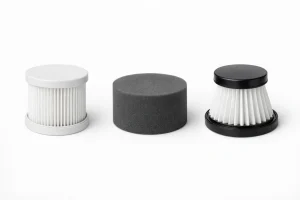
Foam filters are found in budget models. They catch large debris reasonably well but allow fine particles to pass through. Over time they clog faster, which reduces suction. They are washable and inexpensive to replace, which is their main advantage.
Washable Multi-Layer Filters
These sit between HEPA and basic foam in terms of performance. They use multiple filtration layers and can be rinsed clean, dried, and reused — which saves you money on replacements. Many mid-range car vacuums from brands like Bissell use washable multi-layer filters as their core filtration system.
| Filter Type | Filtration Quality | Maintenance | Best For |
|---|---|---|---|
| HEPA | Excellent (99.97%) | Replace every 6–12 months | Allergy sufferers, pet owners |
| Foam | Basic | Rinse weekly | Budget buyers, light use |
| Washable Multi-Layer | Good | Rinse monthly, reusable | Everyday cleaning, value seekers |
Never run a car vacuum with a wet or damp filter. A saturated filter dramatically reduces suction and can damage the motor. Always allow washed filters to dry completely — at least 24 hours — before reinstalling.
Once your filter choice is clear, the next feature to evaluate is how the vacuum is powered — and this is where cordless versus corded becomes a real decision.
Cordless vs. Corded Car Vacuum: Which Power Option Is Right for You?
This is one of the most common questions I get, and the honest answer is: it depends on how and where you clean.
Cordless Car Vacuums
Cordless models run on rechargeable lithium-ion batteries, giving you complete freedom of movement inside and around the vehicle. No tripping over cables, no hunting for an outlet. Dyson (the British engineering brand known for cyclonic vacuum technology) helped establish the modern cordless car vacuum category with products like the V-series, which deliver serious suction without a power cord.
The trade-off is battery life. Many budget cordless models deliver only 8–12 minutes of use on full power — barely enough to clean one car properly. Look for models that offer at least 20 minutes of runtime on the standard cleaning mode. Premium models from Dyson and similar brands push 30–40 minutes, which is enough for a thorough full-car clean.
Corded Car Vacuums
Corded models — typically plugged into your car’s 12V cigarette lighter/DC port — never run out of power. You can clean for as long as you need without interruption. BLACK+DECKER, one of the most recognized names in portable power tools and home appliances, built much of its portable vacuum lineup around this plug-in design for exactly this reason.
The limitation is cord length. A short cord (under 4 meters) forces you to reposition your car multiple times to reach every section. Look for corded models with at least 4.5–5 meters of total reach including the hose.
Choose cordless if you want flexibility and clean multiple vehicles or locations away from outlets. Choose corded if you always clean near your garage or driveway and want consistent, uninterrupted power. For most home users, a good cordless model with 20+ minutes of battery life is the more versatile choice.
Attachments and Accessories: The Tools That Do the Real Work
The vacuum body gets the debris moving — but the attachments are what let you actually reach it. A good set of attachments transforms a decent vacuum into a precision cleaning tool for every surface in your car.
Here are the attachments every car vacuum should include:
- Crevice tool: Narrow, flat nozzle that slides between seats, into console gaps, and along door seams. Non-negotiable.
- Soft brush head: Bristles loosen embedded debris on carpet and fabric while the suction pulls it in. Essential for pet hair.
- Upholstery nozzle: Wide, flat head designed for seat cushions and headliners. Distributes suction evenly across soft surfaces.
- Flexible extension hose: Adds reach and maneuverability. A hose of at least 1.2 meters lets you work from the trunk to the rear footwells without repositioning.
- Motorized brush (on premium models): A rotating brush powered by a mini motor — best for deep carpet cleaning and pet hair extraction.
Check whether attachments store on the vacuum itself. Loose accessories that go back into a bag every time are easy to misplace. Built-in clip storage keeps everything together and ready to use.
Attachments bring versatility. But none of that matters if the vacuum itself is too heavy and bulky to maneuver comfortably inside a vehicle.
Weight and Size: Why Portability Is a Feature, Not an Afterthought
A car vacuum gets used inside a confined space — often awkwardly angled, reaching under seats or into the back footwell. Weight matters in a way it simply doesn’t for a full-size home vacuum.
The ideal car vacuum weighs under 1.5 kg (approximately 3.3 lbs). Models in this range are easy to hold with one hand at any angle, which is exactly what you need when you’re reaching into the back seat while leaning through the front door.
Size matters too. A compact body that’s no longer than 35–40 cm fits naturally into boot storage without eating into luggage space. Bulky vacuum bodies with large external dustbins are fine for garage storage but awkward for in-vehicle use.
The weight-to-suction ratio is one of the most overlooked metrics in car vacuum reviews. A 2 kg vacuum with 20,000 Pa is impressive on paper — but tiring and awkward inside a car. A 1.2 kg model with 16,000 Pa often delivers a far better real-world cleaning experience.
Dustbin Capacity: How Much Is Enough for a Car Interior?
Car vacuums don’t need massive dustbins — but they need enough capacity to get through a full clean without stopping to empty mid-job.
For a standard sedan or hatchback, a 0.4 to 0.6 litre dustbin is sufficient for one full cleaning session. SUV or minivan owners — especially those with kids or pets — should look for 0.6 litres or more to handle heavier loads.
Just as important as size is how easy the bin is to empty. One-click dust ejection systems let you empty directly into a trash bag without touching the debris — a hygienic, fast design that makes the post-clean routine quick and painless.
Overfilling the dustbin is one of the fastest ways to reduce suction and shorten motor life. A full bin blocks airflow. Empty it after every cleaning session — even if it doesn’t look completely full.
Cyclonic Technology: The Feature That Keeps Suction Consistent Over Time
Standard vacuums lose suction as the dustbin fills because debris accumulates directly on the filter, blocking airflow. Cyclonic technology solves this by using centrifugal force to spin debris away from the filter before it settles — keeping the filter cleaner for longer, and keeping suction consistent throughout the cleaning session.
Dyson pioneered the commercial application of cyclonic separation in consumer vacuums, and the technology has since filtered down into mid-range car vacuums from multiple manufacturers. If you notice suction dropping off noticeably partway through a cleaning session with your current vacuum, a cyclonic model is likely the upgrade that fixes it.
Not every car vacuum needs cyclonic technology — but if you do long, thorough cleaning sessions or have heavy debris loads from pets and children, it is a feature worth paying for.
You can read more about how cyclonic separation works and its real-world performance differences from the U.S. Department of Energy’s consumer appliance resources and independent vacuum testing labs like Which? (UK consumer testing organization).
Noise Level: The Feature Nobody Talks About — But Should
Car vacuums run in an enclosed space, often with family members or pets nearby. Noise level is a real comfort factor that almost no mainstream review addresses directly.
Most car vacuums operate between 70 and 85 decibels (dB). That range goes from roughly the sound of normal conversation to the noise level of a loud kitchen blender. For context, prolonged exposure to 85 dB and above can cause hearing fatigue.
If you clean with children or pets in the car, or you are noise-sensitive, look for models that advertise noise levels below 75 dB. Some brands specifically engineer their motors and airflow paths to reduce acoustic output — this is usually marketed as “quiet motor” design and is worth checking for in the product specs.
Wet and Dry Capability: Do You Need It in a Car Vacuum?
Wet and dry vacuums can handle liquid spills as well as solid debris — a genuinely useful feature if you regularly deal with spilled drinks, wet mud from boots, or pet accidents in the vehicle.
The trade-off is size and weight. Wet-and-dry car vacuums tend to be heavier and bulkier than dry-only models. For most drivers, a dry-only vacuum handles 95% of real-world car cleaning tasks perfectly well. The extra weight and bulk of a wet-and-dry model isn’t worth it unless liquid spills are a frequent problem in your specific situation.
If you do opt for a wet-and-dry model, confirm that the filter system is rated for wet use — not all filters tolerate liquid intake, and using a dry-only filter for wet pickup can permanently damage the vacuum.
How to Maintain a Car Vacuum So It Lasts for Years
A quality car vacuum should last 3–5 years with proper care. Most people who find their vacuum “stopped working” after a year simply skipped basic maintenance. Here is what regular upkeep actually looks like.
- Empty the dustbin after every use — never let it exceed 75% capacity.
- Tap out or rinse the filter every 3–4 uses depending on how dusty your environment is.
- Allow washed filters to air-dry for a full 24 hours before reinstalling.
- Check and clear the intake nozzle and hose for blockages monthly.
- Wipe down the exterior with a dry cloth to prevent grit from entering the housing vents.
- For cordless models, store the battery at 40–80% charge if the vacuum won’t be used for more than two weeks — this extends lithium-ion battery lifespan significantly.
- Replace HEPA filters every 6–12 months depending on use frequency, even if they look clean.
The features that make a car vacuum genuinely good: strong suction (15,000 Pa+), proper filtration (HEPA or washable multi-layer), the right power source for your habits (cordless with 20+ min battery or corded with 4.5 m+ reach), a full set of attachments including a crevice tool and brush head, compact lightweight design under 1.5 kg, and a dustbin that empties cleanly. Cyclonic technology and wet-dry capability are valuable upgrades for specific use cases. Noise level and maintenance ease determine long-term satisfaction.
Conclusion
Buying a car vacuum isn’t complicated once you know what the specs actually mean in real use. Suction power in Pascals, filter type, battery life, and the right set of attachments — these are the four things that separate a vacuum that works from one that frustrates you.
Skip the marketing language and go straight to the Pa rating and filter specs. Make sure the battery (if cordless) hits at least 20 minutes. Confirm the attachment set includes a crevice tool and soft brush at minimum. And keep it light — anything over 1.5 kg gets old fast in a confined car interior.
I’m Ryan Carter, and I built this guide so you don’t have to make the same mistake I did with my first car vacuum purchase. Take your time with the comparison, match the features to your actual cleaning habits, and you’ll end up with a tool that makes car cleaning genuinely quick and easy instead of a chore you keep putting off.
Frequently Asked Questions
What suction power is good for a car vacuum?
Look for a minimum of 15,000 Pa for deep cleaning tasks like embedded pet hair or sand in carpet fibers. For light, regular cleanups on smooth surfaces, 8,000–12,000 Pa is sufficient. Suction measured in Pascals is a more reliable indicator of real-world performance than wattage alone.
Is a cordless or corded car vacuum better?
Cordless models offer more freedom of movement and work anywhere, making them better for most users — but only if the battery lasts 20 minutes or more. Corded models (plugged into the car’s 12V port) deliver consistent power without runtime limits, which suits drivers who do thorough, longer cleaning sessions near a power source.
Do car vacuums need HEPA filters?
Not everyone needs HEPA, but allergy sufferers, pet owners, and parents of young children benefit significantly from it. HEPA filters trap 99.97% of particles at 0.3 microns and above, preventing fine dust and allergens from being recirculated into the car’s cabin air during cleaning.
What attachments should a car vacuum have?
At minimum, a good car vacuum should include a narrow crevice tool (for gaps between seats and console), a soft brush head (for carpet and fabric), and an upholstery nozzle (for seats and headliners). A flexible extension hose of at least 1.2 meters is also important for reaching rear footwells and the boot without awkward repositioning.
Can I use a car vacuum on upholstery?
Yes — but use the upholstery nozzle or soft brush attachment, not the bare hard-plastic nozzle. The bare nozzle can scratch or pull fabric threads on delicate upholstery materials. Most car vacuums include an upholstery head specifically designed to clean seat fabric and headliners safely.
How do I clean a car vacuum filter?
Remove the filter, tap out loose debris, then rinse it gently under cool water if it is a washable type. Never use soap or hot water, as these can degrade filter material. Let it air dry completely — at least 24 hours — before placing it back in the vacuum. Never operate the vacuum with a wet filter.
How long should a car vacuum last?
A well-maintained car vacuum from a reputable brand should last 3–5 years with regular use. The most common reasons for early failure are running with a clogged or wet filter, overfilling the dustbin consistently, and storing a cordless model at 0% battery charge for extended periods, which degrades the lithium-ion cells.

