
For most cars, a suction power of 3,000 to 6,000 Pa — or roughly 30 to 60 Air Watts — is the ideal range. That level handles crumbs, dust, pet hair, and sand without being too heavy or too loud to use in a tight interior space. If you deal with deeply embedded dirt or thick floor mats, aim for the higher end of that range, around 5,000 to 6,000 Pa or 50+ AW.
Why Getting Suction Power Right Actually Matters
I’m Ryan Carter, and I test car accessories in real driving conditions so I can explain things simply. One thing I’ve learned after going through more car vacuums than I can count: the number printed on the box often says very little about whether the thing actually cleans your car.
I once bought a vacuum rated at 120 Air Watts — an impressive-sounding number. It was designed for home floors and was absolutely useless inside my SUV. Too bulky, too heavy, and the nozzle couldn’t reach under the seat rail where most of the mess lives. Then I picked up a compact 4,500 Pa cordless model that cost half as much. It handled my car perfectly.
The point is this: suction power for car vacuums is its own world. Home vacuum metrics don’t translate directly, and bigger numbers don’t always mean better cleaning in a confined car interior. Let me break down exactly what you need to know — and what number to shop for.
- Car vacuums perform best in the 3,000–6,000 Pa or 30–60 AW range.
- Pascals measure pressure; Air Watts measure combined pressure and airflow — AW is more accurate.
- Motor wattage is not suction power — do not use it to compare models.
- More suction is not always better in tight car interiors; balance matters.
- A dirty filter can cut your vacuum’s effective suction by 30% or more.
What Is Suction Power in a Car Vacuum — and Why Does It Matter?
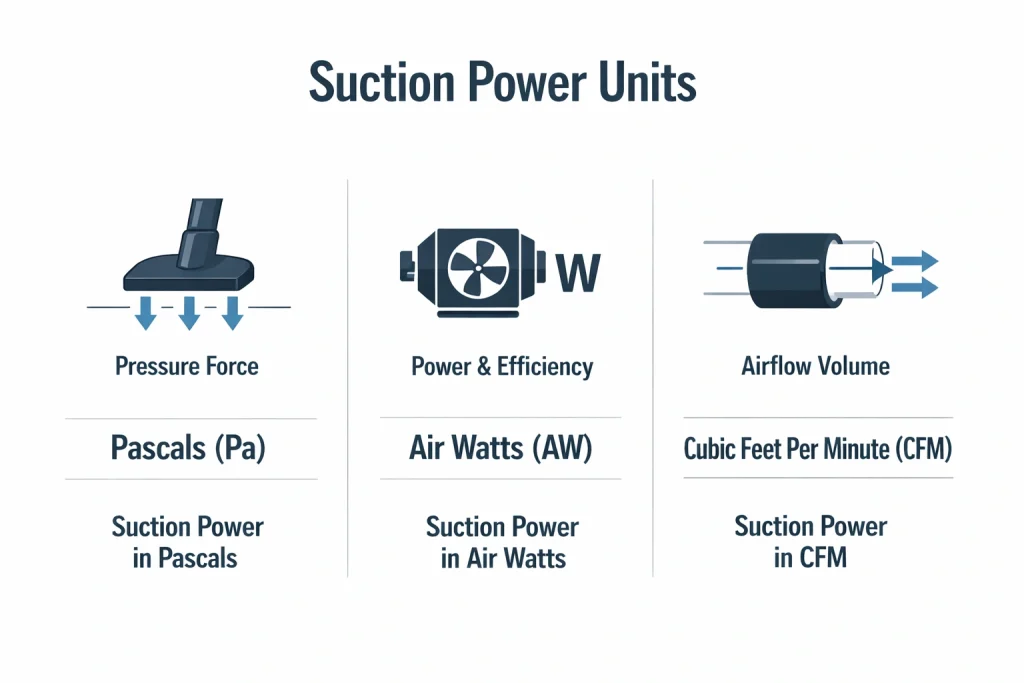
Suction power is the force a vacuum creates to pull air — and debris along with it — into the collection cup. But here is what trips most people up: manufacturers use at least four different units to describe it, and they are not directly comparable to each other. Understanding the difference is the first step to making a smart buying decision.
Pascals (Pa) — The Number You See Most
Pascals measure pressure difference. One Pascal equals one Newton of force per square meter. When a vacuum creates a low-pressure zone inside its chamber, the higher atmospheric pressure outside pushes air (and dirt) in. More Pascals means a stronger pressure differential — which generally means better suction on smooth, hard surfaces.
Most portable and cordless car vacuums advertise Pa ratings because the numbers look impressively large. A model at 15,000 Pa sounds powerful. But Pa alone tells you nothing about airflow, which is equally important for actually moving dirt.
Air Watts (AW) — The More Honest Metric
Air Watts combine suction pressure and airflow into a single performance number. The formula is: AW = Airflow (CFM) × Vacuum Pressure (inches of water) ÷ 8.5. This gives you a truer picture of cleaning performance because it accounts for both how hard the vacuum pulls and how much air it moves per second.
Brands like Dyson (a British engineering company known for bagless cyclone technology) and Shark use Air Watts as their primary spec. A car vacuum delivering 30–60 AW is well-matched to the job. In comparison, a full-size upright home vacuum typically delivers 100–200 AW — but that power is designed for deep carpet fibers across large rooms, not for maneuvering around a gearshift.
CFM — The Hidden Performance Driver
CFM stands for Cubic Feet per Minute and measures how much air volume the vacuum moves. For car vacuums, 15–25 CFM keeps suction consistent across the irregular surfaces inside a vehicle — seat fabric, hard plastic trim, rubber floor mats, and tight crevice gaps all behave differently. A vacuum with strong Pa but poor CFM will struggle on larger debris even if it grabs fine dust well.
When comparing two car vacuums, look for a model that lists both Pa and CFM. If only one number is given, ask yourself: what surface am I cleaning most often? Pa matters more on hard surfaces; CFM matters more when you’re lifting loose debris from fabric seats.
Why Wattage Is Not the Same as Suction Power
This is one of the most common mistakes I see buyers make. Motor wattage tells you how much electricity the vacuum consumes — not how hard it cleans. A 100W vacuum with an efficient motor and tight seals can easily outperform a 200W vacuum with a leaky hose and a clogged filter. The EU actually capped household vacuum motors at 900W for energy reasons, and many top-performing models work perfectly within that limit.
For handheld car vacuums, look for motors in the 100–200W range. For larger corded models that plug into a wall outlet, 300–1,200W is common. But always check the Pa or AW figure — that is the number that tells you what the motor actually does with the power it draws.
Never buy a car vacuum based on wattage alone. A 1,200W car vacuum that plugs into your garage outlet is not necessarily more effective on car upholstery than a 150W cordless model — the suction rating in Pa or AW is what you should compare.
How Much Suction Power Is Enough for a Car? (Numbers by Mess Type)
Not all car messes are created equal. The right suction level depends heavily on what you are actually cleaning up. Here is a breakdown that most buyers never see anywhere:
Light Dust and Crumbs
For regular maintenance cleaning — dashboard dust, loose crumbs, sand on the seat — a vacuum in the 3,000–4,500 Pa range is more than enough. This covers most daily and weekly cleanups in a commuter car. A compact cordless vacuum with 30–40 AW handles this level of mess with ease and won’t feel heavy or awkward inside a small cabin.
Pet Hair and Fine Sand
Pet hair is stubborn. It weaves into fabric fibers and clings electrostatically. Fine sand does something similar — it works its way down into floor mat fibers and resists weak suction. For these, you want at least 4,500–6,000 Pa, paired with good airflow (20+ CFM) to physically dislodge and lift the particles. If you have a dog or cat that rides with you regularly, don’t go below 5,000 Pa.
For pet hair specifically, look for a car vacuum with a motorized brush attachment, not just suction alone. The mechanical agitation loosens the hair from fibers before suction pulls it away. Even a 4,000 Pa model with a good motorized head will outperform a 7,000 Pa vacuum with a plain nozzle.
Deep-Embedded Dirt in Floor Mats
If you have rubber or carpet floor mats with deep grooves and you haven’t cleaned them in a while, or if your kids routinely grind crackers into the back seat, you are dealing with embedded debris. This is where you want a vacuum at 6,000 Pa and above, or a corded model with 50–60+ AW. Some professional-grade portable vacuums like the Vacmaster Beast and DeWalt DXV08S reach this tier comfortably.
| Mess Type | Recommended Pa | Recommended AW | Notes |
|---|---|---|---|
| Light dust & crumbs | 3,000–4,500 Pa | 30–40 AW | Weekly maintenance |
| Pet hair & fine sand | 4,500–6,000 Pa | 40–55 AW | Pair with brush attachment |
| Deep floor mat & embedded dirt | 6,000+ Pa | 55–70 AW | Consider corded model |
The 3,000–6,000 Pa range covers nearly every car cleaning scenario most drivers face. Match your target Pa to the type of mess you deal with most, and always check for airflow specs alongside the pressure rating for a complete performance picture.
Corded vs. Cordless Car Vacuums: Does Suction Differ?
Yes, and the gap is more significant than most people realize. Corded car vacuums — whether they plug into your garage outlet or your car’s 12V socket — deliver consistent suction from start to finish. Cordless models draw from a battery, which means suction often drops as the charge drains.
Most cordless car vacuums run for 15–40 minutes on a single charge, which is enough for a compact sedan but can fall short for a full-size SUV or minivan if you’re being thorough. Battery-powered models typically sit in the 8,000–20,000 Pa range in their marketing specs, but real-world suction at low battery can drop to 50–60% of that rated figure.
Corded 12V models that plug into your car’s cigarette lighter socket sit in a different tier. The Shop-Vac 12V car vacuum, for example, delivers around 7,000 Pa of consistent suction — modest but steady. The trade-off is the cord. It limits your movement inside the cabin, especially in larger vehicles.
- If you clean your car weekly and deal with light messes, a cordless 4,000–6,000 Pa model is perfect.
- If you have pets or kids and need deep cleaning monthly, go corded or choose a high-capacity cordless with a 6,000 mAh+ battery.
- If you detail your car or clean multiple vehicles, a full corded model rated 6,000+ Pa or 50+ AW will save you time.
- Always check the battery size (mAh) alongside suction power on cordless models — both numbers together tell the real story.
Can Too Much Suction Actually Cause Problems in a Car?
This is a question almost no buying guide addresses — and it matters. Yes, excessively strong suction can work against you in a car interior. Here is why.
Car interiors are full of delicate surfaces: thin fabric headliners, leather seats, loose floor mats, and small trim pieces. A vacuum with very high suction — say, 15,000+ Pa applied through a narrow nozzle — can deform soft materials, pull up floor mats, or make the tool hard to glide across upholstery. Some testers have reported that powerful cordless vacuums literally sucked up floor mats during use, requiring you to hover the nozzle just above the surface rather than pressing it down.
This is why the 3,000–6,000 Pa sweet spot exists. It is strong enough to do the job and light enough to stay manageable. If you do buy a higher-powered model, look for adjustable suction modes so you can dial back power on delicate surfaces.
The best car vacuum is not the most powerful one you can buy. It is the most powerful one you can comfortably control in a tight space — with enough suction to do the job and enough refinement to not damage what you’re cleaning.
Top Car Vacuum Options Worth Considering
Based on real-world testing and verified specs, here are a few categories worth looking at before you buy.
For everyday cordless use: Models like the Fanttik V9 Mate and Saker HL-series reach 15,000–17,000 Pa on paper, but their practical car-cleaning performance sits in the effective 5,000–6,000 Pa zone due to real-world airflow and nozzle design. They are lightweight, rechargeable via USB-C, and handle weekly cleanups well.
For pet owners: Look for models combining 6,000+ Pa with a motorized mini brush attachment. The Ryobi cordless car vacuum earned strong praise specifically for pet hair thanks to its mini beater bar — mechanical agitation plus suction is the winning combination.
For deep cleaning: The Vacmaster Beast and DeWalt DXV08S (a tool made by the American power-tool brand DeWalt, part of the Stanley Black & Decker family) both deliver professional-grade suction. They are not lightweight or portable, but for a thorough monthly detail, they are among the most effective options available.
ThisWorx Portable Car Vacuum Cleaner (12V Corded)
A well-reviewed budget corded option with a 16-foot cord, three attachments, and consistent plug-in suction — ideal for drivers who want reliable performance without charging concerns.
Saker Cordless Handheld Car Vacuum (17,000 Pa)
A compact, rechargeable cordless model with a brushless motor — lightweight enough for overhead headliner cleaning and strong enough for pet hair and crumbs in daily use.
How to Keep Your Car Vacuum Suction Strong Over Time
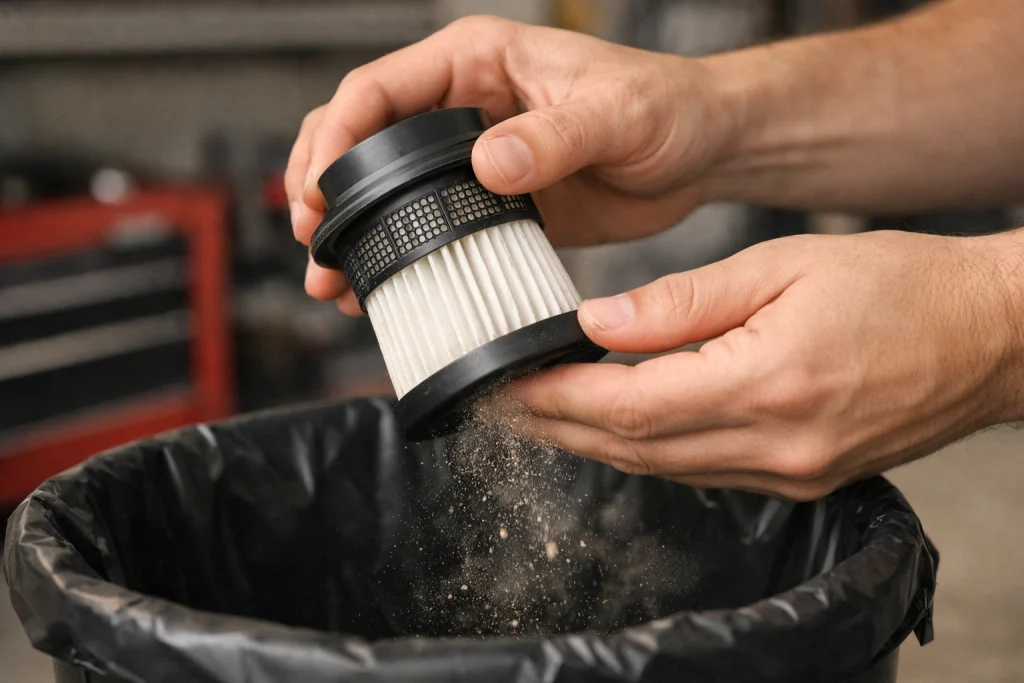
A vacuum that rated 5,000 Pa when new can perform like a 2,500 Pa model within a few months if you don’t maintain it. Suction loss is almost always caused by one of three things: a clogged filter, a full dustbin, or an air leak in the hose or seal.
- Empty the dustbin after every use — never let it fill past 70% or suction drops noticeably.
- Clean the filter every 1–2 weeks if you use the vacuum regularly. Tap it out over a trash can and rinse if it is washable.
- Dry the filter completely before reinstalling — a damp filter cuts airflow and can damage the motor over time. Allow at least 24 hours of air-drying.
- Check the hose and nozzle for blockages after vacuuming sand or pet hair — these materials pack tightly and can create a near-complete clog inside the nozzle throat.
- Inspect the seal between the dustbin and the body every month. A worn or cracked seal lets air bypass the suction path entirely.
Never vacuum wet debris with a standard car vacuum not rated for wet use. Moisture ruins the filter, clogs the airflow path, and can short the motor. If you have a spill, use a wet/dry rated model like the Shark MessMaster or a shop vac with the appropriate filter installed.
For a deeper look at how vacuum performance specs compare across categories, the engineering team at the FTC’s consumer resources page and independent test lab RTINGS.com vacuum reviews both offer reliable, third-party performance data worth checking before you spend money on a premium model.
Regular filter cleaning and dustbin emptying are the single highest-impact things you can do to keep your car vacuum performing like new. Suction loss over time is almost always a maintenance issue, not a hardware failure — and it’s almost always fixable in under five minutes.
The Bottom Line: What Suction Number Should You Shop For?
After all the numbers and comparisons, here is what I actually tell people when they ask me directly: look for a car vacuum rated between 4,000 and 6,000 Pa, with at least 15–20 CFM of airflow, and an adjustable suction mode if your budget allows.
That range covers the vast majority of what real drivers deal with — kids’ crumbs, road dust, pet hair, and the occasional sand disaster after a beach trip. It works in compact cars and full-size trucks. It is light enough to maneuver without fatigue and powerful enough to do the job in one pass, not five.
If you can only use one number to shop by, use Pa. And if a model only lists wattage — not Pa or AW — that’s a red flag worth paying attention to.
I’m Ryan Carter, and I hope this clears up what has been, honestly, a confusing topic for too long. Pick the right suction range, maintain your filter, and your car will feel noticeably cleaner with a lot less effort.
Frequently Asked Questions
How many Pa is good for a car vacuum cleaner?
A range of 3,000 to 6,000 Pa is good for most car interiors. For light daily cleaning, 3,000–4,500 Pa is sufficient. For pet hair, deep floor mats, or embedded sand, aim for 5,000–6,000 Pa or higher.
What is the difference between Pa and Air Watts in a vacuum cleaner?
Pascals measure pressure only — how hard the vacuum pulls air. Air Watts combine pressure and airflow into one performance number, making AW a more complete and accurate measure of real-world cleaning power.
Is 6,000 Pa good for a car vacuum cleaner?
Yes, 6,000 Pa is on the strong end of the car vacuum range and handles virtually every interior cleaning task, including pet hair and embedded floor mat dirt. It is more than adequate for regular use.
Does motor wattage tell you how strong a car vacuum is?
No. Wattage measures electricity consumption, not cleaning performance. A vacuum with a higher watt motor may still deliver weaker suction than a lower-watt model with a better-designed airflow path and tighter seals.
How long does a cordless car vacuum last per charge?
Most cordless car vacuums run 15 to 40 minutes per charge. Battery size (mAh) and suction mode both affect runtime. A higher Pa setting drains the battery faster, so models with adjustable suction modes help balance power and runtime.
Why did my car vacuum lose suction over time?
The most common causes are a clogged filter, an overfilled dustbin, or a cracked seal between the dust cup and vacuum body. Cleaning the filter and emptying the bin after every use prevents most suction loss in car vacuums.
Is a cordless or corded car vacuum better for suction?
Corded car vacuums deliver more consistent suction since they don’t rely on battery charge. Cordless models offer more mobility but suction can decrease as the battery drains. For deep cleaning, corded is more reliable; for regular upkeep, cordless is more convenient.